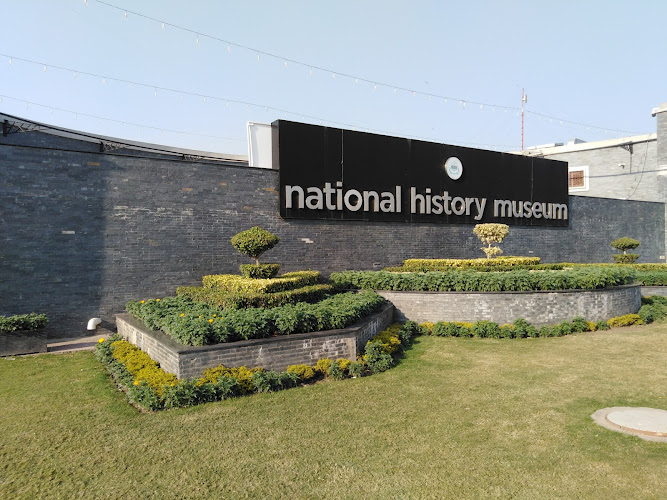
The National History Museum in Lahore showcases Pakistan’s cultural and political past through curated exhibitions of archaeological finds, colonial-era artifacts, and interactive multimedia displays.
Highlights & Key Features
Immersive Partition of 1947 Gallery: Oral histories, timelines, and maps that bring migration routes and personal accounts to life without overwhelming you.
VR and Interactive Tech: Virtual reality segments and touchscreen displays that add context and let you explore topics at your own pace.
Muhammad Ali Jinnah Archives: Speeches, photographs, and curated clips that frame the political vision behind Pakistan’s creation.
Media, Music, and Film Exhibits: A look at pop culture—radio, cinema, and television—that reveals how identity and entertainment evolved across decades.
Sports Heritage: From cricket milestones to unsung sports stories, it’s a compact but engaging overview.
Clean, Modern Design: Clear signage, intuitive gallery flow, and bilingual content make it easy to navigate.
Family-Friendly Interactives: Touchpoints that encourage kids to engage rather than just look; great for school groups.
Accessibility: Wheelchair-accessible entrance, parking, and restrooms, with wide pathways inside the galleries.
Onsite Amenities: Air-conditioning, restrooms, and a restaurant for a quick meal or tea break.
Free Parking: A dedicated, no-cost parking lot within Greater Iqbal Park, including accessible spaces.
Contextual Location: Set amid iconic Lahore landmarks, so you can pair the museum with visits to Minar-e-Pakistan, the Fort, and Badshahi Mosque.
Thoughtful Storytelling: Curated with an emphasis on first-hand voices and archives rather than just artifacts.
Visitor Guide & Information
The National History Museum in Lahore showcases Pakistan’s cultural and political past through curated exhibitions of archaeological finds, colonial-era artifacts, and interactive multimedia displays. Visitors can see reconstructed periods of regional history, including Gandharan sculptures, Mughal-era documents, and rare photographs that trace Lahore’s urban development. The museum’s research archives and rotating special exhibits provide context and new perspectives for understanding the city’s role in South Asian history.
Community & Insider Notes
Last modified September 18, 2025
The National History Museum in Lahore showcases Pakistan’s cultural and political past through curated exhibitions of archaeological finds, colonial-era artifacts, and interactive multimedia displays. Visitors can see reconstructed periods of regional history, including Gandharan sculptures, Mughal-era documents, and rare photographs that trace Lahore’s urban development. The museum’s research archives and rotating special exhibits provide context and new perspectives for understanding the city’s role in South Asian history.
Immersive Partition of 1947 Gallery: Oral histories, timelines, and maps that bring migration routes and personal accounts to life without overwhelming you.
VR and Interactive Tech: Virtual reality segments and touchscreen displays that add context and let you explore topics at your own pace.
Muhammad Ali Jinnah Archives: Speeches, photographs, and curated clips that frame the political vision behind Pakistan’s creation.
Media, Music, and Film Exhibits: A look at pop culture—radio, cinema, and television—that reveals how identity and entertainment evolved across decades.
Sports Heritage: From cricket milestones to unsung sports stories, it’s a compact but engaging overview.
Clean, Modern Design: Clear signage, intuitive gallery flow, and bilingual content make it easy to navigate.
Family-Friendly Interactives: Touchpoints that encourage kids to engage rather than just look; great for school groups.
Accessibility: Wheelchair-accessible entrance, parking, and restrooms, with wide pathways inside the galleries.
Onsite Amenities: Air-conditioning, restrooms, and a restaurant for a quick meal or tea break.
Free Parking: A dedicated, no-cost parking lot within Greater Iqbal Park, including accessible spaces.
Contextual Location: Set amid iconic Lahore landmarks, so you can pair the museum with visits to Minar-e-Pakistan, the Fort, and Badshahi Mosque.
Thoughtful Storytelling: Curated with an emphasis on first-hand voices and archives rather than just artifacts.
If you’re curious about Pakistan’s story and want a museum that feels alive rather than dusty, the National History Museum in Lahore hits exactly that note. Set inside Greater Iqbal Park at 229 Circular Road, right by the Walled City of Lahore and a short stroll from Minar-e-Pakistan, it’s a modern, tech-forward space where the country’s past is presented through immersive screens, sharply edited films, and VR. I’ve visited twice—once alone and once with family—and both times I found myself lingering far longer than planned. There’s a palpable sense of place: you look out toward landmarks where history unfolded and then step back inside to hear the voices of the people who lived it.
The museum is designed around thematic galleries rather than endless corridors. Instead of reading long labels, you tap through touchscreens, put on a headset, or trigger a projection. You move from the Partition of 1947 gallery—raw, moving, and full of personal testimonies—to exhibits about cinema, music, sports, and the formation of the new state. The tone is accessible without oversimplifying: timelines are clean, maps are dynamic, and the audio is crisp. Many displays are bilingual (Urdu and English), which makes it easy to share the experience with friends or family visiting from abroad.
One of the museum’s strengths is how it layers big events with everyday life. You get archival audio of Muhammad Ali Jinnah, but you also hear ordinary voices recounting migrations during Partition. There are photos you may have never seen in textbooks, and the VR experiences add context instead of simply being flashy. On my last visit, I noticed people of all ages—students in uniform, grandparents, tourists from Karachi and Islamabad—each finding something that held their attention. That’s not easy to pull off.
Practicalities matter, too. The National History Museum is air-conditioned (a relief in Lahore’s summer), has wheelchair-accessible entrances and restrooms, and offers onsite services including a restaurant and clean restrooms. Families will be happy to know it’s good for kids, and I saw many school groups working through interactive assignments. The staff tend to be approachable, stepping in only when needed. I also appreciated that the broader park is open and green; after the galleries, a short walk outside offers a breather before you dive back into Lahore’s streets.
While many visitors combine it with nearby heavyweights like the Badshahi Mosque and Lahore Fort, the museum stands on its own. Plan a focused visit, give yourself time to browse the digital archives, and you’ll leave with a clearer, more personal understanding of how this country came together—and how culture, sport, and media shaped the national conversation over decades.
Key Features
Immersive Partition of 1947 Gallery: Oral histories, timelines, and maps that bring migration routes and personal accounts to life without overwhelming you.
VR and Interactive Tech: Virtual reality segments and touchscreen displays that add context and let you explore topics at your own pace.
Muhammad Ali Jinnah Archives: Speeches, photographs, and curated clips that frame the political vision behind Pakistan’s creation.
Media, Music, and Film Exhibits: A look at pop culture—radio, cinema, and television—that reveals how identity and entertainment evolved across decades.
Sports Heritage: From cricket milestones to unsung sports stories, it’s a compact but engaging overview.
Clean, Modern Design: Clear signage, intuitive gallery flow, and bilingual content make it easy to navigate.
Family-Friendly Interactives: Touchpoints that encourage kids to engage rather than just look; great for school groups.
Accessibility: Wheelchair-accessible entrance, parking, and restrooms, with wide pathways inside the galleries.
Onsite Amenities: Air-conditioning, restrooms, and a restaurant for a quick meal or tea break.
Free Parking: A dedicated, no-cost parking lot within Greater Iqbal Park, including accessible spaces.
Contextual Location: Set amid iconic Lahore landmarks, so you can pair the museum with visits to Minar-e-Pakistan, the Fort, and Badshahi Mosque.
Thoughtful Storytelling: Curated with an emphasis on first-hand voices and archives rather than just artifacts.
Best Time to Visit
Lahore has distinct seasons, and they change how you experience both the museum and Greater Iqbal Park. For comfortable weather and lighter crowds, the sweet spot is October to March. You’ll appreciate the walk through the park to the museum, and the air indoors won’t feel like such a dramatic temperature shift. If you’re traveling in summer (April to June), aim for a morning visit or early evening; the museum’s air-conditioning keeps things pleasant, but midday heat makes the approach and any outdoor exploring less fun.
Weekdays are generally calmer. I’ve found late mornings ideal: enough time for a deep dive into the galleries before lunch, with fewer school groups than early morning. Weekends tend to be busier, especially in the evening when families come to the park. If you enjoy a more animated atmosphere, that can be part of the charm; if you prefer quieter galleries for listening to audio archives and lingering at screens, pick a weekday.
During Ramadan and national holidays, timings can shift and crowds increase around sunset. Monsoon season (July to September) brings dramatic skies and occasional downpours; the museum itself is a great rainy-day option, but plan for slippery pathways outside and keep an umbrella handy.
How to Get There
The National History Museum sits inside Greater Iqbal Park, at 229 Circular Road, in the Walled City of Lahore area. If you’re already exploring the old city—Anarkali Bazaar, Delhi Gate, or the food streets near Fort Road—you’re not far. The park has multiple entrances; look for signage to the museum once inside. It’s well signposted from the Minar-e-Pakistan side.
By car: Driving is straightforward via Circular Road. There’s a free parking lot with wheelchair-accessible spaces near the museum entrance. Traffic around Azadi Chowk can be busy at peak times; give yourself a buffer if you have a timed plan afterward.
By ride-hailing or taxi: This is the easiest option for most visitors. Set your drop-off to “National History Museum, Greater Iqbal Park.” Drivers in Lahore usually know the area well, and the park gates have clear security checkpoints.
By public transit: The Metrobus line’s Azadi Chowk station is the closest major stop; from there, it’s a short rickshaw or a 15–20 minute walk, depending on which park gate you choose. The Orange Line Metro Train can get you close—Anarkali Station is handy if you’re combining the museum with the bazaar—after which a quick rickshaw ride brings you to the park. Lahore Junction railway station is also a short drive away if you’re coming in by train.
On foot from nearby sights: From Minar-e-Pakistan it’s a comfortable walk across the park; from the Badshahi Mosque or Lahore Fort, allow extra time and check the most direct gate access on arrival. Security can direct you if you’re unsure of the route.
Tips for Visiting
Allow 2–3 hours: You can skim in an hour, but the VR segments and oral histories deserve unhurried time. I’ve never managed the whole museum in less than two.
Start with the Partition gallery: It sets the tone and provides context for the exhibits on state-building, media, and culture that follow.
Go early for VR: The VR stations can draw small queues. If you arrive in the morning, you’ll usually get quicker access.
Bring headphones if you like: Many stations have built-in audio, but if you prefer a more private listening experience, lightweight wired earbuds can be useful where permitted.
Check photography rules at the entrance: Most areas are photo-friendly, though flash may be restricted. I’ve found staff happy to clarify where needed.
Combine with nearby icons: The museum pairs naturally with Minar-e-Pakistan, Lahore Fort, and Badshahi Mosque. If you’re short on time, do the museum first while your energy is fresh.
Dress for comfort: You’ll be indoors most of the time, but you’ll likely walk through the park before and after. Comfortable shoes make a difference.
Family-friendly planning: It’s good for kids; choose interactive stations to keep younger visitors engaged. Short breaks at the onsite restaurant help everyone recharge.
Accessibility: Entrances, restrooms, and parking are wheelchair accessible. Inside, the pathways are wide and even. If you need assistance, staff are present near gallery thresholds.
Carry a light layer: The air-conditioning is great, but if you run cold, a thin sweater helps—especially if you’ve been walking in the heat outside.
Expect a small entry fee: Keep some cash handy. Ticketing is straightforward at the entrance; student groups often have separate arrangements.
Mind the security checks: Bag screening is standard at park entrances. Pack light for faster entry.
From an SEO perspective, if you’re researching before your trip, search terms like “National History Museum Lahore,” “Greater Iqbal Park museum,” “Partition of 1947 exhibits Lahore,” and “VR museum Pakistan” will surface the most relevant details. But honestly, the best way to understand this place is to step inside and let the stories unfold. Whether you’re tracing family roots tied to Partition or simply curious about Pakistan’s cultural timeline, the National History Museum offers both clarity and emotion—delivered through technology that enhances rather than distracts.
Stay22 provides this accommodation search. We may earn a commission if you book through it; verify current prices and terms with the provider.
🗺️
Interactive accommodation map requires marketing cookies to display live rates.
Recommended Experiences & Activities
GetYourGuide provides this tour inventory. We may earn a commission if you book through it; verify current availability, prices, and terms with the provider.
Top Viator Experiences & Guided Tours in Lahore
We may earn a commission if you book through links on this page at no extra cost to you. All tours feature verified customer reviews and flexible cancellation options.