

Ulitsa Nakhimsona, 1a
About Ulitsa Nakhimsona, 1a
Description
Ulitsa Nakhimsona 1a represents one of those curious addresses that travelers stumble upon when exploring the deeper layers of a destination. And honestly, that's where the real magic happens, right? Not in the glossy tourist brochures but in those unexpected discoveries that make you feel like you've cracked some local code. This location sits within a neighborhood that tells stories through its architecture and the rhythm of daily life unfolding around it. When you visit places like this, you're not just checking off another box on your itinerary—you're actually experiencing how people live, work, and move through their everyday routines. I remember my first time wandering through residential areas in an unfamiliar city, feeling slightly lost but thrillingly alive, and that's the kind of energy you'll tap into here. The street itself carries the name of Admiral Nakhimov, a Russian naval commander whose legacy permeates many places across regions with maritime history. But forget the history lesson for a moment—what matters to you as a traveler is understanding what this address offers in terms of authentic experience. The building at 1a functions within the commercial and residential framework that defines much of the area, providing services or facilities that locals depend on regularly. What strikes most visitors is the unvarnished reality of the place. There's no tourist polish here, no manufactured charm designed to extract money from your wallet at every turn. Instead, you get genuine interaction with an area that exists primarily for the people who call it home. And honestly? That's becoming increasingly rare in our Instagram-filtered world where every corner seems designed for viral content rather than real connection.Key Features
- Authentic neighborhood atmosphere that reflects genuine local life rather than tourist-oriented environments
- Accessible location within the broader street network making it easy to incorporate into walking tours
- Opportunity to observe daily routines and interactions that characterize residential commercial areas
- Architecture that represents the building styles common to the region and time period of development
- Less crowded than major tourist attractions allowing for more relaxed exploration
- Potential for spontaneous interactions with residents who can offer insider perspectives
- Representative example of urban planning and development patterns in the area
- Practical facilities that may serve travelers looking for services beyond typical tourist infrastructure
- Street-level views that provide photography opportunities capturing everyday life
- Connection to the broader network of streets named after historical figures creating a narrative through urban geography
Best Time to Visit
Timing your visit to Ulitsa Nakhimsona 1a really depends on what kind of experience you're after. But let me share what I've learned from years of wandering through neighborhoods exactly like this one. Weekday mornings between 8 and 10 AM offer incredible people-watching opportunities. This is when the area pulses with energy as residents head to work, students make their way to classes, and shop owners prepare for the day ahead. You'll see the neighborhood at its most authentic, and honestly, there's something oddly satisfying about being up early enough to catch this daily choreography. If you prefer a more relaxed pace, late morning around 11 AM to 1 PM works beautifully. The morning rush has subsided, but the area remains active enough to feel alive. This window also gives you better lighting for photography if that's your thing, and you're more likely to find time for unhurried conversations if you're the type who enjoys chatting with locals. Evenings present a completely different character. Around 5 to 7 PM, you'll witness the homecoming ritual as people return from their workday. The atmosphere shifts, becomes more leisurely, and you might catch glimpses of neighborhood social dynamics that only emerge when the workday pressure releases. Weather-wise, spring and early autumn provide the most comfortable conditions for exploring on foot. Summer can get intense depending on the climate of the region, making midday walks less appealing. Winter visits have their own charm, though—there's something about seeing how a neighborhood functions in challenging weather that reveals its true character. Avoid visiting during major holidays when many services might be closed and the area could feel unusually quiet. Unless, of course, that's exactly what you want—sometimes the emptiness of a usually busy place creates its own kind of meditation.How to Get There
Getting to Ulitsa Nakhimsona 1a doesn't require advanced navigation skills, but a bit of preparation helps ensure you don't waste precious travel time wandering in circles. And trust me, I've done plenty of that in my adventures, sometimes enjoyably, sometimes less so. Public transportation typically offers your most efficient option. Research the local bus, tram, or metro routes that service the area before you arrive. Download offline maps on your phone because data connectivity can be unreliable, and there's nothing quite as frustrating as watching that loading circle spin while you stand on a street corner trying to figure out which direction to walk. Most mapping applications will provide accurate directions, but here's a pro tip: look at the route the day before and identify notable landmarks along the way. Intersection names and building numbers can be confusing in unfamiliar territories, but that distinctive blue building or the park on the corner? Those become your anchors when you're navigating in real-time. Taxis and ride-sharing services work well if you prefer door-to-door convenience. Just make sure the driver understands exactly where you're heading—show them the address written down or on your phone screen to avoid miscommunication. I've ended up in some wildly wrong locations because of pronunciation mishaps that seemed hilarious in retrospect but weren't funny at the time. Walking from nearby tourist areas or your accommodation can be surprisingly feasible. Check the distance beforehand—what looks like a short hop on a map might involve navigating busy intersections or areas with limited sidewalks. But if it's under two kilometers and the weather cooperates, walking gives you the best sense of how the neighborhood connects to surrounding areas. For those renting cars, be aware that parking in residential commercial areas can be challenging. Street parking might have restrictions, and finding a spot during busy hours can test your patience. Research parking options in advance or plan to park further away and walk the final distance.Tips for Visiting
Let me share some practical wisdom that'll make your visit smoother and more rewarding. These aren't the tips you'll find in generic travel guides—they're the things you learn by actually showing up and occasionally making mistakes. First off, dress appropriately for walking and standing around. This isn't a monument where you snap photos and leave after fifteen minutes. You'll want to explore the surrounding area, and comfortable shoes make all the difference. I learned this the hard way wearing fashionable but impractical footwear that left me limping by midday. Bring local currency in small denominations. While cards work in many places, smaller establishments might prefer cash, and you don't want to miss out on buying something interesting from a local shop because you only have large bills. Learn a few basic phrases in the local language. Even if everyone speaks English, making an effort shows respect and often opens doors that remain closed to tourists who assume everyone should accommodate them. A simple greeting or "thank you" goes surprisingly far in creating positive interactions. Visit during different times if your schedule allows. The character of a place genuinely changes throughout the day, and seeing those transformations provides deeper understanding than a single visit ever could. Morning, afternoon, and evening each tell different stories about the same location. Keep your expectations realistic. This isn't a theme park designed to entertain you—it's a real place where real people conduct their actual lives. Appreciate it for what it is rather than what you might have imagined based on incomplete information. Take time to notice details that initially seem insignificant. The way shopkeepers arrange their displays, how people greet each other on the street, the sounds and smells that define the atmosphere—these sensory details create lasting memories more effectively than any photograph. Respect privacy and boundaries. Just because you're in a public space doesn't mean everyone wants to be photographed or approached. Read social cues carefully, and when in doubt, ask permission before taking photos that include recognizable people. Stay aware of your surroundings without being paranoid. Use common sense about securing your belongings, but don't let fear prevent you from engaging authentically with the place. Most people everywhere are decent humans going about their business, not waiting to take advantage of tourists. Consider visiting nearby establishments to support the local economy. Grab coffee from a neighborhood cafe, buy snacks from a local shop, or browse whatever services the area offers. Your spending, however modest, contributes to the community you're exploring. Document your experience in ways that feel meaningful to you. Maybe that's photographs, maybe it's journal entries, or maybe it's just mental notes and memories. Not everything needs to be shared immediately on social media—sometimes the most valuable travel experiences are the ones you hold privately. Finally, stay flexible and open to unexpected experiences. The best travel moments often happen when plans go sideways and you discover something you never knew existed. Ulitsa Nakhimsona 1a might surprise you in ways you didn't anticipate, and that's exactly the kind of travel magic worth seeking out.Key Features
- Intimate, off-the-beaten-path urban atmosphere
- Authentic residential and small-business streetscape
- Architectural details reflecting 19th–20th century layers
- Close proximity to central Yaroslavl attractions
- Good spot for street photography and quiet strolling
More Details
Updated March 30, 2026
Table of Contents
Description
Ulitsa Nakhimsona 1a represents one of those curious addresses that travelers stumble upon when exploring the deeper layers of a destination. And honestly, that’s where the real magic happens, right? Not in the glossy tourist brochures but in those unexpected discoveries that make you feel like you’ve cracked some local code.
This location sits within a neighborhood that tells stories through its architecture and the rhythm of daily life unfolding around it. When you visit places like this, you’re not just checking off another box on your itinerary—you’re actually experiencing how people live, work, and move through their everyday routines. I remember my first time wandering through residential areas in an unfamiliar city, feeling slightly lost but thrillingly alive, and that’s the kind of energy you’ll tap into here.
The street itself carries the name of Admiral Nakhimov, a Russian naval commander whose legacy permeates many places across regions with maritime history. But forget the history lesson for a moment—what matters to you as a traveler is understanding what this address offers in terms of authentic experience. The building at 1a functions within the commercial and residential framework that defines much of the area, providing services or facilities that locals depend on regularly.
What strikes most visitors is the unvarnished reality of the place. There’s no tourist polish here, no manufactured charm designed to extract money from your wallet at every turn. Instead, you get genuine interaction with an area that exists primarily for the people who call it home. And honestly? That’s becoming increasingly rare in our Instagram-filtered world where every corner seems designed for viral content rather than real connection.
Key Features
- Authentic neighborhood atmosphere that reflects genuine local life rather than tourist-oriented environments
- Accessible location within the broader street network making it easy to incorporate into walking tours
- Opportunity to observe daily routines and interactions that characterize residential commercial areas
- Architecture that represents the building styles common to the region and time period of development
- Less crowded than major tourist attractions allowing for more relaxed exploration
- Potential for spontaneous interactions with residents who can offer insider perspectives
- Representative example of urban planning and development patterns in the area
- Practical facilities that may serve travelers looking for services beyond typical tourist infrastructure
- Street-level views that provide photography opportunities capturing everyday life
- Connection to the broader network of streets named after historical figures creating a narrative through urban geography
Best Time to Visit
Timing your visit to Ulitsa Nakhimsona 1a really depends on what kind of experience you’re after. But let me share what I’ve learned from years of wandering through neighborhoods exactly like this one.
Weekday mornings between 8 and 10 AM offer incredible people-watching opportunities. This is when the area pulses with energy as residents head to work, students make their way to classes, and shop owners prepare for the day ahead. You’ll see the neighborhood at its most authentic, and honestly, there’s something oddly satisfying about being up early enough to catch this daily choreography.
If you prefer a more relaxed pace, late morning around 11 AM to 1 PM works beautifully. The morning rush has subsided, but the area remains active enough to feel alive. This window also gives you better lighting for photography if that’s your thing, and you’re more likely to find time for unhurried conversations if you’re the type who enjoys chatting with locals.
Evenings present a completely different character. Around 5 to 7 PM, you’ll witness the homecoming ritual as people return from their workday. The atmosphere shifts, becomes more leisurely, and you might catch glimpses of neighborhood social dynamics that only emerge when the workday pressure releases.
Weather-wise, spring and early autumn provide the most comfortable conditions for exploring on foot. Summer can get intense depending on the climate of the region, making midday walks less appealing. Winter visits have their own charm, though—there’s something about seeing how a neighborhood functions in challenging weather that reveals its true character.
Avoid visiting during major holidays when many services might be closed and the area could feel unusually quiet. Unless, of course, that’s exactly what you want—sometimes the emptiness of a usually busy place creates its own kind of meditation.
How to Get There
Getting to Ulitsa Nakhimsona 1a doesn’t require advanced navigation skills, but a bit of preparation helps ensure you don’t waste precious travel time wandering in circles. And trust me, I’ve done plenty of that in my adventures, sometimes enjoyably, sometimes less so.
Public transportation typically offers your most efficient option. Research the local bus, tram, or metro routes that service the area before you arrive. Download offline maps on your phone because data connectivity can be unreliable, and there’s nothing quite as frustrating as watching that loading circle spin while you stand on a street corner trying to figure out which direction to walk.
Most mapping applications will provide accurate directions, but here’s a pro tip: look at the route the day before and identify notable landmarks along the way. Intersection names and building numbers can be confusing in unfamiliar territories, but that distinctive blue building or the park on the corner? Those become your anchors when you’re navigating in real-time.
Taxis and ride-sharing services work well if you prefer door-to-door convenience. Just make sure the driver understands exactly where you’re heading—show them the address written down or on your phone screen to avoid miscommunication. I’ve ended up in some wildly wrong locations because of pronunciation mishaps that seemed hilarious in retrospect but weren’t funny at the time.
Walking from nearby tourist areas or your accommodation can be surprisingly feasible. Check the distance beforehand—what looks like a short hop on a map might involve navigating busy intersections or areas with limited sidewalks. But if it’s under two kilometers and the weather cooperates, walking gives you the best sense of how the neighborhood connects to surrounding areas.
For those renting cars, be aware that parking in residential commercial areas can be challenging. Street parking might have restrictions, and finding a spot during busy hours can test your patience. Research parking options in advance or plan to park further away and walk the final distance.
Tips for Visiting
Let me share some practical wisdom that’ll make your visit smoother and more rewarding. These aren’t the tips you’ll find in generic travel guides—they’re the things you learn by actually showing up and occasionally making mistakes.
First off, dress appropriately for walking and standing around. This isn’t a monument where you snap photos and leave after fifteen minutes. You’ll want to explore the surrounding area, and comfortable shoes make all the difference. I learned this the hard way wearing fashionable but impractical footwear that left me limping by midday.
Bring local currency in small denominations. While cards work in many places, smaller establishments might prefer cash, and you don’t want to miss out on buying something interesting from a local shop because you only have large bills.
Learn a few basic phrases in the local language. Even if everyone speaks English, making an effort shows respect and often opens doors that remain closed to tourists who assume everyone should accommodate them. A simple greeting or “thank you” goes surprisingly far in creating positive interactions.
Visit during different times if your schedule allows. The character of a place genuinely changes throughout the day, and seeing those transformations provides deeper understanding than a single visit ever could. Morning, afternoon, and evening each tell different stories about the same location.
Keep your expectations realistic. This isn’t a theme park designed to entertain you—it’s a real place where real people conduct their actual lives. Appreciate it for what it is rather than what you might have imagined based on incomplete information.
Take time to notice details that initially seem insignificant. The way shopkeepers arrange their displays, how people greet each other on the street, the sounds and smells that define the atmosphere—these sensory details create lasting memories more effectively than any photograph.
Respect privacy and boundaries. Just because you’re in a public space doesn’t mean everyone wants to be photographed or approached. Read social cues carefully, and when in doubt, ask permission before taking photos that include recognizable people.
Stay aware of your surroundings without being paranoid. Use common sense about securing your belongings, but don’t let fear prevent you from engaging authentically with the place. Most people everywhere are decent humans going about their business, not waiting to take advantage of tourists.
Consider visiting nearby establishments to support the local economy. Grab coffee from a neighborhood cafe, buy snacks from a local shop, or browse whatever services the area offers. Your spending, however modest, contributes to the community you’re exploring.
Document your experience in ways that feel meaningful to you. Maybe that’s photographs, maybe it’s journal entries, or maybe it’s just mental notes and memories. Not everything needs to be shared immediately on social media—sometimes the most valuable travel experiences are the ones you hold privately.
Finally, stay flexible and open to unexpected experiences. The best travel moments often happen when plans go sideways and you discover something you never knew existed. Ulitsa Nakhimsona 1a might surprise you in ways you didn’t anticipate, and that’s exactly the kind of travel magic worth seeking out.
Key Highlights
- Intimate, off-the-beaten-path urban atmosphere
- Authentic residential and small-business streetscape
- Architectural details reflecting 19th–20th century layers
- Close proximity to central Yaroslavl attractions
- Good spot for street photography and quiet strolling
Location
Places to Stay Near Ulitsa Nakhimsona, 1a
Find and Book a Tour
Explore More Travel Guides
No reviews found! Be the first to review!
Ulitsa Nakhimsona, 1a is a prominent Attractions located in Yaroslavl.
Visit us at: Ulitsa Nakhimsona, 1a, Yaroslavl, Yaroslavl Oblast, Russia, 150000.
Traveler Reviews for Ulitsa Nakhimsona, 1a
There are no reviews yet. Be the first one to write one.
Have you visited Ulitsa Nakhimsona, 1a? Help other travelers by sharing your review.
Nearby Attractions
You Might Also Like
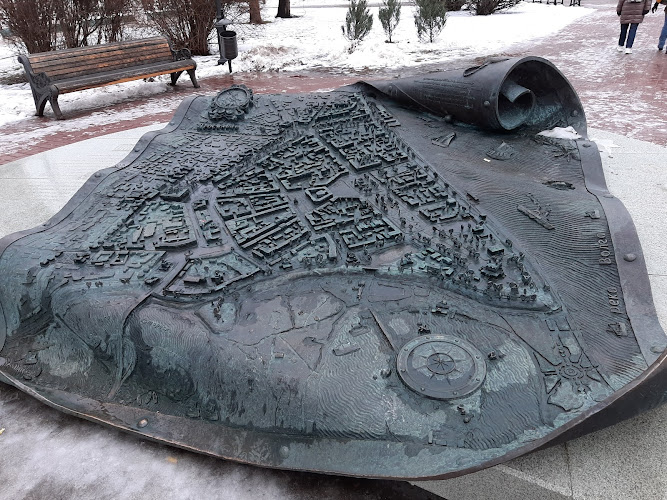
Bronzovaya Karta Yaroslavlya
Ulitsa Sverdlova, 53
"Zamochnoye Derevo"
Find Accommodations Nearby
Recommended Tours & Activities
Visitor Reviews
There are no reviews yet. Be the first one to write one.
Share Your Experience
Have you visited Ulitsa Nakhimsona, 1a? Help other travelers by leaving a review.