
Last modified August 27, 2026
For over a decade, Munich has been hiding an extraordinary time machine in plain sight at Oktoberfest. While millions crowd into massive beer tents blasting modern party hits, a select group of locals and informed visitors slip through a separate entrance into Oide Wiesn – literally “Old Oktoberfest” in Bavarian dialect – where the festival exists as it did over a century ago. This 3.5-hectare historical wonderland offers something increasingly rare at modern Oktoberfest: authentic Bavarian culture served alongside traditional beer in ceramic steins, historic carnival rides from the 1920s, and the kind of gemütlichkeit (cozy conviviality) that made the original celebration famous.
What started as a one-time tribute for Oktoberfest’s 200th anniversary in 2010 proved so beloved that Munich made it permanent. Today, paying the modest €4 entrance fee feels like purchasing a ticket to 19th-century Bavaria, complete with operating carnival attractions from 1919, traditional Schuhplattler dancers slapping their thighs in rhythm, and Augustiner beer flowing from wooden barrels into stone mugs just as it did when Crown Prince Ludwig married Princess Therese in 1810.
The origins of stepping back in time

The story of Oide Wiesn begins with Munich’s ambitious celebration of Oktoberfest’s bicentennial. Originally called “Historische Wiesn” (Historic Oktoberfest), the special area opened on September 17, 2010, one day before the regular festival, featuring historical fairground culture, horse races reminiscent of the original 1810 celebration, and beer brewed to early 19th-century recipes. The city expected 300,000 visitors; instead, 500,000 people flocked to experience this authentic recreation of Bavaria’s past.
The overwhelming success prompted immediate action from Munich’s administration. Dieter Reiter, then Economic Affairs Referent and later mayor, received countless citizen letters requesting the historical area become permanent. By 2011, the city council officially established “Oide Wiesn” as an annual fixture, recognizing its cultural preservation value and appeal to families seeking alternatives to the increasingly commercialized main festival. The initiative represents a collaboration between Munich’s government, the Historical Society of Bavarian Showmen, traditional costume associations, and all six Munich breweries, each contributing to maintain authenticity while ensuring economic viability.
The concept aimed to address growing concerns about Oktoberfest’s evolution into what Munich resident and travel blogger Sooz describes as “drunk hot mess party tourism.” By creating a separate, ticketed area focused on cultural heritage rather than mass consumption, Munich found a way to preserve its traditions while still accommodating the millions who visit for the party atmosphere. The €4 entrance fee, initially controversial, now serves multiple purposes: subsidizing the historic rides to keep them affordable at just €1.50 each, managing crowd sizes to maintain the intimate atmosphere, and ensuring visitors are genuinely interested in cultural experiences rather than just cheap thrills.
A landscape frozen in Bavarian history
Navigating to Oide Wiesn requires first entering the main Oktoberfest grounds through security, then walking past the Paulaner and Löwenbräu tents toward the southern end of Theresienwiese. Behind the giant Ferris wheel, a separate fenced entrance marks the boundary between modern festival chaos and historical tranquility. The contrast becomes immediately apparent: instead of pounding bass and shouting crowds, visitors hear the melodic strains of traditional brass bands and the mechanical music of century-old organs.
The crown jewel of Oide Wiesn’s historical attractions is the Kettenflieger Kalb, a chain carousel dating from 1919 that represents one of the oldest continuously operating rides at any Oktoberfest. Nearby, the Fahrt ins Paradies (“Journey to Paradise”) offers a glimpse into 1939 engineering – this wooden carousel with 16 cars spent 60 years in storage before the Schleifer family discovered and meticulously restored it in 2003. The ride reaches nearly 40 kilometers per hour over four hills, though safety regulations required reducing its original, more thrilling speed.
The Museum Tent serves as both cultural anchor and educational center. Run by the Historical Society of Bavarian Showmen, it houses artifacts normally displayed in Munich’s City Museum, including every official Oktoberfest poster from 1952 to 2018. Visitors can explore a 1950s trailer that served as Oktoberfest’s press office until 2003, examine an ice cream stand from 1937 called “Wiener Eispalast,” and watch live demonstrations of traditional crafts. The museum’s 2025 special exhibition, “Every Picture a Hit! Photography at the Fairground,” features historical fairground photography equipment and commissioned artwork by Swiss artist Romain Mader.
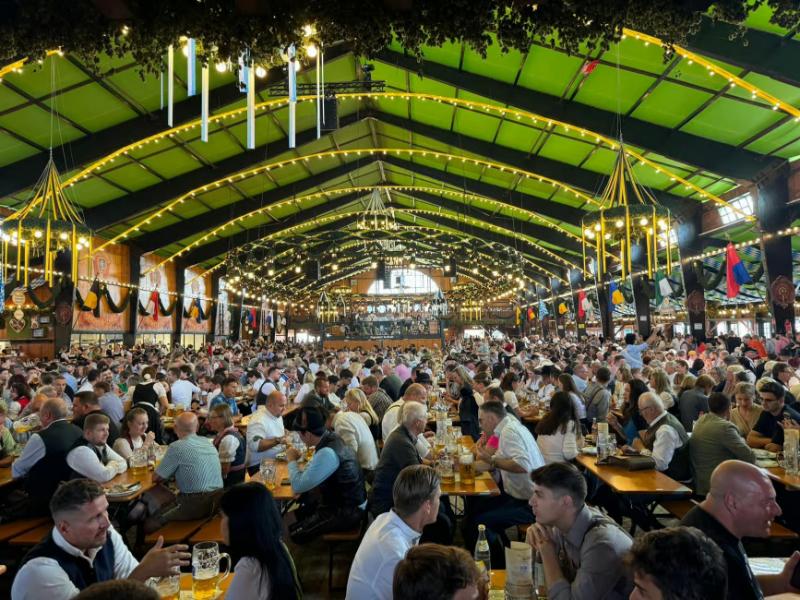
Three traditional beer tents anchor the culinary experience. Festzelt Tradition, the largest with 8,000 total seats, features daily performances by traditional costume societies and serves Augustiner Wiesn-Edelstoff from wooden barrels. The tent’s raised central dance floor becomes a stage for visitor participation in folk dances, while the Limogarten offers unlimited lemonade refills for children at just €1. Schützenlisl Volkssängerzelt celebrates legendary Bavarian folk singers, encouraging sing-alongs while serving 90% organic Bavarian products. The newest addition, Boandlkramerei (opened 2024), recreates an old tavern atmosphere with elevated boxes for better stage views and focuses on emerging folk artists alongside established names.
Where tradition trumps modern party culture
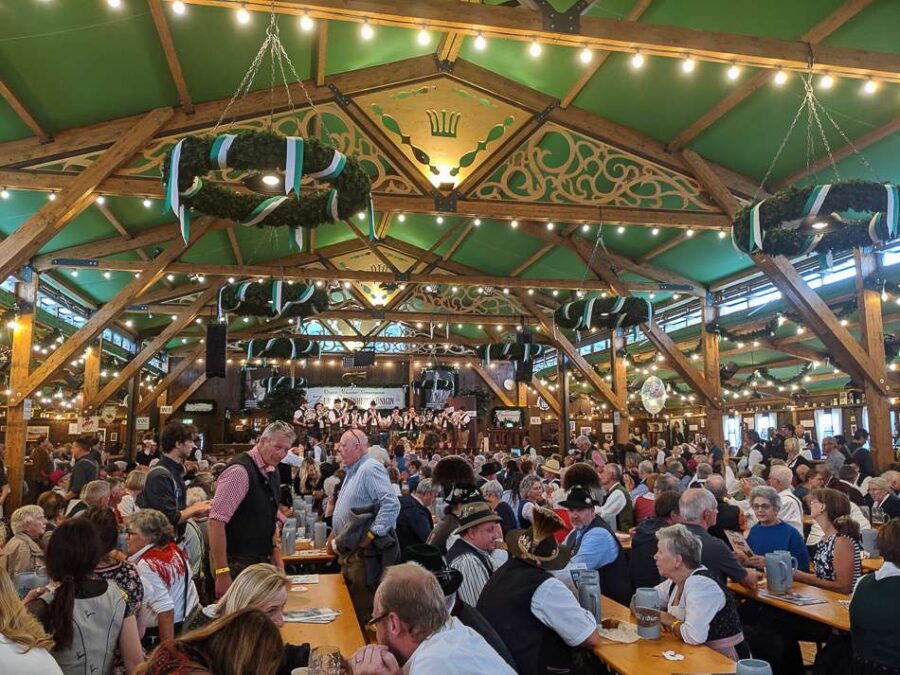
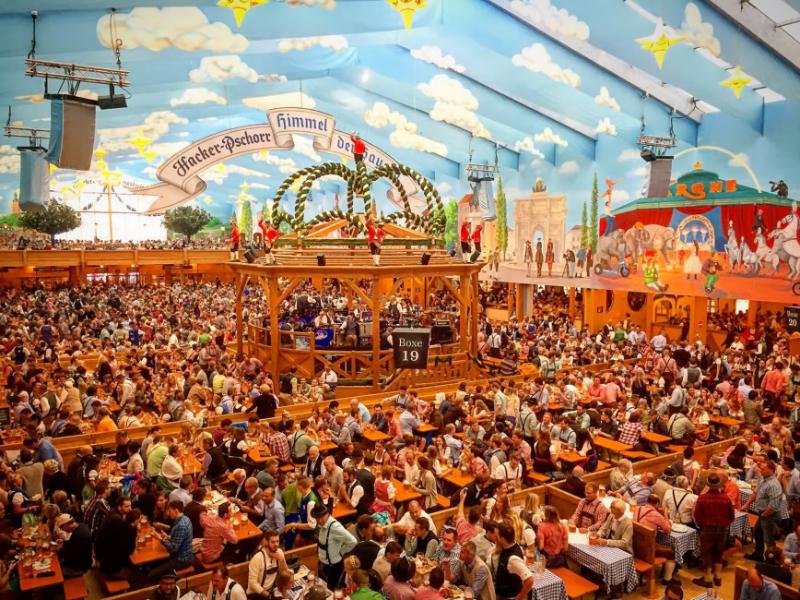
The differences between Oide Wiesn and the main Oktoberfest extend far beyond historical decorations. While regular tents blast contemporary hits after 6 PM and encourage table-dancing revelry, Oide Wiesn maintains traditional brass music exclusively from opening until the 10:30 PM bar closure. The crowd demographics shift dramatically too – travel forums consistently report “90% local crowd” at Oide Wiesn versus the international party tourism dominating main tents.
Traditional Bavarian culture permeates every aspect. Daily at 1 PM, members of various Trachtenvereine (traditional costume clubs) begin performances that include Schuhplattler dancing, where men slap their thighs and shoes in complex rhythms, and Goaßlschnalzer (whip cracking) demonstrations. The Förderverein für Bairische Sprache und Dialecte offers weekly Bavarian dialect lessons, preserving linguistic traditions alongside cultural ones. Even the beer service maintains historical accuracy: dark Märzen brewed to early 19th-century recipes flows from wooden barrels into ceramic Keferloher steins, creating what one visitor described as beer that “tastes better and music that sounds sweeter” than anywhere else at Oktoberfest.
The authenticity extends to pricing structures that prioritize cultural appreciation over profit maximization. All historic rides cost just €1.50, compared to €8-15 in the main festival area. The Museum Tent offers free admission and children’s programs. Festzelt Tradition requires no minimum consumption for reservations, unusual for Oktoberfest tents. These policies reflect Munich’s commitment to making cultural heritage accessible to families and locals, not just wealthy tourists.
Food offerings emphasize regional traditions and sustainability. Schützenlisl sources 90% of its ingredients from Bavarian organic farms and holds the Munich Ökoprofit certification for its environmental practices. Traditional dishes like Steckerlfisch (grilled fish on a stick), prepared over open fires using historical methods, appear alongside modern accommodations like extensive vegetarian options. The emphasis on quality over quantity means slightly higher beer prices – €14.60 to €15.35 per Maß in 2026 – but visitors consistently report the experience justifies the cost.
Carnival rides that survived a century
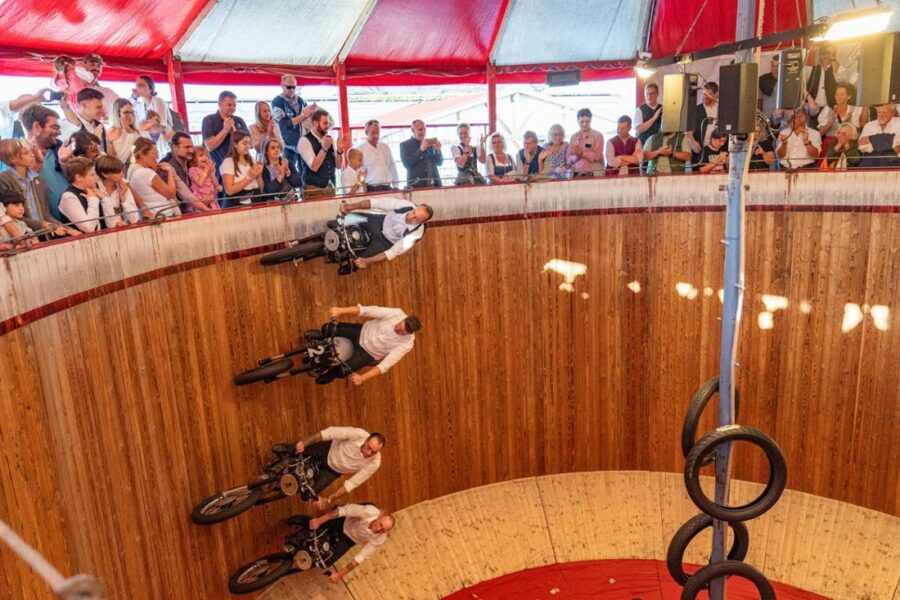
The historic rides at Oide Wiesn tell stories of German engineering and showmanship spanning over 100 years. The Original Motodrom, commissioned by Munich showman Josef Ruprecht in 1928, remains the world’s oldest traveling steep wall for motorcycle stunts. Featured in the 1953 film “The Death Arena,” current operators Thomas Ottl and Donald Ganslmeier continue the daredevil tradition with multiple daily shows on the vertical walls.
The Schiffschaukel (boat swing) from 1925 requires physical effort from riders to build momentum, traditionally allowing men to demonstrate strength and coordination for their companions. Despite continuous use for nearly a century, careful restoration maintains its original glittering appearance. The Raupenbahn, operating since 1926 under the Buchholz family for over 60 years, features 24 carriages and a convertible roof that creates darkness during the ride – a special effect that seemed magical to riders decades before modern theme parks.
New for 2026, the Geisterhöhle (Ghost Cave) brings Oide Wiesn its first ghost train, a classic 1965 model with elaborately designed scenery promising family-friendly scares. The Holzpfosten-Scooter, added in 2024, claims distinction as probably Germany’s only remaining historic wooden post bumper cars from the 1960s-70s, operated by the Richard Müller family whose fairground tradition dates to the 16th century.
Beyond rides, traditional games test skills unchanged since the early 1900s. Dicke Berta (“Fat Berta”) challenges visitors to prove their strength with a carnival hammer game, while a shooting gallery continuously operating since 1905 offers marksmanship tests with period-appropriate prizes. The historic Kegelbahn (German bowling alley) combines sport with socializing, featuring an attached Weißbier bar where players celebrate strikes and commiserate over splits.
Practical wisdom for time travelers
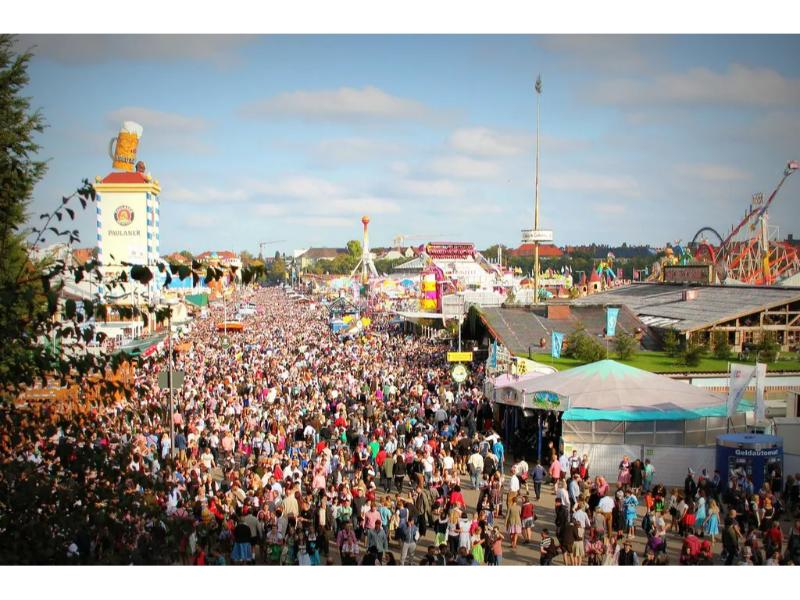
Visiting Oide Wiesn requires strategic planning to maximize the historical immersion. Munich locals and frequent visitors unanimously recommend arriving at the 10 AM opening on weekdays for the most authentic experience. Helen, writing on the German family blog Miles and Kids, documented her family’s early morning strategy: starting at Café Kaiserschmarrn at 9 AM before entering Oide Wiesn at opening, they enjoyed “eine sehr nette und angenehme Atmosphäre” (a very nice and pleasant atmosphere) until crowds arrived around 11:30 AM.
The entrance fee structure reflects thoughtful crowd management: €4 for visitors 15 and older, free for children under 15, and complimentary entry after 9 PM through exits only. This late-evening free entry offers budget-conscious visitors a taste of the atmosphere, though with just 90 minutes before the 10:30 PM bar service ends, it provides limited time for full cultural immersion. Online tickets through München Ticket avoid entrance queues, particularly valuable on busy weekend afternoons.
Budget expectations should account for the premium experience: plan approximately €100 per adult for a full day including entrance, several beers, traditional food, and rides. Cash remains king – while some food stalls accept cards, beer tents operate on a cash-only basis. ATMs near tent entrances charge premium fees, so arriving with sufficient euros proves wise. Tipping customs follow standard German practice: round up beer prices by €1-2 and add 5-10% for food service.
Family amenities surpass anything available in the main festival. The Museum Tent’s children’s program runs 11 AM to 3 PM on weekdays with free face painting, balloon artists, and educational activities leading to a “Wiesn diploma.” Stroller parking at multiple locations, dedicated children’s toilets with changing facilities, and the Festzelt Tradition’s unlimited lemonade fountain for €1 create an environment where parents can relax while children explore safely. German family bloggers consistently praise these features, with reader Evelyn commenting that €1 rides are “fast geschenkt” (practically a gift) in today’s economy.
Timing visits requires balancing crowds with cultural programming. Traditional performances begin around noon, making early afternoon ideal for experiencing folk dancing and music. However, this coincides with increasing crowds. Visitors seeking space should target Tuesday through Thursday mornings or utilize the strategic late arrival after 9 PM for free entry. The area can close entirely when reaching capacity on busy Saturdays, making Oide Wiesn an excellent backup when main tents overflow with revelers.
Voices from the past and present
Personal experiences shared across travel blogs and forums paint a consistent picture of Oide Wiesn as Oktoberfest’s cultural soul. Sooz from Curiosity Saves Travel, a Munich resident for seven years, captures the common sentiment: “There is something magical about the Oide Wiesn; the beer tastes better, and the music sounds a bit sweeter.” She describes it as perfect for “someone who appreciates big global events for their cultural significance but struggles with crowds and messy drunk people.”
The authentic atmosphere attracts even introverted travelers typically overwhelmed by festival crowds. Multiple bloggers describe successfully participating in traditional dancing despite initial shyness, with one noting: “I’m a terrible dancer, but I love getting up on the stage at Festzelt Tradition and giving my Dirndl a whirl. It is very relaxed and beginner-friendly.” This welcoming environment extends to children, with German parents reporting their kids could ride attractions “so oft fahren wie er wollte” (as often as they wanted) without breaking the family budget.
Local Munich residents express particular affection for Oide Wiesn as a preservation of their heritage. Forum discussions reveal locals choosing it over main tents specifically because it maintains the gemütlichkeit lost elsewhere to commercialization. The predominance of Bavarian dialect, traditional costume societies, and familiar faces creates what many describe as “the Oktoberfest our grandparents knew.”
Criticisms remain remarkably rare across years of forum posts and reviews. Occasional complaints focus on crowd management after 11:30 AM when “übereifrige Eltern” (overzealous parents) compete for carousel spots, or disappointment with beer prices not matching the historical theme. One Toytown Germany user found entertainment “half-hearted” on a quiet night, though this appears anomalous among overwhelmingly positive experiences. The only significant limitation comes from operational scheduling – Oide Wiesn closes every fourth year for Munich’s agricultural festival, though exceptions like 2024 demonstrate flexibility in preserving this cultural treasure.
The future of preserving the past
Recent developments suggest Oide Wiesn continues evolving while maintaining historical integrity. The 2024 addition of Boandlkramerei tent expanded capacity and musical offerings, while 2026’s introduction of the Geisterhöhle ghost train adds a classic attraction missing from previous years. Two new drinking water fountains installed for 2026 address practical needs without compromising historical atmosphere. The Museum Tent’s rotating special exhibitions ensure returning visitors discover new cultural insights annually.
These careful improvements reflect Munich’s successful balance between preservation and progress. By maintaining strict authentic standards – traditional music only, historical ride operations, cultural programming requirements – while adapting to modern needs like accessibility and family amenities, Oide Wiesn demonstrates how cities can honor heritage without creating static museums. The economic model, combining entrance fees with subsidized attractions and premium beer prices, ensures financial sustainability without excessive commercialization.
Why Oide Wiesn matters
In an era when global festivals increasingly homogenize toward mass-market appeal, Oide Wiesn stands as a testament to the value of cultural authenticity. Its success – consistently attracting over 500,000 visitors annually – proves appetite exists for experiences prioritizing heritage over hedonism. For families, it offers rare intergenerational bonding over traditional activities. For cultural enthusiasts, it provides immersive education about Bavarian customs. For Munich locals, it preserves the Oktoberfest they remember from childhood. And for international visitors seeking genuine German culture beyond stereotypes, it delivers an experience that, as countless reviewers note, feels like “stepping back in time.”
The €4 entrance fee represents perhaps the best cultural value at any European festival. Where else can visitors ride century-old carousels, learn traditional dances from costume societies, drink beer from wooden barrels served in ceramic steins, and explore museum-quality exhibits about fairground history, all while surrounded by locals genuinely celebrating their heritage rather than performing for tourist cameras? Oide Wiesn reminds us that sometimes the best innovation involves thoughtful preservation, and that progress doesn’t always mean abandoning the past – sometimes it means carrying the best parts forward for future generations to discover and cherish.