
Museo Colonial Charcas U. S. F. X.
About Museo Colonial Charcas U. S. F. X.
Description
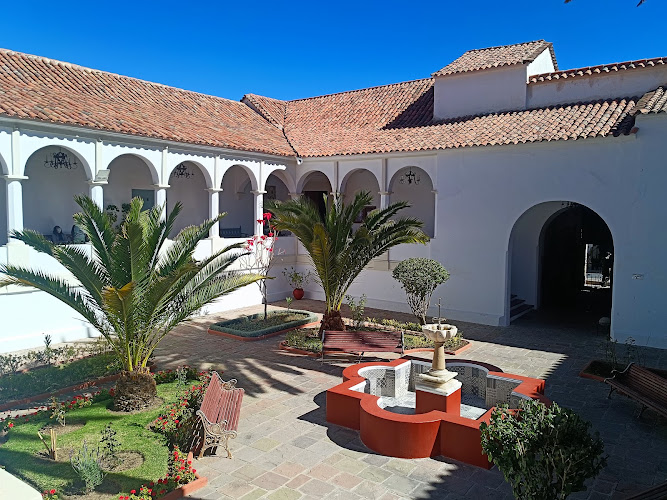
The Museo Colonial Charcas U.S.F.X. is one of those places that somehow manages to feel both grand and quietly intimate at the same time. Housed in a 17th-century palace, this museum holds the soul of Sucre in its thick adobe walls and creaky wooden floors. You can almost hear the whispers of history echoing through its courtyards—stories of colonial aristocrats, religious devotion, and artistic ambition. It’s not a massive museum, but it’s layered with meaning. Every room seems to have a mood of its own: one filled with portraits of saints painted in rich oils, another lined with carved wooden furniture that looks like it’s been waiting centuries for visitors to appreciate its craftsmanship.
What struck me most when I first visited was the sense of preservation. The museum doesn’t try to modernize its displays too much, and that’s part of its charm. The lighting is soft, and the air feels slightly cool, carrying that faint scent of old wood and waxed floors. It’s the kind of place where you slow down without realizing it. You start noticing details—the brushstrokes on a colonial painting, the intricate silverwork on a chalice, the way sunlight filters through the courtyard arches. It’s not just about art here; it’s about atmosphere, about stepping into another era and letting it wash over you.
While some visitors might find the collection modest compared to large international museums, the Museo Colonial Charcas offers something far more personal: a glimpse into the artistic and cultural heartbeat of colonial Bolivia. It’s a museum that rewards curiosity. If you take your time, you’ll find yourself connecting the dots between faith, politics, and artistry in ways that feel surprisingly modern. And the guided tours—usually led by passionate university students—add a layer of storytelling that brings the exhibits to life.
Key Features
- Located within a beautifully preserved 17th-century colonial palace, offering authentic period architecture.
- Extensive collection of colonial-era paintings, sculptures, and religious artifacts from Bolivia’s early history.
- Guided tours available, often led by knowledgeable local historians or university guides who share fascinating anecdotes.
- Original furniture and decorative arts that showcase the lifestyle of colonial elites.
- Quiet courtyards and shaded corridors perfect for reflection and photography.
- Restrooms available on-site, though accessibility features are somewhat limited.
- Family-friendly environment suitable for children interested in art and history.
And if you’re someone who loves a good story behind an artifact, this museum won’t disappoint. I remember one guide pointing out a small, almost hidden painting of a saint holding a quill. Turns out, it was painted by an anonymous indigenous artist, subtly blending Andean symbolism into a European religious scene. Those little discoveries make the visit feel like a treasure hunt.
Best Time to Visit
Sucre enjoys a mild climate year-round, but if you want to make the most of your museum visit, the dry season—from May to October—is ideal. The skies are clear, the light is perfect for photos, and the city itself feels alive with travelers exploring its colonial streets. I’d suggest going in the late morning or early afternoon when the natural light fills the museum’s courtyards. It adds a warmth to the experience that artificial lighting just can’t replicate.
Avoid late afternoons if possible, as the museum tends to get quieter and some rooms might feel a bit dim. And if you happen to be in Sucre during one of its cultural festivals, that’s a bonus. The museum sometimes hosts small temporary exhibits or special guided tours that tie into the city’s celebrations. It’s a great way to see how history still breathes in modern Sucre.
How to Get There
Reaching the Museo Colonial Charcas is fairly straightforward. It’s located in the historic center of Sucre, within walking distance of many other attractions, including the main plaza and the Metropolitan Cathedral. If you’re staying nearby, you can easily stroll through the cobblestone streets—just wear comfortable shoes because those stones have a way of testing your balance.
For those coming from farther out, taxis are inexpensive and readily available. Sucre’s drivers are usually friendly and know the area well, though it’s always wise to have the museum’s name written down since pronunciation can vary. Public transportation is an option too, but honestly, walking through Sucre’s charming streets is half the fun. You’ll pass by whitewashed buildings, small cafes, and maybe even a local market or two on your way.
Parking is limited, so if you’re driving, plan ahead. There’s no dedicated parking lot for the museum, and nearby street parking can be tight, especially during weekends. Personally, I’d skip the car altogether—it’s much easier (and more enjoyable) to explore on foot.
Tips for Visiting
Before you go, it’s worth knowing a few things that can make your visit smoother and more enjoyable. First, bring some cash for the entrance fee. It’s usually modest, but card payments aren’t always accepted. Guided tours often start at specific times, so ask at the front desk when you arrive. Trust me, the stories you’ll hear from the guides add so much depth to what you’re seeing.
The museum isn’t fully wheelchair accessible, which is unfortunate given its historical architecture. While the restrooms are accessible, the entrance and some interior areas involve steps. If mobility is a concern, it’s best to check ahead or go with someone who can assist. On the bright side, the staff are generally kind and willing to help however they can.
Photography is allowed in most areas, but flash is typically prohibited to protect the artwork. Bring a camera or smartphone with a good low-light setting because some rooms can be a bit dim. And if you’re a parent, you’ll be glad to know the museum is quite kid-friendly. Children often enjoy spotting the unusual details in the paintings or counting the carved angels in the altarpieces.
Here’s a small personal tip: take a few minutes to sit in the inner courtyard before you leave. The light there is beautiful in the afternoon, and it’s a quiet spot to reflect on everything you’ve just seen. I remember sitting there once, listening to the faint sound of church bells in the distance, thinking about how much history these walls have witnessed. It’s one of those moments that stays with you long after you’ve left.
Also, don’t rush your visit. Even though the museum isn’t huge, the details are what make it special. Take your time reading the captions, looking closely at the brushwork, and imagining what life must have been like during the colonial era. If you’re lucky, you might catch a temporary exhibition or a student art display—these small additions often highlight the connection between Bolivia’s colonial past and its vibrant contemporary culture.
Lastly, consider pairing your visit with a walk around Sucre’s historic core. The museum is surrounded by some of the city’s most photogenic streets. Grab a coffee afterward at a nearby café and let the experience sink in. There’s something about Sucre that blends history and everyday life so effortlessly—it’s in the laughter of students, the echo of footsteps on old stone, and the quiet pride of places like the Museo Colonial Charcas U.S.F.X.
If you love art, history, or simply enjoy places that tell stories through their walls, this museum is worth every minute. It’s not flashy or overwhelming—it’s genuine. And that’s what makes it one of Sucre’s most memorable stops for travelers who appreciate authenticity over spectacle.
Key Features
- Located within a beautifully preserved 17th-century colonial palace, offering authentic period architecture.
- Extensive collection of colonial-era paintings, sculptures, and religious artifacts from Bolivia’s early history.
- Guided tours available, often led by knowledgeable local historians or university guides who share fascinating anecdotes.
- Original furniture and decorative arts that showcase the lifestyle of colonial elites.
- Quiet courtyards and shaded corridors perfect for reflection and photography.
- Restrooms available on-site, though accessibility features are somewhat limited.
- Family-friendly environment suitable for children interested in art and history.
More Details
Updated October 8, 2025
Table of Contents
- Description
- Key Features
- Best Time to Visit
- How to Get There
- Tips for Visiting
- Key Highlights
- Location
- Places to Stay Near Museo Colonial Charcas U. S. F. X.
- Find and Book a Tour
- Explore More Travel Guides
- Nearby Places You Might Like
- Traveler Reviews for Museo Colonial Charcas U. S. F. X.
- Share Your Experience
Description
The Museo Colonial Charcas U.S.F.X. is one of those places that somehow manages to feel both grand and quietly intimate at the same time. Housed in a 17th-century palace, this museum holds the soul of Sucre in its thick adobe walls and creaky wooden floors. You can almost hear the whispers of history echoing through its courtyards—stories of colonial aristocrats, religious devotion, and artistic ambition. It’s not a massive museum, but it’s layered with meaning. Every room seems to have a mood of its own: one filled with portraits of saints painted in rich oils, another lined with carved wooden furniture that looks like it’s been waiting centuries for visitors to appreciate its craftsmanship.
What struck me most when I first visited was the sense of preservation. The museum doesn’t try to modernize its displays too much, and that’s part of its charm. The lighting is soft, and the air feels slightly cool, carrying that faint scent of old wood and waxed floors. It’s the kind of place where you slow down without realizing it. You start noticing details—the brushstrokes on a colonial painting, the intricate silverwork on a chalice, the way sunlight filters through the courtyard arches. It’s not just about art here; it’s about atmosphere, about stepping into another era and letting it wash over you.
While some visitors might find the collection modest compared to large international museums, the Museo Colonial Charcas offers something far more personal: a glimpse into the artistic and cultural heartbeat of colonial Bolivia. It’s a museum that rewards curiosity. If you take your time, you’ll find yourself connecting the dots between faith, politics, and artistry in ways that feel surprisingly modern. And the guided tours—usually led by passionate university students—add a layer of storytelling that brings the exhibits to life.
Key Features
- Located within a beautifully preserved 17th-century colonial palace, offering authentic period architecture.
- Extensive collection of colonial-era paintings, sculptures, and religious artifacts from Bolivia’s early history.
- Guided tours available, often led by knowledgeable local historians or university guides who share fascinating anecdotes.
- Original furniture and decorative arts that showcase the lifestyle of colonial elites.
- Quiet courtyards and shaded corridors perfect for reflection and photography.
- Restrooms available on-site, though accessibility features are somewhat limited.
- Family-friendly environment suitable for children interested in art and history.
And if you’re someone who loves a good story behind an artifact, this museum won’t disappoint. I remember one guide pointing out a small, almost hidden painting of a saint holding a quill. Turns out, it was painted by an anonymous indigenous artist, subtly blending Andean symbolism into a European religious scene. Those little discoveries make the visit feel like a treasure hunt.
Best Time to Visit
Sucre enjoys a mild climate year-round, but if you want to make the most of your museum visit, the dry season—from May to October—is ideal. The skies are clear, the light is perfect for photos, and the city itself feels alive with travelers exploring its colonial streets. I’d suggest going in the late morning or early afternoon when the natural light fills the museum’s courtyards. It adds a warmth to the experience that artificial lighting just can’t replicate.
Avoid late afternoons if possible, as the museum tends to get quieter and some rooms might feel a bit dim. And if you happen to be in Sucre during one of its cultural festivals, that’s a bonus. The museum sometimes hosts small temporary exhibits or special guided tours that tie into the city’s celebrations. It’s a great way to see how history still breathes in modern Sucre.
How to Get There
Reaching the Museo Colonial Charcas is fairly straightforward. It’s located in the historic center of Sucre, within walking distance of many other attractions, including the main plaza and the Metropolitan Cathedral. If you’re staying nearby, you can easily stroll through the cobblestone streets—just wear comfortable shoes because those stones have a way of testing your balance.
For those coming from farther out, taxis are inexpensive and readily available. Sucre’s drivers are usually friendly and know the area well, though it’s always wise to have the museum’s name written down since pronunciation can vary. Public transportation is an option too, but honestly, walking through Sucre’s charming streets is half the fun. You’ll pass by whitewashed buildings, small cafes, and maybe even a local market or two on your way.
Parking is limited, so if you’re driving, plan ahead. There’s no dedicated parking lot for the museum, and nearby street parking can be tight, especially during weekends. Personally, I’d skip the car altogether—it’s much easier (and more enjoyable) to explore on foot.
Tips for Visiting
Before you go, it’s worth knowing a few things that can make your visit smoother and more enjoyable. First, bring some cash for the entrance fee. It’s usually modest, but card payments aren’t always accepted. Guided tours often start at specific times, so ask at the front desk when you arrive. Trust me, the stories you’ll hear from the guides add so much depth to what you’re seeing.
The museum isn’t fully wheelchair accessible, which is unfortunate given its historical architecture. While the restrooms are accessible, the entrance and some interior areas involve steps. If mobility is a concern, it’s best to check ahead or go with someone who can assist. On the bright side, the staff are generally kind and willing to help however they can.
Photography is allowed in most areas, but flash is typically prohibited to protect the artwork. Bring a camera or smartphone with a good low-light setting because some rooms can be a bit dim. And if you’re a parent, you’ll be glad to know the museum is quite kid-friendly. Children often enjoy spotting the unusual details in the paintings or counting the carved angels in the altarpieces.
Here’s a small personal tip: take a few minutes to sit in the inner courtyard before you leave. The light there is beautiful in the afternoon, and it’s a quiet spot to reflect on everything you’ve just seen. I remember sitting there once, listening to the faint sound of church bells in the distance, thinking about how much history these walls have witnessed. It’s one of those moments that stays with you long after you’ve left.
Also, don’t rush your visit. Even though the museum isn’t huge, the details are what make it special. Take your time reading the captions, looking closely at the brushwork, and imagining what life must have been like during the colonial era. If you’re lucky, you might catch a temporary exhibition or a student art display—these small additions often highlight the connection between Bolivia’s colonial past and its vibrant contemporary culture.
Lastly, consider pairing your visit with a walk around Sucre’s historic core. The museum is surrounded by some of the city’s most photogenic streets. Grab a coffee afterward at a nearby café and let the experience sink in. There’s something about Sucre that blends history and everyday life so effortlessly—it’s in the laughter of students, the echo of footsteps on old stone, and the quiet pride of places like the Museo Colonial Charcas U.S.F.X.
If you love art, history, or simply enjoy places that tell stories through their walls, this museum is worth every minute. It’s not flashy or overwhelming—it’s genuine. And that’s what makes it one of Sucre’s most memorable stops for travelers who appreciate authenticity over spectacle.
Key Highlights
- Located within a beautifully preserved 17th-century colonial palace, offering authentic period architecture.
- Extensive collection of colonial-era paintings, sculptures, and religious artifacts from Bolivia’s early history.
- Guided tours available, often led by knowledgeable local historians or university guides who share fascinating anecdotes.
- Original furniture and decorative arts that showcase the lifestyle of colonial elites.
- Quiet courtyards and shaded corridors perfect for reflection and photography.
- Restrooms available on-site, though accessibility features are somewhat limited.
- Family-friendly environment suitable for children interested in art and history.
Location
Places to Stay Near Museo Colonial Charcas U. S. F. X.
Find and Book a Tour
Explore More Travel Guides
No reviews found! Be the first to review!
Traveler Reviews for Museo Colonial Charcas U. S. F. X.
There are no reviews yet. Be the first one to write one.
Have you visited Museo Colonial Charcas U. S. F. X.? Help other travelers by sharing your review.
You Might Also Like

Origins Cultural Space
Cathedral Metropolitana Basilica of Our Lady of Guadalupe

Church of Saint Philip of Neri
Find Accommodations Nearby
Recommended Tours & Activities
Visitor Reviews
There are no reviews yet. Be the first one to write one.
Share Your Experience
Have you visited Museo Colonial Charcas U. S. F. X.? Help other travelers by leaving a review.