
National Trust – Brean Down Fort
About National Trust – Brean Down Fort
Description
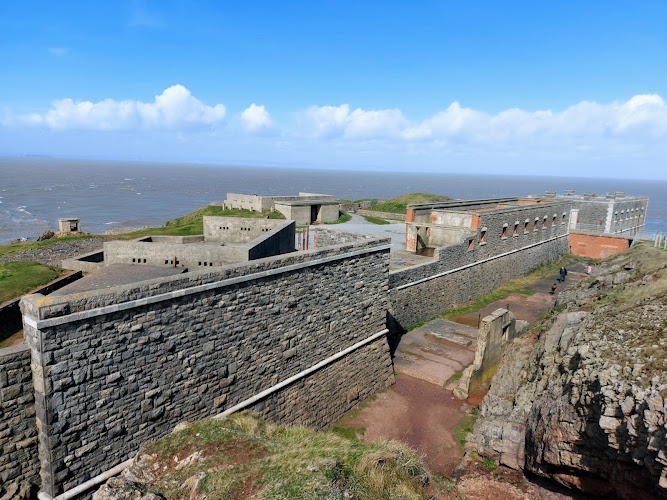
The National Trust's Brean Down Fort is one of those rare British sites that’s been staring at the sea so long it feels like it could blink. Call me sentimental, but when you trudge the (sometimes blustery!) trail out along that famous peninsula—a whopping 318 feet up depending where you stand—you’ll understand. The place has character to spare, and a history that’s as salty as the air off the Bristol Channel. You can’t help but gape a little: here’s a chunk of military engineering that once braced itself against the threat of a Napoleonic invasion. And now? Well, it survives as a dramatic ruin, the sort of spot that makes you want to kick a stone over the edge and wonder how many soldiers peered anxiously into the fog below.
What really gets me is the scale of Brean Down Fort. It’s not some dinky folly—it sprawls, a labyrinth of gun chambers, officer’s quarters, and thick-walled gun emplacements. Wandering around, I lost count of secret nooks and half-collapsed stairways. I’ll admit, half my visit was spent ducking through mysterious passageways and speculating (with enthusiasm, if not total accuracy) about ghosts. Kids love this sort of thing, by the way—there’s real “adventure” energy about the place, but also a few bits where you definitely want to keep little ones within arm’s reach.
And man… those sights! The views from Brean Down are next-level; on a clear day you’ll gobble up panoramas stretching out to the Welsh coastline and over the Somerset Levels. On a moody day, with winds knocking your hat sideways and gulls wheeling overhead, the fort practically hums with stories. It’s got the “Instagrammable ruin” thing going on but in a way that feels authentic, not staged.
Cynics might say it’s “just a ruined old fort,” but I disagree. There’s heaps of atmosphere, with the exposed walls weathered by coastal storms and history etched into every stone. You don’t need to be a military buff to enjoy yourself here, either. I’ve known families—city folks and country types alike—who come for the breezy walk and linger by the cannon for ages, just soaking in that odd, peaceful defiance you get from a place that outlasted its original purpose.
Key Features
- Historic Ruins: Explore the remains of a 19th-century fort built to guard against foreign invasion. There’s something undeniably haunting about the broken gun emplacements and dark, echoing rooms.
- Stunning Coastal Views: Expect jaw-dropping views over the Bristol Channel, Steep Holm and Flat Holm islands, and, if you’re lucky, the glinting outline of Wales in the distance.
- Family-Friendly Adventure: Paths wind up and over the down, offering a manageable (though occasionally steep) route perfect for energetic children itching for exploration.
- Local Flora and Fauna: The peninsula is a mini-nature reserve, home to rare plants, noisy gulls, and the odd kestrel. If you visit in summer, shameless numbers of butterflies flutter around wildflowers at your feet.
- Accessible (Sort of): It’s not wheelchair accessible, let’s be real—and some paths and steps are uneven. But if you’re up for a good walk, your rewards are big.
- Atmospheric History: Learn about the site’s service during WW2 and its somewhat accidental “taste” of dynamite in the early 1900s (the story is real—ask a guide if you spot one!).
- Onsite Services: National Trust runs a seasonal café and facilities, which is basically magic after a windswept hike.
Best Time to Visit
If you ask me, Brean Down Fort is one of those places that takes on a fresh personality every season. Summer pulls in families and dog-walkers, all eager for that sea air (and the ice cream that just seems to taste better by the water). The wildflowers light up the grassy slopes—blue, yellow, bursts of pink—and if you strike lucky with weather, you could laze by the edge for hours. I won’t lie—on busy Saturdays, it gets bustling, but the down is wide enough that you’ll still find some quiet.
But when autumn rolls in, things slow down. The bramble gets heavy with berries, and the entire headland is hit with wild, golden sunset light that’s…well, it’s hard not to get poetic about. My favorite visits have been late afternoons in September, coat zipped up, mist threatening on the channel, and the fort almost empty except for a handful of hardy wanderers. Winter is for the brave: fewer people, more weather. You might get battered by wind and squint into the rain, but honestly, the atmosphere is unforgettable. Spring is a gem too, minus the heat and crowds of midsummer, plus the sudden appearance of skylarks overhead.
My advice? Avoid high tide if you hope to walk the surrounding beaches, and check if the café’s open (if you’re as addicted to hot chocolate as I am). Weekdays outside of school breaks tend to be the quietest. If you prize solitude, try sunrise or golden hour—there’s nothing like watching those salt-stained ramparts glow in first or last light.
How to Get There
Getting to Brean Down Fort is part of the day’s adventure. If you’re steering a car, set course for Brean village—there’s usually good signage from Burnham-on-Sea direction and, honesty, you’ll notice the headland jutting straight out to sea like a pointed finger. Parking is available near the base of the down (though summer weekends can fill up quick). Last time I went, I left my muddy boots in the car and thanked myself—bits of the path can get slippy, especially after rain.
For folks using public transport, your options are a bit limited but doable with planning. The nearest main rail is Weston-super-Mare. From there, you’d grab a bus towards Brean or Burnham-on-Sea and hop off as close as you can to Brean Leisure Park, then finish with a bit of a walk. (I actually met a couple last spring who cycled in from Weston—they were sweaty but all smiles.) Some people make a day out, walking the beach all the way up from Berrow, then climbing the down from the southern end. It’s a proper leg stretch, not recommended with grumpy teenagers unless you’ve bribed them suitably with café treats.
Once you reach the base, get ready for a bit of a climb! The footpath snakes up the side—a few hundred steep steps if you take the “direct” route, but there’s a gentler sloping alternative that curls around the rear if you prefer. It’s worth the puff, trust me!
Tips for Visiting
Let me share a few things you’ll want to know before you lace up your boots and set off for Brean Down Fort—stuff I’ve learned the hard way and the easy way. First, footwear matters: even if it’s sunny at the car park, the downtop can be windswept and slippery. Wear sturdy shoes, with at least a bit of grip. On hot days, sling a water bottle and a snack in your bag—it’s further out than it looks, and kids (or adults, no shame) will flag halfway along that peninsula.
Bring a camera, or at least charge your phone. The fort has a way of catching the light—especially around sunset or when cloud shadows race overhead. Photographers, amateur and obsessive alike, will find something to love every time. (Side note: ambitious birds sometimes dive-bomb your lunch if you picnic beside the ramparts. Be warned!)
Dogs are welcome—on leads around livestock and the fort. Bear in mind there’s little shelter from sun or rain, so be ready for quick weather changes. If you plan a picnic, note there aren’t many benches right by the fort itself, but plenty of grassy spots with million-quid views. And trust me, don’t underestimate the wind; I once lost my sandwich straight over the cliffs, gone to the gods of the Bristol Channel.
Toilets are usually available during National Trust café hours, but if you visit out of season, check in advance—having somewhere to wash sand off or warm up with a cuppa makes a world of difference. Accessibility is, honestly, limited if you’ve got mobility concerns. The fort’s rough, and the steps and paths are steep and exposed. For pushchairs, bring nerves of steel (and maybe a carrier instead—much easier).
One last thing—make time to simply stop and breathe in the salt air. Brean Down is a place that rewards curiosity. Don’t just snap a selfie and rush off; linger, poke around the ruins, play at echoing in the old gun chambers, imagine the soldiers standing watch way back when. Even after all these years, the fort keeps its secrets. That’s what hooked me, the first time I visited—there’s always more to discover, if you give yourself the time.
Key Features
- Key Features
- Best Time to Visit
- How to Get There
- Tips for Visiting
More Details
Updated July 3, 2025
Table of Contents
Description
The National Trust’s Brean Down Fort is one of those rare British sites that’s been staring at the sea so long it feels like it could blink. Call me sentimental, but when you trudge the (sometimes blustery!) trail out along that famous peninsula—a whopping 318 feet up depending where you stand—you’ll understand. The place has character to spare, and a history that’s as salty as the air off the Bristol Channel. You can’t help but gape a little: here’s a chunk of military engineering that once braced itself against the threat of a Napoleonic invasion. And now? Well, it survives as a dramatic ruin, the sort of spot that makes you want to kick a stone over the edge and wonder how many soldiers peered anxiously into the fog below.
What really gets me is the scale of Brean Down Fort. It’s not some dinky folly—it sprawls, a labyrinth of gun chambers, officer’s quarters, and thick-walled gun emplacements. Wandering around, I lost count of secret nooks and half-collapsed stairways. I’ll admit, half my visit was spent ducking through mysterious passageways and speculating (with enthusiasm, if not total accuracy) about ghosts. Kids love this sort of thing, by the way—there’s real “adventure” energy about the place, but also a few bits where you definitely want to keep little ones within arm’s reach.
And man… those sights! The views from Brean Down are next-level; on a clear day you’ll gobble up panoramas stretching out to the Welsh coastline and over the Somerset Levels. On a moody day, with winds knocking your hat sideways and gulls wheeling overhead, the fort practically hums with stories. It’s got the “Instagrammable ruin” thing going on but in a way that feels authentic, not staged.
Cynics might say it’s “just a ruined old fort,” but I disagree. There’s heaps of atmosphere, with the exposed walls weathered by coastal storms and history etched into every stone. You don’t need to be a military buff to enjoy yourself here, either. I’ve known families—city folks and country types alike—who come for the breezy walk and linger by the cannon for ages, just soaking in that odd, peaceful defiance you get from a place that outlasted its original purpose.
Key Features
- Historic Ruins: Explore the remains of a 19th-century fort built to guard against foreign invasion. There’s something undeniably haunting about the broken gun emplacements and dark, echoing rooms.
- Stunning Coastal Views: Expect jaw-dropping views over the Bristol Channel, Steep Holm and Flat Holm islands, and, if you’re lucky, the glinting outline of Wales in the distance.
- Family-Friendly Adventure: Paths wind up and over the down, offering a manageable (though occasionally steep) route perfect for energetic children itching for exploration.
- Local Flora and Fauna: The peninsula is a mini-nature reserve, home to rare plants, noisy gulls, and the odd kestrel. If you visit in summer, shameless numbers of butterflies flutter around wildflowers at your feet.
- Accessible (Sort of): It’s not wheelchair accessible, let’s be real—and some paths and steps are uneven. But if you’re up for a good walk, your rewards are big.
- Atmospheric History: Learn about the site’s service during WW2 and its somewhat accidental “taste” of dynamite in the early 1900s (the story is real—ask a guide if you spot one!).
- Onsite Services: National Trust runs a seasonal café and facilities, which is basically magic after a windswept hike.
Best Time to Visit
If you ask me, Brean Down Fort is one of those places that takes on a fresh personality every season. Summer pulls in families and dog-walkers, all eager for that sea air (and the ice cream that just seems to taste better by the water). The wildflowers light up the grassy slopes—blue, yellow, bursts of pink—and if you strike lucky with weather, you could laze by the edge for hours. I won’t lie—on busy Saturdays, it gets bustling, but the down is wide enough that you’ll still find some quiet.
But when autumn rolls in, things slow down. The bramble gets heavy with berries, and the entire headland is hit with wild, golden sunset light that’s…well, it’s hard not to get poetic about. My favorite visits have been late afternoons in September, coat zipped up, mist threatening on the channel, and the fort almost empty except for a handful of hardy wanderers. Winter is for the brave: fewer people, more weather. You might get battered by wind and squint into the rain, but honestly, the atmosphere is unforgettable. Spring is a gem too, minus the heat and crowds of midsummer, plus the sudden appearance of skylarks overhead.
My advice? Avoid high tide if you hope to walk the surrounding beaches, and check if the café’s open (if you’re as addicted to hot chocolate as I am). Weekdays outside of school breaks tend to be the quietest. If you prize solitude, try sunrise or golden hour—there’s nothing like watching those salt-stained ramparts glow in first or last light.
How to Get There
Getting to Brean Down Fort is part of the day’s adventure. If you’re steering a car, set course for Brean village—there’s usually good signage from Burnham-on-Sea direction and, honesty, you’ll notice the headland jutting straight out to sea like a pointed finger. Parking is available near the base of the down (though summer weekends can fill up quick). Last time I went, I left my muddy boots in the car and thanked myself—bits of the path can get slippy, especially after rain.
For folks using public transport, your options are a bit limited but doable with planning. The nearest main rail is Weston-super-Mare. From there, you’d grab a bus towards Brean or Burnham-on-Sea and hop off as close as you can to Brean Leisure Park, then finish with a bit of a walk. (I actually met a couple last spring who cycled in from Weston—they were sweaty but all smiles.) Some people make a day out, walking the beach all the way up from Berrow, then climbing the down from the southern end. It’s a proper leg stretch, not recommended with grumpy teenagers unless you’ve bribed them suitably with café treats.
Once you reach the base, get ready for a bit of a climb! The footpath snakes up the side—a few hundred steep steps if you take the “direct” route, but there’s a gentler sloping alternative that curls around the rear if you prefer. It’s worth the puff, trust me!
Tips for Visiting
Let me share a few things you’ll want to know before you lace up your boots and set off for Brean Down Fort—stuff I’ve learned the hard way and the easy way. First, footwear matters: even if it’s sunny at the car park, the downtop can be windswept and slippery. Wear sturdy shoes, with at least a bit of grip. On hot days, sling a water bottle and a snack in your bag—it’s further out than it looks, and kids (or adults, no shame) will flag halfway along that peninsula.
Bring a camera, or at least charge your phone. The fort has a way of catching the light—especially around sunset or when cloud shadows race overhead. Photographers, amateur and obsessive alike, will find something to love every time. (Side note: ambitious birds sometimes dive-bomb your lunch if you picnic beside the ramparts. Be warned!)
Dogs are welcome—on leads around livestock and the fort. Bear in mind there’s little shelter from sun or rain, so be ready for quick weather changes. If you plan a picnic, note there aren’t many benches right by the fort itself, but plenty of grassy spots with million-quid views. And trust me, don’t underestimate the wind; I once lost my sandwich straight over the cliffs, gone to the gods of the Bristol Channel.
Toilets are usually available during National Trust café hours, but if you visit out of season, check in advance—having somewhere to wash sand off or warm up with a cuppa makes a world of difference. Accessibility is, honestly, limited if you’ve got mobility concerns. The fort’s rough, and the steps and paths are steep and exposed. For pushchairs, bring nerves of steel (and maybe a carrier instead—much easier).
One last thing—make time to simply stop and breathe in the salt air. Brean Down is a place that rewards curiosity. Don’t just snap a selfie and rush off; linger, poke around the ruins, play at echoing in the old gun chambers, imagine the soldiers standing watch way back when. Even after all these years, the fort keeps its secrets. That’s what hooked me, the first time I visited—there’s always more to discover, if you give yourself the time.
Key Highlights
- Key Features
- Best Time to Visit
- How to Get There
- Tips for Visiting
Location
Places to Stay Near National Trust - Brean Down Fort
Find and Book a Tour
Explore More Travel Guides
No reviews found! Be the first to review!
Traveler Reviews for National Trust – Brean Down Fort
There are no reviews yet. Be the first one to write one.
Have you visited National Trust – Brean Down Fort? Help other travelers by sharing your review.
You Might Also Like
Find Accommodations Nearby
Recommended Tours & Activities
Visitor Reviews
There are no reviews yet. Be the first one to write one.
Share Your Experience
Have you visited National Trust – Brean Down Fort? Help other travelers by leaving a review.