
Ciolanu Monastery
About Ciolanu Monastery
Key Features
More Details
Updated June 11, 2025
CIOLANU MONASTERY: Tutto quello che c’è da sapere (2025)
## Ciolanu Monastery (Mănăstirea Ciolanu): what it is, why it matters, and how to visit responsibly
Ciolanu Monastery is an Eastern Orthodox monastery of monks in Tisău commune, Buzău County, Romania, sitting along the DJ203G road near Haleș. If you like sites where spiritual life, art, and landscape overlap—without the “ticket-booth vibe” of big-name attractions—Ciolanu is one of the strongest stops in this part of the Subcarpathians.
### Quick facts (from the details you provided + reliable references)
– Location: DJ203G, Haleș 127613, Romania (Buzău County)
– Coordinates: 45.235446, 26.5468941 (as provided)
– Type: Tourist attraction / monastery complex (Eastern Orthodox)
– Nearby pairing: The Măgura Sculpture Camp is close enough that most visitors sensibly treat it as a combined visit. Romania Journal
## The story behind Ciolanu: a 16th-century foundation with a serious art side
Most monastery visits in Romania give you architecture, icons, and a quiet courtyard. Ciolanu adds a specific historical anchor: it was erected around 1570 by Dumitru Ciolanu (a boyar from Buzău) together with the Sorescu boyar family from nearby Vernești—so the place name is directly tied to its patronage.
Inside the compound, one of the most concrete “don’t-miss” elements is its museum collection, which includes icons painted by Gheorghe Tattarescu, alongside other religious artifacts. If you care about Romanian religious art, that detail alone changes the visit from “pleasant stop” to “plan your time.”
What to look for (practical, non-obvious angle):
– If you’re visiting multiple monasteries, prioritize Ciolanu’s museum component specifically because it is documented as holding Tattarescu icons.
– Pace yourself: the appeal here isn’t one headline feature—it’s the combination of monastic setting + curated art + the nearby open-air sculpture landscape.
## Pair it with Măgura Sculpture Camp: Romania’s open-air “gallery you walk through”
Your prompt mentions, “Nearby, one can also visit Magura sculpture camp”—and that’s not a throwaway. The Măgura Sculpture Camp is widely described as an open-air museum near Ciolanu Monastery, created through sculpture-making sessions held over multiple summers between 1970 and 1986. Romania Journal
A few grounded specifics that help you frame it accurately:
– It’s an outdoor exhibition spread across a large area—one reference describes 21 hectares near the monastery.
– The project is linked to an initiative by sculptor Gheorghe Coman and support from the Union of Plastic Artists from Romania, per the Buzău County Museum’s description.
– Another description emphasizes it as an “exceptional outdoor museum” built between 1970–1986, near Ciolanu Monastery. Romania Journal
### How to visit the monastery + sculpture camp as one coherent half-day
A simple structure that works for most travelers:
1. Start at Ciolanu Monastery while your attention is fresh—museum first if it’s open during your visit (since that’s the “timed” part).
2. Use the monastery setting as context, then transition to Măgura as the “outdoor extension” of the day’s art theme.
3. Finish with a slow loop through the sculpture meadow(s). The experience is fundamentally about walking and looking—treat it like a landscape museum, not a checklist.
## Getting there and what to expect on arrival
From your provided address, the practical reality is that Ciolanu is approached via DJ203G, with the monastery listed at Haleș 127613. Visitors commonly describe it as set in a quiet, green environment, and it’s regularly reviewed as a calm stop.
### Accessibility & respectful visiting (recommendations, not hard “facts”)
Because this is an active Orthodox monastic site (not just a museum object), plan on:
– Dressing in a way that won’t draw attention in a religious setting.
– Keeping voices low and photo-taking conservative unless signage clearly allows it.
(These are general best practices for Orthodox monasteries; rules can vary by site and day.)
## Accuracy + “outdated data” flags (what to verify before publishing)
– I did not find a consistently authoritative, official source in the materials above for opening hours, entrance fees, or current rules. Some pages mention fees/timings, but they are not reliable enough to treat as certain.
– The historical and institutional facts (foundation around 1570; museum icons by Gheorghe Tattarescu; sculpture camp dates 1970–1986; 21ha figure) are supported by reference sources, but visitor logistics can change seasonally or due to religious observances.
## Why Ciolanu is worth it (the real “hook” for travelers who hate filler stops)
Ciolanu is not a “drive-by church photo.” It’s a place where you can connect three threads in one visit:
– A documented 16th-century monastic foundation with identifiable patrons
– A museum element tied to a named Romanian painter (Tattarescu)
– A major open-air sculpture environment next door, created through a long-running cultural project (1970–1986) Romania Journal
If you publish this for RealJourneyTravels.com, that triad is your angle: spiritual heritage + curated icon art + outdoor modern sculpture in one compact area—rare, and very easy for readers to understand.
Table of Contents
Key Highlights
Ciolanu Monastery
Location
Places to Stay Near Ciolanu Monastery"Nearby, one can also visit Magura sculpture camp."
Find and Book a Tour
Explore More Travel Guides
No reviews found! Be the first to review!
Traveler Reviews for Ciolanu Monastery
There are no reviews yet. Be the first one to write one.
Have you visited Ciolanu Monastery? Help other travelers by sharing your review.
You Might Also Like
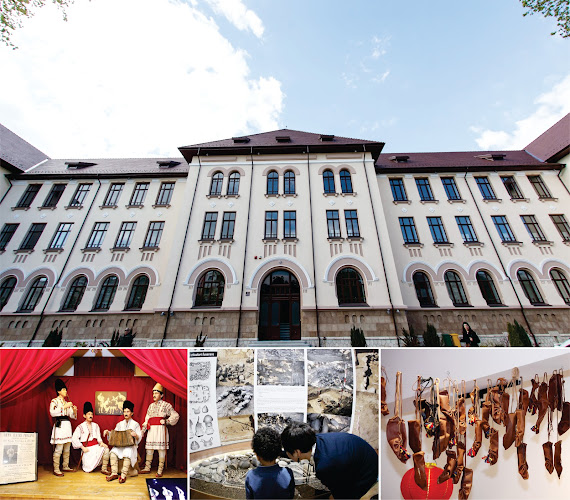
Buzău County's Museum
"Crâng" Park
Holy Angels Church
Find Accommodations Nearby
Recommended Tours & Activities
Visitor Reviews
There are no reviews yet. Be the first one to write one.
Share Your Experience
Have you visited Ciolanu Monastery? Help other travelers by leaving a review.