

Last modified October 17, 2025
Picking between Syros and Tinos? It’s not just about choosing a pretty island—these two are neighbors, but wow, they couldn’t feel more different.
If you want lively culture, striking architecture, and easy transport, Syros wins; if you crave quiet villages, raw landscapes, and spiritual depth, Tinos is the better choice. They’re both in the Cyclades, but the vibe on each is worlds apart.
I’ve spent plenty of days wandering both, and honestly, the contrast still catches me off guard. Syros sweeps you up in Ermoupoli’s neoclassical streets—sometimes, it feels more like you’re in a little European city than on a Greek island.
Then, on Tinos, you’re winding through rugged hills, stumbling into marble villages that look completely untouched. That’s the real challenge: both have their own magic.
Key Takeaways
- Syros brings urban energy, history, and convenience
- Tinos is all about tradition, nature, and spirituality
- Both offer unique food, beaches, and culture
Syros vs Tinos: Quick Comparison
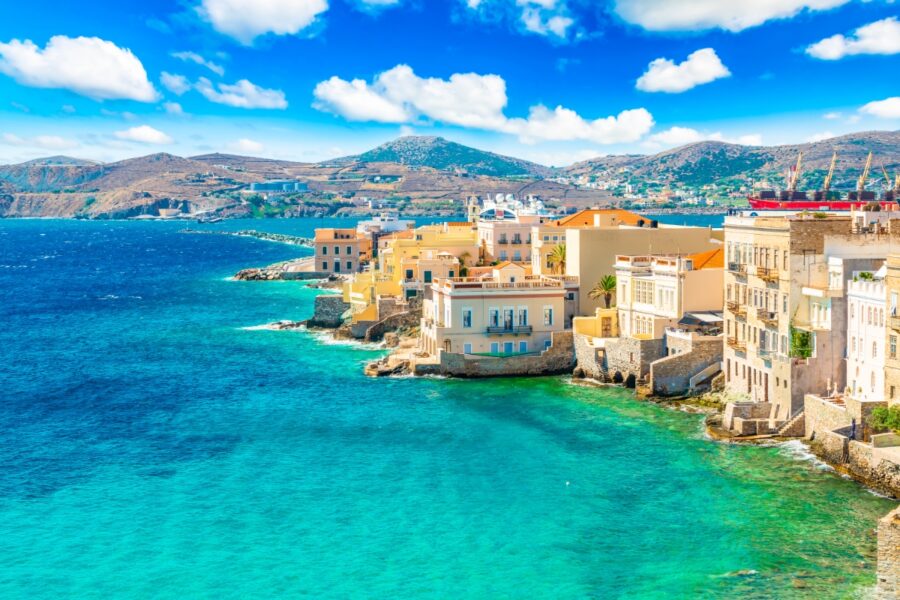
Syros gives off a more urban, cultural buzz. Tinos? It’s rural and spiritual, through and through. They’re close neighbors—just a short ferry apart—but their towns, landscapes, and daily rhythms couldn’t be more different.
Location and Accessibility
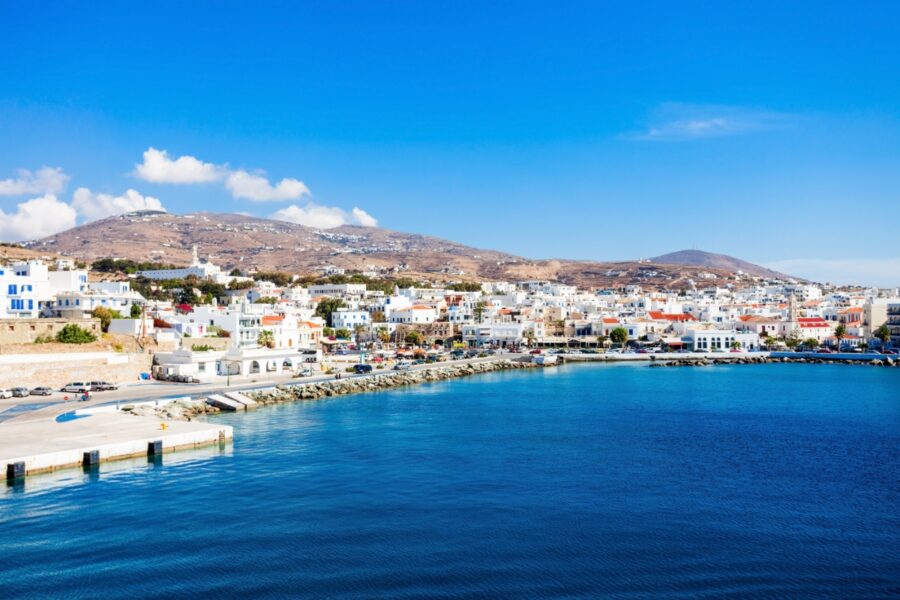
Syros is a breeze to reach. There’s a small airport with flights from Athens and plenty of ferries from Piraeus.
Ermoupoli, the main port, hums with activity and connects you to other Cycladic islands. If you’re thinking about island hopping, Syros is a really practical base.
Tinos skips the airport, so ferries are your only option. The quickest is from Rafina, close to Athens airport, and the ride takes about two hours. Ferries from Syros make it easy to hop between the two if you’re up for it.
This difference in accessibility really shapes the crowd. Syros draws more weekenders from Athens, while Tinos stays quieter—except in August, when Greek pilgrims flock there for the Church of Panagia Evangelistria.
Main Towns and Atmosphere
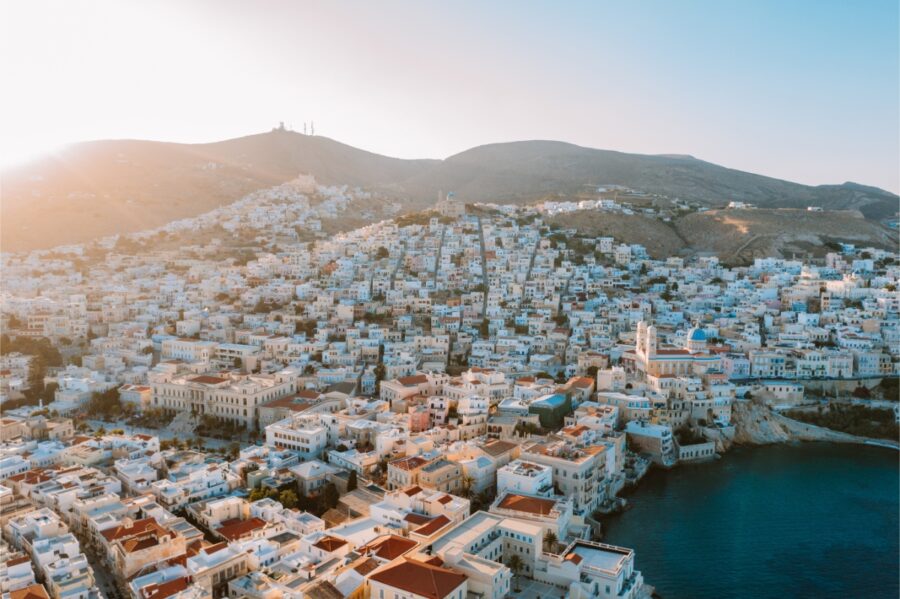
Ermoupoli on Syros stands out from most Cycladic towns. Forget endless white cubes—here, you get neoclassical mansions, pastel facades, and even an opera house.
Walking around, you might forget you’re on a Greek island at all. Cafes, theaters, and shops keep things lively, no matter the season.
Tinos town feels smaller and less polished. Its main claim to fame is the long avenue leading to Panagia Evangelistria church, where pilgrims crawl on their knees to the shrine. But the real soul of Tinos is out in its villages—like Pyrgos, famous for marble workshops, or Volax, which sits among surreal, scattered boulders.
If nightlife and cultural events are your thing, Syros is the obvious pick. But if you love wandering quiet villages, eating at family-run tavernas, and soaking up traditional Cycladic life, Tinos is probably your place.
Best Time to Visit

Syros keeps a steady beat all year since it’s the Cyclades’ administrative capital. Even in winter, Ermoupoli’s cafes and shops stay open. Summer brings festivals—like the Syros International Film Festival—that inject a creative buzz.
Tinos feels more in tune with the seasons. Spring and early summer are perfect for hiking and exploring villages without crowds. August is wild—pilgrims descend for the Feast of the Dormition, and the island transforms. If religious tourism isn’t your thing, maybe skip mid-August.
For beach days, September is a sweet spot on both islands. The Aegean’s still warm, ferries aren’t packed, and the vibe is way more relaxed. Personally, I love late May on Tinos—you can hike all day and barely see another traveler.
Island Character and Local Culture

Syros and Tinos might only be a short ferry apart, but wow, the feel couldn’t be more different. One is all about lively streets and neoclassical buildings; the other lures you into stone-paved villages and quiet countryside.
Syros: Urban Vibe and Local Life

Syros centers around Ermoupoli, the Cyclades’ capital. This isn’t your classic whitewashed town. You’ll spot pastel mansions, marble squares, and a waterfront with cafés that feel more European than island-y.
Head uphill and you’ll reach Ano Syros, the medieval quarter. Its narrow lanes twist past Catholic churches and bougainvillea-draped balconies.
Tiny tavernas fill up with locals playing rebetiko music. I once stumbled into a late-night jam session here—felt like I’d time-traveled.
Syros keeps a strong year-round community. Shops, markets, and cultural spots stay open, so the island never feels empty. It’s cosmopolitan, but still totally Greek at heart.
Tinos: Traditional Villages and Rural Charm

Tinos is bigger, rougher, and honestly, it just feels more “real.” Over 40 villages dot the island, each with its own quirks. Komi is famous for dovecotes and peaceful squares, while Pyrgos is all about marble carving.
Life here moves at a slower pace. You might find yourself sipping coffee in a shaded kafenio, old men playing backgammon nearby. It’s the kind of place where you walk through terraced hills, stumble into a family taverna, and end up eating tomatoes straight from someone’s garden.
Vineyards, olive groves, and craggy paths fill the countryside. I’ve hiked those trails and, more than once, shared bread and cheese with locals who insisted I join them. That warmth is Tinos’ secret ingredient.
Festivals and Local Traditions
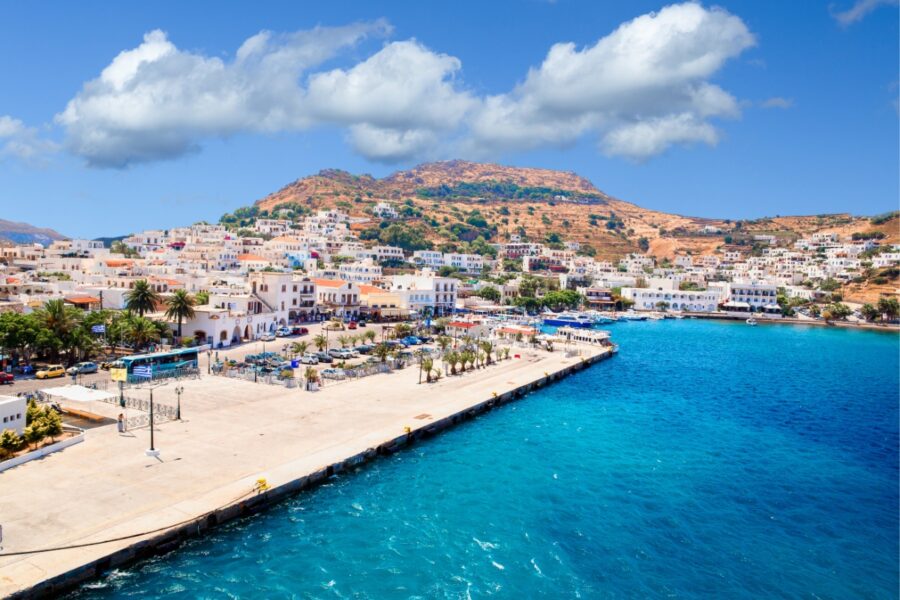
Both islands celebrate culture, but in their own ways. Syros throws concerts, theater, and art shows in Ermoupoli’s grand venues. The Apollo Theater, modeled after La Scala, hosts everything from opera to jazz—a nod to the island’s merchant past.
Tinos is legendary for religious festivals. The Church of Panagia Evangelistria draws pilgrims from all over, especially on August 15th. People crawl from the port to the church—devotion like you’ve never seen.
Village feasts (panigyria) are a big deal too—music, dancing, endless lamb and wine. I once joined a panigyri in a tiny mountain village. The dancing carried on until sunrise, and it felt like being adopted by a family, not just attending an event.
These traditions aren’t just for show—they’re woven into daily life. Whether it’s Syros’ cosmopolitan arts or Tinos’ deep-rooted spirituality, you’ll leave feeling like you’ve glimpsed the real heart of the Cyclades.
See Related: Most Famous Villas in Greece for Exclusive Aegean Hideaways
Architectural Highlights

Syros and Tinos are night and day when it comes to architecture. One dazzles with neoclassical grandeur; the other draws you in with spiritual landmarks and villages that look frozen in time. If you actually look up and linger, the details will blow you away.
Neoclassical Buildings in Syros

Step off the ferry in Ermoupoli and you might do a double-take. This capital doesn’t look like your typical Cycladic town.
Pastel mansions, marble squares, and elegant public buildings line the streets. Venetian and neoclassical touches are everywhere.
The Town Hall, built by Ernst Ziller, dominates Miaouli Square. It’s huge—almost palatial. Just nearby, the Apollo Theater stands as a tiny La Scala, a reminder of the island’s cultural heyday.
Vaporia, the old shipowners’ quarter, is a personal favorite. Grand 19th-century houses perch right above the sea, their balconies almost hanging over the water. You can sit here for ages, just imagining the island’s wealthy past.
Don’t miss Ano Syros either—the medieval quarter above Ermoupoli. Its narrow alleys, Catholic cathedral, and sweeping harbor views tell stories of layered history.
Religious Landmarks in Tinos
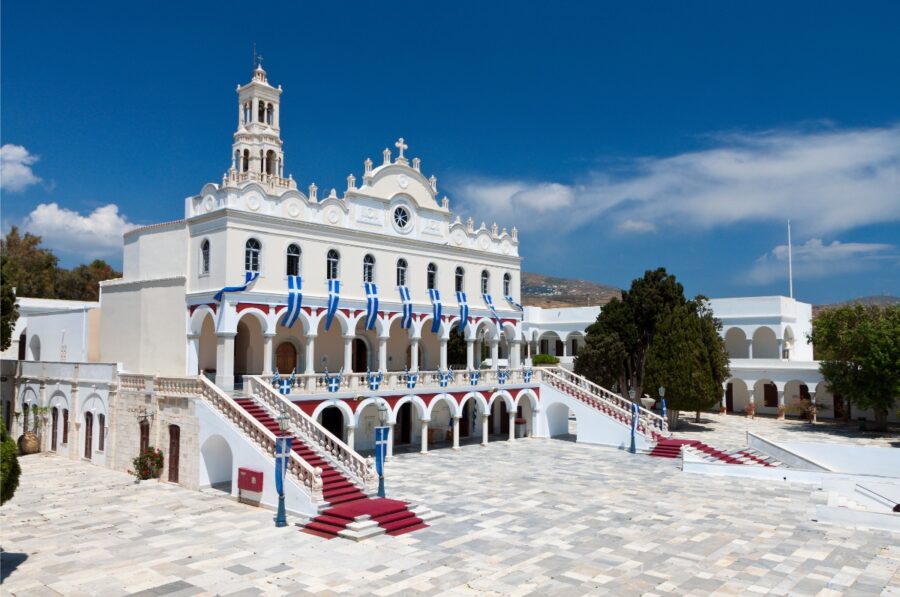
Tinos is often called Greece’s religious heart. You’ll get it when you see the Church of Panagia Evangelistria.
Pilgrims crawl up the carpeted avenue, especially on August 15th. Inside, the icon of the Virgin Mary—the Panagia of Tinos—is said to be miraculous.
Even if you’re not religious, the atmosphere is intense. You’ll see offerings everywhere: jewelry, tiny silver boats, heartfelt tokens. It’s moving in a way that’s hard to explain.
There are hundreds of tiny chapels scattered across the island. Some are tucked into hillsides, others stand in lonely fields. Each one feels personal, almost like a secret.
Once, I wandered into a tiny chapel near Komi. The door was open, candles half-melted, the air still thick with incense.
No tourists, no noise—just peace. Those little moments stick with you.
Unique Villages and Settlements
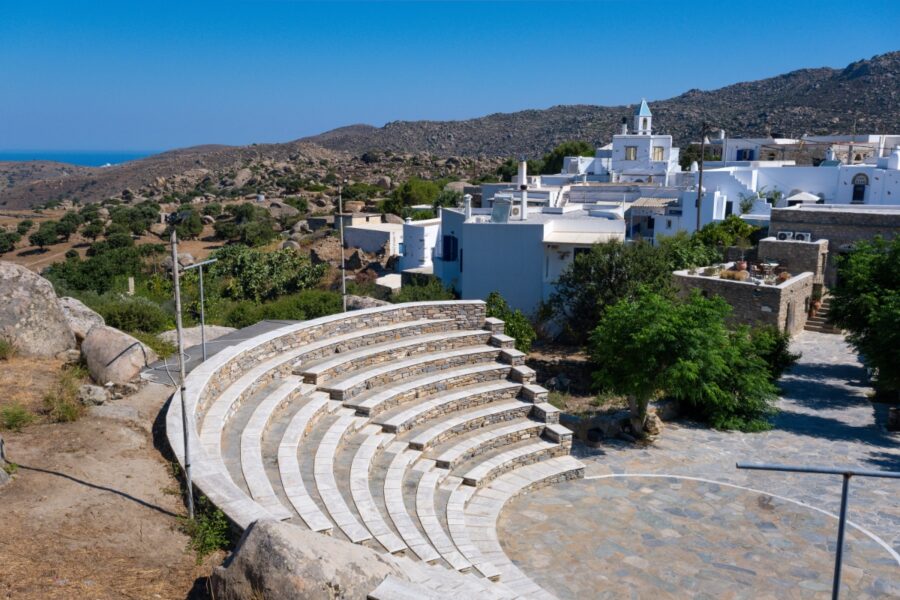
Tinos isn’t just churches. The villages are some of the most fascinating in the Cyclades.
Volax is wild—it sits in a valley full of giant round boulders, almost lunar. The village itself is tiny, with stone houses and basket-weaving workshops.
Komi is surrounded by farmland and dovecotes—fortress-like pigeon houses you’ll only find on Tinos. Walking here feels like stepping into a rural painting, with olive trees and terraced hills.
Every village has its own thing. Pyrgos is marble everywhere—door frames, fountains, you name it.
Kardiani clings to a hillside with killer sea views. Unlike Syros, where everything centers around one big town, Tinos spreads its character across dozens of settlements.
If you love wandering with no plan, Tinos is for you. You might stumble into a shady square with a single café, locals chatting over coffee. That’s the everyday magic that makes this island such a joy to explore.
Beaches and Natural Landscapes

Syros and Tinos both sit in the Aegean, but their landscapes couldn’t be more different. One is about lively seaside spots close to town; the other hides remote coves, rugged hills, and villages tucked into wild corners.
Top Beaches in Syros
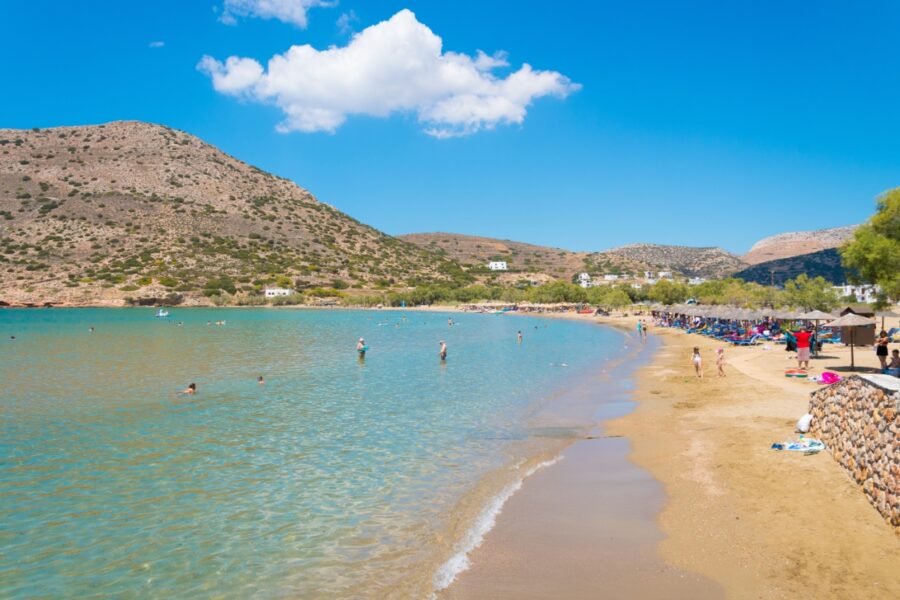
Syros isn’t the place for endless sandy beaches, but it’s got a handful that are easy to reach and charming in their own way. Galissas Beach is the crowd-pleaser—shallow, family-friendly, lined with tavernas. You can easily spend a whole day here.
For something quieter, try Kini Beach on the west coast. It’s more laid-back, with a couple of seafood spots right on the sand. Possidonia, further south, is another good pick, and those neoclassical mansions nearby give it a unique look.
One thing I love: you don’t need a car to hit the beaches. Most are just a short bus ride from Ermoupoli, so even a quick stay gives you plenty of options.
Best Beaches in Tinos

Tinos is a whole different story. There are dozens of beaches—some wild and windy, others calm and shallow.
Kolimbithra Beach is a standout, split into two bays: one side is organized, the other feels raw and remote. Surfers flock here for the waves.
On the south coast, Agios Sostis is a sandy stretch with views across the Aegean. It’s calm, shallow, and great for families. If you’re craving something rugged, drive north to Panormos, a working fishing village with a small beach and tons of charm.
The landscapes behind the beaches are just as impressive. Marble quarries, wind-whipped hills, and the surreal rock formations of Volax—giant boulders scattered like marbles—make Tinos feel like nowhere else in the Cyclades.
Hiking and Outdoor Activities

If you love walking, Tinos will probably steal your heart more than Syros. The island’s crisscrossed trails link up sleepy villages, old monasteries, and secret coves you’d never find by car.
You can ramble from Pyrgos down to Panormos, or just lose yourself in the wild, almost lunar landscape around Volax. Trust me, bring sturdy shoes—it’s not a flip-flop kind of place.
Syros doesn’t offer as many trails, but wandering around Ano Syros on foot has its own magic. The old town’s a tangle of alleys and stairways, with sudden views opening out over the Aegean.
It’s not exactly wilderness, but there’s something rewarding about just getting lost up there. If you’re the type who wants to mix lazy beach days with a little adventure, Tinos is the better call. And hey, if your dates are flexible, keep checking cheap flight deals before you book that ferry—sometimes you’ll save enough for a few extra souvlaki.
See Related: Top Luxury Resorts in Greece: Unforgettable Mediterranean Escapes Await
Religious and Spiritual Significance

Syros and Tinos might look like neighbors on the map, but wow, their religious vibes couldn’t be more different. One’s all about blending Catholic and Orthodox traditions, while the other pulls in pilgrims from all over Greece.
Orthodox and Catholic Heritage in Syros
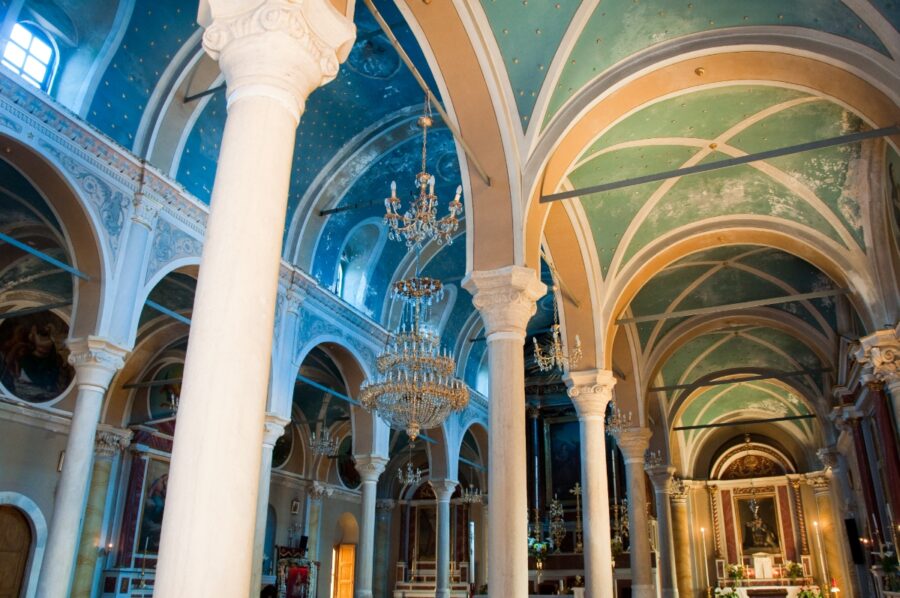
When you stroll through Ermoupoli, Syros’ capital, that layered identity jumps out at you. In Vaporia, pastel mansions line the waterfront, and Orthodox churches rise above them.
Just a short climb away, you’ll spot the Catholic Cathedral of Saint George. Syros stands out in Greece because Catholics and Orthodox have lived side by side here for ages. You might catch a Catholic procession one day, then see Orthodox Easter celebrated just as passionately the next.
It’s not a rivalry—more like a rhythm that keeps both traditions alive. I remember stumbling into a tiny Catholic mass on Syros years ago, then later hearing Orthodox bells echoing across the harbor. That peaceful coexistence makes the island’s spirit feel something special.
You don’t get that everywhere in the Aegean. If you’re curious, step into both kinds of churches.
Orthodox ones are usually ornate, with incense and gold icons, while the Catholic spaces feel quieter, almost minimalist. Experiencing both gives you a sense of why Syros is called the cultural heart of the Cyclades.
Pilgrimage Sites in Tinos
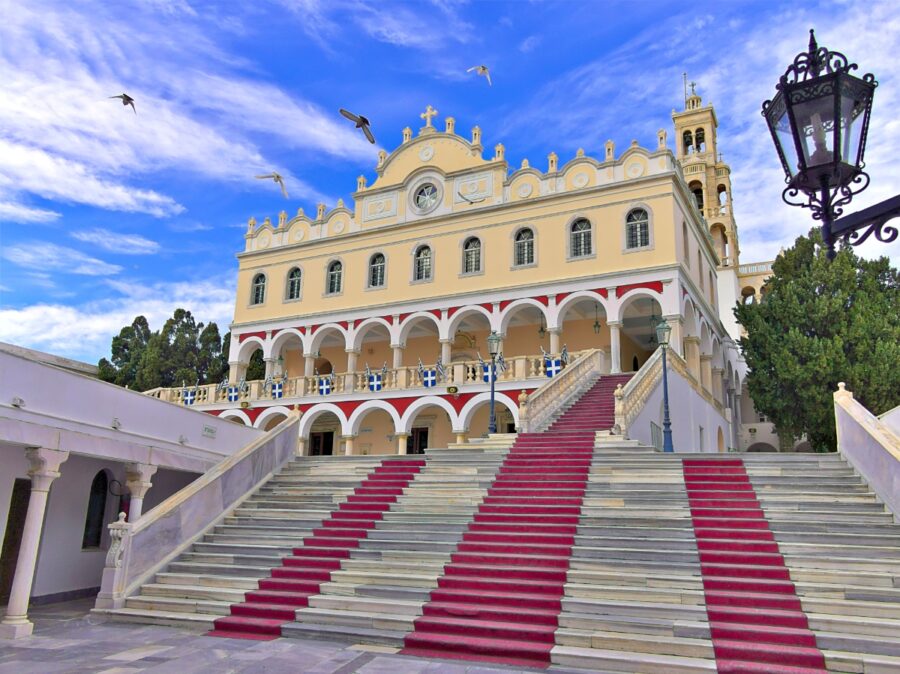
Tinos isn’t just religious—it’s got this deep, almost tangible spirituality. The Church of Panagia Evangelistria (or Panagia of Tinos) looms over the town, and every August 15, thousands of pilgrims crawl on their knees from the port up to the church.
It’s humbling, honestly—something you won’t forget. Inside, you’ll see offerings piled around the miraculous icon. Even if faith isn’t your thing, the devotion is hard to ignore.
And the whole island feels like an open-air spiritual museum—over 700 chapels and churches are scattered across its hills and villages. One time, near Volax, I stumbled onto a tiny white chapel, door open, candles still burning inside. No one around, just the wind and the stones.
That’s Tinos for you—faith woven into the everyday, not just the big pilgrimage crowds. Beyond the main church, you’ll find the old Temple of Poseidon ruins. Ancient Greeks purified themselves there before heading to Delos.
It’s wild how Tinos holds both ancient and Christian layers together. If Syros is about balance, Tinos is all about devotion. For more on the island’s religious side, check out the spiritual and scenic beauty of Tinos or dive into the pilgrimage traditions tied to Panagia Evangelistria.
Food, Accommodation, and Getting Around
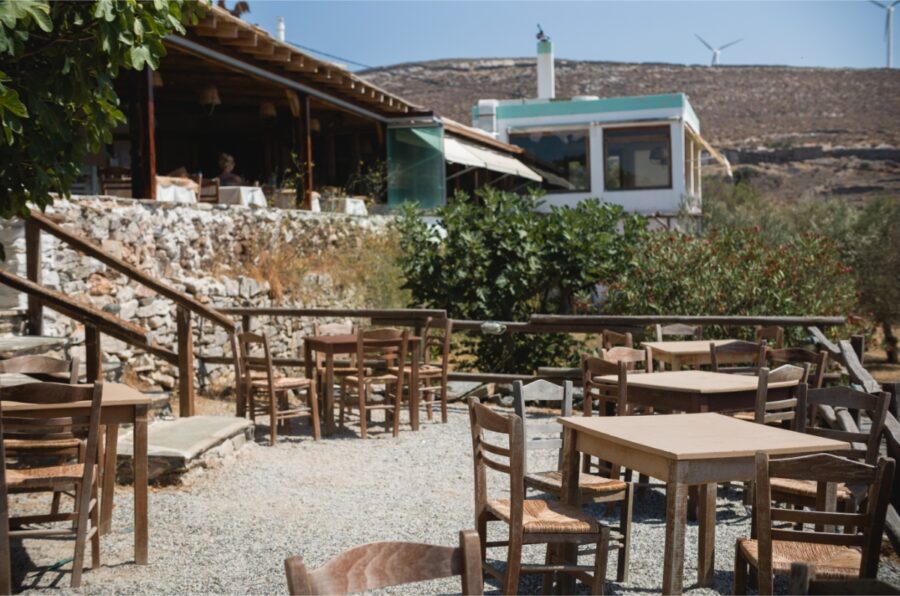
Syros and Tinos serve up totally different flavors of the Cyclades. One leans into urban comforts and lively dining; the other, rustic villages and slow, quiet days. Where you sleep, what you eat, and how you get around will shape your trip more than you might expect.
Local Cuisine and Specialties
Syros’ food scene is a cool mix of the old and new. In Ermoupoli, tavernas dish up loukoumia (think Turkish delight, but Greek) and halvadopita (nougat pies).
Seafood is fresh and surprisingly affordable, especially near Galissas Beach and Vari. I once got grilled octopus for less than a sandwich back home—no complaints there.
Tinos is all about village tavernas. Each little square has at least one, maybe two, usually with a handwritten menu.
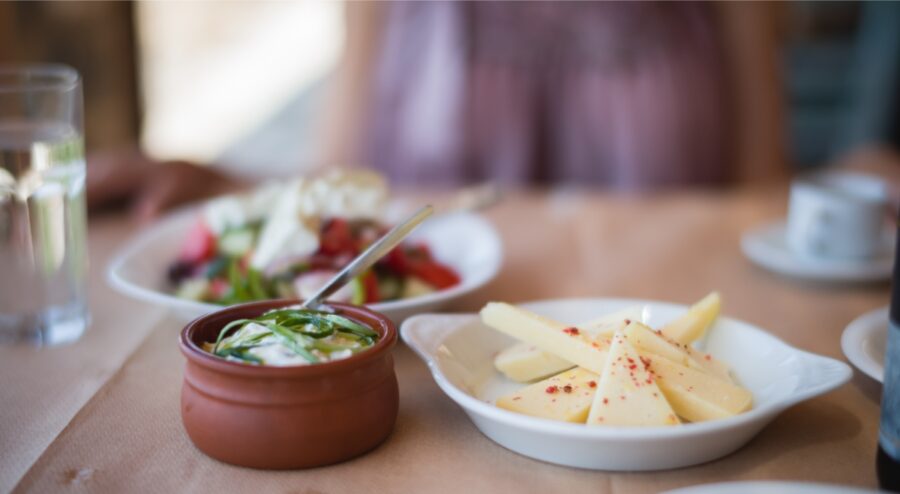
You’ll spot dishes made from artichokes, chickpeas, and local goat cheese. Even in restaurants, the food tastes homemade.
If you’re into wine, don’t skip Tinos’ boutique vineyards—they’re starting to get some real buzz for crisp whites. Eating out on both islands is way cheaper than in Mykonos. You can have a full meal with wine for the price of one fancy cocktail over there.
Where to Stay
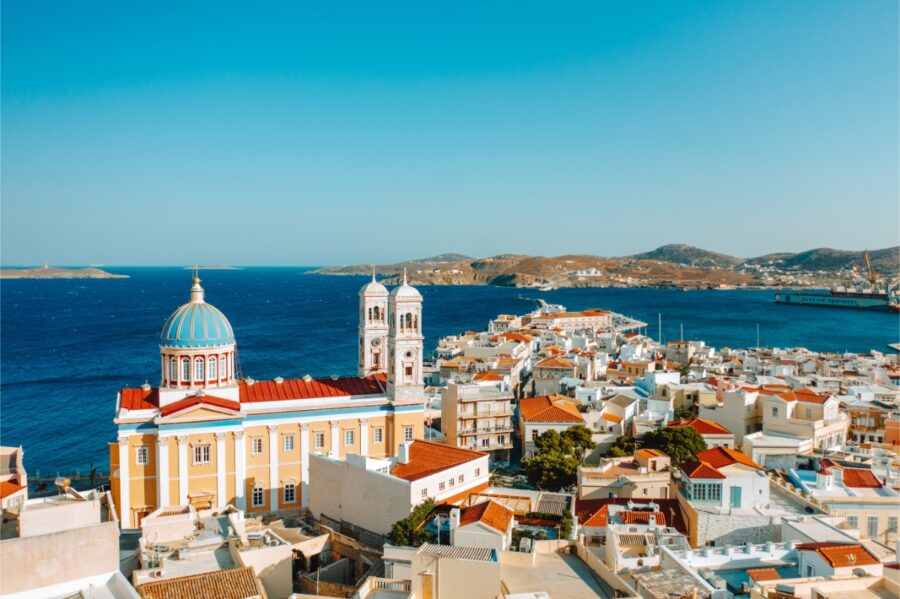
Ermoupoli on Syros gives you the widest range of hotels and guesthouses. You’ll find restored neoclassical mansions with harbor views, or budget rooms near the bus station.
Families usually pick beach villages like Vari or Galissas, where you can roll out of bed and onto the sand. It’s easy to compare options on Booking before you go.
Tinos is more spread out, so your choice of base really matters. If you don’t want to rent a car, stick to Tinos Town (Chora)—buses run from there.
But honestly, the magic comes from renting a guesthouse in a mountain village. You’ll lose some convenience, but the peace is worth it.
If you’re planning to hop between islands, check KAYAK for deals on flights or ferries. It can be cheaper to stay put longer than you’d think.
Transportation and Island-Hopping

Syros is compact, and the circular bus route makes reaching beaches like Kini, Vari, and Galissas a breeze. Taxis are cheaper than on most Cycladic islands.
I got around just fine without a car, especially when I stayed in Ermoupoli. Tinos is bigger, more rural, and the buses aren’t as frequent. The best villages are often miles apart.
Unless you’re happy sticking to Tinos Town, rent a car or scooter. That’s really the only way to see the marble villages or those quiet coves up north.
Both islands connect well by ferry. Syros acts as a hub, so you can hop to Paros, Naxos, or even Santorini.
Tinos sits just 30–40 minutes from Syros and links easily to Mykonos. If you’re feeling adventurous, you could even reach smaller islands like Donoussa or Schinoussa, but ferry schedules can be tricky.
For peace of mind, maybe look into travel insurance before booking a bunch of ferry legs. Delays happen—trust me, I’ve been there.
See Related: Irresistibly Useful Vacation Tips to Transform Your Next Trip
Frequently Asked Questions

Syros pulls you in with its neoclassical charm and buzzing port, while Tinos feels wilder, more spiritual, and closer to nature. Each island dances to its own beat, from elegant dining and nightlife to quiet trails and family-friendly adventures.
What unique attractions can visitors find on Syros compared to other Greek islands?
Syros stands out for Ermoupoli, the capital, which feels more like a mini European city than your average island town. You’ll wander marble squares, spot pastel mansions, and even stumble onto an opera house modeled after La Scala.
There’s a cosmopolitan vibe here that’s rare in the Cyclades. It’s not just about beaches—it’s urban culture mixing with island life.
How do the beaches of Tinos stand out from those on Syros?
Tinos’ beaches are less polished, but they’ve got this wild, dramatic beauty. You’ll find wide sandy stretches, rocky coves, and spots where the wind sculpts the waves.
Syros’ beaches tend to be smaller and closer to town—super easy to reach, but not as untouched. Tinos rewards you if you’re willing to explore a bit.
Could you provide insights into the cultural experiences offered by Tinos?
Tinos is steeped in religion and tradition. The Church of Panagia Evangelistria is one of Greece’s most important pilgrimage sites, and you’ll often see people making the journey on their knees from the port.
The island’s artistic side is just as vibrant. Villages are dotted with dovecotes and marble workshops, and you can join local tours to watch artisans at work.
Syros’ food scene surprises a lot of people. Tiny tavernas serve up local dishes like loukoumi (that Greek take on Turkish delight), and Ermoupoli has restaurants that wouldn’t look out of place in Athens.
For nightlife, you’ll find cozy cocktail bars tucked away in side streets and live music joints near the port. It’s lively, but never overwhelming—perfect if you want fun without chaos.
How convenient is island-hopping from Syros to nearby destinations?
Syros sits smack in the middle of the Cyclades, so ferries whisk you off to Tinos, Mykonos, Paros, and more in no time. A 30-minute ride lands you in Tinos, and from there you can branch out further.
If you’re the planning type, you can book day trips that bundle ferry rides with guided experiences. It’s honestly one of the easiest bases for island-hopping.
What are the top family-friendly activities to enjoy in Tinos?
Honestly, wandering through Tinos’ villages with your family just feels right. Kids can dash around those winding lanes and leafy squares, and you don’t have to worry much—they’re pretty safe.
The island’s gentle beaches? Total win. Shallow waters stretch out forever, so little swimmers can splash around without a care.
If your crew’s into walking, you’ll find marked trails that snake past chapels, windmills, and into these ridiculously peaceful valleys. It’s outdoor time, but without the swarm of tourists you’d get on the bigger-name islands.