
Wuyishan Natural Museum
About Wuyishan Natural Museum
Description
The Wuyishan Natural Museum sits in the shadow — not literally, but you know what I mean — of the famous Wuyi Mountain area in Fujian province, offering visitors an unexpectedly thorough dive into the natural and cultural threads that make Wuyishan unique. It is a local museum that leans on natural history, ecology, and the region's deep connection to tea culture, and it succeeds by being quietly focused rather than flashy. For travelers who plan to explore Wuyi Mountain national scenic area, the museum acts as a compact primer: good background before hiking the peaks, floating the Nine-Bend Stream, or visiting the Dahongpao tea terraces.
The permanent galleries emphasize the geology, flora and fauna, and the human interactions with this landscape across centuries. Displays present rock formations and the karst-like features characteristic of parts of the Wuyi area, while botanical cabinets highlight both common and endemic species — from mountain ferns to tea trees that have shaped local livelihoods for generations. There are specimens of local birds and small mammals, fossil fragments that hint at the region's deep-time story, and curated panels that link natural evolution to cultural practices like tea cultivation and processing. It is not a blockbuster natural history museum one sees in a megacity, but it is crisply organized and instructive: visitors leave with a clearer sense of why Wuyishan earned UNESCO recognition as a cultural and natural heritage landscape.
What sets the Wuyishan Natural Museum apart are a few modest but distinctive choices. First, the museum connects natural science to lived culture — so alongside plant specimens there are artifacts illustrating ancient tea routes, hand tools used in terraced tea farming, and photos that show how the same slopes have been worked for centuries. Second, interpretive displays often include local voices: short notes and oral-history snippets collected from farmers, tea-makers, and boatmen who know the nine-bend river intimately. That human layer helps the museum feel less like a set of sterile cases and more like a conversation: between geology, biology, and people.
The museum is designed with families in mind. There is a dedicated area suitable for kids, where tactile or visual activities simplify complicated ideas (how a tea cultivar differs, why certain birds live only in specific streams). Parents appreciate that the museum is practical — restrooms are available and wheelchair accessible restroom facilities are on site — and that exhibits are paced so children can take in the material without being overwhelmed. The layout encourages short visits or longer lingerings; a focused 45–60 minute visit will cover the essentials, while a more curious traveler can spend longer reading panels and watching the short films often shown in the small auditorium.
Accessibility is a real plus here. The museum has taken steps to be inclusive: paths are navigable for wheelchairs, and bathrooms accommodate visitors with mobility needs. It is not a brand-new glass-and-steel fortress, but it is thoughtful. The atmosphere tends to be calm, often with local teachers and students on field trips, so expect a low-key, educational crowd rather than noisy tour buses. That said, signage is sometimes heavier on Chinese-language text; a few English captions appear, but travelers who do not read Chinese should plan to supplement the visit with a quick guidebook read or a translation app. In the author’s experience — and this is a small aside that may help — a smartphone image search or an app can bridge the few language gaps, and there’s a kind of reward in piecing the story together while standing in front of a specimen you otherwise would have missed.
Visitors who are keen on tea culture will find particular enjoyment. Exhibits explain the botanical differences among Wuyi rock teas, the history of the famous Dahongpao bushes, and the ceremonial and commercial roles tea has played locally. There are sometimes samples or demonstrations offered, though these vary seasonally; don’t bank on a tasting at every visit, but be pleasantly surprised if one pops up. The museum does not compete with a tea house tour, but it frames those experiences: after viewing how terroir and microclimate influence leaf chemistry, the practice of sipping a local rock tea on a mountaintop suddenly gains extra meaning.
Another advantage is the location and context. The museum acts as a gentle orientation point for travelers who intend to explore the Wuyishan scenic area, including highlights like Tianyou Peak, the Nine-Bend Stream, and the various temples and caves. Rather than a stand-alone novelty, the museum complements hikes, raft trips, and tea farm visits by adding layers of understanding. Travelers who visit the museum first often report a more satisfying on-site experience at the scenic spots; they notice plant species, interpret rock formations, and recognize signs of human adaptation that would have otherwise slipped by unnoticed.
On the practical side, the museum is run with a local sensibility: efficient, respectful, and quietly proud. Staff tend to be helpful and knowledgeable; when the author once lingered over a fossil display longer than polite, a docent came over and offered an explanation that connected the fossil to a broader regional timeline. Those small personal touches matter. But it is important to temper expectations. This museum is not meant to be compared to national museums in Beijing or Shanghai. It has a regional scale and charm; its value lies in its specificity and contextual relevance to Wuyishan rather than in blockbuster artifacts or immersive high-tech installations.
For photographers and casual sightseers, the lighting is generally good but intentionally subdued in certain cases to protect delicate specimens, so expect some reflective glass and occasional glare. The best photographic opportunities are often in the botanical or cultural sections where displays are less sensitive. If a traveler is scanning for Instagram-perfect backdrops, this might not be the place for long shoots, but if someone wants meaningful shots that tell a story — tea tools, labeled leaves, old photographs of terrace farming — there is plenty to capture.
Because the museum balances natural history with cultural narrative, it also serves researchers and students. Local universities and conservation groups sometimes use the museum as a base for educational programs, and temporary exhibitions occasionally spotlight conservation issues — habitat fragmentation, endangered species, or the interplay between tourism and fragile ecosystems. Those rotating exhibits are often the surprise highlight; they bring in contemporary debates and make a visit feel timely rather than purely retrospective.
One slightly quirky thing to note: the museum has an unpretentious, almost domestic energy at times. The author once observed a group of elders discussing a photo of a river bend as if recollecting an old neighbor. That human scale — the sense that this place belongs to the community as much as to tourists — adds warmth. It’s the kind of place where a traveler might overhear a local dialect and feel like an observer inside an ongoing story, rather than an outsider peering at artifacts. For many visitors, that’s the best part.
In sum, the Wuyishan Natural Museum is a compact, well-curated spot that rewards curious travelers who want more than scenery. It bridges natural science and local culture, emphasizing how geology, plants, animals, and human activity have shaped one another in the Wuyishan area. Practical amenities and accessible restrooms make it friendly for families and visitors with mobility needs, and the good-for-kids approach makes it a low-stress stop on a broader Wuyishan itinerary. The tone of the museum is sober and educational, with just enough local color to make it memorable. If a traveler wants to go deeper than a postcard view of the peaks and the stream, a stop here will make the whole Wuyishan experience richer and more intelligible.
Key Features
More Details
Updated August 30, 2025
Table of Contents
Description
The Wuyishan Natural Museum sits in the shadow — not literally, but you know what I mean — of the famous Wuyi Mountain area in Fujian province, offering visitors an unexpectedly thorough dive into the natural and cultural threads that make Wuyishan unique. It is a local museum that leans on natural history, ecology, and the region’s deep connection to tea culture, and it succeeds by being quietly focused rather than flashy. For travelers who plan to explore Wuyi Mountain national scenic area, the museum acts as a compact primer: good background before hiking the peaks, floating the Nine-Bend Stream, or visiting the Dahongpao tea terraces.
The permanent galleries emphasize the geology, flora and fauna, and the human interactions with this landscape across centuries. Displays present rock formations and the karst-like features characteristic of parts of the Wuyi area, while botanical cabinets highlight both common and endemic species — from mountain ferns to tea trees that have shaped local livelihoods for generations. There are specimens of local birds and small mammals, fossil fragments that hint at the region’s deep-time story, and curated panels that link natural evolution to cultural practices like tea cultivation and processing. It is not a blockbuster natural history museum one sees in a megacity, but it is crisply organized and instructive: visitors leave with a clearer sense of why Wuyishan earned UNESCO recognition as a cultural and natural heritage landscape.
What sets the Wuyishan Natural Museum apart are a few modest but distinctive choices. First, the museum connects natural science to lived culture — so alongside plant specimens there are artifacts illustrating ancient tea routes, hand tools used in terraced tea farming, and photos that show how the same slopes have been worked for centuries. Second, interpretive displays often include local voices: short notes and oral-history snippets collected from farmers, tea-makers, and boatmen who know the nine-bend river intimately. That human layer helps the museum feel less like a set of sterile cases and more like a conversation: between geology, biology, and people.
The museum is designed with families in mind. There is a dedicated area suitable for kids, where tactile or visual activities simplify complicated ideas (how a tea cultivar differs, why certain birds live only in specific streams). Parents appreciate that the museum is practical — restrooms are available and wheelchair accessible restroom facilities are on site — and that exhibits are paced so children can take in the material without being overwhelmed. The layout encourages short visits or longer lingerings; a focused 45–60 minute visit will cover the essentials, while a more curious traveler can spend longer reading panels and watching the short films often shown in the small auditorium.
Accessibility is a real plus here. The museum has taken steps to be inclusive: paths are navigable for wheelchairs, and bathrooms accommodate visitors with mobility needs. It is not a brand-new glass-and-steel fortress, but it is thoughtful. The atmosphere tends to be calm, often with local teachers and students on field trips, so expect a low-key, educational crowd rather than noisy tour buses. That said, signage is sometimes heavier on Chinese-language text; a few English captions appear, but travelers who do not read Chinese should plan to supplement the visit with a quick guidebook read or a translation app. In the author’s experience — and this is a small aside that may help — a smartphone image search or an app can bridge the few language gaps, and there’s a kind of reward in piecing the story together while standing in front of a specimen you otherwise would have missed.
Visitors who are keen on tea culture will find particular enjoyment. Exhibits explain the botanical differences among Wuyi rock teas, the history of the famous Dahongpao bushes, and the ceremonial and commercial roles tea has played locally. There are sometimes samples or demonstrations offered, though these vary seasonally; don’t bank on a tasting at every visit, but be pleasantly surprised if one pops up. The museum does not compete with a tea house tour, but it frames those experiences: after viewing how terroir and microclimate influence leaf chemistry, the practice of sipping a local rock tea on a mountaintop suddenly gains extra meaning.
Another advantage is the location and context. The museum acts as a gentle orientation point for travelers who intend to explore the Wuyishan scenic area, including highlights like Tianyou Peak, the Nine-Bend Stream, and the various temples and caves. Rather than a stand-alone novelty, the museum complements hikes, raft trips, and tea farm visits by adding layers of understanding. Travelers who visit the museum first often report a more satisfying on-site experience at the scenic spots; they notice plant species, interpret rock formations, and recognize signs of human adaptation that would have otherwise slipped by unnoticed.
On the practical side, the museum is run with a local sensibility: efficient, respectful, and quietly proud. Staff tend to be helpful and knowledgeable; when the author once lingered over a fossil display longer than polite, a docent came over and offered an explanation that connected the fossil to a broader regional timeline. Those small personal touches matter. But it is important to temper expectations. This museum is not meant to be compared to national museums in Beijing or Shanghai. It has a regional scale and charm; its value lies in its specificity and contextual relevance to Wuyishan rather than in blockbuster artifacts or immersive high-tech installations.
For photographers and casual sightseers, the lighting is generally good but intentionally subdued in certain cases to protect delicate specimens, so expect some reflective glass and occasional glare. The best photographic opportunities are often in the botanical or cultural sections where displays are less sensitive. If a traveler is scanning for Instagram-perfect backdrops, this might not be the place for long shoots, but if someone wants meaningful shots that tell a story — tea tools, labeled leaves, old photographs of terrace farming — there is plenty to capture.
Because the museum balances natural history with cultural narrative, it also serves researchers and students. Local universities and conservation groups sometimes use the museum as a base for educational programs, and temporary exhibitions occasionally spotlight conservation issues — habitat fragmentation, endangered species, or the interplay between tourism and fragile ecosystems. Those rotating exhibits are often the surprise highlight; they bring in contemporary debates and make a visit feel timely rather than purely retrospective.
One slightly quirky thing to note: the museum has an unpretentious, almost domestic energy at times. The author once observed a group of elders discussing a photo of a river bend as if recollecting an old neighbor. That human scale — the sense that this place belongs to the community as much as to tourists — adds warmth. It’s the kind of place where a traveler might overhear a local dialect and feel like an observer inside an ongoing story, rather than an outsider peering at artifacts. For many visitors, that’s the best part.
In sum, the Wuyishan Natural Museum is a compact, well-curated spot that rewards curious travelers who want more than scenery. It bridges natural science and local culture, emphasizing how geology, plants, animals, and human activity have shaped one another in the Wuyishan area. Practical amenities and accessible restrooms make it friendly for families and visitors with mobility needs, and the good-for-kids approach makes it a low-stress stop on a broader Wuyishan itinerary. The tone of the museum is sober and educational, with just enough local color to make it memorable. If a traveler wants to go deeper than a postcard view of the peaks and the stream, a stop here will make the whole Wuyishan experience richer and more intelligible.
Key Highlights
Wuyishan Natural Museum
Location
Places to Stay Near Wuyishan Museum of Natural History
Find and Book a Tour
Explore More Travel Guides
No reviews found! Be the first to review!
Traveler Reviews for Wuyishan Natural Museum
There are no reviews yet. Be the first one to write one.
Have you visited Wuyishan Natural Museum? Help other travelers by sharing your review.
You Might Also Like
Feiyun Lake
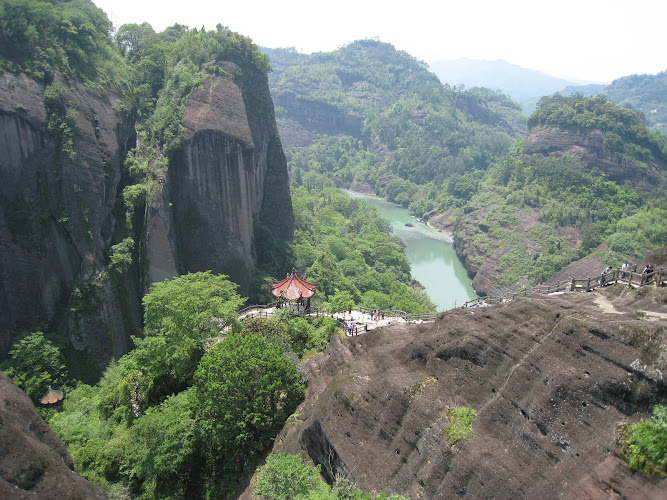
Tianyoufeng Scenic Area

Wuyishan Natural Scenic Area
Find Accommodations Nearby
Recommended Tours & Activities
Visitor Reviews
There are no reviews yet. Be the first one to write one.
Share Your Experience
Have you visited Wuyishan Natural Museum? Help other travelers by leaving a review.