
Vintage Flying Museum
About Vintage Flying Museum
Description
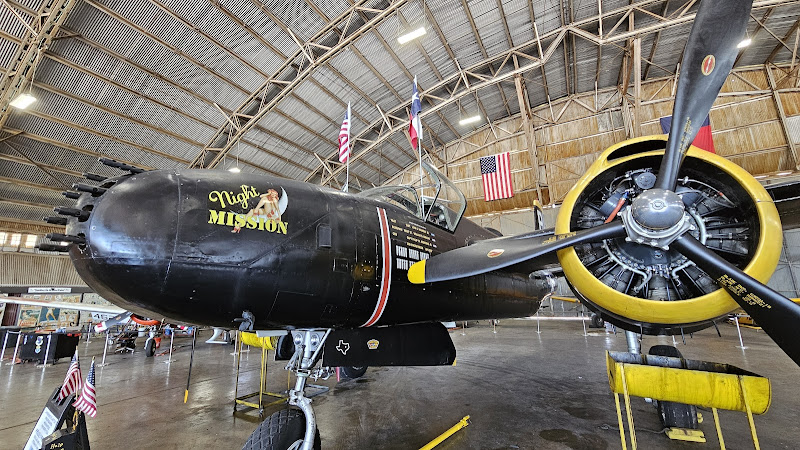
The Vintage Flying Museum in Fort Worth is one of those places where history feels alive, not trapped behind glass. Instead of just staring at faded photographs, visitors stand beneath the wings of restored warplanes that once roared across skies in times of war and peace. The museum is housed in a working hangar, and that gives it a gritty, authentic vibe. The smell of oil, the faint echo of tools clinking, and the sight of mechanics tinkering with engines—it all makes you feel like you’ve stepped back into the golden age of aviation.
What makes the museum stand out is its mix of polished restoration and raw storytelling. Some aircraft gleam as if they just rolled out of the factory, while others proudly show their age, scars and all. It’s not a sterile display; it’s a living collection. And while most people expect to just see planes, they’re often surprised by the aviation artifacts, uniforms, and memorabilia tucked into every corner. There’s a sense of personal connection here, like each piece has been carefully chosen to honor the men and women who flew, fixed, and lived alongside these machines.
Of course, not every visitor walks away with the same impression. Some folks want a slick, polished museum with interactive screens and modern exhibits—this isn’t that. But for travelers who appreciate authenticity, the Vintage Flying Museum delivers a rare, hands-on encounter with aviation history. It’s the kind of place where kids’ eyes light up at the sheer size of the planes, and adults quietly reflect on the stories behind them.
Key Features
- Restored warplanes on display, ranging from World War II aircraft to Cold War-era planes
- Aviation artifacts and memorabilia that tell personal stories of pilots and crews
- Guided tours led by volunteers with deep knowledge and often personal connections to aviation
- On-site gift shop offering aviation-themed souvenirs and books
- Wheelchair accessible entrance, restrooms, and parking areas
- Family-friendly environment with plenty to keep kids engaged
- On-site parking for easy access
Best Time to Visit
The museum is open year-round, but the best time to visit really depends on what you’re after. If you want a quieter experience where you can wander at your own pace, weekdays are ideal. On weekends, you’re more likely to catch special events or meet volunteer pilots who share their stories—it can get busier, but the energy is worth it.
Summer in Texas can be sweltering, and while the hangar is spacious, it’s not exactly climate-controlled like a modern gallery. Personally, I’d recommend spring or fall when the weather is milder. That way, you can enjoy exploring without feeling like you’re melting. If you’re traveling with kids, mornings are usually calmer, and they’ll have more space to roam without the crowds.
How to Get There
Getting to the museum is straightforward if you’re already in the Fort Worth area. It’s located near the city’s historic aviation hub, so you’ll get a sense of the region’s flying heritage even before you step inside. Driving is the easiest option, and there’s on-site parking available, which takes away the usual headache of hunting for a spot.
If you’re coming from downtown Fort Worth, it’s just a short drive, and rideshares or taxis are reliable options too. Public transportation can get you part of the way, but honestly, it’s not the most convenient choice if you’re carrying kids or planning to spend a few hours exploring. I’ve always found that driving gives you the flexibility to stay as long as you want without worrying about bus schedules.
Tips for Visiting
First and foremost, wear comfortable shoes. You’ll be walking around a hangar, and while it’s not endless, it’s big enough that you’ll be on your feet for a while. Also, bring a camera—but don’t just snap the planes. Take time to capture the little details: the worn leather of a pilot’s seat, the faded paint on an old propeller, the look on your kid’s face when they stand next to a bomber taller than a house. Those are the memories that stick.
If you’re a history buff, try to time your visit when volunteers are giving tours. These folks aren’t just reciting facts; many of them have personal stories or family ties to aviation. I once listened to a guide describe how his father flew missions in a plane almost identical to the one in front of us. It gave me goosebumps.
For families, the museum is surprisingly kid-friendly. Kids love the sheer size of the planes, and the staff are patient with curious questions. Just keep in mind that it’s a working hangar, so set expectations—this isn’t a playground, but it’s definitely hands-on in its own way.
Lastly, don’t rush. It’s tempting to breeze through, but the magic is in the details. Read the plaques, peek into every corner, and let yourself imagine what it would’ve been like to climb into one of those cockpits decades ago. And if you’re the type who likes to bring home a souvenir, the gift shop has some surprisingly good finds—aviation books, model planes, and even quirky trinkets that make great gifts.
Key Features
- Restored warplanes on display, ranging from World War II aircraft to Cold War-era planes
- Aviation artifacts and memorabilia that tell personal stories of pilots and crews
- Guided tours led by volunteers with deep knowledge and often personal connections to aviation
- On-site gift shop offering aviation-themed souvenirs and books
- Wheelchair accessible entrance, restrooms, and parking areas
- Family-friendly environment with plenty to keep kids engaged
- On-site parking for easy access
More Details
Updated September 30, 2025
Table of Contents
Description
The Vintage Flying Museum in Fort Worth is one of those places where history feels alive, not trapped behind glass. Instead of just staring at faded photographs, visitors stand beneath the wings of restored warplanes that once roared across skies in times of war and peace. The museum is housed in a working hangar, and that gives it a gritty, authentic vibe. The smell of oil, the faint echo of tools clinking, and the sight of mechanics tinkering with engines—it all makes you feel like you’ve stepped back into the golden age of aviation.
What makes the museum stand out is its mix of polished restoration and raw storytelling. Some aircraft gleam as if they just rolled out of the factory, while others proudly show their age, scars and all. It’s not a sterile display; it’s a living collection. And while most people expect to just see planes, they’re often surprised by the aviation artifacts, uniforms, and memorabilia tucked into every corner. There’s a sense of personal connection here, like each piece has been carefully chosen to honor the men and women who flew, fixed, and lived alongside these machines.
Of course, not every visitor walks away with the same impression. Some folks want a slick, polished museum with interactive screens and modern exhibits—this isn’t that. But for travelers who appreciate authenticity, the Vintage Flying Museum delivers a rare, hands-on encounter with aviation history. It’s the kind of place where kids’ eyes light up at the sheer size of the planes, and adults quietly reflect on the stories behind them.
Key Features
- Restored warplanes on display, ranging from World War II aircraft to Cold War-era planes
- Aviation artifacts and memorabilia that tell personal stories of pilots and crews
- Guided tours led by volunteers with deep knowledge and often personal connections to aviation
- On-site gift shop offering aviation-themed souvenirs and books
- Wheelchair accessible entrance, restrooms, and parking areas
- Family-friendly environment with plenty to keep kids engaged
- On-site parking for easy access
Best Time to Visit
The museum is open year-round, but the best time to visit really depends on what you’re after. If you want a quieter experience where you can wander at your own pace, weekdays are ideal. On weekends, you’re more likely to catch special events or meet volunteer pilots who share their stories—it can get busier, but the energy is worth it.
Summer in Texas can be sweltering, and while the hangar is spacious, it’s not exactly climate-controlled like a modern gallery. Personally, I’d recommend spring or fall when the weather is milder. That way, you can enjoy exploring without feeling like you’re melting. If you’re traveling with kids, mornings are usually calmer, and they’ll have more space to roam without the crowds.
How to Get There
Getting to the museum is straightforward if you’re already in the Fort Worth area. It’s located near the city’s historic aviation hub, so you’ll get a sense of the region’s flying heritage even before you step inside. Driving is the easiest option, and there’s on-site parking available, which takes away the usual headache of hunting for a spot.
If you’re coming from downtown Fort Worth, it’s just a short drive, and rideshares or taxis are reliable options too. Public transportation can get you part of the way, but honestly, it’s not the most convenient choice if you’re carrying kids or planning to spend a few hours exploring. I’ve always found that driving gives you the flexibility to stay as long as you want without worrying about bus schedules.
Tips for Visiting
First and foremost, wear comfortable shoes. You’ll be walking around a hangar, and while it’s not endless, it’s big enough that you’ll be on your feet for a while. Also, bring a camera—but don’t just snap the planes. Take time to capture the little details: the worn leather of a pilot’s seat, the faded paint on an old propeller, the look on your kid’s face when they stand next to a bomber taller than a house. Those are the memories that stick.
If you’re a history buff, try to time your visit when volunteers are giving tours. These folks aren’t just reciting facts; many of them have personal stories or family ties to aviation. I once listened to a guide describe how his father flew missions in a plane almost identical to the one in front of us. It gave me goosebumps.
For families, the museum is surprisingly kid-friendly. Kids love the sheer size of the planes, and the staff are patient with curious questions. Just keep in mind that it’s a working hangar, so set expectations—this isn’t a playground, but it’s definitely hands-on in its own way.
Lastly, don’t rush. It’s tempting to breeze through, but the magic is in the details. Read the plaques, peek into every corner, and let yourself imagine what it would’ve been like to climb into one of those cockpits decades ago. And if you’re the type who likes to bring home a souvenir, the gift shop has some surprisingly good finds—aviation books, model planes, and even quirky trinkets that make great gifts.
Key Highlights
- Restored warplanes on display, ranging from World War II aircraft to Cold War-era planes
- Aviation artifacts and memorabilia that tell personal stories of pilots and crews
- Guided tours led by volunteers with deep knowledge and often personal connections to aviation
- On-site gift shop offering aviation-themed souvenirs and books
- Wheelchair accessible entrance, restrooms, and parking areas
- Family-friendly environment with plenty to keep kids engaged
- On-site parking for easy access
Location
Places to Stay Near Vintage Flying Museum
Find and Book a Tour
Explore More Travel Guides
No reviews found! Be the first to review!
Traveler Reviews for Vintage Flying Museum
There are no reviews yet. Be the first one to write one.
Have you visited Vintage Flying Museum? Help other travelers by sharing your review.
You Might Also Like

Ridgmar Mall
Leonard
Sid Richardson Museum
Find Accommodations Nearby
Recommended Tours & Activities
Visitor Reviews
There are no reviews yet. Be the first one to write one.
Share Your Experience
Have you visited Vintage Flying Museum? Help other travelers by leaving a review.