
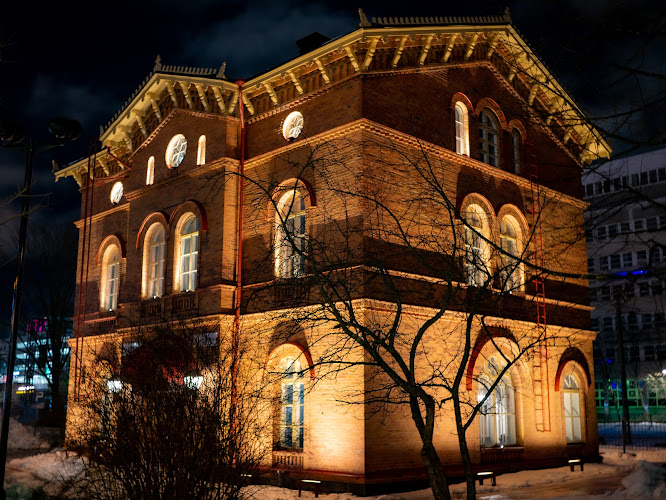
Vantaa City Museum
About Vantaa City Museum
Description
The Vantaa City Museum sits inside a piece of living history: the old Tikkurila railway station, a brick building completed in 1862 and often remarked upon as Finland's oldest brick station. The museum is not just a collection of artifacts; it is an active storyteller about Vantaa — its people, the land, the industry and the odd little moments that shaped daily life here. Designed by county architect Carl Albert Edelfelt, the station's exterior remains remarkably close to the original plans, and that sense of continuity greets visitors the moment they step up to the platform-style entrance. For travelers who like a slice of local life with their cultural sightseeing, this place tends to land on the nice side of unexpected discoveries.
Exhibitions change regularly, so repeat visits often feel fresh. The focus is local but the themes ripple outward: industrial change and transport, community customs, migration and the slow morphing of the cultural environment around Helsinki and Vantaa. The museum is, in short, an authority on Vantaa's history and cultural heritage, but it presents that authority in an accessible way — guided tours, hands-on workshops, and public events are part of the rhythm here. And yes, there is a small museum shop and a reference library where visitors can sit and read; it can be a lovely low-key pause between heavier tourist stops.
One of the nicest things about the Vantaa City Museum is how it balances scholarship with a sense of everyday affection. The curators do the serious work — preserving documents, researching local architecture, advising on cultural environments — but exhibitions often foreground objects and stories that people can immediately relate to: a wartime ration book, a school photograph from 1920, the tools of a craftsman who once worked in the area. Those domestic details give the displays a friendly, almost chatty quality. It makes sense, because a city museum is ultimately a mirror held up to the community; it wants local residents to recognize themselves and visitors to leave feeling they now know a small piece of how life actually unfolded in this town.
Accessibility is built into the museum's approach. The entrance is wheelchair accessible, there is suitable parking, and accessible restrooms are available. Families with children find the museum welcoming — there are activities and exhibition elements designed to engage younger minds. There is no full-service restaurant on-site, so plan accordingly if a long stay is in the cards; but spontaneous snack breaks are easy to manage in the nearby neighborhood of Tikkurila where small cafes and kiosks hum with commuter energy.
The building itself is an exhibit. That old railway atmosphere — the high ceilings, the solid brick walls, wooden details — gives exhibitions a warmth that modern museum boxes sometimes lack. It also means that the museum's day-to-day layout is a little different from a purpose-built gallery: narrow corridors, low thresholds, and intimate rooms create moments of close-up discovery. Those architectural quirks are a big part of the charm. Visitors who love historic buildings will want to take their time, looking up at cornices and moldings and imagining the station as it once was: smoke and steam, people with trunks, the bustle of trains arriving and leaving. For those who nerd out on design history, the fact that Carl Albert Edelfelt's vision remains so visible is a genuine treat.
Educational programming is a clear priority. School groups visit regularly, but adult learners and international travelers also find value in the museum's offerings. Workshops range from heritage crafts to archival introductions — practical, hands-on sessions that give context to the displays. Guided tours explain not only the objects but also the decisions behind exhibitions: what was included, why certain stories are emphasized, and how heritage professionals think about preserving a cultural environment. Sometimes the museum runs special events that tie into broader municipal initiatives, and those are good times to catch a different angle on Vantaa's past and present.
There is a small but well-curated museum shop where visitors can pick up books, postcards, and carefully chosen objects related to Vantaa's history. Expect publications about local architecture, illustrated guides to the region, and charming stationery. The reading collection inside the museum is a quiet little gem: a compact hand library of sources and reference works that reward anyone who wants to dive deeper. It is the sort of place where a short visit often turns into an hour-long linger because the catalogues and photo albums are just too tempting to resist.
Although the museum's focus is local, its themes connect to larger narratives across Finland: industrialization, urbanization, the evolution of public transport and the role of architecture in community identity. For travelers coming from outside Finland — especially those transiting through Helsinki and Vantaa — the museum offers a concentrated look at how small urban centers around major capitals evolve. It complements the bigger national museums by zooming in on the messy, human scale of everyday history. That perspective is often the most memorable; people rarely forget the smell of an old photograph or the face of a farmer whose tools are on display.
Practical details matter: the museum doubles as an office for local heritage professionals, which explains why staff are usually knowledgeable and eager to answer questions about Vantaa's cultural environment. Expect helpful, informed conversations rather than sales pitches. The attitude here leans toward stewardship rather than commerce. Which, frankly, is a relief when so many cultural sites feel overly branded. The Vantaa City Museum is quietly focused on preserving, learning and sharing — quite straightforward, and that sincerity is refreshing.
Because exhibitions rotate, there is always the possibility of catching a theme tied to a specific anniversary, local research project, or community story. That means frequent travelers to the area can discover something new each season. On the flip side, the changing nature means there might not be blockbuster displays every time; many exhibits are modest in scale but rich in detail. If a visitor prefers big, immersive installations, they should set expectations accordingly. But if the aim is to understand local life through curated objects and personal stories, this museum often delivers more than suggested.
The museum sits in the Tikkurila district, which has its own pulse: a commuter hub, modest shops, and the kind of everyday streets that reveal contemporary Finnish life away from the tourist tracks. A quick stroll outside the museum leads to cafés, small public squares and railway views — good spots to process what one has seen. Travelers who combine a museum visit with a short walk around the neighborhood tend to come away with a fuller impression of Vantaa: not just a place on a map near Helsinki Airport, but a lived-in city with its own rhythms.
One anecdote often shared by local guides (and it’s slightly embarrassing but charming) is that the building sometimes confuses first-time visitors who expect a modern museum entrance. The old platform and station feel makes people pause, check the signage, then grin and step inside. It’s almost theatrical; the building introduces the story before the exhibits do. That unpretentious welcome is representative of the museum's broader personality: modest, thoughtful, and quietly proud of the town's history.
In sum, the Vantaa City Museum offers travelers a compact, well-researched, and personable window into Vantaa's past and present. It is a museum that privileges depth over spectacle, and local stories over sweeping national narratives. For those who appreciate historic architecture, carefully curated rotating exhibitions, and an approachable staff who actually know the neighbourhood, this museum is a rewarding stop. And for curious travelers who like to peel back a city’s layers, the Vantaa City Museum provides ample material to chew on — sometimes literally archival chewing, if one gets lost in the photographs and catalogues long enough.
Key Features
More Details
Updated August 30, 2025
Table of Contents
Description
The Vantaa City Museum sits inside a piece of living history: the old Tikkurila railway station, a brick building completed in 1862 and often remarked upon as Finland’s oldest brick station. The museum is not just a collection of artifacts; it is an active storyteller about Vantaa — its people, the land, the industry and the odd little moments that shaped daily life here. Designed by county architect Carl Albert Edelfelt, the station’s exterior remains remarkably close to the original plans, and that sense of continuity greets visitors the moment they step up to the platform-style entrance. For travelers who like a slice of local life with their cultural sightseeing, this place tends to land on the nice side of unexpected discoveries.
Exhibitions change regularly, so repeat visits often feel fresh. The focus is local but the themes ripple outward: industrial change and transport, community customs, migration and the slow morphing of the cultural environment around Helsinki and Vantaa. The museum is, in short, an authority on Vantaa’s history and cultural heritage, but it presents that authority in an accessible way — guided tours, hands-on workshops, and public events are part of the rhythm here. And yes, there is a small museum shop and a reference library where visitors can sit and read; it can be a lovely low-key pause between heavier tourist stops.
One of the nicest things about the Vantaa City Museum is how it balances scholarship with a sense of everyday affection. The curators do the serious work — preserving documents, researching local architecture, advising on cultural environments — but exhibitions often foreground objects and stories that people can immediately relate to: a wartime ration book, a school photograph from 1920, the tools of a craftsman who once worked in the area. Those domestic details give the displays a friendly, almost chatty quality. It makes sense, because a city museum is ultimately a mirror held up to the community; it wants local residents to recognize themselves and visitors to leave feeling they now know a small piece of how life actually unfolded in this town.
Accessibility is built into the museum’s approach. The entrance is wheelchair accessible, there is suitable parking, and accessible restrooms are available. Families with children find the museum welcoming — there are activities and exhibition elements designed to engage younger minds. There is no full-service restaurant on-site, so plan accordingly if a long stay is in the cards; but spontaneous snack breaks are easy to manage in the nearby neighborhood of Tikkurila where small cafes and kiosks hum with commuter energy.
The building itself is an exhibit. That old railway atmosphere — the high ceilings, the solid brick walls, wooden details — gives exhibitions a warmth that modern museum boxes sometimes lack. It also means that the museum’s day-to-day layout is a little different from a purpose-built gallery: narrow corridors, low thresholds, and intimate rooms create moments of close-up discovery. Those architectural quirks are a big part of the charm. Visitors who love historic buildings will want to take their time, looking up at cornices and moldings and imagining the station as it once was: smoke and steam, people with trunks, the bustle of trains arriving and leaving. For those who nerd out on design history, the fact that Carl Albert Edelfelt’s vision remains so visible is a genuine treat.
Educational programming is a clear priority. School groups visit regularly, but adult learners and international travelers also find value in the museum’s offerings. Workshops range from heritage crafts to archival introductions — practical, hands-on sessions that give context to the displays. Guided tours explain not only the objects but also the decisions behind exhibitions: what was included, why certain stories are emphasized, and how heritage professionals think about preserving a cultural environment. Sometimes the museum runs special events that tie into broader municipal initiatives, and those are good times to catch a different angle on Vantaa’s past and present.
There is a small but well-curated museum shop where visitors can pick up books, postcards, and carefully chosen objects related to Vantaa’s history. Expect publications about local architecture, illustrated guides to the region, and charming stationery. The reading collection inside the museum is a quiet little gem: a compact hand library of sources and reference works that reward anyone who wants to dive deeper. It is the sort of place where a short visit often turns into an hour-long linger because the catalogues and photo albums are just too tempting to resist.
Although the museum’s focus is local, its themes connect to larger narratives across Finland: industrialization, urbanization, the evolution of public transport and the role of architecture in community identity. For travelers coming from outside Finland — especially those transiting through Helsinki and Vantaa — the museum offers a concentrated look at how small urban centers around major capitals evolve. It complements the bigger national museums by zooming in on the messy, human scale of everyday history. That perspective is often the most memorable; people rarely forget the smell of an old photograph or the face of a farmer whose tools are on display.
Practical details matter: the museum doubles as an office for local heritage professionals, which explains why staff are usually knowledgeable and eager to answer questions about Vantaa’s cultural environment. Expect helpful, informed conversations rather than sales pitches. The attitude here leans toward stewardship rather than commerce. Which, frankly, is a relief when so many cultural sites feel overly branded. The Vantaa City Museum is quietly focused on preserving, learning and sharing — quite straightforward, and that sincerity is refreshing.
Because exhibitions rotate, there is always the possibility of catching a theme tied to a specific anniversary, local research project, or community story. That means frequent travelers to the area can discover something new each season. On the flip side, the changing nature means there might not be blockbuster displays every time; many exhibits are modest in scale but rich in detail. If a visitor prefers big, immersive installations, they should set expectations accordingly. But if the aim is to understand local life through curated objects and personal stories, this museum often delivers more than suggested.
The museum sits in the Tikkurila district, which has its own pulse: a commuter hub, modest shops, and the kind of everyday streets that reveal contemporary Finnish life away from the tourist tracks. A quick stroll outside the museum leads to cafés, small public squares and railway views — good spots to process what one has seen. Travelers who combine a museum visit with a short walk around the neighborhood tend to come away with a fuller impression of Vantaa: not just a place on a map near Helsinki Airport, but a lived-in city with its own rhythms.
One anecdote often shared by local guides (and it’s slightly embarrassing but charming) is that the building sometimes confuses first-time visitors who expect a modern museum entrance. The old platform and station feel makes people pause, check the signage, then grin and step inside. It’s almost theatrical; the building introduces the story before the exhibits do. That unpretentious welcome is representative of the museum’s broader personality: modest, thoughtful, and quietly proud of the town’s history.
In sum, the Vantaa City Museum offers travelers a compact, well-researched, and personable window into Vantaa’s past and present. It is a museum that privileges depth over spectacle, and local stories over sweeping national narratives. For those who appreciate historic architecture, carefully curated rotating exhibitions, and an approachable staff who actually know the neighbourhood, this museum is a rewarding stop. And for curious travelers who like to peel back a city’s layers, the Vantaa City Museum provides ample material to chew on — sometimes literally archival chewing, if one gets lost in the photographs and catalogues long enough.
Key Highlights
Vantaa City Museum
Location
Places to Stay Near Vantaa City Museum
Find and Book a Tour
Explore More Travel Guides
No reviews found! Be the first to review!
Traveler Reviews for Vantaa City Museum
There are no reviews yet. Be the first one to write one.
Have you visited Vantaa City Museum? Help other travelers by sharing your review.
You Might Also Like
Canada Wood
Fazer Experience Visitor Centre

Finnish Aviation Museum
Find Accommodations Nearby
Recommended Tours & Activities
Visitor Reviews
There are no reviews yet. Be the first one to write one.
Share Your Experience
Have you visited Vantaa City Museum? Help other travelers by leaving a review.