
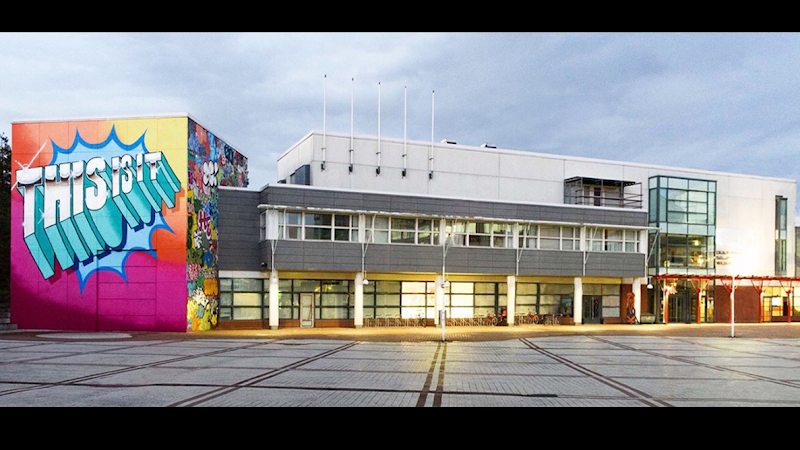
Vantaa Art Museum
About Vantaa Art Museum
Description
The Vantaa Art Museum is presented as a quietly confident cultural stop in Vantaa, Finland, a place that rewards curiosity more than casual browsing. It sits within an easily reachable urban spot—part of a shopping centre complex—which makes arrival feel unexpectedly convenient: one moment we were navigating storefronts and escalators, the next we were standing in a calm white-walled gallery. The museum has a focused personality. It is not attempting to overwhelm with size or claim to be the capital's main art citadel. Instead it concentrates on well-curated exhibitions, thoughtful programming and an approachable collection that tends to favour contemporary Finnish voices alongside occasional international guests. Visitors who expect blockbuster canvases will find something different here: intimate displays, experimental installations, graphic works and public-art projects that show a city thinking about culture as part of everyday life.
Accessibility is clearly more than lip service at this museum. The entrance is wheelchair friendly, there are accessible parking facilities and restrooms adapted for mobility needs. That matters because art spaces should be for everyone, and the Vantaa Art Museum does a good job at removing physical barriers. Families with small children will also feel reasonably welcome; the museum is described by many as kid-friendly, with exhibitions and occasional hands-on events that are designed to include younger visitors rather than simply tolerate them. There is no in-house restaurant, so plan ahead for food if you have a long schedule, but restrooms are available on site which is a small but crucial comfort when touring galleries.
What stands out most is the museum's blend of local identity and curious breadth. It champions local artists and themes tied to Vantaa and the surrounding region—sometimes highlighting works that address urban change, air travel (yes, the proximity to Helsinki Vantaa Airport inspires a lot of creative thinking), and public space. At other times it opens its walls to contemporary international practices, video art, and design experiments that feel refreshingly modern. The result is an experience that reflects the specificity of place: a municipal cultural hub rather than a national museum with sweeping ambitions. That specificity is useful to travellers. If you want to understand a slice of contemporary Finnish cultural life outside Helsinki proper, this museum gives clues and context without pretense.
The exhibition spaces themselves are modest but versatile. One can wander through a main gallery with clean sightlines, then discover smaller, themed rooms or project spaces where emerging artists or community-led works are shown. Lighting tends to be careful and considerate—good for photography if you slip into respectful, non-flash mode—though, on rainy days, reflections can sometimes be a tiny nuisance on glass-encased works. The museum's programming schedule changes frequently, which means returning visitors rarely see the exact same show twice. This is both a strength and a minor frustration: some shows are short-run and miss the chance to become local cultural fixtures; but that rotation keeps the museum lively and responsive to new ideas.
Visitors should also know that the Vantaa Art Museum functions as more than a place to look at pictures. It operates as a community node: workshops, artist talks, and occasional pop-up events happen with regularity. On one chilly autumn afternoon the museum hosted a late-evening open-house with local musicians and a participatory mural project in the lobby. It felt informal, slightly chaotic, and utterly human—exactly the sort of unpolished cultural evening that reveals how art institutions can fold into daily living. If your travel style includes seeking out such local moments, this museum will likely reward you with small but memorable encounters.
For photographers and visual-arts enthusiasts, the collection offers several intriguing highlights: pieces that combine photography, printmaking and mixed media in ways that nod to both Finnish design traditions and broader contemporary trends. Curatorial notes tend to be concise and thoughtful, giving visitors enough context to engage while leaving room for interpretation. That balance can be refreshing in a world of hyper-explanatory placards. And, yes, the kids' corners and interactive labels are thoughtfully integrated—they exist but never feel patronizing.
When it comes to practical visitor experience, the lack of an on-site café is noticeable. Many visitors pair a museum visit with a coffee run in the adjoining shopping area. That works fine for a quick visit, but if one plans to linger—reading catalogues, sketching, or taking part in a longer workshop—it's wise to build in an outside break for food. On the plus side, the museum’s location means there are plenty of nearby options for snacks, meals and coffee, and after a show it’s easy to move from contemplative gallery spaces to a livelier street-level café for debriefs and people-watching.
There is also a civic pride to the place. The museum feels municipally minded: accessible programming, reasonable admission policies, and an emphasis on community outreach are visible in how exhibitions are framed. The staff tend to be approachable and quietly proud of their roster; during a visit one winter the front-desk attendant took time to point out an unexpected installation in a hallway and offered a quick, enthusiastic sketch of its background. Small moments like that—human interactions that are warm and genuine—are plentiful enough to influence impressions more than any single painting or installation might.
Not everything is flawless. Some visitors mention the compact scale and desire a broader permanent collection or a larger display area. At times the museum can feel a little transient—excellent for discovery, less so for those seeking a prolonged, deep-dive encounter with a single artist. Similarly, temporary exhibitions sometimes have a short run, which can be disappointing if travel timing doesn’t line up. Occasionally the shopping-mall noise filters in, a reminder that the museum shares a space with more commercial activities. For many, that collision of commerce and culture is part of the charm; for others it is mildly disconcerting, especially during peak weekend shopping hours.
For travellers planning their visit, the museum is an excellent complement to other local attractions. It pairs well with nearby cultural sites—if travellers have a spare half-day they can create a thoughtful, offbeat cultural itinerary. The museum also makes a smart stop for those arriving early or late at the nearby airport, offering a human-scale, culturally rich pause that contrasts with travel hub anonymity. If one has only a little time in Vantaa, an hour inside the museum often feels like a worthwhile investment: visitors come away with specific impressions of local art scenes rather than a generic souvenir postcard picture.
There is a certain honesty in the museum’s approach: it doesn’t pretend to be more than it is, and yet it packs a considerable amount of cultural value into its walls. Solo travellers will find it meditative, families will find it accommodating, and art students or contemporary-art fans will find enough intelligent programming to justify a deliberate trip. For those who like to tell nuanced travel stories—I once told a friend about a room-sized video installation there that totally upended my expectation of Finnish minimalism—the museum becomes the kind of memory-anchor that helps describe the quieter, more thoughtful side of travel through Finland.
In short, the Vantaa Art Museum is best experienced with a slow curiosity. Wander the galleries, chat with staff if they’re free, peek into side-project spaces, and accept that part of the appeal is in the unexpected: a small, brilliant print, a local artist’s vivid take on urban life, or a community-curated installation that makes you smile. For planning purposes, remember that this is a small-but-intelligent municipal art space—bring patience, a hunger for discovery, and perhaps a jacket for those brisk Nordic drafts that slip through gallery doors. It will repay an attentive visit with insight, charm, and that satisfying feeling of having found a local cultural gem, without the fuss and the crowds that larger institutions sometimes bring.
Key Features
More Details
Updated August 30, 2025
Table of Contents
Description
The Vantaa Art Museum is presented as a quietly confident cultural stop in Vantaa, Finland, a place that rewards curiosity more than casual browsing. It sits within an easily reachable urban spot—part of a shopping centre complex—which makes arrival feel unexpectedly convenient: one moment we were navigating storefronts and escalators, the next we were standing in a calm white-walled gallery. The museum has a focused personality. It is not attempting to overwhelm with size or claim to be the capital’s main art citadel. Instead it concentrates on well-curated exhibitions, thoughtful programming and an approachable collection that tends to favour contemporary Finnish voices alongside occasional international guests. Visitors who expect blockbuster canvases will find something different here: intimate displays, experimental installations, graphic works and public-art projects that show a city thinking about culture as part of everyday life.
Accessibility is clearly more than lip service at this museum. The entrance is wheelchair friendly, there are accessible parking facilities and restrooms adapted for mobility needs. That matters because art spaces should be for everyone, and the Vantaa Art Museum does a good job at removing physical barriers. Families with small children will also feel reasonably welcome; the museum is described by many as kid-friendly, with exhibitions and occasional hands-on events that are designed to include younger visitors rather than simply tolerate them. There is no in-house restaurant, so plan ahead for food if you have a long schedule, but restrooms are available on site which is a small but crucial comfort when touring galleries.
What stands out most is the museum’s blend of local identity and curious breadth. It champions local artists and themes tied to Vantaa and the surrounding region—sometimes highlighting works that address urban change, air travel (yes, the proximity to Helsinki Vantaa Airport inspires a lot of creative thinking), and public space. At other times it opens its walls to contemporary international practices, video art, and design experiments that feel refreshingly modern. The result is an experience that reflects the specificity of place: a municipal cultural hub rather than a national museum with sweeping ambitions. That specificity is useful to travellers. If you want to understand a slice of contemporary Finnish cultural life outside Helsinki proper, this museum gives clues and context without pretense.
The exhibition spaces themselves are modest but versatile. One can wander through a main gallery with clean sightlines, then discover smaller, themed rooms or project spaces where emerging artists or community-led works are shown. Lighting tends to be careful and considerate—good for photography if you slip into respectful, non-flash mode—though, on rainy days, reflections can sometimes be a tiny nuisance on glass-encased works. The museum’s programming schedule changes frequently, which means returning visitors rarely see the exact same show twice. This is both a strength and a minor frustration: some shows are short-run and miss the chance to become local cultural fixtures; but that rotation keeps the museum lively and responsive to new ideas.
Visitors should also know that the Vantaa Art Museum functions as more than a place to look at pictures. It operates as a community node: workshops, artist talks, and occasional pop-up events happen with regularity. On one chilly autumn afternoon the museum hosted a late-evening open-house with local musicians and a participatory mural project in the lobby. It felt informal, slightly chaotic, and utterly human—exactly the sort of unpolished cultural evening that reveals how art institutions can fold into daily living. If your travel style includes seeking out such local moments, this museum will likely reward you with small but memorable encounters.
For photographers and visual-arts enthusiasts, the collection offers several intriguing highlights: pieces that combine photography, printmaking and mixed media in ways that nod to both Finnish design traditions and broader contemporary trends. Curatorial notes tend to be concise and thoughtful, giving visitors enough context to engage while leaving room for interpretation. That balance can be refreshing in a world of hyper-explanatory placards. And, yes, the kids’ corners and interactive labels are thoughtfully integrated—they exist but never feel patronizing.
When it comes to practical visitor experience, the lack of an on-site café is noticeable. Many visitors pair a museum visit with a coffee run in the adjoining shopping area. That works fine for a quick visit, but if one plans to linger—reading catalogues, sketching, or taking part in a longer workshop—it’s wise to build in an outside break for food. On the plus side, the museum’s location means there are plenty of nearby options for snacks, meals and coffee, and after a show it’s easy to move from contemplative gallery spaces to a livelier street-level café for debriefs and people-watching.
There is also a civic pride to the place. The museum feels municipally minded: accessible programming, reasonable admission policies, and an emphasis on community outreach are visible in how exhibitions are framed. The staff tend to be approachable and quietly proud of their roster; during a visit one winter the front-desk attendant took time to point out an unexpected installation in a hallway and offered a quick, enthusiastic sketch of its background. Small moments like that—human interactions that are warm and genuine—are plentiful enough to influence impressions more than any single painting or installation might.
Not everything is flawless. Some visitors mention the compact scale and desire a broader permanent collection or a larger display area. At times the museum can feel a little transient—excellent for discovery, less so for those seeking a prolonged, deep-dive encounter with a single artist. Similarly, temporary exhibitions sometimes have a short run, which can be disappointing if travel timing doesn’t line up. Occasionally the shopping-mall noise filters in, a reminder that the museum shares a space with more commercial activities. For many, that collision of commerce and culture is part of the charm; for others it is mildly disconcerting, especially during peak weekend shopping hours.
For travellers planning their visit, the museum is an excellent complement to other local attractions. It pairs well with nearby cultural sites—if travellers have a spare half-day they can create a thoughtful, offbeat cultural itinerary. The museum also makes a smart stop for those arriving early or late at the nearby airport, offering a human-scale, culturally rich pause that contrasts with travel hub anonymity. If one has only a little time in Vantaa, an hour inside the museum often feels like a worthwhile investment: visitors come away with specific impressions of local art scenes rather than a generic souvenir postcard picture.
There is a certain honesty in the museum’s approach: it doesn’t pretend to be more than it is, and yet it packs a considerable amount of cultural value into its walls. Solo travellers will find it meditative, families will find it accommodating, and art students or contemporary-art fans will find enough intelligent programming to justify a deliberate trip. For those who like to tell nuanced travel stories—I once told a friend about a room-sized video installation there that totally upended my expectation of Finnish minimalism—the museum becomes the kind of memory-anchor that helps describe the quieter, more thoughtful side of travel through Finland.
In short, the Vantaa Art Museum is best experienced with a slow curiosity. Wander the galleries, chat with staff if they’re free, peek into side-project spaces, and accept that part of the appeal is in the unexpected: a small, brilliant print, a local artist’s vivid take on urban life, or a community-curated installation that makes you smile. For planning purposes, remember that this is a small-but-intelligent municipal art space—bring patience, a hunger for discovery, and perhaps a jacket for those brisk Nordic drafts that slip through gallery doors. It will repay an attentive visit with insight, charm, and that satisfying feeling of having found a local cultural gem, without the fuss and the crowds that larger institutions sometimes bring.
Key Highlights
Vantaa Art Museum
Location
Places to Stay Near Vantaa Art Museum
Find and Book a Tour
Explore More Travel Guides
No reviews found! Be the first to review!
Traveler Reviews for Vantaa Art Museum
There are no reviews yet. Be the first one to write one.
Have you visited Vantaa Art Museum? Help other travelers by sharing your review.
Find Accommodations Nearby
Recommended Tours & Activities
Visitor Reviews
There are no reviews yet. Be the first one to write one.
Share Your Experience
Have you visited Vantaa Art Museum? Help other travelers by leaving a review.