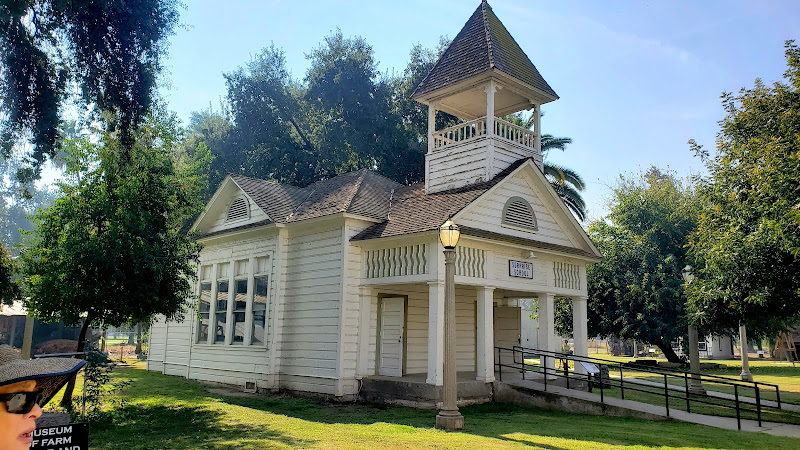
It walks visitors through the county’s agricultural roots, the lives of early settlers, and the deep cultural heritage of the region, with a genuinely impressive collection of Native American baskets forming one of the museum’s signature attractions. For travelers who like museums that feel lived-in — places where artifacts sit in conversation with each other and with the people who brought them to life — this is one of those spots that rewards slow wandering.
Exhibits are arranged so that context matters. Instead of isolating an object behind glass with a label, the museum often places artifacts within scenes or alongside oral histories and photographs. This makes the past feel like it was an actual messy, passionate human affair — which, of course, it was. Visitors will find displays focused on agricultural technology, family life in the valley across different eras, and regional craft and trade. The basket collection is not just a pile of pretty weaving; it’s a cupboard of culture. The baskets document craftsmanship, trade networks, and ceremonial practices among local Native communities. Their variety is the sort of thing that can surprise even visitors who think they know California history.
There’s also a compact theater space where occasional live performances and community presentations are held. That theater, in many ways, acts as a bridge: museum visitors can move from static displays into live storytelling, public talks, and filmed histories. The programming sometimes features local musicians, storytellers, and guest speakers—so it’s worth checking what’s on the calendar if a performance would sweeten the visit. The theater and live performance angle give the museum a local pulse; it’s not frozen in a case, it invites participation.
Accessibility is straightforward and thoughtfully considered. The museum offers a wheelchair-accessible entrance, parking, restrooms, and seating. There’s a gender-neutral restroom, changing tables for families with babies, and kid-focused activities that aim to keep younger visitors engaged without dumbing anything down. Staff tend to be friendly and used to assisting a broad range of visitors. For older adults, people with mobility needs, and families with small children, the layout generally makes the museum easy to enjoy without sprinting or backtracking.
What travelers sometimes miss, but should not, is that the museum sits adjacent to Mooney Grove Park. This proximity is great for travelers who like to mix indoor learning with outdoor time. One afternoon visit can include a museum tour followed by a picnic under big shade trees, or a loop around the park to round out the day. Locals often use that combination for family outings: history in the morning, playtime afterward. It’s a nice rhythm and, truthfully, it’s how the museum was meant to be experienced—connected to community life rather than severed from it.
Practical amenities are simple but useful. On-site parking is available, though during special events it can get full, so arriving a touch earlier than the posted opening time makes sense. The museum does not have an on-site restaurant, so plan to bring snacks or pair the visit with a nearby cafe in Visalia. Tours are offered, and taking one of the guided tours adds layers of nuance to the exhibits; docents often share little anecdotes and provenance stories that you won’t find on the label cards. Those tours are especially valuable for people who want to ask the nitty-gritty questions about specific collection pieces, such as the origins of particular baskets, or how agricultural implements evolved across the valley.
Visitors who like context will appreciate the way the museum links local themes to broader narratives: migration, labor, and the social transformations that shaped California’s Central Valley. The agricultural exhibits, for instance, don’t just display old tools. They describe labor movements, irrigation innovations, crop diversity across decades, and the human stories behind fluctuations in the regional economy. For travelers who typically breeze through tourist museums, this one rewards a slower pace. The more time a visitor spends reading the labels and listening to the audio segments, the more the place pays back in understanding.
Families find the museum particularly welcoming. Kid-friendly activities are set up to encourage tactile learning, with changeable stations that highlight crafts, simple agricultural science, and local wildlife. There’s a sense that education here is not lecture-based but curiosity-led. Numerous parents have said that a bored child was quickly turned into an engaged mini-historian after handling a puzzle or trying a simple demonstration activity. It’s not a children’s museum, but it treats younger visitors like real participants — which, in the writer’s humble opinion, is how museums should be.
One under-the-radar charm: the museum changes exhibits with modest regularity, which means repeat visitors from the region often find something new on successive trips. Special exhibits may spotlight particular families, seasonal crops, or the work of local artisans. Those rotating shows are where the museum often gets creative: multi-media presentations, guest-curated cases, and community-sourced displays that keep the content fresh. If a traveler spots a locally-themed temporary exhibit, it’s worth spending extra time; these are often where the most personal stories are told.
There is a humble authenticity to the place. It doesn’t try to overwhelm with high-end tech or dizzying special effects. Instead, the Tulare County Museum leans on three things that work well in tandem: a strong collection (especially the Native American baskets), purposeful interpretation that respects complexity, and an active connection to the local community through performances and events. For many travelers, that translates into the sort of museum visit that feels human rather than corporate.
That said, it’s not without quirks. The building layout can feel a little idiosyncratic to first-time visitors — rooms shift in scale, and some exhibits are tucked into alcoves that reward exploration. Sometimes signage could be crisper, and there are moments where a display could use an extra label or a touch more historical context. But those are small trade-offs for a museum that consistently prioritizes storytelling over glossy presentation. Docents and staff often fill those small gaps with friendly, off-the-cuff explanations that are both informative and full of personality.
For visitors who plan ahead, the museum experience can be enriched by timing the visit around an event or guided tour. It’s also wise to allow at least 1.5 to 2 hours to move through the permanent and any rotating exhibits at a comfortable pace. A lot of travel itineraries try to pack in too much; here, taking a breath and letting the exhibits sink in will be more satisfying. And if the timing aligns with a live performance in the theater, that can transform the visit from informative to memorable. One traveler remembered watching a short play about valley life that made a simple museum visit feel surprisingly cinematic — small scenes, big feelings.
In short, the Tulare County Museum offers a grounded, thoughtful encounter with the county’s past. It’s ideal for travelers who want historical depth without pretension, for families who need a welcoming environment, and for curious visitors who appreciate craft, context, and community programming. It’s the kind of place where objects feel like they have voices — and the staff are keen to help those voices be heard. If a traveler wants to leave with a clearer sense of how Tulare County grew into its current self, and how the indigenous and settler stories intersect here, this museum is an excellent starting point.
 Real Journey Travels