
Tomb of Sheikh Ahmad-e Jam
About Tomb of Sheikh Ahmad-e Jam
Description
The Tomb of Sheikh Ahmad-e Jam stands as one of Iran's most remarkable historical treasures, quietly tucked away in the city of Torbat-e Jam in Razavi Khorasan Province. This isn't your typical tourist trap - it's a genuine piece of Persian history that tells the story of one of the country's most revered mystics and scholars from the 11th and 12th centuries.
What strikes most visitors first is the sheer architectural complexity of this site. We're talking about a collection of buildings that spans several centuries, each adding its own layer to the story. The mausoleum complex houses the remains of Sheikh Ahmad Jam (1049-1141 AD), a Sufi mystic whose influence was so profound that the entire city eventually took his name.
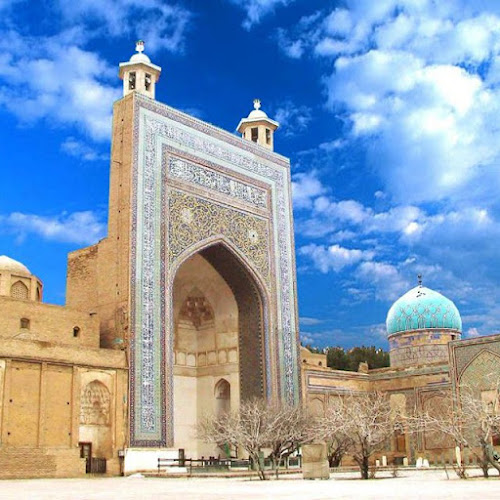
The complex itself is built around a spacious central courtyard - a design that immediately draws you in and makes you want to explore every corner. And there's plenty to see. The main tomb sits under an impressive double-shelled dome that's considered a masterpiece of Persian architecture. But that's just the beginning. You'll also find the Kermani Mosque, the Firozhany School, what locals call the "White Dome," both an old and new mosque, plus various other religious and educational buildings.
What I find particularly fascinating is how this place represents authentic Sunni Islamic architecture within predominantly Shia Iran. It's like stepping into a different cultural pocket, one that's been preserved for nearly a thousand years. The site serves as both a pilgrimage destination and a historical monument, which gives it this unique dual personality.
The craftsmanship here is extraordinary. The dome work, the intricate tilework, and the overall layout show the kind of attention to detail that modern construction just doesn't match. You can spend hours just looking at the geometric patterns and calligraphy that adorn various surfaces throughout the complex.
Key Features
The Tomb of Sheikh Ahmad-e Jam offers visitors several distinctive architectural and historical elements that make it stand out among Iran's many historical sites:
- Double-shelled main dome - The centerpiece dome features innovative engineering with two separate shells, representing advanced Persian architectural techniques from the medieval period
- Central courtyard design - A spacious courtyard serves as the heart of the complex, connecting all major buildings and providing a peaceful gathering space
- Kermani Mosque entrance - An ornate entrance featuring traditional Persian Islamic design elements and detailed stonework
- Firozhany School - Historical madrasa buildings that showcase educational architecture from centuries past
- White Dome structure - A secondary domed building that complements the main mausoleum architecture
- Atiq (Old) Mosque - Original mosque structures dating back several centuries
- New Mosque additions - Later architectural additions that show the evolution of the complex over time
- Minaret and porch areas - Traditional Islamic architectural elements that complete the complex's skyline
- Wheelchair accessibility features - Modern adaptations including accessible entrances and parking areas
- Family-friendly layout - Open spaces and safe pathways suitable for visitors with children
Best Time to Visit
Timing your visit to the Tomb of Sheikh Ahmad-e Jam can really make or break your experience, and I've learned this the hard way through various trips to similar sites across Iran. The climate in Razavi Khorasan Province can be pretty unforgiving during certain months, so you'll want to plan accordingly.
Spring (March to May) is absolutely your best bet. The weather's mild, the crowds are manageable, and you won't be dealing with the extreme temperatures that can make exploring outdoor courtyards miserable. Plus, there's something special about experiencing historical sites when the weather's just right - you can actually focus on the architecture instead of trying to find shade every few minutes.
Early fall (September to November) comes in as a close second. The summer heat has died down, but you're still getting decent daylight hours for photography and exploration. The light during these months is particularly beautiful for capturing the intricate details of the domes and tilework.
I'd strongly advise against summer visits unless you're really used to intense heat. We're talking temperatures that can easily exceed 35°C (95°F), and when you're wandering around exposed courtyards and climbing steps to get better views of the architecture, it becomes genuinely uncomfortable.
Winter isn't impossible, but it's not ideal either. The cold can be quite biting, and you might encounter occasional snow or rain that could limit your exploration time. However, if you do visit during winter months, you'll likely have the place almost to yourself, which has its own appeal.
For the best experience, aim for weekday visits during spring or fall. Religious holidays and weekends can bring larger crowds, which isn't necessarily bad but might affect your ability to get those perfect photos or have quiet moments for reflection.
How to Get There
Getting to the Tomb of Sheikh Ahmad-e Jam requires a bit of planning, but it's definitely doable and the journey itself offers some interesting glimpses of rural Iranian landscapes. Torbat-e Jam isn't exactly on the main tourist circuit, which is part of its charm but also means transportation options are somewhat limited.
If you're flying in, your closest major airport is Mashhad International Airport, which is about 150 kilometers away. From Mashhad, you have several options. The most straightforward is hiring a private taxi or driver for the day - it'll cost you more upfront, but you get flexibility and comfort. The drive takes roughly 2-2.5 hours depending on traffic and road conditions.
Bus service runs between Mashhad and Torbat-e Jam several times daily, and honestly, this is how most locals make the journey. The buses are generally comfortable and affordable, though you'll need to check current schedules as they can change seasonally. The bus station in Mashhad has regular departures, and the trip takes about 2.5-3 hours.
If you're already in Iran and coming from Tehran, you're looking at either a domestic flight to Mashhad first, or a very long overland journey. The direct drive from Tehran to Torbat-e Jam is around 800 kilometers and takes 8-10 hours, so I'd only recommend this if you're planning to see multiple sites along the way.
Once you're in Torbat-e Jam, the tomb complex is well-known locally, so any taxi driver can get you there. It's centrally located within the city, so walking is possible if you're staying nearby. The site has parking available, including designated spaces for visitors with disabilities.
One tip I wish someone had told me earlier - consider staying overnight in Torbat-e Jam if your schedule allows. The town has some basic but comfortable accommodations, and staying locally gives you the chance to visit the tomb both in the late afternoon and early morning when the light is best for photography.
Tips for Visiting
Visiting the Tomb of Sheikh Ahmad-e Jam successfully requires a bit of cultural awareness and practical preparation. This isn't like visiting a museum where everything's laid out for international tourists - it's a functioning religious site with its own rhythms and expectations.
Dress code is absolutely crucial here. We're talking about a conservative religious environment, so both men and women need to dress modestly. For women, this means covering hair, arms, and legs completely. Long sleeves, long pants or skirts, and a headscarf are non-negotiable. Men should wear long pants and shirts that cover their arms. I've seen visitors turned away at the entrance for inappropriate clothing, and there aren't always shops nearby where you can quickly buy something suitable.
Bring comfortable walking shoes with good grip. The complex involves quite a bit of walking on various surfaces - stone courtyards, steps, and sometimes uneven ground. You'll also be removing your shoes before entering certain areas, so slip-on shoes or ones that are easy to take off and put back on will save you time and hassle.
Photography rules can be tricky. While exterior shots of the buildings and architecture are generally fine, be very respectful about photographing people, especially during prayer times or religious observances. Ask permission when in doubt, and be prepared to put your camera away if requested. Flash photography inside the main tomb chamber is typically prohibited.
The complex is wheelchair accessible, which is great, but it's worth calling ahead if you have specific mobility needs to confirm which areas are fully accessible on the day of your visit.
Language can be a barrier since most staff and local visitors speak Farsi. Learning a few basic Persian phrases for "thank you," "excuse me," and "where is..." will go a long way. Having a translation app ready on your phone is also really helpful.
Visit timing within your day matters too. Early morning visits (around 8-9 AM) tend to be quieter and offer better light for photography. Late afternoon can also be beautiful, but you might encounter more local visitors coming for prayers.
Bring water and perhaps some snacks, especially if you're visiting during warmer months. There might be small shops nearby, but don't count on finding exactly what you need right at the site.
And here's something that isn't mentioned in most guidebooks - be prepared for this visit to take longer than you initially planned. The architecture is so intricate and the history so layered that what you think will be a quick stop often turns into several hours of exploration and contemplation.
Key Features
- Central mausoleum of Sheikh Ahmad-e Jami with historic sarcophagus and white dome
- Multiple mosques and madrasas showcasing Khorasani tilework and brick patterns
- Courtyards and shaded iwans offering tranquil, photogenic spaces
- Historic entrance portals and carved stone inscriptions
- Nearby ancillary structures: water reservoir (ab anbar), tombstones and small museums
Nearby Attractions
Tours & Activities
GetYourGuide provides this tour inventory. We may earn a commission if you book through it; verify current availability, prices, and terms with the provider.
Visitor Reviews
There are no reviews yet. Be the first one to write one.
Share Your Experience
Have you visited Tomb of Sheikh Ahmad-e Jam? Help other travelers by leaving a review.