
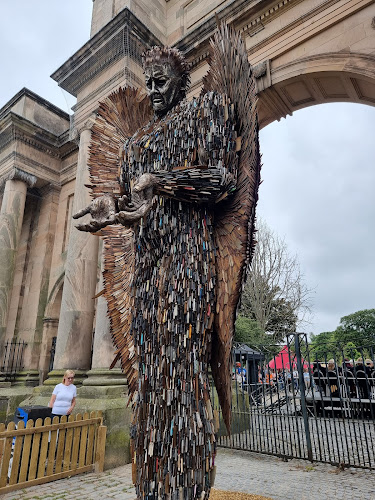
The Town Gates, Birkenhead Park
About The Town Gates, Birkenhead Park
Description
The Town Gates of Birkenhead Park are one of those landmarks that quietly command your attention the moment you see them. Built in 1847, they stand as a proud reminder of the park’s Victorian heritage, with their ornate stonework and iron detailing still holding up remarkably well against the test of time. There’s a certain dignity to them, the kind you can’t fake or replicate with modern architecture. They’re not just an entrance — they’re a statement, marking the threshold to one of the world’s first publicly funded parks.
Walking up to the gates, you can almost imagine the carriages that once rolled through here, the clatter of hooves echoing down the road. And yet, despite their historic significance, they don’t feel unapproachably grand. There’s a warmth to the space, maybe because it’s still used daily by locals heading for a jog, a dog walk, or just a slow Sunday stroll. The gates are fully accessible, with a wheelchair-friendly entrance and nearby parking, which means no one has to miss out on seeing them up close. Families often stop here before heading deeper into the park, kids darting ahead while parents linger to take a photo or two. It’s the kind of spot where you can linger without feeling rushed, and that’s a rare thing in a busy town.
It’s not perfect — nothing ever is — but that’s part of the charm. You might spot a bit of weathering here and there, or a stray leaf caught in the ironwork after a windy day. But if you ask me, those little imperfections make it feel more real, more lived-in. This isn’t a sterile museum piece; it’s a working gateway that has welcomed generations of visitors for over 175 years. And if you take the time to really look, you’ll notice the craftsmanship in every curve and carving. It’s the kind of detail you only appreciate when you stand still for a moment and let the history sink in.
Key Features
- Historic construction dating back to 1847, part of the original Birkenhead Park design
- Elegant Victorian stone and iron craftsmanship with intricate detailing
- Fully wheelchair-accessible entrance and nearby accessible parking
- Popular photo spot for visitors entering the park
- Close proximity to walking paths, gardens, and park attractions
- Well-maintained yet retains authentic signs of age and history
Best Time to Visit
If you’re looking for the gates at their most photogenic, aim for early morning or late afternoon. The low sun casts long shadows and brings out the texture in the stonework, making the details pop in a way midday light just can’t. Spring is particularly lovely, with blossoms framing the view, while autumn offers a rich palette of gold and russet leaves drifting across the entrance. Personally, I’ve always had a soft spot for visiting on a crisp winter morning when the frost clings to the ironwork — it’s like stepping into a sepia photograph.
Weekdays tend to be quieter, so if you want to take your time without too many people in the background of your shots, that’s the way to go. Weekends, especially when the weather’s good, bring a livelier atmosphere with families, joggers, and the occasional busker adding a bit of soundtrack to the scene.
How to Get There
The Town Gates are positioned at one of the main entrances to Birkenhead Park, making them easy to spot whether you’re arriving on foot, by bike, or via public transport. If you’re coming from central Birkenhead, it’s a short walk along well-marked routes. Buses stop nearby, and for those driving, there’s accessible parking close to the gates. Cyclists will find bike racks within a short distance, so you can lock up and explore without worry.
For visitors unfamiliar with the area, I’d suggest using the park as your landmark — once you’re in its orbit, the gates are hard to miss. And if you’re the type who likes to wander, you could easily make the approach part of your experience, taking in the surrounding streets and their mix of old and new architecture before arriving at the gates themselves.
Tips for Visiting
First off, don’t just breeze through. I know the temptation is there — you see a gate, you walk past it — but this is one of those places where a few extra minutes make all the difference. Stand to the side and look up; the scale feels different when you’re not rushing. If you’re into photography, try framing a shot from slightly off-center to catch the depth of the ironwork against the park beyond.
Bring comfortable shoes, especially if you plan to explore the park after. The gates might be your starting point, but there’s a lot of ground to cover inside. And if you’re visiting with kids, they’ll probably want to run straight through, so be ready to follow. For wheelchair users or anyone with mobility concerns, the approach is smooth and manageable, but it’s worth checking the park’s map for the most accessible paths once you’re inside.
Lastly, keep an eye out for seasonal events. Sometimes the gates are subtly decorated for holidays or local celebrations, and it adds a nice touch to the already impressive setting. And if you’re anything like me, you might find yourself coming back at different times of year just to see how the light, the weather, and the mood of the place change. It’s a small ritual, but one that makes the Town Gates feel less like a tourist stop and more like an old friend you’re visiting again.
Key Features
- Historic construction dating back to 1847, part of the original Birkenhead Park design
- Elegant Victorian stone and iron craftsmanship with intricate detailing
- Fully wheelchair-accessible entrance and nearby accessible parking
- Popular photo spot for visitors entering the park
- Close proximity to walking paths, gardens, and park attractions
- Well-maintained yet retains authentic signs of age and history
More Details
Updated August 11, 2025
Table of Contents
Description
The Town Gates of Birkenhead Park are one of those landmarks that quietly command your attention the moment you see them. Built in 1847, they stand as a proud reminder of the park’s Victorian heritage, with their ornate stonework and iron detailing still holding up remarkably well against the test of time. There’s a certain dignity to them, the kind you can’t fake or replicate with modern architecture. They’re not just an entrance — they’re a statement, marking the threshold to one of the world’s first publicly funded parks.
Walking up to the gates, you can almost imagine the carriages that once rolled through here, the clatter of hooves echoing down the road. And yet, despite their historic significance, they don’t feel unapproachably grand. There’s a warmth to the space, maybe because it’s still used daily by locals heading for a jog, a dog walk, or just a slow Sunday stroll. The gates are fully accessible, with a wheelchair-friendly entrance and nearby parking, which means no one has to miss out on seeing them up close. Families often stop here before heading deeper into the park, kids darting ahead while parents linger to take a photo or two. It’s the kind of spot where you can linger without feeling rushed, and that’s a rare thing in a busy town.
It’s not perfect — nothing ever is — but that’s part of the charm. You might spot a bit of weathering here and there, or a stray leaf caught in the ironwork after a windy day. But if you ask me, those little imperfections make it feel more real, more lived-in. This isn’t a sterile museum piece; it’s a working gateway that has welcomed generations of visitors for over 175 years. And if you take the time to really look, you’ll notice the craftsmanship in every curve and carving. It’s the kind of detail you only appreciate when you stand still for a moment and let the history sink in.
Key Features
- Historic construction dating back to 1847, part of the original Birkenhead Park design
- Elegant Victorian stone and iron craftsmanship with intricate detailing
- Fully wheelchair-accessible entrance and nearby accessible parking
- Popular photo spot for visitors entering the park
- Close proximity to walking paths, gardens, and park attractions
- Well-maintained yet retains authentic signs of age and history
Best Time to Visit
If you’re looking for the gates at their most photogenic, aim for early morning or late afternoon. The low sun casts long shadows and brings out the texture in the stonework, making the details pop in a way midday light just can’t. Spring is particularly lovely, with blossoms framing the view, while autumn offers a rich palette of gold and russet leaves drifting across the entrance. Personally, I’ve always had a soft spot for visiting on a crisp winter morning when the frost clings to the ironwork — it’s like stepping into a sepia photograph.
Weekdays tend to be quieter, so if you want to take your time without too many people in the background of your shots, that’s the way to go. Weekends, especially when the weather’s good, bring a livelier atmosphere with families, joggers, and the occasional busker adding a bit of soundtrack to the scene.
How to Get There
The Town Gates are positioned at one of the main entrances to Birkenhead Park, making them easy to spot whether you’re arriving on foot, by bike, or via public transport. If you’re coming from central Birkenhead, it’s a short walk along well-marked routes. Buses stop nearby, and for those driving, there’s accessible parking close to the gates. Cyclists will find bike racks within a short distance, so you can lock up and explore without worry.
For visitors unfamiliar with the area, I’d suggest using the park as your landmark — once you’re in its orbit, the gates are hard to miss. And if you’re the type who likes to wander, you could easily make the approach part of your experience, taking in the surrounding streets and their mix of old and new architecture before arriving at the gates themselves.
Tips for Visiting
First off, don’t just breeze through. I know the temptation is there — you see a gate, you walk past it — but this is one of those places where a few extra minutes make all the difference. Stand to the side and look up; the scale feels different when you’re not rushing. If you’re into photography, try framing a shot from slightly off-center to catch the depth of the ironwork against the park beyond.
Bring comfortable shoes, especially if you plan to explore the park after. The gates might be your starting point, but there’s a lot of ground to cover inside. And if you’re visiting with kids, they’ll probably want to run straight through, so be ready to follow. For wheelchair users or anyone with mobility concerns, the approach is smooth and manageable, but it’s worth checking the park’s map for the most accessible paths once you’re inside.
Lastly, keep an eye out for seasonal events. Sometimes the gates are subtly decorated for holidays or local celebrations, and it adds a nice touch to the already impressive setting. And if you’re anything like me, you might find yourself coming back at different times of year just to see how the light, the weather, and the mood of the place change. It’s a small ritual, but one that makes the Town Gates feel less like a tourist stop and more like an old friend you’re visiting again.
Key Highlights
- Historic construction dating back to 1847, part of the original Birkenhead Park design
- Elegant Victorian stone and iron craftsmanship with intricate detailing
- Fully wheelchair-accessible entrance and nearby accessible parking
- Popular photo spot for visitors entering the park
- Close proximity to walking paths, gardens, and park attractions
- Well-maintained yet retains authentic signs of age and history
Location
Places to Stay Near The Town Gates, Birkenhead Park
Find and Book a Tour
Explore More Travel Guides
No reviews found! Be the first to review!
Traveler Reviews for The Town Gates, Birkenhead Park
There are no reviews yet. Be the first one to write one.
Have you visited The Town Gates, Birkenhead Park? Help other travelers by sharing your review.
You Might Also Like
St Mary
Clue HQ - The Live Escape Game - Wirral
Eureka! Science + Discovery
Find Accommodations Nearby
Recommended Tours & Activities
Visitor Reviews
There are no reviews yet. Be the first one to write one.
Share Your Experience
Have you visited The Town Gates, Birkenhead Park? Help other travelers by leaving a review.