
The Adalaj Stepwell
About The Adalaj Stepwell
History and Significance
If you’re planning a trip to Gujarat, the Adalaj Stepwell is an absolute must-see—a stunning jewel that combines architectural genius, cultural depth, and a truly captivating story of history and love. Built way back in 1499, this stepwell was originally commissioned by Rana Veer Singh, a ruler from the Vaghela dynasty, to help bring water to the dry village of Adalaj, located near Ahmedabad. The plot thickens with a tale that could rival the best historical dramas: Rana Veer Singh died in battle fighting Mahmud Begada, the Sultan of Gujarat. The Sultan fell for the widow, Rani Rudabai, who agreed to marry him only if he completed the stepwell that her late husband had started. This legendary story adds layers of romance, resilience, and political intrigue to an already impressive architectural feat.
Adalaj Stepwell isn’t just a water reservoir—it’s a fine example of how ancient engineering met artistry. The structure was carefully designed to provide not only water but also cool respite from the harsh Indian sun, serving as a social and cultural hub for both locals and travelers. The intricate carvings and architectural style beautifully fuse Hindu, Jain, and Islamic influences, making the stepwell a symbol of Gujarat’s diverse heritage and religious co-existence. It’s a physical expression of centuries of history, cultural exchange, and the importance of water as a precious resource in semi-arid regions.
Main Attractions and Activities
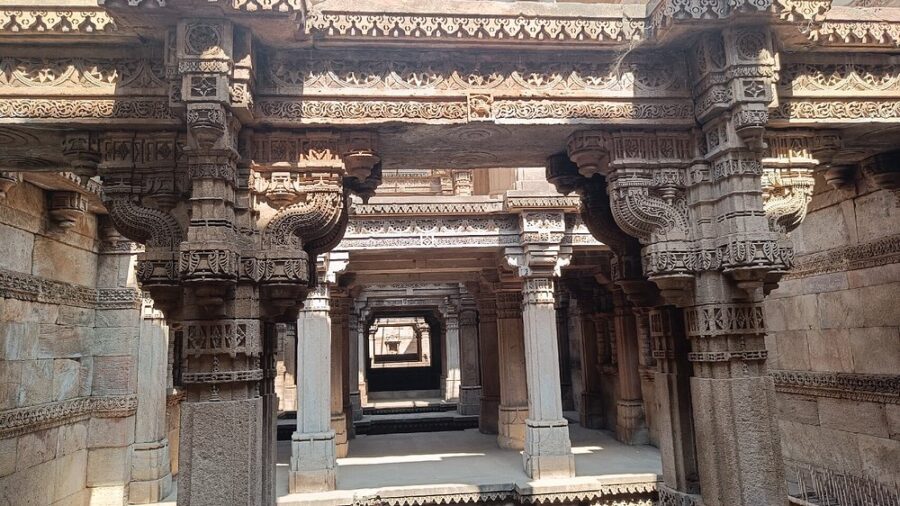
When you step into Adalaj Stepwell, you’re entering a five-story subterranean marvel. The well descends deep into the earth through staircases that converge at platforms on each level, creating a layered, echoing space full of intricate artistry. You’ll be amazed at the exquisite carvings on the walls, pillars, and beams, depicting an array of Hindu deities, religious motifs, floral patterns, and everyday scenes that tell stories of life, devotion, and heritage.
The octagonal shape and the three entrance staircases (a unique architectural feature known as “three-faced” or “Jaya Vav”) welcome visitors from multiple directions, symbolizing open access. Each floor has resting areas shaded from the heat, making it a cool haven no matter the blazing sun above. Historically, these areas weren’t just practical—they were social spaces where people gathered to rest, worship, and enjoy music or dance festivals, making the stepwell a cultural center as much as a water source.
Exploring the stepwell, you can appreciate how the rooms and niches were used for ritual purposes, with carvings that double as mini-temples for prayer and meditation. The artistry reflects both Hindu and Islamic traditions in a seamless dialogue. And the sense of depth, combined with the play of natural light filtering down, creates a mystical atmosphere that captivates photographers and history buffs alike.
Visitor Experience
Visiting Adalaj Stepwell is like taking a deep dive into another world—one where water meets spirituality and engineering touches artistry. As you descend the stone steps, the temperature noticeably drops, offering relief from Gujarat’s dry heat. The cool, shaded corridors wrapped in finely chiseled stone carvings are breathtaking, and at every turn, you catch something new: a divine sculpture, a delicate pattern, or a quiet niche hinting at times long past.
I remember my visit when I paused on the middle platform to look up at the stepwell’s towering walls. The carvings shimmering in the dim light told silent stories of kings, queens, and common folk, all tied together in this stone sanctuary. You sense how this isn’t just an ancient well but a communal heart beating beneath the surface.
Crowds tend to peak during weekends, so if you want a more contemplative experience, early mornings or weekdays are ideal. The locals also share tales of Rani Rudabai’s strength and spirit, adding a personal dimension to the visit. Plus, the peaceful village surrounding the stepwell offers authentic Gujarati hospitality if you want to extend your exploration.
Tips for Visitors
To get the best out of your visit to Adalaj Stepwell, consider the following:
Wear comfortable footwear—the nicely carved steps can be steep and uneven in parts.
Visit in the cooler months (October to February) for the most pleasant weather.
Arrive early in the day if you want to avoid crowds and enjoy the serenity.
Bring a camera, but be mindful of the lighting conditions—early morning or late afternoon offers the most dramatic shadows.
Hire a local guide or join a small tour to fully appreciate the architectural and historical nuances.
Stay hydrated since exploring under the sun can be taxing, especially if you extend your visit to nearby attractions.
Respect the site by not touching delicate carvings or climbing on the architectural features.
Combine your visit with a trip to Ahmedabad or Gandhinagar to see other rich cultural gems in Gujarat.
Accessibility and Facilities
Adalaj Stepwell is located about 18 km from Ahmedabad city, well connected by road. It’s easy to reach by taxi or private car. The village itself is quaint, offering a glimpse into rural Gujarat alongside this historic marvel.
The stepwell has basic on-site facilities like clean restrooms and a small ticket counter, but don’t expect large commercial complexes or eateries directly adjacent. The pathways inside the stepwell are stone-carved and somewhat narrow, which might pose challenges for visitors with mobility issues. There are multiple flights of steps, and no ramps, so it’s less accessible for wheelchairs or strollers.
Benches are available around the well’s perimeter for resting, and the village offers some modest local hospitality spots where you can get refreshments. Overall, the site balances conservation with visitor convenience well enough for most travelers.
Unique Features
What truly sets Adalaj Stepwell apart is how it blends architecture, storytelling, functionality, and spirituality into one extraordinary structure. The architectural fusion is striking—you’ll find the geometric precision and floral motifs characteristic of Islamic art alongside Hindu mythological figures and Jain symbolism.
The stepwell’s design to regulate temperature naturally, creating a cool underground climate, is a marvel of ancient engineering that still fascinates modern scientists and architects. It served myriad purposes: a water reservoir, a community gathering spot, a place of worship, and even a cool retreat from the summer heat.
The legend of Rani Rudabai and her role in the construction after her husband’s death adds an emotional and human layer that transforms the stepwell from a mere monument to a timeless story of power, perseverance, and artistry.
Another unique feature is the ornate carvings depicting everyday life, from village dancers to musicians, reflecting the vibrant cultural tapestry of the era. The fact that the artisans who created this masterpiece were reportedly killed after its completion to preserve its uniqueness adds a tragic, haunting mystique to the site’s history.
Overall Impressions
Honestly, the Adalaj Stepwell is one of those rare places where the past speaks clearly through stone and space. It’s humbling and awe-inspiring, providing a break from the modern world into a realm where water, art, history, and legend all converge.
The experience isn’t just about seeing a historic monument but feeling the cool air, noticing the gentle echoes, tracing carvings with your eyes, and absorbing the centuries of human creativity. If you love architecture, history, or just want a peaceful retreat with a story behind it, Adalaj Stepwell delivers profoundly.
It’s a gem of Gujarat that’ll linger in your memory—not just for its impressive visuals but for the stories carved in every corner and the spirit of a queen who shaped its legacy.
Pros and Cons
| Pros | Cons |
|---|---|
| Stunning blend of Hindu, Jain, and Islamic architecture | Limited accessibility for visitors with mobility issues |
| Five-story intricately carved stepwell with cool underground retreat | Basic facilities, no extensive visitor amenities |
| A legendary romantic and historical story behind the construction | It can be crowded on weekends and holidays |
| Unique climate control through natural design | Steep and sometimes slippery stone steps |
| Cultural hub historically used for rituals and gatherings | Limited signage in English; guided tours are recommended |
| Easily reachable from Ahmedabad for a day trip | Minimal shaded resting spots inside the stepwell |
Visiting the Adalaj Stepwell is stepping into a living piece of history where every stone tells a tale. If you want to feel the pulse of ancient Gujarat’s culture, engineering brilliance, and heartfelt stories, this is where your journey should begin.
Key Features
- History and Significance
- Main Attractions and Activities
- Visitor Experience
- Tips for Visitors
- Accessibility and Facilities
- Unique Features
You Might Also Like

1, Swarn Jayanti Park Rd
1/33, Rajiv Park Rd
3D Park
Tours & Activities
GetYourGuide provides this tour inventory. We may earn a commission if you book through it; verify current availability, prices, and terms with the provider.
Visitor Reviews
There are no reviews yet. Be the first one to write one.
Share Your Experience
Have you visited The Adalaj Stepwell? Help other travelers by leaving a review.