
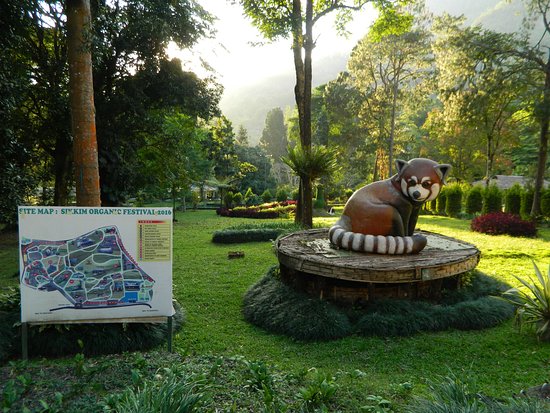
Saramsa Garden
About Saramsa Garden
Description
Saramsa Garden stands as one of Sikkim's most charming botanical destinations, though it's honestly not the flashiest spot you'll encounter in the region. Established back in 1922 to supply fresh fruits for British officials overseeing the Namgyal Royal Family, this garden has evolved into something quite different from its original purpose. And that's actually part of its appeal - there's this fascinating blend of colonial history mixed with modern-day recreational use that you won't find everywhere.
The garden sprawls across well-maintained grounds that showcase both indigenous Himalayan flora and introduced species. You'll find yourself wandering through sections dedicated to different types of plants, from medicinal herbs to ornamental flowers. But here's what struck me during my research - this isn't your typical manicured tourist garden. It has this lived-in quality where locals genuinely come to relax, families spread out picnic blankets, and kids run around on playground equipment that's seen better days but still does the job.
What makes Saramsa Garden particularly interesting for travelers is its dual nature. On one hand, you have the botanical aspect with its greenhouse and diverse plant collections that appeal to nature enthusiasts. On the other hand, it's become this community gathering space where the line between tourist attraction and local hangout gets pleasantly blurred. The garden's accessibility features, including wheelchair-accessible entrances and parking, make it welcoming for visitors with mobility needs - something that's unfortunately not always guaranteed at Sikkim's more remote attractions.
Key Features
The garden offers several distinctive elements that set it apart from other botanical destinations in the region:
- Historic Greenhouse Complex - The original greenhouse structures from the 1920s still house exotic plants and provide shelter for more delicate species during harsh mountain weather
- Fruit Tree Orchards - Remnants of the original purpose remain with sections dedicated to oranges, guava, and other fruits that once fed British administrators
- Family Recreation Areas - Multiple picnic spots with tables, along with playground equipment including slides and swings that keep children entertained
- Medicinal Plant Section - A dedicated area showcasing traditional Sikkimese healing plants with basic information about their uses
- Walking Trails - Well-marked paths that wind through different garden sections, suitable for casual strolls rather than serious hiking
- Photography Spots - Several scenic viewpoints that offer decent mountain backdrops, though nothing too dramatic
- Basic Amenities - Clean restroom facilities and the ability to pay entry fees with debit cards, which is more convenient than many regional attractions
Best Time to Visit
Timing your visit to Saramsa Garden requires balancing weather conditions with your personal preferences, and honestly, there's no perfect season that ticks every box. The most popular period runs from March through May when spring flowers are blooming and temperatures hover in that comfortable range where you can spend hours outdoors without feeling miserable. During these months, you'll encounter the garden at its most photogenic, but you'll also deal with higher visitor numbers and slightly inflated local prices.
Summer months from June to August bring their own challenges and rewards. The monsoon season means you're gambling with weather - some days offer perfect conditions while others dump enough rain to make outdoor exploration pretty unpleasant. But if you catch a clear day during this period, the garden absolutely comes alive with lush greenery that's almost impossibly green. Plus, fewer tourists mean you might have entire sections to yourself.
I'd actually argue that September through November offers the most balanced experience. Post-monsoon clarity gives you stunning mountain views on clear days, temperatures are pleasant without being too hot or cold, and the garden maintains that lush appearance from the rainy season. October specifically tends to offer the most reliable weather patterns, though you'll want to bring layers since mountain weather can shift quickly.
Winter visits from December to February are possible but require realistic expectations. Many flowering plants won't be at their peak, and morning temperatures can be genuinely uncomfortable. However, if you're already in the region during winter months, the garden still provides a pleasant break from indoor activities, and the greenhouse sections offer some respite from cold weather.
How to Get There
Getting to Saramsa Garden involves a bit of planning, but it's far from the most complicated destination you'll tackle in Sikkim. The garden sits close to Ranipool in the Pakyong District, which means your journey starts with reaching Gangtok - the state capital and most visitors' entry point to the region.
From Gangtok, you're looking at roughly a 45-minute drive depending on traffic and road conditions. Local taxis are the most straightforward option, and most drivers know the location well enough that you won't spend time getting lost. Expect to pay around 800-1200 rupees for a round trip including waiting time, though prices fluctuate based on fuel costs and season. And here's a tip from experience - negotiate the return journey upfront rather than hoping to find transport back from the garden itself.
Shared vehicles and local buses run between Gangtok and Ranipool throughout the day, offering a more budget-friendly option at around 30-50 rupees per person. The downside is less flexibility in timing and the possibility of crowded conditions during peak hours. You'll need to walk about 15 minutes from the main road drop-off point to reach the garden entrance.
For those renting vehicles, the route is fairly straightforward but involves typical mountain road challenges - narrow sections, occasional construction delays, and weather-dependent conditions. GPS navigation works reasonably well in this area, though having offline maps as backup never hurts. Parking is available near the entrance, though spaces fill up during weekends and holidays.
If you're staying in other parts of Sikkim, factor in additional travel time to reach Gangtok first. From Pelling, you're looking at 3-4 hours of mountain driving. From Darjeeling, expect about 2-3 hours depending on border crossing efficiency.
Tips for Visiting
Visiting Saramsa Garden successfully means managing expectations while maximizing what the location actually offers, rather than what you might hope it offers. First things first - this isn't a world-class botanical garden that'll compete with major international destinations. Go in knowing you're visiting a pleasant regional attraction with historical significance rather than expecting something that'll blow your mind.
Bring your own food and drinks for picnicking, but check what's available locally too. The garden allows outside food, and many visitors specifically come for family picnic experiences. However, basic snacks and beverages are often sold near the entrance, so you don't need to pack everything. A blanket or portable seating makes the experience much more comfortable since you'll likely want to rest at various points.
Photography enthusiasts should manage lighting expectations. The garden offers decent photo opportunities, but dramatic mountain backdrops aren't guaranteed due to frequent cloud cover. Early morning visits sometimes provide clearer views, though this means dealing with cooler temperatures and potentially wet grass from overnight moisture.
Weather preparation is crucial since mountain conditions change quickly. Even on sunny days, temperatures can drop noticeably once clouds roll in. Layered clothing works better than bulky jackets, and comfortable walking shoes are essential since some paths can be uneven or muddy depending on recent weather.
For families with children, the playground equipment provides entertainment, but supervise kids closely since maintenance standards vary. The slides and swings are functional but show wear from constant use and weather exposure. It's perfectly safe with attention, just not pristine.
Entry fees are modest, and paying with debit cards is possible, though carrying some cash never hurts in case systems are down. The wheelchair accessibility is genuine, making this one of the more inclusive attractions in the region.
Plan for 2-3 hours to see everything comfortably without rushing. Less if you're just passing through, more if you're planning a proper picnic experience. And honestly? Sometimes the best part is simply sitting quietly and watching how locals use the space - it gives you insight into daily life in Sikkim that pure tourist destinations can't provide.
Key Features
- Key Features
- Best Time to Visit
- How to Get There
- Tips for Visiting
More Details
Updated September 24, 2025
Table of Contents
Description
Saramsa Garden stands as one of Sikkim’s most charming botanical destinations, though it’s honestly not the flashiest spot you’ll encounter in the region. Established back in 1922 to supply fresh fruits for British officials overseeing the Namgyal Royal Family, this garden has evolved into something quite different from its original purpose. And that’s actually part of its appeal – there’s this fascinating blend of colonial history mixed with modern-day recreational use that you won’t find everywhere.
The garden sprawls across well-maintained grounds that showcase both indigenous Himalayan flora and introduced species. You’ll find yourself wandering through sections dedicated to different types of plants, from medicinal herbs to ornamental flowers. But here’s what struck me during my research – this isn’t your typical manicured tourist garden. It has this lived-in quality where locals genuinely come to relax, families spread out picnic blankets, and kids run around on playground equipment that’s seen better days but still does the job.
What makes Saramsa Garden particularly interesting for travelers is its dual nature. On one hand, you have the botanical aspect with its greenhouse and diverse plant collections that appeal to nature enthusiasts. On the other hand, it’s become this community gathering space where the line between tourist attraction and local hangout gets pleasantly blurred. The garden’s accessibility features, including wheelchair-accessible entrances and parking, make it welcoming for visitors with mobility needs – something that’s unfortunately not always guaranteed at Sikkim’s more remote attractions.
Key Features
The garden offers several distinctive elements that set it apart from other botanical destinations in the region:
- Historic Greenhouse Complex – The original greenhouse structures from the 1920s still house exotic plants and provide shelter for more delicate species during harsh mountain weather
- Fruit Tree Orchards – Remnants of the original purpose remain with sections dedicated to oranges, guava, and other fruits that once fed British administrators
- Family Recreation Areas – Multiple picnic spots with tables, along with playground equipment including slides and swings that keep children entertained
- Medicinal Plant Section – A dedicated area showcasing traditional Sikkimese healing plants with basic information about their uses
- Walking Trails – Well-marked paths that wind through different garden sections, suitable for casual strolls rather than serious hiking
- Photography Spots – Several scenic viewpoints that offer decent mountain backdrops, though nothing too dramatic
- Basic Amenities – Clean restroom facilities and the ability to pay entry fees with debit cards, which is more convenient than many regional attractions
Best Time to Visit
Timing your visit to Saramsa Garden requires balancing weather conditions with your personal preferences, and honestly, there’s no perfect season that ticks every box. The most popular period runs from March through May when spring flowers are blooming and temperatures hover in that comfortable range where you can spend hours outdoors without feeling miserable. During these months, you’ll encounter the garden at its most photogenic, but you’ll also deal with higher visitor numbers and slightly inflated local prices.
Summer months from June to August bring their own challenges and rewards. The monsoon season means you’re gambling with weather – some days offer perfect conditions while others dump enough rain to make outdoor exploration pretty unpleasant. But if you catch a clear day during this period, the garden absolutely comes alive with lush greenery that’s almost impossibly green. Plus, fewer tourists mean you might have entire sections to yourself.
I’d actually argue that September through November offers the most balanced experience. Post-monsoon clarity gives you stunning mountain views on clear days, temperatures are pleasant without being too hot or cold, and the garden maintains that lush appearance from the rainy season. October specifically tends to offer the most reliable weather patterns, though you’ll want to bring layers since mountain weather can shift quickly.
Winter visits from December to February are possible but require realistic expectations. Many flowering plants won’t be at their peak, and morning temperatures can be genuinely uncomfortable. However, if you’re already in the region during winter months, the garden still provides a pleasant break from indoor activities, and the greenhouse sections offer some respite from cold weather.
How to Get There
Getting to Saramsa Garden involves a bit of planning, but it’s far from the most complicated destination you’ll tackle in Sikkim. The garden sits close to Ranipool in the Pakyong District, which means your journey starts with reaching Gangtok – the state capital and most visitors’ entry point to the region.
From Gangtok, you’re looking at roughly a 45-minute drive depending on traffic and road conditions. Local taxis are the most straightforward option, and most drivers know the location well enough that you won’t spend time getting lost. Expect to pay around 800-1200 rupees for a round trip including waiting time, though prices fluctuate based on fuel costs and season. And here’s a tip from experience – negotiate the return journey upfront rather than hoping to find transport back from the garden itself.
Shared vehicles and local buses run between Gangtok and Ranipool throughout the day, offering a more budget-friendly option at around 30-50 rupees per person. The downside is less flexibility in timing and the possibility of crowded conditions during peak hours. You’ll need to walk about 15 minutes from the main road drop-off point to reach the garden entrance.
For those renting vehicles, the route is fairly straightforward but involves typical mountain road challenges – narrow sections, occasional construction delays, and weather-dependent conditions. GPS navigation works reasonably well in this area, though having offline maps as backup never hurts. Parking is available near the entrance, though spaces fill up during weekends and holidays.
If you’re staying in other parts of Sikkim, factor in additional travel time to reach Gangtok first. From Pelling, you’re looking at 3-4 hours of mountain driving. From Darjeeling, expect about 2-3 hours depending on border crossing efficiency.
Tips for Visiting
Visiting Saramsa Garden successfully means managing expectations while maximizing what the location actually offers, rather than what you might hope it offers. First things first – this isn’t a world-class botanical garden that’ll compete with major international destinations. Go in knowing you’re visiting a pleasant regional attraction with historical significance rather than expecting something that’ll blow your mind.
Bring your own food and drinks for picnicking, but check what’s available locally too. The garden allows outside food, and many visitors specifically come for family picnic experiences. However, basic snacks and beverages are often sold near the entrance, so you don’t need to pack everything. A blanket or portable seating makes the experience much more comfortable since you’ll likely want to rest at various points.
Photography enthusiasts should manage lighting expectations. The garden offers decent photo opportunities, but dramatic mountain backdrops aren’t guaranteed due to frequent cloud cover. Early morning visits sometimes provide clearer views, though this means dealing with cooler temperatures and potentially wet grass from overnight moisture.
Weather preparation is crucial since mountain conditions change quickly. Even on sunny days, temperatures can drop noticeably once clouds roll in. Layered clothing works better than bulky jackets, and comfortable walking shoes are essential since some paths can be uneven or muddy depending on recent weather.
For families with children, the playground equipment provides entertainment, but supervise kids closely since maintenance standards vary. The slides and swings are functional but show wear from constant use and weather exposure. It’s perfectly safe with attention, just not pristine.
Entry fees are modest, and paying with debit cards is possible, though carrying some cash never hurts in case systems are down. The wheelchair accessibility is genuine, making this one of the more inclusive attractions in the region.
Plan for 2-3 hours to see everything comfortably without rushing. Less if you’re just passing through, more if you’re planning a proper picnic experience. And honestly? Sometimes the best part is simply sitting quietly and watching how locals use the space – it gives you insight into daily life in Sikkim that pure tourist destinations can’t provide.
Key Highlights
- Key Features
- Best Time to Visit
- How to Get There
- Tips for Visiting
Location
Places to Stay Near Saramsa Garden
Find and Book a Tour
Explore More Travel Guides
No reviews found! Be the first to review!
Traveler Reviews for Saramsa Garden
There are no reviews yet. Be the first one to write one.
Have you visited Saramsa Garden? Help other travelers by sharing your review.
You Might Also Like

Sonapur Beach

Gorumara National Park

Netaji Subhash Chandra Bose Island, Port Blair (Ross Island)
Find Accommodations Nearby
Recommended Tours & Activities
Visitor Reviews
There are no reviews yet. Be the first one to write one.
Share Your Experience
Have you visited Saramsa Garden? Help other travelers by leaving a review.