
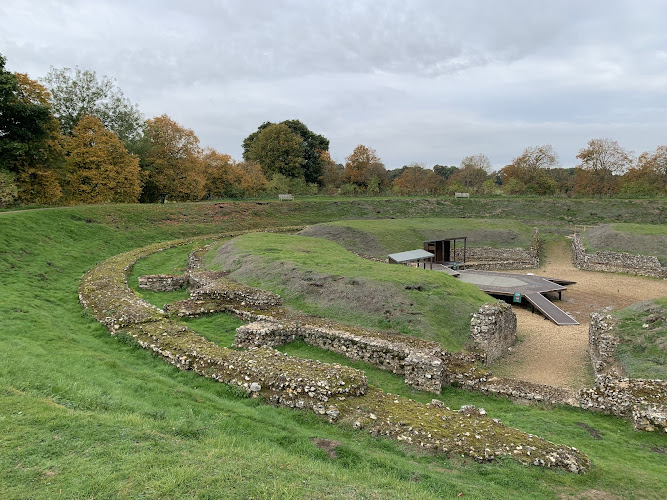
Roman Theatre of Verulamium
About Roman Theatre of Verulamium
Description
Imagine stepping back nearly two millennia to a place where Romans gathered to watch dramas, religious ceremonies, and even wild beast shows. That’s exactly the vibe you get at the Roman Theatre of Verulamium, tucked just west of St Albans. Unlike the more common amphitheatres you might picture, this theatre is unique in Britain because it actually has a stage—built around 140 AD, no less. It’s not just a pile of stones; it’s a genuine slice of Roman life, quietly holding court in the peaceful English countryside.
The ruins may look modest at first glance, but don’t let that fool you. This theatre was once a bustling hub, part of the Roman city of Verulamium, which was one of the most important towns in Roman Britain. The semicircular auditorium still hints at the crowds who would have sat here, watching everything from wrestling matches to theatrical performances. And the stage? It’s the real deal — the only known example of its kind in the UK, making this spot a rare gem for history buffs and curious travelers alike.
Walking through the site, you’ll notice how well it’s preserved compared to other Roman ruins. There’s a quiet magic in standing where ancient Romans once gathered, and you can almost hear the echoes of the past if you let your imagination run wild. Plus, the countryside setting adds a calmness that’s perfect for a reflective stroll or a family outing. It’s not just about history; it’s about experiencing a living link to a world long gone but not forgotten.
Key Features
- Constructed circa 140 AD, part of the Roman city of Verulamium
- Unique Roman theatre in Britain with a stage rather than an amphitheatre
- Semicircular auditorium layout typical of Roman theatres
- Well-preserved ruins offering a tangible connection to ancient Roman culture
- Serene countryside location ideal for peaceful exploration
- Wheelchair accessible entrance and parking, making it inclusive for all visitors
- Onsite services available to enhance the visitor experience
- Family-friendly site, suitable for children with educational opportunities
- Recommended to book tickets in advance to avoid disappointment
Best Time to Visit
Now, if you ask me, the best time to visit the Roman Theatre of Verulamium is definitely in the spring or early autumn. The weather’s usually just right—not too hot, not too chilly—and the countryside blooms with fresh greenery or autumnal hues, which makes exploring the ruins even more atmospheric. Summer’s great too, but it can get a bit busy, especially on weekends and school holidays. If you want to avoid the crowds (and who doesn’t?), aim for a weekday visit.
Early mornings or late afternoons are also golden hours here. The soft sunlight casts long shadows over the stone remains, creating perfect photo ops and a kind of quiet that lets you soak in the history without distractions. Plus, if you’re lucky, you might catch a local event or a small performance staged here, adding a sprinkle of life to the ancient stones.
How to Get There
Getting to the Roman Theatre is pretty straightforward, but a little heads-up can save you some hassle. It’s located just outside St Albans, so if you’re coming from London, the train ride is about 20-30 minutes to St Albans City station. From there, you can hop on a local bus or grab a taxi for the short trip west to the site. Driving is also a solid option, especially if you’re planning to explore the surrounding Hertfordshire countryside. There’s wheelchair accessible parking onsite, which is a big plus if you’re traveling with mobility needs.
Keep in mind, the theatre is set in a more rural spot, so public transport might not run super late. Planning your return trip in advance is a good idea, especially if you’re staying out for a leisurely afternoon. And if you’re a fan of walking, the surrounding area offers some lovely trails that connect with other Roman and medieval landmarks — perfect for stretching your legs and soaking up more history.
Tips for Visiting
Here’s the lowdown to make your visit smoother and more enjoyable. First off, definitely book your tickets in advance. This place is popular, and while it’s not a massive tourist trap, it’s wise not to risk missing out, especially during peak seasons. The ticketing system is straightforward, and it helps the site manage visitor numbers to keep the experience pleasant for everyone.
Don’t forget to wear comfy shoes. The terrain around the ruins can be uneven, and you’ll want to take your time wandering without worrying about slipping or sore feet. Sun protection is another must in the warmer months — there’s not a ton of shade, so a hat and sunscreen will save you from turning lobster-red.
If you’re visiting with kids, this site is surprisingly engaging for little ones. The open space lets them run around a bit, and the history is tangible enough to spark their imagination. Just be ready to answer a lot of “What’s that?” questions — it’s all part of the fun. And if you’re a history nerd like me, bring a guidebook or download a good app to get the most out of the stories behind the stones. Sometimes, knowing what you’re looking at makes the whole experience way more vivid.
Lastly, take your time. It’s tempting to rush through, but the magic here is in the details and the atmosphere. Sit on the stone steps, imagine the crowds from nearly 2,000 years ago, and maybe even picture what it was like when the theatre was in full swing. It’s not just a visit; it’s a little journey through time.
Key Features
- Constructed circa 140 AD, part of the Roman city of Verulamium
- Unique Roman theatre in Britain with a stage rather than an amphitheatre
- Semicircular auditorium layout typical of Roman theatres
- Well-preserved ruins offering a tangible connection to ancient Roman culture
- Serene countryside location ideal for peaceful exploration
- Wheelchair accessible entrance and parking, making it inclusive for all visitors
- Onsite services available to enhance the visitor experience
- Family-friendly site, suitable for children with educational opportunities
More Details
Updated July 13, 2025
Table of Contents
Description
Imagine stepping back nearly two millennia to a place where Romans gathered to watch dramas, religious ceremonies, and even wild beast shows. That’s exactly the vibe you get at the Roman Theatre of Verulamium, tucked just west of St Albans. Unlike the more common amphitheatres you might picture, this theatre is unique in Britain because it actually has a stage—built around 140 AD, no less. It’s not just a pile of stones; it’s a genuine slice of Roman life, quietly holding court in the peaceful English countryside.
The ruins may look modest at first glance, but don’t let that fool you. This theatre was once a bustling hub, part of the Roman city of Verulamium, which was one of the most important towns in Roman Britain. The semicircular auditorium still hints at the crowds who would have sat here, watching everything from wrestling matches to theatrical performances. And the stage? It’s the real deal — the only known example of its kind in the UK, making this spot a rare gem for history buffs and curious travelers alike.
Walking through the site, you’ll notice how well it’s preserved compared to other Roman ruins. There’s a quiet magic in standing where ancient Romans once gathered, and you can almost hear the echoes of the past if you let your imagination run wild. Plus, the countryside setting adds a calmness that’s perfect for a reflective stroll or a family outing. It’s not just about history; it’s about experiencing a living link to a world long gone but not forgotten.
Key Features
- Constructed circa 140 AD, part of the Roman city of Verulamium
- Unique Roman theatre in Britain with a stage rather than an amphitheatre
- Semicircular auditorium layout typical of Roman theatres
- Well-preserved ruins offering a tangible connection to ancient Roman culture
- Serene countryside location ideal for peaceful exploration
- Wheelchair accessible entrance and parking, making it inclusive for all visitors
- Onsite services available to enhance the visitor experience
- Family-friendly site, suitable for children with educational opportunities
- Recommended to book tickets in advance to avoid disappointment
Best Time to Visit
Now, if you ask me, the best time to visit the Roman Theatre of Verulamium is definitely in the spring or early autumn. The weather’s usually just right—not too hot, not too chilly—and the countryside blooms with fresh greenery or autumnal hues, which makes exploring the ruins even more atmospheric. Summer’s great too, but it can get a bit busy, especially on weekends and school holidays. If you want to avoid the crowds (and who doesn’t?), aim for a weekday visit.
Early mornings or late afternoons are also golden hours here. The soft sunlight casts long shadows over the stone remains, creating perfect photo ops and a kind of quiet that lets you soak in the history without distractions. Plus, if you’re lucky, you might catch a local event or a small performance staged here, adding a sprinkle of life to the ancient stones.
How to Get There
Getting to the Roman Theatre is pretty straightforward, but a little heads-up can save you some hassle. It’s located just outside St Albans, so if you’re coming from London, the train ride is about 20-30 minutes to St Albans City station. From there, you can hop on a local bus or grab a taxi for the short trip west to the site. Driving is also a solid option, especially if you’re planning to explore the surrounding Hertfordshire countryside. There’s wheelchair accessible parking onsite, which is a big plus if you’re traveling with mobility needs.
Keep in mind, the theatre is set in a more rural spot, so public transport might not run super late. Planning your return trip in advance is a good idea, especially if you’re staying out for a leisurely afternoon. And if you’re a fan of walking, the surrounding area offers some lovely trails that connect with other Roman and medieval landmarks — perfect for stretching your legs and soaking up more history.
Tips for Visiting
Here’s the lowdown to make your visit smoother and more enjoyable. First off, definitely book your tickets in advance. This place is popular, and while it’s not a massive tourist trap, it’s wise not to risk missing out, especially during peak seasons. The ticketing system is straightforward, and it helps the site manage visitor numbers to keep the experience pleasant for everyone.
Don’t forget to wear comfy shoes. The terrain around the ruins can be uneven, and you’ll want to take your time wandering without worrying about slipping or sore feet. Sun protection is another must in the warmer months — there’s not a ton of shade, so a hat and sunscreen will save you from turning lobster-red.
If you’re visiting with kids, this site is surprisingly engaging for little ones. The open space lets them run around a bit, and the history is tangible enough to spark their imagination. Just be ready to answer a lot of “What’s that?” questions — it’s all part of the fun. And if you’re a history nerd like me, bring a guidebook or download a good app to get the most out of the stories behind the stones. Sometimes, knowing what you’re looking at makes the whole experience way more vivid.
Lastly, take your time. It’s tempting to rush through, but the magic here is in the details and the atmosphere. Sit on the stone steps, imagine the crowds from nearly 2,000 years ago, and maybe even picture what it was like when the theatre was in full swing. It’s not just a visit; it’s a little journey through time.
Key Highlights
- Constructed circa 140 AD, part of the Roman city of Verulamium
- Unique Roman theatre in Britain with a stage rather than an amphitheatre
- Semicircular auditorium layout typical of Roman theatres
- Well-preserved ruins offering a tangible connection to ancient Roman culture
- Serene countryside location ideal for peaceful exploration
- Wheelchair accessible entrance and parking, making it inclusive for all visitors
- Onsite services available to enhance the visitor experience
- Family-friendly site, suitable for children with educational opportunities
Location
Places to Stay Near Roman Theatre of Verulamium
Find and Book a Tour
Explore More Travel Guides
No reviews found! Be the first to review!
Traveler Reviews for Roman Theatre of Verulamium
There are no reviews yet. Be the first one to write one.
Have you visited Roman Theatre of Verulamium? Help other travelers by sharing your review.
You Might Also Like

Verulamium Museum

St. Albans City Park
Lamer Park
Find Accommodations Nearby
Recommended Tours & Activities
Visitor Reviews
There are no reviews yet. Be the first one to write one.
Share Your Experience
Have you visited Roman Theatre of Verulamium? Help other travelers by leaving a review.