
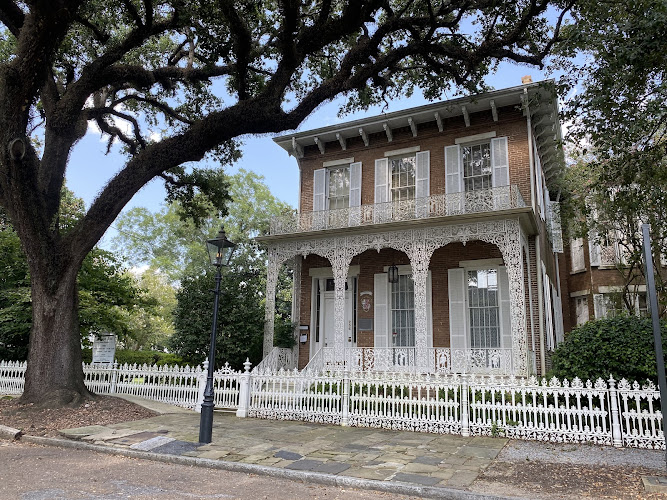
Richards-DAR House Museum
About Richards-DAR House Museum
Description
The Richards-DAR House Museum stands as a well-preserved example of 19th-century residential architecture in Mobile, Alabama, offering visitors a close-up look at period life in the American South. Housed in an Italianate-style dwelling originally associated with the Richards family, the museum is cared for by the local chapter of the Daughters of the American Revolution and interpreted as a living record of domestic taste, craftsmanship, and urban history. It sits within Mobile’s historic core, among other preserved homes and public squares, and is often visited by travelers who want a slower, more tactile museum experience than the usual big-block cultural stops.
The interior showcases original and period-appropriate furnishings, decorative arts, and architectural details that reward slow, curious visitors. From delicate mantelpieces and carved woodwork to imposing chandeliers and a staircase that catches the eye, the house presents layers of material culture: family portraits, everyday glassware, and household items that together sketch social habits, fashions, and domestic technologies across decades. The collection and presentation emphasize lived experience rather than grand narratives, which means visitors often come away feeling like they have visited a lived-in home rather than a sterile exhibit hall.
This museum is especially appealing to people who love architecture, regional history, or historic house museums. Guides lead tours that weave anecdote with fact, and the volunteer-driven nature of the site lends it a warm, personal character. That warmth also explains why many repeat visitors comment on the intimacy of the experience — small rooms, close-up looks at period furnishings, and knowledgeable docents who will happily point out tiny details that larger museums often miss. It’s an accessible dip into Mobile’s urban past for families, history buffs, and travelers looking to experience local color beyond the main tourist strip.
While the museum receives strong praise for its preservation efforts and the quality of its guided tours, it is not a crowded attraction, which is a plus for those who dislike elbow-to-elbow sightseeing. At the same time, the small-house format means that peak times can feel cozy and guided tours have fixed capacity, so planning ahead is useful. Visitors should expect an admission fee, a small gift shop for keepsakes, and basic amenities such as restrooms and on-site parking. The museum’s footprint and volunteer model make it charming and intimate, but those same attributes mean it functions differently from larger municipal museums; expect a curated house-museum pace rather than a long, multi-gallery itinerary.
Key Features
- Historic Italianate architecture reflecting mid-19th-century urban design and ornamentation
- Authentic period furnishings and decorative arts displayed room-by-room
- Guided tours led by knowledgeable docents who contextualize family life and local history
- Small, personal museum experience well-suited to families and children with an interest in tangible history
- On-site parking with a wheelchair-accessible parking lot to ease arrivals
- Basic visitor amenities including restrooms and a modest gift shop for souvenirs
- Managed and interpreted by a local chapter of the Daughters of the American Revolution, preserving community memory
- Close proximity to other historic homes and public squares for easy combined visits
- Admission fee supports conservation and programming, reflecting the museum’s volunteer-run, nonprofit model
Best Time to Visit
Timing a visit to the Richards-DAR House Museum can make a big difference in the overall experience. Mornings on weekdays are the quietest and best for those who prefer a leisurely walkthrough with a docent. Mid-morning light filtering through period windows tends to highlight wood tones and textiles in a pleasing way, so photographers and detail-oriented visitors will find this time especially satisfying. Weekends see more families and local visitors; the atmosphere is friendly but can become slightly crowded during guided tours.
Seasonally, spring and fall are particularly comfortable times for visiting Mobile. The city’s humidity eases up, street-level walking becomes more pleasant, and the neighborhood shows off its tree-lined streets and historic squares. Summers can be hot and humid; if visiting in summer, schedule the museum portion of the day for early morning or later afternoon and plan indoor, air-conditioned stops for the midday lull. Winter is mild in Mobile, making it a viable season for travel, though holiday weekends may bring special events and a busier calendar.
Visitors who prefer special-program experiences should check the museum’s event schedule in advance. Special talks, small exhibitions, and seasonal programming occasionally alter opening times or require reservations. Because the museum operates with a strong volunteer presence, it’s wise to confirm tour availability on the intended day of travel.
How to Get There
The museum is located in Mobile’s historic district, surrounded by other preserved homes and public squares, making it an easy stop on a walking tour of the neighborhood. For visitors arriving by car, on-site parking is available, and the property includes a designated wheelchair-accessible parking lot for those who need it. Public transit options and rideshare services can drop off nearby, and the compact nature of the district means short walks between attractions.
From central parts of the city, a short drive or a brisk walk along tree-lined streets will bring visitors to the house museum. Travelers who plan to explore multiple historic homes can arrange an efficient route that includes nearby museums, squares, and local eateries. Parking in the area is generally straightforward thanks to the museum’s on-site lot, but during festivals or large events it can fill up; in those cases, arriving earlier or using a drop-off service is recommended.
For out-of-town visitors using regional transport hubs, the downtown historic district is easily accessible by taxi or rideshare from the main bus and train stations. The neighborhood layout is compact, so once on foot, visitors can move comfortably between attractions. Those driving should keep in mind that some historic streets are narrower than modern thoroughfares and may have more pedestrian traffic, so a relaxed driving style pays off.
Tips for Visiting
Plan ahead but stay flexible. The museum’s small size and volunteer-run model mean tour schedules can be limited; checking hours before arrival can prevent disappointment. Guided tours are the main way visitors access the interior, so booking a spot early in the day gives the best chance for an unhurried experience.
Expect an admission fee that supports preservation and programming. The fee is relatively modest and contributes directly to conservation of the house and its collections. Those who love historic neighborhoods may want to budget a full morning or afternoon for the area, pairing the museum visit with nearby squares and other historic sites.
Accessibility is addressed thoughtfully at the property level: there is a wheelchair-accessible parking lot on site. However, the house itself has historic architectural features and some narrower passages or staircases typical of period homes. If full interior wheelchair access is required, contacting the museum ahead of time is recommended so staff can suggest the best ways to experience the site.
Bring small children but set expectations. The house is family-friendly and useful for introducing kids to local history, but rooms are intimate and fragile items are on display. Docents often tailor comments to younger audiences, which helps keep kids engaged. Strollers may be awkward in tighter rooms; a lightweight, foldable option or a carrier may work better.
Ask questions. Docents at the Richards-DAR House Museum tend to be passionate and have local knowledge — they enjoy pointing out details like original hardware, unique chandeliers, or a surprising textile practice. Those little stories often become the highlight of a visit, transforming objects into people and moments.
Take pictures when allowed, but be mindful. Many visitors like to photograph detail shots of woodwork, fireplaces, and decorative arts. The museum will have rules about flash, tripods, or restricted rooms; following them keeps the house available for future visitors. If the gift shop is open, it’s a handy place to pick up a guide or reproduction item to remember the visit.
Consider combining the visit with a neighborhood lunch or tea. The surrounding district has several cafes and eateries that match the historic mood of the area. While the museum itself does not serve meals, a nearby café stop pairs nicely with a house-tour morning, giving visitors time to digest both facts and flavors.
Finally, give the place a little time. The Richards-DAR House Museum rewards patience and curiosity. It is not a high-speed, tick-off-the-list attraction. Instead, it thrives on careful looking and good questions. Many visitors leave saying they felt a stronger connection to Mobile’s history precisely because the setting encouraged lingering. That lingering is actually one of the museum’s best features — it invites a slower kind of travel, the kind that remembers small things.
Key Features
- Historic Italianate architecture reflecting mid-19th-century urban design and ornamentation
- Authentic period furnishings and decorative arts displayed room-by-room
- Guided tours led by knowledgeable docents who contextualize family life and local history
- Small, personal museum experience well-suited to families and children with an interest in tangible history
- On-site parking with a wheelchair-accessible parking lot to ease arrivals
- Basic visitor amenities including restrooms and a modest gift shop for souvenirs
- Managed and interpreted by a local chapter of the Daughters of the American Revolution, preserving community memory
- Close proximity to other historic homes and public squares for easy combined visits
More Details
Updated August 29, 2025
Table of Contents
Description
The Richards-DAR House Museum stands as a well-preserved example of 19th-century residential architecture in Mobile, Alabama, offering visitors a close-up look at period life in the American South. Housed in an Italianate-style dwelling originally associated with the Richards family, the museum is cared for by the local chapter of the Daughters of the American Revolution and interpreted as a living record of domestic taste, craftsmanship, and urban history. It sits within Mobile’s historic core, among other preserved homes and public squares, and is often visited by travelers who want a slower, more tactile museum experience than the usual big-block cultural stops.
The interior showcases original and period-appropriate furnishings, decorative arts, and architectural details that reward slow, curious visitors. From delicate mantelpieces and carved woodwork to imposing chandeliers and a staircase that catches the eye, the house presents layers of material culture: family portraits, everyday glassware, and household items that together sketch social habits, fashions, and domestic technologies across decades. The collection and presentation emphasize lived experience rather than grand narratives, which means visitors often come away feeling like they have visited a lived-in home rather than a sterile exhibit hall.
This museum is especially appealing to people who love architecture, regional history, or historic house museums. Guides lead tours that weave anecdote with fact, and the volunteer-driven nature of the site lends it a warm, personal character. That warmth also explains why many repeat visitors comment on the intimacy of the experience — small rooms, close-up looks at period furnishings, and knowledgeable docents who will happily point out tiny details that larger museums often miss. It’s an accessible dip into Mobile’s urban past for families, history buffs, and travelers looking to experience local color beyond the main tourist strip.
While the museum receives strong praise for its preservation efforts and the quality of its guided tours, it is not a crowded attraction, which is a plus for those who dislike elbow-to-elbow sightseeing. At the same time, the small-house format means that peak times can feel cozy and guided tours have fixed capacity, so planning ahead is useful. Visitors should expect an admission fee, a small gift shop for keepsakes, and basic amenities such as restrooms and on-site parking. The museum’s footprint and volunteer model make it charming and intimate, but those same attributes mean it functions differently from larger municipal museums; expect a curated house-museum pace rather than a long, multi-gallery itinerary.
Key Features
- Historic Italianate architecture reflecting mid-19th-century urban design and ornamentation
- Authentic period furnishings and decorative arts displayed room-by-room
- Guided tours led by knowledgeable docents who contextualize family life and local history
- Small, personal museum experience well-suited to families and children with an interest in tangible history
- On-site parking with a wheelchair-accessible parking lot to ease arrivals
- Basic visitor amenities including restrooms and a modest gift shop for souvenirs
- Managed and interpreted by a local chapter of the Daughters of the American Revolution, preserving community memory
- Close proximity to other historic homes and public squares for easy combined visits
- Admission fee supports conservation and programming, reflecting the museum’s volunteer-run, nonprofit model
Best Time to Visit
Timing a visit to the Richards-DAR House Museum can make a big difference in the overall experience. Mornings on weekdays are the quietest and best for those who prefer a leisurely walkthrough with a docent. Mid-morning light filtering through period windows tends to highlight wood tones and textiles in a pleasing way, so photographers and detail-oriented visitors will find this time especially satisfying. Weekends see more families and local visitors; the atmosphere is friendly but can become slightly crowded during guided tours.
Seasonally, spring and fall are particularly comfortable times for visiting Mobile. The city’s humidity eases up, street-level walking becomes more pleasant, and the neighborhood shows off its tree-lined streets and historic squares. Summers can be hot and humid; if visiting in summer, schedule the museum portion of the day for early morning or later afternoon and plan indoor, air-conditioned stops for the midday lull. Winter is mild in Mobile, making it a viable season for travel, though holiday weekends may bring special events and a busier calendar.
Visitors who prefer special-program experiences should check the museum’s event schedule in advance. Special talks, small exhibitions, and seasonal programming occasionally alter opening times or require reservations. Because the museum operates with a strong volunteer presence, it’s wise to confirm tour availability on the intended day of travel.
How to Get There
The museum is located in Mobile’s historic district, surrounded by other preserved homes and public squares, making it an easy stop on a walking tour of the neighborhood. For visitors arriving by car, on-site parking is available, and the property includes a designated wheelchair-accessible parking lot for those who need it. Public transit options and rideshare services can drop off nearby, and the compact nature of the district means short walks between attractions.
From central parts of the city, a short drive or a brisk walk along tree-lined streets will bring visitors to the house museum. Travelers who plan to explore multiple historic homes can arrange an efficient route that includes nearby museums, squares, and local eateries. Parking in the area is generally straightforward thanks to the museum’s on-site lot, but during festivals or large events it can fill up; in those cases, arriving earlier or using a drop-off service is recommended.
For out-of-town visitors using regional transport hubs, the downtown historic district is easily accessible by taxi or rideshare from the main bus and train stations. The neighborhood layout is compact, so once on foot, visitors can move comfortably between attractions. Those driving should keep in mind that some historic streets are narrower than modern thoroughfares and may have more pedestrian traffic, so a relaxed driving style pays off.
Tips for Visiting
Plan ahead but stay flexible. The museum’s small size and volunteer-run model mean tour schedules can be limited; checking hours before arrival can prevent disappointment. Guided tours are the main way visitors access the interior, so booking a spot early in the day gives the best chance for an unhurried experience.
Expect an admission fee that supports preservation and programming. The fee is relatively modest and contributes directly to conservation of the house and its collections. Those who love historic neighborhoods may want to budget a full morning or afternoon for the area, pairing the museum visit with nearby squares and other historic sites.
Accessibility is addressed thoughtfully at the property level: there is a wheelchair-accessible parking lot on site. However, the house itself has historic architectural features and some narrower passages or staircases typical of period homes. If full interior wheelchair access is required, contacting the museum ahead of time is recommended so staff can suggest the best ways to experience the site.
Bring small children but set expectations. The house is family-friendly and useful for introducing kids to local history, but rooms are intimate and fragile items are on display. Docents often tailor comments to younger audiences, which helps keep kids engaged. Strollers may be awkward in tighter rooms; a lightweight, foldable option or a carrier may work better.
Ask questions. Docents at the Richards-DAR House Museum tend to be passionate and have local knowledge — they enjoy pointing out details like original hardware, unique chandeliers, or a surprising textile practice. Those little stories often become the highlight of a visit, transforming objects into people and moments.
Take pictures when allowed, but be mindful. Many visitors like to photograph detail shots of woodwork, fireplaces, and decorative arts. The museum will have rules about flash, tripods, or restricted rooms; following them keeps the house available for future visitors. If the gift shop is open, it’s a handy place to pick up a guide or reproduction item to remember the visit.
Consider combining the visit with a neighborhood lunch or tea. The surrounding district has several cafes and eateries that match the historic mood of the area. While the museum itself does not serve meals, a nearby café stop pairs nicely with a house-tour morning, giving visitors time to digest both facts and flavors.
Finally, give the place a little time. The Richards-DAR House Museum rewards patience and curiosity. It is not a high-speed, tick-off-the-list attraction. Instead, it thrives on careful looking and good questions. Many visitors leave saying they felt a stronger connection to Mobile’s history precisely because the setting encouraged lingering. That lingering is actually one of the museum’s best features — it invites a slower kind of travel, the kind that remembers small things.
Key Highlights
- Historic Italianate architecture reflecting mid-19th-century urban design and ornamentation
- Authentic period furnishings and decorative arts displayed room-by-room
- Guided tours led by knowledgeable docents who contextualize family life and local history
- Small, personal museum experience well-suited to families and children with an interest in tangible history
- On-site parking with a wheelchair-accessible parking lot to ease arrivals
- Basic visitor amenities including restrooms and a modest gift shop for souvenirs
- Managed and interpreted by a local chapter of the Daughters of the American Revolution, preserving community memory
- Close proximity to other historic homes and public squares for easy combined visits
Location
Places to Stay Near Richards-DAR House Museum
Find and Book a Tour
Explore More Travel Guides
No reviews found! Be the first to review!
Traveler Reviews for Richards-DAR House Museum
There are no reviews yet. Be the first one to write one.
Have you visited Richards-DAR House Museum? Help other travelers by sharing your review.
You Might Also Like

Mobile Botanical Gardens

Phoenix Fire Museum

Alabama Contemporary Art Center
Find Accommodations Nearby
Recommended Tours & Activities
Visitor Reviews
There are no reviews yet. Be the first one to write one.
Share Your Experience
Have you visited Richards-DAR House Museum? Help other travelers by leaving a review.