
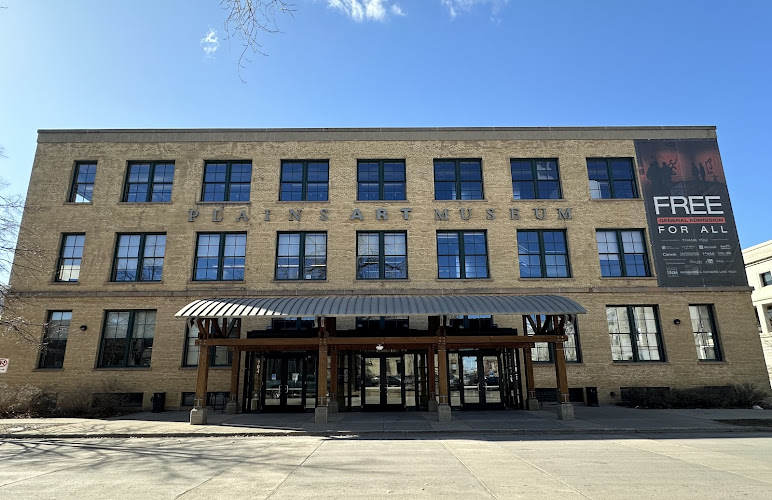
Plains Art Museum
About Plains Art Museum
Description
The Plains Art Museum sits in Fargo as a contemporary art hub and learning center that leans into experimentation and local stories. It presents rotating exhibitions alongside permanent collections and runs a steady calendar of classes, lectures, and community programs. The place is less about pomp and more about showing art that asks questions, sparks conversation, and occasionally makes people laugh or squirm — sometimes all at once.
Visitors encounter contemporary paintings, sculpture, mixed-media installations, and community-curated projects that reflect regional voices as well as national and international artists. The museum doubles as an educational institution: studio art classes, youth workshops, and public programs are part of the daily rhythm. The staff aims to be approachable; they often guide school groups, host artist talks, and lead tours that actually help people understand why a piece matters. It isn’t a hush-only gallery. Kids' feet and curiosity are welcome — in fact, this writer once watched a six-year-old explain a sculpture better than half the adults in the room. That memory stuck.
Onsite amenities include a café where visitors can pause between galleries, a gift shop stocked with locally made crafts and museum-quality reproductions, and accessible facilities throughout the building. Tours are offered regularly, and onsite services help families and visitors with accessibility needs. There is free parking on the property, which cuts out one annoying bit of travel logistics — and yes, that matters more than people admit when they're juggling backpacks and coffee cups.
More than a place to look at art, the Plains Art Museum functions as a community laboratory. It hosts lectures and panel discussions that bring artists and audiences into direct conversation. Sometimes those discussions are quiet and contemplative. Other times they are a little rowdy — in a good way. The museum’s programming is designed to get people thinking, and occasionally acting, beyond the gallery walls.
Key Features
- Contemporary art exhibitions highlighting regional, national, and international artists
- Art classes and hands-on workshops for children, teens, and adults
- Regular lectures, artist talks, and community programming
- Café on site for casual meals, coffee breaks, and people-watching between galleries
- Gift shop featuring locally made goods, books, prints, and unique souvenirs
- Free on-site parking with accessible parking spots available
- Wheelchair accessible entrances, restrooms, and paths throughout the museum
- Guided tours available to deepen the visitor experience
- Family-friendly exhibits and kids’ programs that encourage creative participation
- Onsite services to support visitors with mobility or sensory needs
Best Time to Visit
The best time to visit depends on what we think you want out of the experience. For quieter, more reflective visits, weekday mornings are ideal. The galleries are less crowded, docents are easier to catch for a quick chat, and the café tables are mostly empty which makes for a pleasant pause. For families and those seeking more energy, weekend afternoons often feature children’s programs, interactive activities, or special events that make the museum feel lively and communal.
If timing exhibitions matters to you — and it should, because some shows are short-run and can be quite compelling — check the museum’s schedule before making a special trip. Major exhibitions and traveling shows often draw bigger crowds in the opening and closing weeks, so plan accordingly: go early in the run to avoid peak days, or go on a closing weekend if you like the buzz of launch events. The museum’s lecture series and artist talks usually happen in the evenings; these are excellent opportunities to hear curators and artists discuss the work in a way that adds real depth to a future visit.
Season matters too. Fargo summers bring a lot of tourists and local events downtown, so exhibit traffic can spike. Winter visits, when the city slows down, provide a cozy indoor cultural day — art, coffee, and then a stroll through downtown if the weather allows. This writer prefers the late autumn lull: museums feel intimate then, and the light in the galleries has a particular crispness that makes colors pop.
How to Get There
The Plains Art Museum is centrally located and easy to reach by several modes of transport. For those driving, there is free on-site parking that includes accessible spaces close to the entrance. This is a small but meaningful convenience especially if you’re carrying camera gear, a sketchbook, or a kid who insists on bringing three stuffed animals.
Public transit options serve the area, and many visitors find bus routes convenient for downtown travel. Walkers and cyclists will appreciate the short distance from much of downtown; it’s the kind of museum one can plan as part of a half-day exploring nearby galleries, shops, and eateries. Rideshare and taxi services regularly drop off at the main entrance, and the route from central Fargo is typically straightforward.
If coming from out of town, consider staying at one of Fargo’s downtown hotels to keep the commute short. That way, you can fit in multiple art stops, meals, and lectures across a single day without hopping back and forth across the city. The museum’s location makes it friendly for multi-stop cultural itineraries: see an exhibition, stop at the café, browse the gift shop, then wander the neighborhood for dinner or a nightcap.
Tips for Visiting
Plan ahead but stay flexible. Here are practical, sometimes quirky, tips that improve the experience — the stuff a seasoned visitor learns after a couple of visits, not from a brochure.
- Check program schedules before you go. Special exhibitions, artist talks, and workshops can change exhibit traffic quickly. If an artist talk is on the calendar, arrive early; seats fill up sooner than you might expect.
- Ask about photography and sketching rules. Many exhibits allow non-flash photography, but some loaned or delicate works won’t. Staff are usually helpful and will point out the parts of the show where photography is permitted.
- Take the guided tour if you can. It’s not just background info — tours often reveal the story behind acquisitions, artist intentions, and curatorial choices that transform a casual glance into a richer understanding.
- Use the café as a planning tool. It’s a great place to decompress, jot notes, or plan the rest of your day. Also, the café scene is ideal for people-watching and overhearing conversations that might lead to new book or exhibit suggestions.
- Bring layers. Gallery lighting and interior temperatures can vary, and it’s nicer to remove a jacket if you’re hot than to rush out because you’re uncomfortable.
- Keep kids engaged. If you’re visiting with children, check for family programs or activity guides at the front desk. Hands-on classes are available at times, and many exhibits have tactile or low-sensory options.
- Leave room for the gift shop. The shop often features limited-run prints and local artisan goods that make memorable gifts or travel mementos. If you find something you love, buy it — it might not be there on your next trip.
- Respect quiet zones. Some parts of the museum invite quiet reflection; others encourage discussion. The staff usually signpost these areas well, but a little awareness goes a long way for other visitors.
- Accessibility matters. If mobility or sensory needs require accommodations, contact the museum ahead of your visit or ask at the desk on arrival. The building is wheelchair accessible and equipped with accessible restrooms and parking.
- Plan for parking on busy days. The free lot on-site is generous but can fill on event nights. Arrive early or consider public transport if you’re attending a special program with expected high attendance.
Finally, let the museum surprise you. The Plains Art Museum does a good job of rotating exhibitions and programming so there is often something unexpected. Take your time. Wander. Ask dumb questions. The staff are used to curious visitors and usually respond with real enthusiasm — and if the writer’s memory stands for anything, they sometimes share insider notes about favorite pieces or artists in the galleries. That kind of tip can make a visit feel personal, not just perfunctory.
For trip planning, pair a museum visit with a stroll through nearby cultural spots and local eateries. Build your day around an exhibit and a long coffee break, and you’ll leave feeling like you actually experienced the city and not just ticked an item off a list. That is, after all, what good travel is about — little discoveries, small conversations, and the art that makes them possible.
Key Features
- Contemporary art exhibitions highlighting regional, national, and international artists
- Art classes and hands-on workshops for children, teens, and adults
- Regular lectures, artist talks, and community programming
- Café on site for casual meals, coffee breaks, and people-watching between galleries
- Gift shop featuring locally made goods, books, prints, and unique souvenirs
- Free on-site parking with accessible parking spots available
- Wheelchair accessible entrances, restrooms, and paths throughout the museum
- Guided tours available to deepen the visitor experience
More Details
Updated August 30, 2025
Table of Contents
Description
The Plains Art Museum sits in Fargo as a contemporary art hub and learning center that leans into experimentation and local stories. It presents rotating exhibitions alongside permanent collections and runs a steady calendar of classes, lectures, and community programs. The place is less about pomp and more about showing art that asks questions, sparks conversation, and occasionally makes people laugh or squirm — sometimes all at once.
Visitors encounter contemporary paintings, sculpture, mixed-media installations, and community-curated projects that reflect regional voices as well as national and international artists. The museum doubles as an educational institution: studio art classes, youth workshops, and public programs are part of the daily rhythm. The staff aims to be approachable; they often guide school groups, host artist talks, and lead tours that actually help people understand why a piece matters. It isn’t a hush-only gallery. Kids’ feet and curiosity are welcome — in fact, this writer once watched a six-year-old explain a sculpture better than half the adults in the room. That memory stuck.
Onsite amenities include a café where visitors can pause between galleries, a gift shop stocked with locally made crafts and museum-quality reproductions, and accessible facilities throughout the building. Tours are offered regularly, and onsite services help families and visitors with accessibility needs. There is free parking on the property, which cuts out one annoying bit of travel logistics — and yes, that matters more than people admit when they’re juggling backpacks and coffee cups.
More than a place to look at art, the Plains Art Museum functions as a community laboratory. It hosts lectures and panel discussions that bring artists and audiences into direct conversation. Sometimes those discussions are quiet and contemplative. Other times they are a little rowdy — in a good way. The museum’s programming is designed to get people thinking, and occasionally acting, beyond the gallery walls.
Key Features
- Contemporary art exhibitions highlighting regional, national, and international artists
- Art classes and hands-on workshops for children, teens, and adults
- Regular lectures, artist talks, and community programming
- Café on site for casual meals, coffee breaks, and people-watching between galleries
- Gift shop featuring locally made goods, books, prints, and unique souvenirs
- Free on-site parking with accessible parking spots available
- Wheelchair accessible entrances, restrooms, and paths throughout the museum
- Guided tours available to deepen the visitor experience
- Family-friendly exhibits and kids’ programs that encourage creative participation
- Onsite services to support visitors with mobility or sensory needs
Best Time to Visit
The best time to visit depends on what we think you want out of the experience. For quieter, more reflective visits, weekday mornings are ideal. The galleries are less crowded, docents are easier to catch for a quick chat, and the café tables are mostly empty which makes for a pleasant pause. For families and those seeking more energy, weekend afternoons often feature children’s programs, interactive activities, or special events that make the museum feel lively and communal.
If timing exhibitions matters to you — and it should, because some shows are short-run and can be quite compelling — check the museum’s schedule before making a special trip. Major exhibitions and traveling shows often draw bigger crowds in the opening and closing weeks, so plan accordingly: go early in the run to avoid peak days, or go on a closing weekend if you like the buzz of launch events. The museum’s lecture series and artist talks usually happen in the evenings; these are excellent opportunities to hear curators and artists discuss the work in a way that adds real depth to a future visit.
Season matters too. Fargo summers bring a lot of tourists and local events downtown, so exhibit traffic can spike. Winter visits, when the city slows down, provide a cozy indoor cultural day — art, coffee, and then a stroll through downtown if the weather allows. This writer prefers the late autumn lull: museums feel intimate then, and the light in the galleries has a particular crispness that makes colors pop.
How to Get There
The Plains Art Museum is centrally located and easy to reach by several modes of transport. For those driving, there is free on-site parking that includes accessible spaces close to the entrance. This is a small but meaningful convenience especially if you’re carrying camera gear, a sketchbook, or a kid who insists on bringing three stuffed animals.
Public transit options serve the area, and many visitors find bus routes convenient for downtown travel. Walkers and cyclists will appreciate the short distance from much of downtown; it’s the kind of museum one can plan as part of a half-day exploring nearby galleries, shops, and eateries. Rideshare and taxi services regularly drop off at the main entrance, and the route from central Fargo is typically straightforward.
If coming from out of town, consider staying at one of Fargo’s downtown hotels to keep the commute short. That way, you can fit in multiple art stops, meals, and lectures across a single day without hopping back and forth across the city. The museum’s location makes it friendly for multi-stop cultural itineraries: see an exhibition, stop at the café, browse the gift shop, then wander the neighborhood for dinner or a nightcap.
Tips for Visiting
Plan ahead but stay flexible. Here are practical, sometimes quirky, tips that improve the experience — the stuff a seasoned visitor learns after a couple of visits, not from a brochure.
- Check program schedules before you go. Special exhibitions, artist talks, and workshops can change exhibit traffic quickly. If an artist talk is on the calendar, arrive early; seats fill up sooner than you might expect.
- Ask about photography and sketching rules. Many exhibits allow non-flash photography, but some loaned or delicate works won’t. Staff are usually helpful and will point out the parts of the show where photography is permitted.
- Take the guided tour if you can. It’s not just background info — tours often reveal the story behind acquisitions, artist intentions, and curatorial choices that transform a casual glance into a richer understanding.
- Use the café as a planning tool. It’s a great place to decompress, jot notes, or plan the rest of your day. Also, the café scene is ideal for people-watching and overhearing conversations that might lead to new book or exhibit suggestions.
- Bring layers. Gallery lighting and interior temperatures can vary, and it’s nicer to remove a jacket if you’re hot than to rush out because you’re uncomfortable.
- Keep kids engaged. If you’re visiting with children, check for family programs or activity guides at the front desk. Hands-on classes are available at times, and many exhibits have tactile or low-sensory options.
- Leave room for the gift shop. The shop often features limited-run prints and local artisan goods that make memorable gifts or travel mementos. If you find something you love, buy it — it might not be there on your next trip.
- Respect quiet zones. Some parts of the museum invite quiet reflection; others encourage discussion. The staff usually signpost these areas well, but a little awareness goes a long way for other visitors.
- Accessibility matters. If mobility or sensory needs require accommodations, contact the museum ahead of your visit or ask at the desk on arrival. The building is wheelchair accessible and equipped with accessible restrooms and parking.
- Plan for parking on busy days. The free lot on-site is generous but can fill on event nights. Arrive early or consider public transport if you’re attending a special program with expected high attendance.
Finally, let the museum surprise you. The Plains Art Museum does a good job of rotating exhibitions and programming so there is often something unexpected. Take your time. Wander. Ask dumb questions. The staff are used to curious visitors and usually respond with real enthusiasm — and if the writer’s memory stands for anything, they sometimes share insider notes about favorite pieces or artists in the galleries. That kind of tip can make a visit feel personal, not just perfunctory.
For trip planning, pair a museum visit with a stroll through nearby cultural spots and local eateries. Build your day around an exhibit and a long coffee break, and you’ll leave feeling like you actually experienced the city and not just ticked an item off a list. That is, after all, what good travel is about — little discoveries, small conversations, and the art that makes them possible.
Key Highlights
- Contemporary art exhibitions highlighting regional, national, and international artists
- Art classes and hands-on workshops for children, teens, and adults
- Regular lectures, artist talks, and community programming
- Café on site for casual meals, coffee breaks, and people-watching between galleries
- Gift shop featuring locally made goods, books, prints, and unique souvenirs
- Free on-site parking with accessible parking spots available
- Wheelchair accessible entrances, restrooms, and paths throughout the museum
- Guided tours available to deepen the visitor experience
Location
Places to Stay Near Plains Art Museum
Find and Book a Tour
Explore More Travel Guides
No reviews found! Be the first to review!
Traveler Reviews for Plains Art Museum
There are no reviews yet. Be the first one to write one.
Have you visited Plains Art Museum? Help other travelers by sharing your review.
You Might Also Like
Greetings from Fargo Postcard Mural

Oak Grove Park
Broadway Square
Find Accommodations Nearby
Recommended Tours & Activities
Visitor Reviews
There are no reviews yet. Be the first one to write one.
Share Your Experience
Have you visited Plains Art Museum? Help other travelers by leaving a review.