
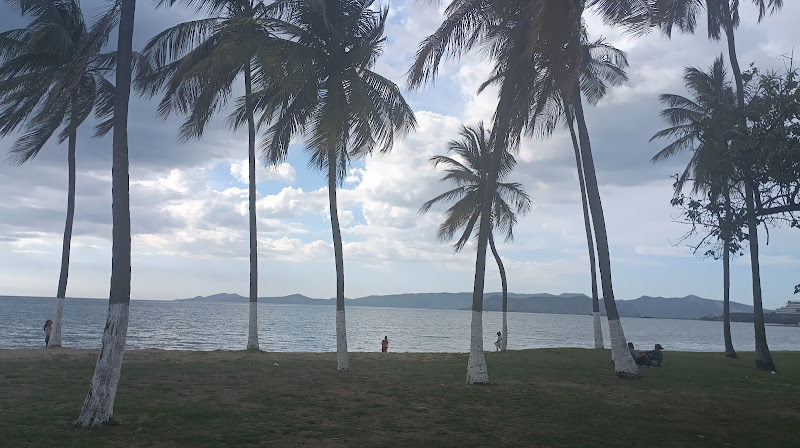
Paseo de la cruz y el mar
About Paseo de la cruz y el mar
Description
Paseo de la Cruz y el Mar, often affectionately called Paseo Colón by locals, is one of those seaside spots that somehow manages to feel both lively and peaceful at the same time. It stretches along the northern edge of Puerto La Cruz, in the state of Anzoátegui, and is the kind of place that makes you want to slow down, watch the sun dip behind the horizon, and just breathe in that salty Caribbean air. I remember walking there one late afternoon, the sky painted in orange and pink streaks, and thinking, “This is exactly what a coastal town should feel like.”
It’s more than just a walkway — it’s a cultural heartbeat of the city. Families wander the promenade, kids dart between the playgrounds, and artisans set up colorful stalls selling handwoven crafts and seashell jewelry. You’ll find locals jogging in the morning, couples strolling hand-in-hand at sunset, and fishermen chatting by the pier, their laughter carried by the sea breeze. There’s a rhythm here that feels deeply Venezuelan — warm, welcoming, and unhurried.
Over the years, the area has evolved from a simple coastal boulevard into a well-developed public space that blends leisure, art, and community. It’s fully accessible, with ramps and wide pathways that make it easy for everyone to enjoy. And while the upgrades have made it more polished, it hasn’t lost its charm or authenticity. You still get that old-town feeling, that sense of history and pride that locals carry with them.
What I love most about Paseo de la Cruz y el Mar is how it captures the essence of Puerto La Cruz — a city that thrives on its connection to the sea. You can almost taste the salt in the air and hear the faint hum of boats heading toward the Mochima National Park islands. It’s a place where you can spend hours doing absolutely nothing and still feel like you’ve experienced something beautiful.
Key Features
- Seaside Promenade: A long, scenic walkway that hugs the coastline, perfect for evening strolls or early morning runs.
- Playground Area: A safe, well-kept playground where children can play freely while parents relax nearby.
- Artisan Market: Local vendors display handmade crafts, souvenirs, and traditional snacks, giving visitors a taste of local culture.
- Sunset Views: The sunsets here are something else — wide open skies melting into the Caribbean Sea, ideal for photos or quiet reflection.
- Accessibility: Wheelchair-accessible entrances and parking make it easy for everyone to explore the area comfortably.
- Proximity to Attractions: It’s close to the main port, restaurants, and ferry terminals that connect to nearby islands.
- Public Events: On weekends, you might catch live music, food fairs, or community gatherings that bring the space to life.
Best Time to Visit
If you ask locals, they’ll tell you there’s no bad time to visit Paseo de la Cruz y el Mar — but I’d say the golden hours around sunset are unbeatable. Between 5:30 and 6:30 p.m., the light softens, the sea glimmers, and the air cools just enough to make walking around pure bliss. The dry season, roughly from December to April, tends to be the most pleasant for long outdoor strolls since the humidity drops and the skies stay clear. But even during the wetter months, the promenade has its charm — a quick tropical shower followed by a rainbow over the sea is a sight you won’t forget.
If you’re into people-watching (and who isn’t?), weekends are when the place really comes alive. Families, street performers, food stalls — it’s a sensory mix that captures the local spirit perfectly. On weekdays, it’s quieter, ideal for travelers who prefer a slower pace or want to take photos without too many crowds in the background.
How to Get There
Getting to Paseo de la Cruz y el Mar is fairly straightforward once you’re in Puerto La Cruz. The promenade sits along the city’s northern waterfront, not far from the main port area. If you’re staying in town, most hotels and guesthouses are within a short taxi or bus ride away. If you’re coming from nearby cities like Barcelona or Lechería, it’s a quick drive — traffic can be a bit unpredictable at times, but that’s part of the experience in Venezuela’s coastal towns.
For those who enjoy walking, the route from the city center to the promenade is pleasant, lined with small shops, cafés, and glimpses of daily life. And if you’re planning a day trip to the Mochima islands, this spot makes a perfect starting or ending point — you can grab a snack, enjoy the view, and unwind before or after your boat ride.
Public transportation is available, though it can be inconsistent. Taxis and private drivers are often the most convenient option, especially for visitors unfamiliar with local routes. Parking spaces are available near the promenade, including designated accessible spots for those who need them.
Tips for Visiting
First things first — bring your camera or phone fully charged. The sunsets here are ridiculously photogenic, and you’ll want to capture those moments when the sky turns into a watercolor painting. I’d also recommend wearing comfortable shoes since you’ll probably end up walking more than you planned. The promenade is long, and every corner seems to have something worth stopping for — a street musician, a vendor selling fresh coconut water, or a group of kids playing soccer by the sea.
If you’re visiting during the day, sunscreen is a must. The Caribbean sun doesn’t play around, even when it feels breezy. A hat and a bottle of water go a long way, too. And if you’re traveling with kids, the playground area is a lifesaver — shaded, safe, and close to snack vendors where you can grab an arepa or a cold drink.
One personal tip: try to chat with the artisans. Many of them have been selling their crafts here for decades, and their stories are as colorful as their creations. I once bought a small wooden carving of a pelican from an older gentleman who told me he’d been working there since the 1970s. That little carving now sits on my desk — a reminder of how travel isn’t just about places but about the people you meet along the way.
Evenings are when the promenade really shines. The air cools, the lights flicker on, and the sound of waves mixes with laughter and music. It’s romantic, yes, but also deeply communal — locals and travelers sharing the same space, the same moment. If you’re lucky, you might even catch a small concert or dance performance. Just follow the sound of the drums.
Safety-wise, it’s generally a friendly area, especially when it’s busy. Still, like in any city, keep an eye on your belongings and avoid wandering too far from the main path late at night. The local police often patrol the area, adding a sense of security for visitors.
And here’s something that might surprise you — the sea breeze here has a way of making time feel slower. You might arrive thinking you’ll spend an hour or two, but before you know it, the sky’s gone dark, and you’re still sitting on a bench, watching the reflections of city lights dance on the water. That’s the magic of Paseo de la Cruz y el Mar. It’s not just a place to see; it’s a place to feel. And once you’ve felt it, you’ll probably find yourself coming back again… just because.
Key Features
- Key Features
- Best Time to Visit
- How to Get There
- Tips for Visiting
More Details
Updated November 10, 2025
Table of Contents
Description
Paseo de la Cruz y el Mar, often affectionately called Paseo Colón by locals, is one of those seaside spots that somehow manages to feel both lively and peaceful at the same time. It stretches along the northern edge of Puerto La Cruz, in the state of Anzoátegui, and is the kind of place that makes you want to slow down, watch the sun dip behind the horizon, and just breathe in that salty Caribbean air. I remember walking there one late afternoon, the sky painted in orange and pink streaks, and thinking, “This is exactly what a coastal town should feel like.”
It’s more than just a walkway — it’s a cultural heartbeat of the city. Families wander the promenade, kids dart between the playgrounds, and artisans set up colorful stalls selling handwoven crafts and seashell jewelry. You’ll find locals jogging in the morning, couples strolling hand-in-hand at sunset, and fishermen chatting by the pier, their laughter carried by the sea breeze. There’s a rhythm here that feels deeply Venezuelan — warm, welcoming, and unhurried.
Over the years, the area has evolved from a simple coastal boulevard into a well-developed public space that blends leisure, art, and community. It’s fully accessible, with ramps and wide pathways that make it easy for everyone to enjoy. And while the upgrades have made it more polished, it hasn’t lost its charm or authenticity. You still get that old-town feeling, that sense of history and pride that locals carry with them.
What I love most about Paseo de la Cruz y el Mar is how it captures the essence of Puerto La Cruz — a city that thrives on its connection to the sea. You can almost taste the salt in the air and hear the faint hum of boats heading toward the Mochima National Park islands. It’s a place where you can spend hours doing absolutely nothing and still feel like you’ve experienced something beautiful.
Key Features
- Seaside Promenade: A long, scenic walkway that hugs the coastline, perfect for evening strolls or early morning runs.
- Playground Area: A safe, well-kept playground where children can play freely while parents relax nearby.
- Artisan Market: Local vendors display handmade crafts, souvenirs, and traditional snacks, giving visitors a taste of local culture.
- Sunset Views: The sunsets here are something else — wide open skies melting into the Caribbean Sea, ideal for photos or quiet reflection.
- Accessibility: Wheelchair-accessible entrances and parking make it easy for everyone to explore the area comfortably.
- Proximity to Attractions: It’s close to the main port, restaurants, and ferry terminals that connect to nearby islands.
- Public Events: On weekends, you might catch live music, food fairs, or community gatherings that bring the space to life.
Best Time to Visit
If you ask locals, they’ll tell you there’s no bad time to visit Paseo de la Cruz y el Mar — but I’d say the golden hours around sunset are unbeatable. Between 5:30 and 6:30 p.m., the light softens, the sea glimmers, and the air cools just enough to make walking around pure bliss. The dry season, roughly from December to April, tends to be the most pleasant for long outdoor strolls since the humidity drops and the skies stay clear. But even during the wetter months, the promenade has its charm — a quick tropical shower followed by a rainbow over the sea is a sight you won’t forget.
If you’re into people-watching (and who isn’t?), weekends are when the place really comes alive. Families, street performers, food stalls — it’s a sensory mix that captures the local spirit perfectly. On weekdays, it’s quieter, ideal for travelers who prefer a slower pace or want to take photos without too many crowds in the background.
How to Get There
Getting to Paseo de la Cruz y el Mar is fairly straightforward once you’re in Puerto La Cruz. The promenade sits along the city’s northern waterfront, not far from the main port area. If you’re staying in town, most hotels and guesthouses are within a short taxi or bus ride away. If you’re coming from nearby cities like Barcelona or Lechería, it’s a quick drive — traffic can be a bit unpredictable at times, but that’s part of the experience in Venezuela’s coastal towns.
For those who enjoy walking, the route from the city center to the promenade is pleasant, lined with small shops, cafés, and glimpses of daily life. And if you’re planning a day trip to the Mochima islands, this spot makes a perfect starting or ending point — you can grab a snack, enjoy the view, and unwind before or after your boat ride.
Public transportation is available, though it can be inconsistent. Taxis and private drivers are often the most convenient option, especially for visitors unfamiliar with local routes. Parking spaces are available near the promenade, including designated accessible spots for those who need them.
Tips for Visiting
First things first — bring your camera or phone fully charged. The sunsets here are ridiculously photogenic, and you’ll want to capture those moments when the sky turns into a watercolor painting. I’d also recommend wearing comfortable shoes since you’ll probably end up walking more than you planned. The promenade is long, and every corner seems to have something worth stopping for — a street musician, a vendor selling fresh coconut water, or a group of kids playing soccer by the sea.
If you’re visiting during the day, sunscreen is a must. The Caribbean sun doesn’t play around, even when it feels breezy. A hat and a bottle of water go a long way, too. And if you’re traveling with kids, the playground area is a lifesaver — shaded, safe, and close to snack vendors where you can grab an arepa or a cold drink.
One personal tip: try to chat with the artisans. Many of them have been selling their crafts here for decades, and their stories are as colorful as their creations. I once bought a small wooden carving of a pelican from an older gentleman who told me he’d been working there since the 1970s. That little carving now sits on my desk — a reminder of how travel isn’t just about places but about the people you meet along the way.
Evenings are when the promenade really shines. The air cools, the lights flicker on, and the sound of waves mixes with laughter and music. It’s romantic, yes, but also deeply communal — locals and travelers sharing the same space, the same moment. If you’re lucky, you might even catch a small concert or dance performance. Just follow the sound of the drums.
Safety-wise, it’s generally a friendly area, especially when it’s busy. Still, like in any city, keep an eye on your belongings and avoid wandering too far from the main path late at night. The local police often patrol the area, adding a sense of security for visitors.
And here’s something that might surprise you — the sea breeze here has a way of making time feel slower. You might arrive thinking you’ll spend an hour or two, but before you know it, the sky’s gone dark, and you’re still sitting on a bench, watching the reflections of city lights dance on the water. That’s the magic of Paseo de la Cruz y el Mar. It’s not just a place to see; it’s a place to feel. And once you’ve felt it, you’ll probably find yourself coming back again… just because.
Key Highlights
- Key Features
- Best Time to Visit
- How to Get There
- Tips for Visiting
Location
Places to Stay Near Paseo de la cruz y el mar
Find and Book a Tour
Explore More Travel Guides
No reviews found! Be the first to review!
Traveler Reviews for Paseo de la cruz y el mar
There are no reviews yet. Be the first one to write one.
Have you visited Paseo de la cruz y el mar? Help other travelers by sharing your review.
You Might Also Like
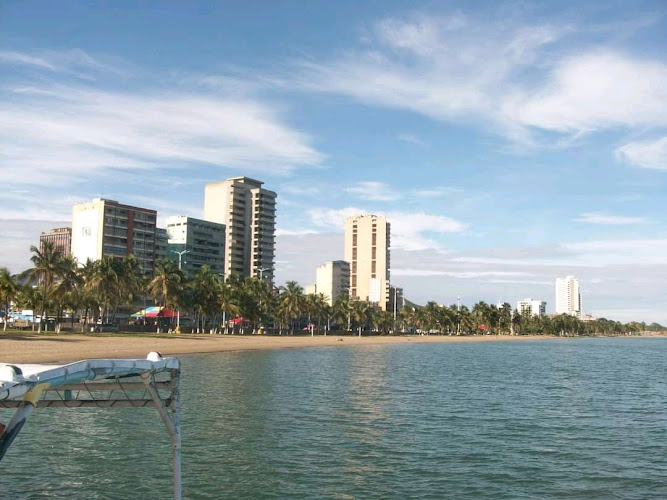
Puerto La Cruz
Casa De Fritox
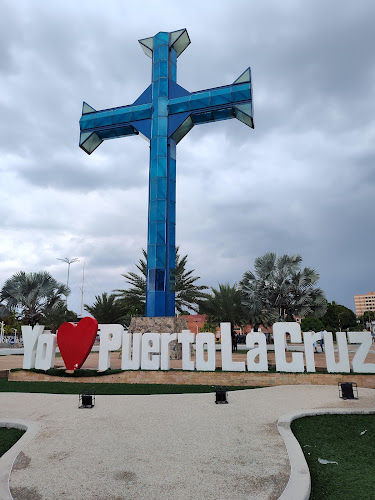
Paseo De La Cruz Y El Mar (Paseo Colón)
Find Accommodations Nearby
Recommended Tours & Activities
Visitor Reviews
There are no reviews yet. Be the first one to write one.
Share Your Experience
Have you visited Paseo de la cruz y el mar? Help other travelers by leaving a review.