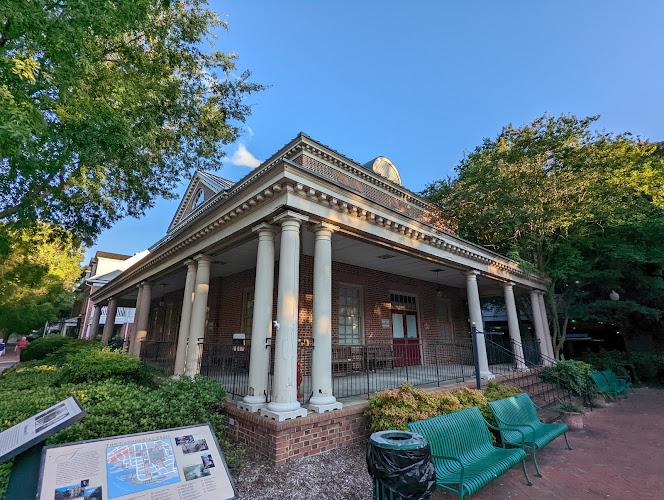
It is the kind of museum that rewards curiosity. Visitors won’t find acres of exhibit halls here; instead they encounter a concentrated, tactile collection of historic memorabilia and equipment that charts how local emergency services evolved over decades. Old uniforms, polished badges, radios that look like relics from a spy movie, and the gleam of firehouse brass all sit within arm’s reach, telling practical stories about everyday courage and municipal life.
This description aims to be straightforward: the museum feels intimate and personal. It leans into artifacts rather than flashy multimedia; cases and displays are curated to emphasize craftsmanship, procedure and the small details that reveal larger changes in technology and community expectations. The displays often juxtapose police badges and patrol logs with firefighting helmets and hose couplings, which oddly makes the history feel more human — two departments, same mission of protecting the public, but different tools and traditions. Historians will appreciate the contextual notes, while families tend to linger over the tactile items: a vintage fire axe, a hand-cranked siren, or a display of old communication equipment that demonstrates how critical suspense and coordination once were.
There is a community heartbeat to the place. Volunteers and retired service members have played a big role in assembling and telling the stories on show, and that local stewardship shines through. The museum often functions as a living memory bank: donated uniforms, hand-written logs, and photographed faces of past officers and firefighters are presented with a respectful tone that invites reflection. It can be moving, actually—people sometimes pause longer than expected at memorials or personal plaques. Visitors who come looking purely for cool old machinery leave with something else: an appreciation for the routines, risks and small acts of bravery that make a city run.
Some practical realities are worth mentioning up front, because honesty helps planning. The space is compact, which is delightful to people who dislike museum fatigue, but it also means exhibits are close together and can feel dense. Accessibility varies by building layout; steps and narrow doorways appear in older structures, and while the staff tends to be accommodating, travelers with mobility concerns should check ahead. Likewise, exhibit labels are succinct. Those hungry for deep academic analysis might feel they have only scratched the surface after an hour or two. But for many, that succinctness is a plus: it leaves room for conversation, questions, and that slightly nostalgic feeling of connecting with local history in a real, human-scale way.
On the artifacts themselves: the collection gives a convincing sense of time passing. Horse-drawn era firefighting tools and early motorized engines are referenced alongside mid-20th-century equipment; police memorabilia traces shifts in uniforms, communications, and community policing approaches. There are examples of old fire engines, breathing apparatus, and turnout gear that illustrate how safety protocols evolved. Old dispatch boards and radio gear underscore how crucial communication was before the digital age. It’s one thing to read about incident reports; it is another to see a beat-up logbook with scrawled notes about a stormy night—suddenly the past feels immediate.
Educational groups, families and history buffs make up a fair share of visitors. The museum does a good job at being both informative and approachable; school groups usually leave with practical lessons about public safety, the evolution of technology, and civic responsibility. But adults who wander in on their own often find equal pleasure in the small surprises: period photographs, personal mementos, or a plaque that tells an unusual story about a local station. The tone throughout is respectful, often reverent, but not solemn. There’s humor tucked into some displays—old slogans, curious equipment names—that reminds one these were people doing a job, not just icons on a pedestal.
One of the less obvious qualities that sets the museum apart is its local specificity. There are artifacts and stories that wouldn’t make it into a national museum because they are distinctly Norfolk—stories tied to neighborhoods, ports, and local events. That local focus is precisely the draw. Travelers who want surface-level, postcard-ready history might miss the payoff here; travelers who like to learn what made a place tick will find value. The museum reads like a neighborhood chronicle, full of small, telling details about how public safety adapted to urban growth, shipping traffic, and changing social patterns.
That said, the museum is not a blockbuster attraction and it does not pretend to be. Its charm is in the authentic, sometimes weathered items that carry real provenance and personal history. The presentation is honest rather than theatrical. If a visitor expects interactive rides or high-budget spectacle, they might leave wanting more. But people who appreciate archival material and candid interpretation will likely linger and, often, return. It is a spot where volunteers will happily answer questions, and casual conversations can lead to unexpected historical nuggets—favorite local stories, the origin of a tradition, or an anecdote about a particular piece of equipment. Those little interactions are often the best part.
For photographers and collectors of visual detail, the museum offers textured imagery: brass fixtures catching late-afternoon light, embossed badges, faded patches, and the careful curvature of century-old hoses. There’s a quiet aesthetic here that speaks to the design and engineering of safety tools across eras. But note: photography etiquette matters. Many artifacts are delicate; flash may be discouraged, and some items may be behind glass. Visitors who treat the collection with care and curiosity tend to get more out of their time.
In short, the Norfolk Police & Fire Museum will most appeal to people who enjoy local history, to those intrigued by the nuts and bolts of emergency services, and to anyone who appreciates a small museum that delivers concentrated, meaningful content. It is both a repository of memorabilia and a community memory space. Expect a compact visit rich with human stories, practical artifacts, and the kind of small-scale discovery that often makes a trip memorable long after the bigger tourist attractions have faded from the itinerary.
 Real Journey Travels