About Noravanq

Description

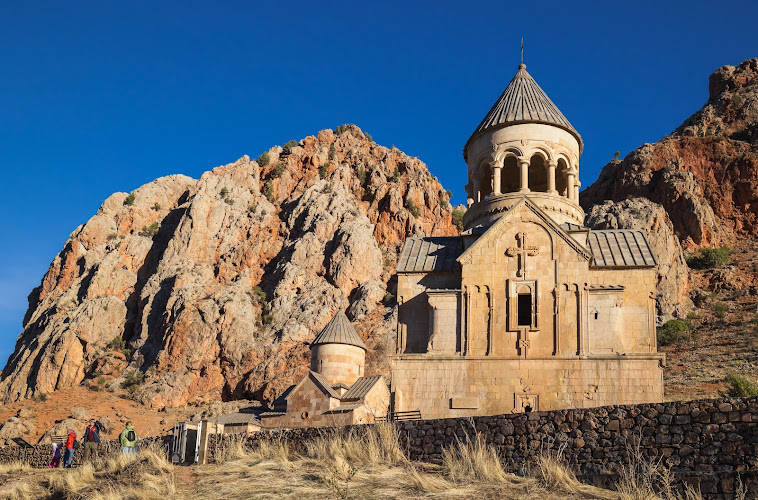
Noravanq is one of those places that stays with you long after you’ve left. Tucked among the dramatic red cliffs of Armenia’s Vayots Dzor region, this 13th-century monastery feels both ancient and alive. The first time I saw it, the sunlight was bouncing off the canyon walls, and the stones of the monastery seemed to glow. It’s not just a religious site—it’s a masterpiece of medieval Armenian architecture, a story carved in stone. The complex was built by some of the most skilled craftsmen of its time, and you can feel that pride in every arch and carving.

The main church, Surb Astvatsatsin (Church of the Holy Mother of God), is especially striking because of its unusual two-level design. The upper floor, which you reach by a narrow set of stone steps that jut out from the façade, feels like stepping into another world. It’s a little nerve-wracking if you’re afraid of heights, but worth every shaky step. Inside, the air is cool and still, and the faint smell of incense lingers. You can almost hear the whispers of monks who once lived and prayed here.

What makes Noravanq truly special, though, is its setting. The monastery sits in a narrow gorge surrounded by towering cliffs in shades of red and orange. It’s the kind of landscape that makes you stop mid-sentence just to take it all in. And when the sun begins to set, the whole valley glows as if it’s on fire. I’ve seen a lot of monasteries in Armenia, but Noravanq has this quiet, magnetic pull that keeps drawing you back.

While most visitors come for the architecture, there’s a deeper energy here that’s hard to describe. Maybe it’s the centuries of prayer that have soaked into the stones, or maybe it’s just the raw beauty of the place. Either way, Noravanq isn’t just a stop on a travel itinerary—it’s an experience that connects you to Armenia’s soul.

Key Features

  • 13th-century Armenian monastery complex known for its intricate stone carvings and detailed khachkars (cross-stones).
  • Features a bi-level church, Surb Astvatsatsin, with unique cantilevered steps leading to the upper chapel.
  • Surrounded by dramatic red cliffs and a scenic mountain gorge offering panoramic views.
  • Home to the tombs of notable Armenian princes and clergy from the Orbelian dynasty.
  • Includes a smaller church, Surb Karapet, and a chapel dedicated to St. Gregory.
  • Accessible amenities such as restrooms and wheelchair-friendly parking.
  • Peaceful atmosphere ideal for photography, reflection, and quiet exploration.

Best Time to Visit

If you ask me, the best time to visit Noravanq is during late spring or early autumn. The weather is just right—not too hot, not too chilly—and the colors of the canyon are at their most dramatic. In May, the hills are green and dotted with wildflowers, which makes the red cliffs pop even more. Autumn, on the other hand, brings a golden glow that feels almost cinematic. Summer can be scorching, especially around midday, but if you go early in the morning or near sunset, the light is magical. Winter has its own charm too; the snow-dusted cliffs make the monastery look like something out of a painting, though the roads can be tricky.

I remember visiting once in October, and the air had that crisp, earthy smell that only autumn brings. The crowds were thinner, and there was this peaceful hush all around. You could hear the wind rustling through the canyon and the occasional echo of footsteps on stone. That’s when Noravanq feels most alive—when you have the space to breathe it all in.

How to Get There

Getting to Noravanq is part of the adventure. Most travelers make the trip from Yerevan, which takes about two and a half hours by car. The drive itself is beautiful—you’ll pass through rolling hills, vineyards, and tiny villages that seem frozen in time. As you turn off the main highway near Areni (famous for its wine, by the way), the road winds through a narrow gorge that feels almost otherworldly. Keep an eye out for the red cliffs; that’s your sign you’re close.

If you don’t have a car, there are plenty of tour options that include Noravanq as part of a day trip, often combined with stops at Areni Winery or the nearby cave where the world’s oldest leather shoe was found. For the more adventurous, hiring a local taxi from Areni is possible, though it’s best to agree on a price beforehand. The road is paved and in decent condition, but it’s a bit twisty—so if you get motion sickness, maybe skip breakfast before the drive.

Once you arrive, there’s a small parking area and a short walk up to the monastery. It’s not a difficult climb, but wear good shoes; the stones can be uneven. And don’t rush—half the joy is just soaking in the views as you approach.

Tips for Visiting

Visiting Noravanq is as much about the experience as the destination. Here are a few tips to make the most of your trip:

  • Go early or late in the day: The light is softer, the colors richer, and you’ll avoid the tour bus crowds that sometimes roll in mid-morning.
  • Bring water and snacks: There’s usually a small café nearby, but options can be limited, especially off-season.
  • Dress comfortably: You’ll be walking on uneven terrain, and the weather can change quickly in the mountains.
  • Be respectful: This is still a sacred site for many Armenians. Keep your voice low inside the churches and avoid using flash photography.
  • Take your time: Don’t just snap a few photos and leave. Sit on one of the stone benches, listen to the wind, and let the place tell you its story.
  • Combine it with nearby attractions: The Areni wine region and the Areni-1 cave are both close by and worth a visit.
  • Check accessibility: There’s wheelchair-accessible parking, but the terrain near the monastery itself can be uneven, so plan accordingly.

One last thing—if you’re into photography, bring your best camera or even just your phone. The contrast between the red rocks and the pale stone of the monastery is breathtaking, especially around sunset. I once spent nearly an hour just trying to capture the way the light hit the upper church. Of course, no photo ever quite does it justice, but it’s worth the attempt.

Noravanq isn’t a place you simply visit—it’s a place you feel. Whether you’re drawn by history, architecture, or just the raw beauty of Armenia’s landscapes, it has a way of grounding you. It reminds you that even in the quietest corners of the world, there’s a story waiting to be heard. And if you listen closely enough, Noravanq will tell you its own.

Key Features

  • 13th-century Armenian monastery complex known for its intricate stone carvings and detailed khachkars (cross-stones).
  • Features a bi-level church, Surb Astvatsatsin, with unique cantilevered steps leading to the upper chapel.
  • Surrounded by dramatic red cliffs and a scenic mountain gorge offering panoramic views.
  • Home to the tombs of notable Armenian princes and clergy from the Orbelian dynasty.
  • Includes a smaller church, Surb Karapet, and a chapel dedicated to St. Gregory.
  • Accessible amenities such as restrooms and wheelchair-friendly parking.
  • Peaceful atmosphere ideal for photography, reflection, and quiet exploration.

More Details

Updated November 10, 2025


Description

Noravanq is one of those places that stays with you long after you’ve left. Tucked among the dramatic red cliffs of Armenia’s Vayots Dzor region, this 13th-century monastery feels both ancient and alive. The first time I saw it, the sunlight was bouncing off the canyon walls, and the stones of the monastery seemed to glow. It’s not just a religious site—it’s a masterpiece of medieval Armenian architecture, a story carved in stone. The complex was built by some of the most skilled craftsmen of its time, and you can feel that pride in every arch and carving.

The main church, Surb Astvatsatsin (Church of the Holy Mother of God), is especially striking because of its unusual two-level design. The upper floor, which you reach by a narrow set of stone steps that jut out from the façade, feels like stepping into another world. It’s a little nerve-wracking if you’re afraid of heights, but worth every shaky step. Inside, the air is cool and still, and the faint smell of incense lingers. You can almost hear the whispers of monks who once lived and prayed here.

What makes Noravanq truly special, though, is its setting. The monastery sits in a narrow gorge surrounded by towering cliffs in shades of red and orange. It’s the kind of landscape that makes you stop mid-sentence just to take it all in. And when the sun begins to set, the whole valley glows as if it’s on fire. I’ve seen a lot of monasteries in Armenia, but Noravanq has this quiet, magnetic pull that keeps drawing you back.

While most visitors come for the architecture, there’s a deeper energy here that’s hard to describe. Maybe it’s the centuries of prayer that have soaked into the stones, or maybe it’s just the raw beauty of the place. Either way, Noravanq isn’t just a stop on a travel itinerary—it’s an experience that connects you to Armenia’s soul.

Key Features

  • 13th-century Armenian monastery complex known for its intricate stone carvings and detailed khachkars (cross-stones).
  • Features a bi-level church, Surb Astvatsatsin, with unique cantilevered steps leading to the upper chapel.
  • Surrounded by dramatic red cliffs and a scenic mountain gorge offering panoramic views.
  • Home to the tombs of notable Armenian princes and clergy from the Orbelian dynasty.
  • Includes a smaller church, Surb Karapet, and a chapel dedicated to St. Gregory.
  • Accessible amenities such as restrooms and wheelchair-friendly parking.
  • Peaceful atmosphere ideal for photography, reflection, and quiet exploration.

Best Time to Visit

If you ask me, the best time to visit Noravanq is during late spring or early autumn. The weather is just right—not too hot, not too chilly—and the colors of the canyon are at their most dramatic. In May, the hills are green and dotted with wildflowers, which makes the red cliffs pop even more. Autumn, on the other hand, brings a golden glow that feels almost cinematic. Summer can be scorching, especially around midday, but if you go early in the morning or near sunset, the light is magical. Winter has its own charm too; the snow-dusted cliffs make the monastery look like something out of a painting, though the roads can be tricky.

I remember visiting once in October, and the air had that crisp, earthy smell that only autumn brings. The crowds were thinner, and there was this peaceful hush all around. You could hear the wind rustling through the canyon and the occasional echo of footsteps on stone. That’s when Noravanq feels most alive—when you have the space to breathe it all in.

How to Get There

Getting to Noravanq is part of the adventure. Most travelers make the trip from Yerevan, which takes about two and a half hours by car. The drive itself is beautiful—you’ll pass through rolling hills, vineyards, and tiny villages that seem frozen in time. As you turn off the main highway near Areni (famous for its wine, by the way), the road winds through a narrow gorge that feels almost otherworldly. Keep an eye out for the red cliffs; that’s your sign you’re close.

If you don’t have a car, there are plenty of tour options that include Noravanq as part of a day trip, often combined with stops at Areni Winery or the nearby cave where the world’s oldest leather shoe was found. For the more adventurous, hiring a local taxi from Areni is possible, though it’s best to agree on a price beforehand. The road is paved and in decent condition, but it’s a bit twisty—so if you get motion sickness, maybe skip breakfast before the drive.

Once you arrive, there’s a small parking area and a short walk up to the monastery. It’s not a difficult climb, but wear good shoes; the stones can be uneven. And don’t rush—half the joy is just soaking in the views as you approach.

Tips for Visiting

Visiting Noravanq is as much about the experience as the destination. Here are a few tips to make the most of your trip:

  • Go early or late in the day: The light is softer, the colors richer, and you’ll avoid the tour bus crowds that sometimes roll in mid-morning.
  • Bring water and snacks: There’s usually a small café nearby, but options can be limited, especially off-season.
  • Dress comfortably: You’ll be walking on uneven terrain, and the weather can change quickly in the mountains.
  • Be respectful: This is still a sacred site for many Armenians. Keep your voice low inside the churches and avoid using flash photography.
  • Take your time: Don’t just snap a few photos and leave. Sit on one of the stone benches, listen to the wind, and let the place tell you its story.
  • Combine it with nearby attractions: The Areni wine region and the Areni-1 cave are both close by and worth a visit.
  • Check accessibility: There’s wheelchair-accessible parking, but the terrain near the monastery itself can be uneven, so plan accordingly.

One last thing—if you’re into photography, bring your best camera or even just your phone. The contrast between the red rocks and the pale stone of the monastery is breathtaking, especially around sunset. I once spent nearly an hour just trying to capture the way the light hit the upper church. Of course, no photo ever quite does it justice, but it’s worth the attempt.

Noravanq isn’t a place you simply visit—it’s a place you feel. Whether you’re drawn by history, architecture, or just the raw beauty of Armenia’s landscapes, it has a way of grounding you. It reminds you that even in the quietest corners of the world, there’s a story waiting to be heard. And if you listen closely enough, Noravanq will tell you its own.

Key Highlights

  • 13th-century Armenian monastery complex known for its intricate stone carvings and detailed khachkars (cross-stones).
  • Features a bi-level church, Surb Astvatsatsin, with unique cantilevered steps leading to the upper chapel.
  • Surrounded by dramatic red cliffs and a scenic mountain gorge offering panoramic views.
  • Home to the tombs of notable Armenian princes and clergy from the Orbelian dynasty.
  • Includes a smaller church, Surb Karapet, and a chapel dedicated to St. Gregory.
  • Accessible amenities such as restrooms and wheelchair-friendly parking.
  • Peaceful atmosphere ideal for photography, reflection, and quiet exploration.

Location

Places to Stay Near Noravanq

Find and Book a Tour

Explore More Travel Guides

No reviews found! Be the first to review!

Traveler Reviews for Noravanq

There are no reviews yet. Be the first one to write one.

Share Your Experience

Have you visited Noravanq? Help other travelers by sharing your review.

Find Accommodations Nearby

Recommended Tours & Activities

Visitor Reviews

There are no reviews yet. Be the first one to write one.

Share Your Experience

Have you visited Noravanq? Help other travelers by leaving a review.