
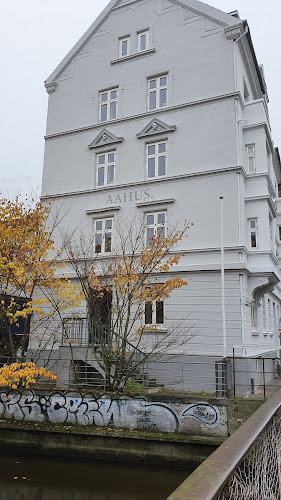
Museumsbroen
About Museumsbroen
Description
The Museumsbroen is a low, pedestrian-focused bridge in Aarhus that functions less like a mere crossing and more like a short, social corridor between the city's museum quarter and the rest of the downtown. It sits close to the cluster of institutions that make Aarhus one of Denmark's most interesting cultural pockets — think ARoS art museum on one side and the open-air feel of Den Gamle By and other history-focused sites nearby. The structure itself is unpretentious: not a dramatic, swooping landmark, but a practical, pleasant place that invites people to pause, to look, to take a photograph that somehow captures the particular light of eastern Jutland. In short, it quietly earns its keep as an urban connector and an incidental viewpoint.
Architecturally, the Museumsbroen is more about human scale than heroics. It was designed for walking, for tending strollers and for families who like to linger. Benches are scattered along its length; in summer, they'll fill with students, tourists, and locals sipping coffee from a nearby kiosk. The surface is usually level and friendly underfoot, which makes it good for kids and for people hauling small suitcases between hotels and museums. But — and yes there is a but — when the weather turns ugly the bridge shows its honest side: it can be windy, and the wind makes people quicken their step. That tension between calm and briskness often defines a visit, and oddly, that dynamic is part of its charm.
For travelers planning their museum route through Aarhus, the Museumsbroen is often the unglamorous but indispensable bit of infrastructure that ties the day together. Visitors who head to ARoS for modern and contemporary art exhibitions and then want to cross toward history exhibits or the Old Town tend to find the bridge an obvious and sensible route. It helps that the view from the bridge frames a slice of Aarhus: a mix of red-tiled roofs, modern museum façades, occasional cranes (yes, the city keeps changing), and reflections on the water. Photographers sometimes linger for that very reason; the bridge offers angles that the riverside promenades do not, especially when the light is low and warm.
Families will appreciate the tranquil practicality of the place. The Museumsbroen's gentle slopes and handrails make it straightforward for prams and for small children who feel like running a little. On several afternoons, one guide witnessed a flock of school kids trotting across with sketchbooks and sticky fingers, all focused on an assignment about shapes or color or old boats — kids being kids, excited and slightly chaotic. That scene said more about the bridge than any brochure: it works as a small urban classroom, a transitional space where formal museum learning becomes messier, louder, and altogether more human.
There are sensory things to note. The bridge's timber or composite decking (depending on the season and maintenance schedule) has a faint smell after rain — that woody, welcoming smell that somehow smells like vacations by the coast. Footsteps echo in a friendly, non-echoey way. Bikes glide by with polite ringings, though at busier times the bridge feels brisk, the tempo raised by commuters and sightseers alike. And if a street musician chooses to play nearby — which happens, especially in late summer — the result is almost always charming: a few chords, a hat collecting coins, and people who stamp their feet while waiting for the light to change.
Visitors should also be aware of practicalities masked by charm. At peak times — public holidays, festival weekends, or during major exhibitions at ARoS — the bridge can feel crowded. That crowding is not hostile, but it does change the experience from contemplative to communal. Some travelers report that maintenance work can temporarily close or reroute parts of the path; other times municipal events use the area for pop-up installations, which can be delightful or, if someone is in a hurry, mildly inconvenient. The city tends to keep things well signposted, but a detour is always possible; the sensible traveler will allow a few extra minutes between stops.
On the topic of weather and safety: the Museumsbroen reflects Aarhus's seasons. In summer it is an easy, pleasurable stroll; in winter it can be icy and slick in spots, especially where river mist collects and freezes. Locals will give a knowing look and suggest sensible footwear. Maintenance crews do a decent job, but the bridge is still exposed, and the exposed bits can get temperamental. A repeat visitor once said the bridge was like an honest friend: straightforward, sometimes blunt, never pretending to be something else.
Hidden perks worth mentioning to a careful planner: the bridge offers small, often-overlooked sightlines to the city skyline that do not appear in guidebooks. Turn slightly and a small courtyard or a painted wall might reveal itself. Photographers who wander off the main path have returned with surprising finds — a painted door, an old anchor in a museum storage area, or a tiny plaque commemorating a local artist. Those tiny discoveries are the sort of travel detritus that makes a day feel like treasure hunting, and the Museumsbroen is a very good starting point for that kind of mood.
Accessibility is generally good; ramps rather than steep steps keep it friendly for wheelchairs and buggies. The bridge is deliberately integrated into the municipal flow, and for those who worry about language barriers, signage around the museum quarter often includes clear pictograms that help guide non-Danish speakers. Still, if a traveler depends on detailed signage, carrying a simple map or having a navigation app is useful — the area has little alleys and slight twists that can delight as much as confuse.
Finally, as an honest, rounded note: the Museumsbroen is not a must-see solo attraction if someone is in Aarhus for a very short time and has to prioritize world-class museums like ARoS itself. But for anyone who plans to explore the city's cultural web — to hop between art, history, and the surprisingly infectious local street life — the bridge is quietly central. It holds no great pretenses. It simply connects places, people, and small moments — and in travel, those small moments are often the ones remembered best.
Key Features
More Details
Updated August 29, 2025
Table of Contents
Description
The Museumsbroen is a low, pedestrian-focused bridge in Aarhus that functions less like a mere crossing and more like a short, social corridor between the city’s museum quarter and the rest of the downtown. It sits close to the cluster of institutions that make Aarhus one of Denmark’s most interesting cultural pockets — think ARoS art museum on one side and the open-air feel of Den Gamle By and other history-focused sites nearby. The structure itself is unpretentious: not a dramatic, swooping landmark, but a practical, pleasant place that invites people to pause, to look, to take a photograph that somehow captures the particular light of eastern Jutland. In short, it quietly earns its keep as an urban connector and an incidental viewpoint.
Architecturally, the Museumsbroen is more about human scale than heroics. It was designed for walking, for tending strollers and for families who like to linger. Benches are scattered along its length; in summer, they’ll fill with students, tourists, and locals sipping coffee from a nearby kiosk. The surface is usually level and friendly underfoot, which makes it good for kids and for people hauling small suitcases between hotels and museums. But — and yes there is a but — when the weather turns ugly the bridge shows its honest side: it can be windy, and the wind makes people quicken their step. That tension between calm and briskness often defines a visit, and oddly, that dynamic is part of its charm.
For travelers planning their museum route through Aarhus, the Museumsbroen is often the unglamorous but indispensable bit of infrastructure that ties the day together. Visitors who head to ARoS for modern and contemporary art exhibitions and then want to cross toward history exhibits or the Old Town tend to find the bridge an obvious and sensible route. It helps that the view from the bridge frames a slice of Aarhus: a mix of red-tiled roofs, modern museum façades, occasional cranes (yes, the city keeps changing), and reflections on the water. Photographers sometimes linger for that very reason; the bridge offers angles that the riverside promenades do not, especially when the light is low and warm.
Families will appreciate the tranquil practicality of the place. The Museumsbroen’s gentle slopes and handrails make it straightforward for prams and for small children who feel like running a little. On several afternoons, one guide witnessed a flock of school kids trotting across with sketchbooks and sticky fingers, all focused on an assignment about shapes or color or old boats — kids being kids, excited and slightly chaotic. That scene said more about the bridge than any brochure: it works as a small urban classroom, a transitional space where formal museum learning becomes messier, louder, and altogether more human.
There are sensory things to note. The bridge’s timber or composite decking (depending on the season and maintenance schedule) has a faint smell after rain — that woody, welcoming smell that somehow smells like vacations by the coast. Footsteps echo in a friendly, non-echoey way. Bikes glide by with polite ringings, though at busier times the bridge feels brisk, the tempo raised by commuters and sightseers alike. And if a street musician chooses to play nearby — which happens, especially in late summer — the result is almost always charming: a few chords, a hat collecting coins, and people who stamp their feet while waiting for the light to change.
Visitors should also be aware of practicalities masked by charm. At peak times — public holidays, festival weekends, or during major exhibitions at ARoS — the bridge can feel crowded. That crowding is not hostile, but it does change the experience from contemplative to communal. Some travelers report that maintenance work can temporarily close or reroute parts of the path; other times municipal events use the area for pop-up installations, which can be delightful or, if someone is in a hurry, mildly inconvenient. The city tends to keep things well signposted, but a detour is always possible; the sensible traveler will allow a few extra minutes between stops.
On the topic of weather and safety: the Museumsbroen reflects Aarhus’s seasons. In summer it is an easy, pleasurable stroll; in winter it can be icy and slick in spots, especially where river mist collects and freezes. Locals will give a knowing look and suggest sensible footwear. Maintenance crews do a decent job, but the bridge is still exposed, and the exposed bits can get temperamental. A repeat visitor once said the bridge was like an honest friend: straightforward, sometimes blunt, never pretending to be something else.
Hidden perks worth mentioning to a careful planner: the bridge offers small, often-overlooked sightlines to the city skyline that do not appear in guidebooks. Turn slightly and a small courtyard or a painted wall might reveal itself. Photographers who wander off the main path have returned with surprising finds — a painted door, an old anchor in a museum storage area, or a tiny plaque commemorating a local artist. Those tiny discoveries are the sort of travel detritus that makes a day feel like treasure hunting, and the Museumsbroen is a very good starting point for that kind of mood.
Accessibility is generally good; ramps rather than steep steps keep it friendly for wheelchairs and buggies. The bridge is deliberately integrated into the municipal flow, and for those who worry about language barriers, signage around the museum quarter often includes clear pictograms that help guide non-Danish speakers. Still, if a traveler depends on detailed signage, carrying a simple map or having a navigation app is useful — the area has little alleys and slight twists that can delight as much as confuse.
Finally, as an honest, rounded note: the Museumsbroen is not a must-see solo attraction if someone is in Aarhus for a very short time and has to prioritize world-class museums like ARoS itself. But for anyone who plans to explore the city’s cultural web — to hop between art, history, and the surprisingly infectious local street life — the bridge is quietly central. It holds no great pretenses. It simply connects places, people, and small moments — and in travel, those small moments are often the ones remembered best.
Key Highlights
Museumsbroen
Location
Places to Stay Near Museumsbroen
Find and Book a Tour
Explore More Travel Guides
No reviews found! Be the first to review!
Traveler Reviews for Museumsbroen
There are no reviews yet. Be the first one to write one.
Have you visited Museumsbroen? Help other travelers by sharing your review.
You Might Also Like
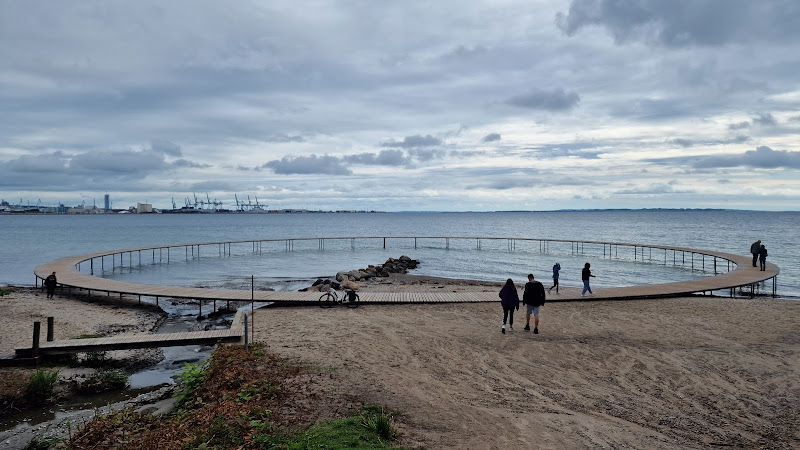
The Infinite Bridge

Museum of Ancient Art, Aarhus
Find Accommodations Nearby
Recommended Tours & Activities
Visitor Reviews
There are no reviews yet. Be the first one to write one.
Share Your Experience
Have you visited Museumsbroen? Help other travelers by leaving a review.