Münster
About Münster
Description
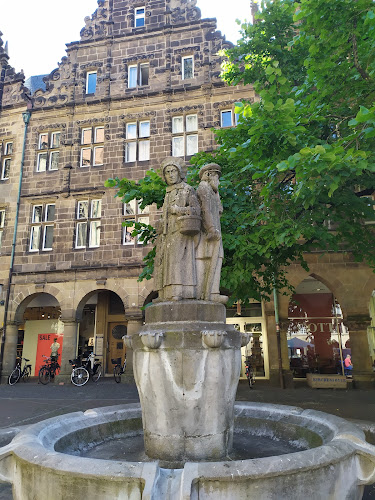
Münster, tucked away in the heart of western Germany, is one of those cities that feels both historic and effortlessly modern at the same time. It’s a place where cobblestone streets hum quietly under the wheels of bicycles, and centuries-old churches share the skyline with sleek university buildings and cozy cafés. I still remember the first time I walked through Prinzipalmarkt — those gabled facades looked like something straight out of a medieval painting, yet the buzz of everyday life kept it from feeling like a museum. It’s a city that doesn’t just preserve its past; it lives it, breathes it, and invites you to join in.
At the heart of it all stands St. Paulus Dom, the city’s iconic cathedral. Its Gothic and Romanesque architecture feels almost otherworldly when you step inside. The light filters through the stained glass in that quiet, reverent way that makes you instinctively lower your voice. And just a short walk away, St. Lamberti Church rises proudly, its spire visible from nearly everywhere in town — a constant reminder of Münster’s deep spiritual and cultural roots.
But Münster isn’t just about churches and old stones. There’s a youthful energy here, thanks to its large student population. You’ll feel it in the laughter spilling out of bars in the Kuhviertel, in the art installations tucked into unexpected corners, and in the easy rhythm of life along the Aasee lake. I once spent an entire afternoon there, watching people paddle boats and feed ducks, the kind of lazy day that makes you forget to check your phone.
The city also has a surprising artistic side. The Pablo Picasso Art Museum, for example, is a gem — not just because of its collection of lithographs, but because it’s so beautifully curated that even someone who’s not “into art” (like I used to be) can find something that stirs them. And the Botanical Garden behind Schloss Münster? That’s a world of its own. The baroque palace itself is stunning, but the gardens are where you’ll find peace — a mix of exotic plants, glass greenhouses, and the soft hum of bees in summer.
Münster manages to balance history, nature, and creativity so naturally that you almost don’t notice how much it’s offering you. It’s not flashy, and maybe that’s what makes it so charming. It’s the kind of city that grows on you slowly, like a good friendship — one you’ll want to revisit again and again.
Key Features
- 13th-century St. Paulus Dom cathedral featuring Gothic and Romanesque architecture
- Historic Prinzipalmarkt square lined with distinctive gabled merchant houses
- St. Lamberti Church, famous for its late medieval design and striking tower
- Baroque Schloss Münster palace surrounded by scenic gardens and greenhouses
- Pablo Picasso Art Museum with one of the most significant lithograph collections in Germany
- Extensive cycling paths making it one of Germany’s most bike-friendly cities
- A lively student culture that keeps the city youthful and dynamic
- Beautiful Aasee lake offering leisure activities and outdoor relaxation
Best Time to Visit
If you ask me, Münster is one of those cities that wears every season differently — and beautifully. Spring brings the gardens back to life, with the Botanical Garden bursting in color and the air smelling faintly of lilacs. It’s perfect for wandering or cycling without breaking too much of a sweat. Summer, though, is when the city feels most alive. Locals gather by the Aasee, concerts pop up in the open air, and the café terraces are packed until late evening.
Autumn might be my favorite, though. The golden leaves lining the promenades make the city look like it’s been dipped in honey. And there’s something about sipping a hot coffee while watching the drizzle on Prinzipalmarkt that just feels right. Winter, on the other hand, transforms Münster into a cozy wonderland. The Christmas market here is one of the most atmospheric in Germany — twinkling lights, mulled wine, and that faint scent of roasted almonds that follows you everywhere.
So, honestly, there’s no bad time to visit. It just depends on the kind of story you want Münster to tell you.
How to Get There
Getting to Münster is surprisingly easy, which is great because once you arrive, you’ll probably wish you’d come sooner. The city is well-connected by train — just a couple of hours from major hubs like Cologne, Düsseldorf, or Hamburg. The main station, Münster Hauptbahnhof, sits close to the city center, so you can literally start exploring within minutes of stepping off the train.
If you’re flying in, Münster Osnabrück International Airport is the nearest one, about 30 minutes away by car or shuttle. But here’s a little tip: many travelers find it convenient to fly into Düsseldorf or Dortmund and take the train from there — it’s scenic and usually cheaper.
And once you’re in the city, forget about cars. Münster is Germany’s cycling capital, and it shows. You’ll see locals in suits, students with backpacks, and even parents with toddlers all pedaling happily along the city’s excellent bike lanes. Rent a bike; it’s the best way to feel like a local.
Tips for Visiting
If you’re planning your first trip to Münster, here are a few things I’ve learned — some the easy way, some the hard way. First, bring a good pair of walking shoes. The old town is best explored on foot, and those cobblestones, while charming, can be unforgiving after a few hours.
Second, don’t rush. Münster isn’t a city that rewards speed. Take time to sit on a bench by the Aasee, or linger over coffee at one of the cafés on Prinzipalmarkt. You’ll see details you’d miss otherwise — the way the light hits the old facades, or the quiet rhythm of daily life.
If you’re into history, pop by the Stadtmuseum. It gives you a deeper understanding of how Münster rebuilt itself after World War II — a story that’s both heartbreaking and inspiring. And if you’re here in summer, check out the Skulptur Projekte if it’s running (it happens every ten years, but smaller exhibitions happen often). It’s one of the most fascinating public art events in Europe.
A practical note: Münster weather can be unpredictable. I once left my umbrella at the hotel on a perfectly sunny morning and ended up drenched an hour later — lesson learned. So pack for all possibilities. And while you’re at it, bring a small backpack for those spontaneous moments when you find a local market or a picnic spot you can’t resist.
Lastly, talk to people. Locals here are friendly in that understated, genuine German way. Ask for recommendations — you’ll discover spots that don’t make it into guidebooks. Maybe a small bakery that makes the best butterkuchen you’ve ever tasted, or a hidden courtyard café where time seems to slow down.
Münster might not shout for attention like Berlin or Munich, but that’s part of its magic. It’s a city that invites you to slow down, look closer, and fall in love quietly. And once you do, you’ll understand why so many people — myself included — keep finding reasons to come back.
Key Features
- 13th-century St. Paulus Dom cathedral featuring Gothic and Romanesque architecture
- Historic Prinzipalmarkt square lined with distinctive gabled merchant houses
- St. Lamberti Church, famous for its late medieval design and striking tower
- Baroque Schloss Münster palace surrounded by scenic gardens and greenhouses
- Pablo Picasso Art Museum with one of the most significant lithograph collections in Germany
- Extensive cycling paths making it one of Germany’s most bike-friendly cities
- A lively student culture that keeps the city youthful and dynamic
- Beautiful Aasee lake offering leisure activities and outdoor relaxation
More Details
Updated November 30, 2025
Table of Contents
Description
Münster, tucked away in the heart of western Germany, is one of those cities that feels both historic and effortlessly modern at the same time. It’s a place where cobblestone streets hum quietly under the wheels of bicycles, and centuries-old churches share the skyline with sleek university buildings and cozy cafés. I still remember the first time I walked through Prinzipalmarkt — those gabled facades looked like something straight out of a medieval painting, yet the buzz of everyday life kept it from feeling like a museum. It’s a city that doesn’t just preserve its past; it lives it, breathes it, and invites you to join in.
At the heart of it all stands St. Paulus Dom, the city’s iconic cathedral. Its Gothic and Romanesque architecture feels almost otherworldly when you step inside. The light filters through the stained glass in that quiet, reverent way that makes you instinctively lower your voice. And just a short walk away, St. Lamberti Church rises proudly, its spire visible from nearly everywhere in town — a constant reminder of Münster’s deep spiritual and cultural roots.
But Münster isn’t just about churches and old stones. There’s a youthful energy here, thanks to its large student population. You’ll feel it in the laughter spilling out of bars in the Kuhviertel, in the art installations tucked into unexpected corners, and in the easy rhythm of life along the Aasee lake. I once spent an entire afternoon there, watching people paddle boats and feed ducks, the kind of lazy day that makes you forget to check your phone.
The city also has a surprising artistic side. The Pablo Picasso Art Museum, for example, is a gem — not just because of its collection of lithographs, but because it’s so beautifully curated that even someone who’s not “into art” (like I used to be) can find something that stirs them. And the Botanical Garden behind Schloss Münster? That’s a world of its own. The baroque palace itself is stunning, but the gardens are where you’ll find peace — a mix of exotic plants, glass greenhouses, and the soft hum of bees in summer.
Münster manages to balance history, nature, and creativity so naturally that you almost don’t notice how much it’s offering you. It’s not flashy, and maybe that’s what makes it so charming. It’s the kind of city that grows on you slowly, like a good friendship — one you’ll want to revisit again and again.
Key Features
- 13th-century St. Paulus Dom cathedral featuring Gothic and Romanesque architecture
- Historic Prinzipalmarkt square lined with distinctive gabled merchant houses
- St. Lamberti Church, famous for its late medieval design and striking tower
- Baroque Schloss Münster palace surrounded by scenic gardens and greenhouses
- Pablo Picasso Art Museum with one of the most significant lithograph collections in Germany
- Extensive cycling paths making it one of Germany’s most bike-friendly cities
- A lively student culture that keeps the city youthful and dynamic
- Beautiful Aasee lake offering leisure activities and outdoor relaxation
Best Time to Visit
If you ask me, Münster is one of those cities that wears every season differently — and beautifully. Spring brings the gardens back to life, with the Botanical Garden bursting in color and the air smelling faintly of lilacs. It’s perfect for wandering or cycling without breaking too much of a sweat. Summer, though, is when the city feels most alive. Locals gather by the Aasee, concerts pop up in the open air, and the café terraces are packed until late evening.
Autumn might be my favorite, though. The golden leaves lining the promenades make the city look like it’s been dipped in honey. And there’s something about sipping a hot coffee while watching the drizzle on Prinzipalmarkt that just feels right. Winter, on the other hand, transforms Münster into a cozy wonderland. The Christmas market here is one of the most atmospheric in Germany — twinkling lights, mulled wine, and that faint scent of roasted almonds that follows you everywhere.
So, honestly, there’s no bad time to visit. It just depends on the kind of story you want Münster to tell you.
How to Get There
Getting to Münster is surprisingly easy, which is great because once you arrive, you’ll probably wish you’d come sooner. The city is well-connected by train — just a couple of hours from major hubs like Cologne, Düsseldorf, or Hamburg. The main station, Münster Hauptbahnhof, sits close to the city center, so you can literally start exploring within minutes of stepping off the train.
If you’re flying in, Münster Osnabrück International Airport is the nearest one, about 30 minutes away by car or shuttle. But here’s a little tip: many travelers find it convenient to fly into Düsseldorf or Dortmund and take the train from there — it’s scenic and usually cheaper.
And once you’re in the city, forget about cars. Münster is Germany’s cycling capital, and it shows. You’ll see locals in suits, students with backpacks, and even parents with toddlers all pedaling happily along the city’s excellent bike lanes. Rent a bike; it’s the best way to feel like a local.
Tips for Visiting
If you’re planning your first trip to Münster, here are a few things I’ve learned — some the easy way, some the hard way. First, bring a good pair of walking shoes. The old town is best explored on foot, and those cobblestones, while charming, can be unforgiving after a few hours.
Second, don’t rush. Münster isn’t a city that rewards speed. Take time to sit on a bench by the Aasee, or linger over coffee at one of the cafés on Prinzipalmarkt. You’ll see details you’d miss otherwise — the way the light hits the old facades, or the quiet rhythm of daily life.
If you’re into history, pop by the Stadtmuseum. It gives you a deeper understanding of how Münster rebuilt itself after World War II — a story that’s both heartbreaking and inspiring. And if you’re here in summer, check out the Skulptur Projekte if it’s running (it happens every ten years, but smaller exhibitions happen often). It’s one of the most fascinating public art events in Europe.
A practical note: Münster weather can be unpredictable. I once left my umbrella at the hotel on a perfectly sunny morning and ended up drenched an hour later — lesson learned. So pack for all possibilities. And while you’re at it, bring a small backpack for those spontaneous moments when you find a local market or a picnic spot you can’t resist.
Lastly, talk to people. Locals here are friendly in that understated, genuine German way. Ask for recommendations — you’ll discover spots that don’t make it into guidebooks. Maybe a small bakery that makes the best butterkuchen you’ve ever tasted, or a hidden courtyard café where time seems to slow down.
Münster might not shout for attention like Berlin or Munich, but that’s part of its magic. It’s a city that invites you to slow down, look closer, and fall in love quietly. And once you do, you’ll understand why so many people — myself included — keep finding reasons to come back.

Key Highlights
- 13th-century St. Paulus Dom cathedral featuring Gothic and Romanesque architecture
- Historic Prinzipalmarkt square lined with distinctive gabled merchant houses
- St. Lamberti Church, famous for its late medieval design and striking tower
- Baroque Schloss Münster palace surrounded by scenic gardens and greenhouses
- Pablo Picasso Art Museum with one of the most significant lithograph collections in Germany
- Extensive cycling paths making it one of Germany’s most bike-friendly cities
- A lively student culture that keeps the city youthful and dynamic
- Beautiful Aasee lake offering leisure activities and outdoor relaxation
Location
Places to Stay Near Münster
Find and Book a Tour
Explore More Travel Guides
No reviews found! Be the first to review!
Traveler Reviews for Münster
There are no reviews yet. Be the first one to write one.
Have you visited Münster? Help other travelers by sharing your review.
Find Accommodations Nearby
Recommended Tours & Activities
Visitor Reviews
There are no reviews yet. Be the first one to write one.
Share Your Experience
Have you visited Münster? Help other travelers by leaving a review.