Matenadaran
About Matenadaran
Description
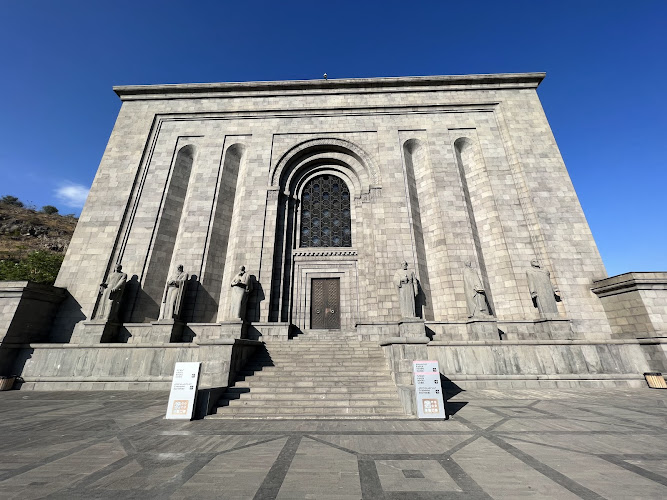
The Matenadaran, officially known as the Mesrop Mashtots Institute of Ancient Manuscripts, is one of those places that quietly takes your breath away. It’s not just a museum—it’s a time capsule of Armenian history, language, and the written word itself. Standing proudly at the top of Yerevan’s main avenue, this monumental building feels like a gateway into centuries of human knowledge. Inside, you’ll find a treasure trove of manuscripts, parchments, and books—over seventeen thousand of them, if we’re counting. Some date back more than a thousand years, their pages still whispering stories of faith, science, art, and philosophy.
What makes the Matenadaran so fascinating isn’t only its collection, but the way it connects the past to the present. It’s both a research institute and a museum, meaning it serves scholars and curious travelers alike. You can wander through exhibits that showcase illuminated manuscripts, ancient maps, and even medical treatises that reveal how advanced Armenian scholars were centuries ago. And if you’re anything like me, you’ll find yourself lingering in front of those delicate, hand-painted pages, wondering about the monks who once copied them by candlelight.
But here’s the thing—this place isn’t just for history buffs. It’s for anyone who loves stories, craftsmanship, or simply the feeling of being surrounded by something bigger than themselves. The Matenadaran’s atmosphere is hushed but not cold; it’s reverent in a way that makes you slow down and listen. The staff are friendly, knowledgeable, and genuinely proud of their heritage, which adds to the experience. There’s a certain warmth here that balances the scholarly tone—a reminder that these manuscripts were once part of people’s everyday lives.
Key Features
- Extensive Manuscript Collection: Over 17,000 manuscripts and 300,000 archival documents covering theology, medicine, astronomy, literature, and law.
- Rare Exhibits: Ancient maps, scientific instruments, and illuminated texts showcasing medieval Armenian artistry.
- Research Institute: A working center where scholars study and restore manuscripts, preserving them for future generations.
- Architectural Grandeur: A striking basalt structure that reflects Armenian architectural traditions and commands one of the best views of Yerevan.
- Family-Friendly: Educational and engaging exhibits suitable for children and adults alike.
- Accessibility: Wheelchair-accessible entrances, restrooms, and parking make it easy for all visitors to explore comfortably.
What I personally love is how the Matenadaran manages to balance its roles—it’s both a guardian of the past and a living, breathing institution. You can almost feel the pulse of Armenian identity running through its halls. And while there’s no on-site restaurant (a heads-up if you’re planning a long visit), there are plenty of cafés nearby where you can sit afterward and let everything sink in.
Best Time to Visit
Yerevan’s climate can be a bit extreme—hot summers, chilly winters—so the best times to visit the Matenadaran are spring (April to June) and autumn (September to early November). The weather is mild, the city feels alive, and you can enjoy the outdoor sculptures and panoramic views without melting or freezing. I once visited in late May, and the walk up Mashtots Avenue with the trees in full bloom was genuinely one of those “wow” travel moments.
If you prefer fewer crowds, try going on a weekday morning. The museum is quieter then, giving you more space to wander and reflect. And if you’re lucky, you might catch a temporary exhibition—these often focus on specific themes like medieval medicine or calligraphy, and they’re absolutely worth the extra time.
How to Get There
Reaching the Matenadaran is quite straightforward. It sits at the northern end of Yerevan’s main thoroughfare, so you can easily walk there from Republic Square in about twenty minutes. If walking isn’t your thing, taxis and ride-sharing apps are inexpensive and widely available. Public buses also stop nearby, though I’ll admit, I’ve always found Yerevan’s bus routes a bit tricky to navigate without help from locals.
For those driving, there’s accessible parking close to the entrance. The museum’s location at the top of a gentle hill gives it a commanding view over the city, so even the journey there feels rewarding. Honestly, just standing outside and looking down Mashtots Avenue is worth the trip alone—it’s one of those perfect photo spots that captures the essence of Yerevan.
Tips for Visiting
Here’s the thing about the Matenadaran—it’s not a place you rush through. Give yourself at least two hours, maybe more if you’re the kind of traveler who likes to really soak things in. The exhibits are detailed, and every manuscript seems to have a story behind it. You’ll want time to read, reflect, and maybe even chat with the guides, who are usually eager to share insights you won’t find in any brochure.
- Take a guided tour: It’s totally worth it. The guides bring the manuscripts to life with fascinating stories about how they were created and preserved.
- Photography: Check the current rules before snapping pictures—some areas may restrict photography to protect delicate materials.
- Bring water: There’s no café inside, and you’ll do a fair bit of walking, so hydration helps.
- Dress comfortably: The interior is climate-controlled but cool, so a light sweater isn’t a bad idea.
- Take your time outside: The statues of Mesrop Mashtots and his student Koryun are iconic photo spots, and the view of Yerevan is stunning, especially at sunset.
One more thing—if you’re traveling with kids, don’t hesitate to bring them along. The exhibits are surprisingly engaging for younger visitors, and the staff are patient and welcoming. It’s the kind of place that quietly inspires curiosity, even in those who might not think they’re into history. I remember seeing a group of schoolchildren absolutely captivated by a medieval astronomy manuscript—it was heartwarming and kind of contagious.
So, if you’re planning a trip to Armenia and want to understand the soul of the country, the Matenadaran is an absolute must. It’s not flashy or loud, but it leaves a lasting impression. You walk out feeling a little more connected—to history, to human creativity, and maybe even to yourself. And isn’t that what great travel experiences are all about?
Key Features
- Key Features
- Best Time to Visit
- How to Get There
- Tips for Visiting
More Details
Updated November 10, 2025
Table of Contents
Description
The Matenadaran, officially known as the Mesrop Mashtots Institute of Ancient Manuscripts, is one of those places that quietly takes your breath away. It’s not just a museum—it’s a time capsule of Armenian history, language, and the written word itself. Standing proudly at the top of Yerevan’s main avenue, this monumental building feels like a gateway into centuries of human knowledge. Inside, you’ll find a treasure trove of manuscripts, parchments, and books—over seventeen thousand of them, if we’re counting. Some date back more than a thousand years, their pages still whispering stories of faith, science, art, and philosophy.
What makes the Matenadaran so fascinating isn’t only its collection, but the way it connects the past to the present. It’s both a research institute and a museum, meaning it serves scholars and curious travelers alike. You can wander through exhibits that showcase illuminated manuscripts, ancient maps, and even medical treatises that reveal how advanced Armenian scholars were centuries ago. And if you’re anything like me, you’ll find yourself lingering in front of those delicate, hand-painted pages, wondering about the monks who once copied them by candlelight.
But here’s the thing—this place isn’t just for history buffs. It’s for anyone who loves stories, craftsmanship, or simply the feeling of being surrounded by something bigger than themselves. The Matenadaran’s atmosphere is hushed but not cold; it’s reverent in a way that makes you slow down and listen. The staff are friendly, knowledgeable, and genuinely proud of their heritage, which adds to the experience. There’s a certain warmth here that balances the scholarly tone—a reminder that these manuscripts were once part of people’s everyday lives.
Key Features
- Extensive Manuscript Collection: Over 17,000 manuscripts and 300,000 archival documents covering theology, medicine, astronomy, literature, and law.
- Rare Exhibits: Ancient maps, scientific instruments, and illuminated texts showcasing medieval Armenian artistry.
- Research Institute: A working center where scholars study and restore manuscripts, preserving them for future generations.
- Architectural Grandeur: A striking basalt structure that reflects Armenian architectural traditions and commands one of the best views of Yerevan.
- Family-Friendly: Educational and engaging exhibits suitable for children and adults alike.
- Accessibility: Wheelchair-accessible entrances, restrooms, and parking make it easy for all visitors to explore comfortably.
What I personally love is how the Matenadaran manages to balance its roles—it’s both a guardian of the past and a living, breathing institution. You can almost feel the pulse of Armenian identity running through its halls. And while there’s no on-site restaurant (a heads-up if you’re planning a long visit), there are plenty of cafés nearby where you can sit afterward and let everything sink in.
Best Time to Visit
Yerevan’s climate can be a bit extreme—hot summers, chilly winters—so the best times to visit the Matenadaran are spring (April to June) and autumn (September to early November). The weather is mild, the city feels alive, and you can enjoy the outdoor sculptures and panoramic views without melting or freezing. I once visited in late May, and the walk up Mashtots Avenue with the trees in full bloom was genuinely one of those “wow” travel moments.
If you prefer fewer crowds, try going on a weekday morning. The museum is quieter then, giving you more space to wander and reflect. And if you’re lucky, you might catch a temporary exhibition—these often focus on specific themes like medieval medicine or calligraphy, and they’re absolutely worth the extra time.
How to Get There
Reaching the Matenadaran is quite straightforward. It sits at the northern end of Yerevan’s main thoroughfare, so you can easily walk there from Republic Square in about twenty minutes. If walking isn’t your thing, taxis and ride-sharing apps are inexpensive and widely available. Public buses also stop nearby, though I’ll admit, I’ve always found Yerevan’s bus routes a bit tricky to navigate without help from locals.
For those driving, there’s accessible parking close to the entrance. The museum’s location at the top of a gentle hill gives it a commanding view over the city, so even the journey there feels rewarding. Honestly, just standing outside and looking down Mashtots Avenue is worth the trip alone—it’s one of those perfect photo spots that captures the essence of Yerevan.
Tips for Visiting
Here’s the thing about the Matenadaran—it’s not a place you rush through. Give yourself at least two hours, maybe more if you’re the kind of traveler who likes to really soak things in. The exhibits are detailed, and every manuscript seems to have a story behind it. You’ll want time to read, reflect, and maybe even chat with the guides, who are usually eager to share insights you won’t find in any brochure.
- Take a guided tour: It’s totally worth it. The guides bring the manuscripts to life with fascinating stories about how they were created and preserved.
- Photography: Check the current rules before snapping pictures—some areas may restrict photography to protect delicate materials.
- Bring water: There’s no café inside, and you’ll do a fair bit of walking, so hydration helps.
- Dress comfortably: The interior is climate-controlled but cool, so a light sweater isn’t a bad idea.
- Take your time outside: The statues of Mesrop Mashtots and his student Koryun are iconic photo spots, and the view of Yerevan is stunning, especially at sunset.
One more thing—if you’re traveling with kids, don’t hesitate to bring them along. The exhibits are surprisingly engaging for younger visitors, and the staff are patient and welcoming. It’s the kind of place that quietly inspires curiosity, even in those who might not think they’re into history. I remember seeing a group of schoolchildren absolutely captivated by a medieval astronomy manuscript—it was heartwarming and kind of contagious.
So, if you’re planning a trip to Armenia and want to understand the soul of the country, the Matenadaran is an absolute must. It’s not flashy or loud, but it leaves a lasting impression. You walk out feeling a little more connected—to history, to human creativity, and maybe even to yourself. And isn’t that what great travel experiences are all about?

Key Highlights
- Key Features
- Best Time to Visit
- How to Get There
- Tips for Visiting
Location
Places to Stay Near Matenadaran
Find and Book a Tour
Explore More Travel Guides
No reviews found! Be the first to review!
Traveler Reviews for Matenadaran
There are no reviews yet. Be the first one to write one.
Have you visited Matenadaran? Help other travelers by sharing your review.
Find Accommodations Nearby
Recommended Tours & Activities
Visitor Reviews
There are no reviews yet. Be the first one to write one.
Share Your Experience
Have you visited Matenadaran? Help other travelers by leaving a review.