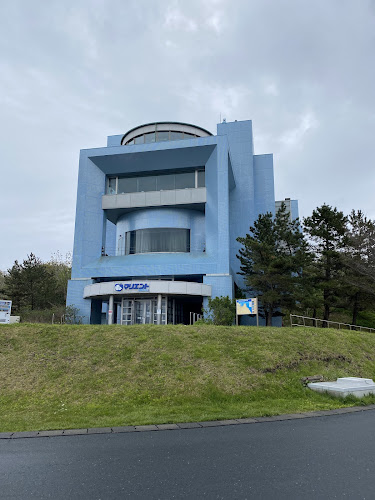
It focuses on local fisheries, marine ecosystems, and the relationship between people and the sea — with a surprisingly lively aquarium at its heart. Visitors often expect a sleepy municipal museum, and then they find thoughtful displays, hands-on tanks for kids, and an exhibition flow that mixes traditional specimens with modern aquaria. Marient Hachinohe balances educational depth with accessibility, which makes it a reliable stop for families, school groups, and curious travelers exploring Aomori Prefecture and the wider Tohoku region.
Inside, the layout is straightforward and easy to navigate. Ground-floor tanks display local coastal species from the Pacific coast and the nearby Tanesashi and Kabushima areas, while upper galleries delve into fisheries science, sustainable practices, and the history of Hachinohe as a port city. The aquariums are not enormous, but they are well-maintained and offer clear windows into the life of Japan northern seas. There is a tactile, somewhat homespun charm to the place: informational panels are bilingual in places, plinths are accessible to wheelchair users, and the small demonstration theater occasionally hosts live talks led by staff who know the local waters intimately.
For travelers who like to nerd out on marine biology or local food culture, Marient is a sweet find. It connects the dots between what fishermen bring into Hachinohe port and what shows up in local markets and restaurants. Exhibits demonstrate fishing techniques, the lifecycle of commercially important species, and the science behind aquaculture — all presented in a way that doesn’t talk down to adults or bore the kids. The museum also highlights regional marine products and explains why Hachinohe has held a longstanding reputation for quality seafood. That local angle gives the museum more personality than a generic aquarium.
Accessibility is a genuine plus. The entrance and facilities include wheelchair-accessible routes and restrooms, and there is accessible parking nearby. This municipal-level attention to access means that older travelers or families with strollers won’t need to plan for extra hurdles. There is also a small on-site restaurant where one can take a break over seafood-inspired dishes and a restroom conveniently placed for quick stops. These practical details make a difference after a morning spent wandering tanks and reading labels.
Children respond well to the hands-on elements. Interactive touch tanks introduce local invertebrates and allow supervised contact, which usually turns a short visit into an enthusiastic hour of questions and squeals. Educational programs and school-oriented displays make Marient particularly kid-friendly; parents will notice that the museum intentionally scaffolds information so that young learners can take something away while adults find deeper context. In short, Marient is thoughtfully set up for a multi-generational audience without resorting to gimmicks.
Expect mixed impressions depending on what you compare it with. Those coming from huge metropolitan aquariums might find the scale modest and some exhibits a bit dated. But that modesty is also its charm: the museum feels local, focused, and authentic rather than spectacle-driven. Staff are often eager to explain local fisheries practices and to point out seasonal phenomena; several times the author has heard staff quietly recommend visiting Kabushima to see seagull colonies or to time a stop by the morning market for fresh catches. Those small, human recommendations often turn a good museum visit into a memorable day in Hachinohe.
Seasonality matters here. The exhibits emphasize species native to northern Japan and the Pacific coast, so the displays and live animals reflect those rhythms — from migratory patterns to spawning seasons. Visitors who plan to pair Marient with a coastal walk or a market visit will find the timing can amplify the experience. And for photographers who love muted coastal light, the museum’s location near the port and seaside parks offers easy transitions from indoor exhibits to atmospheric outdoor shots.
Practical visitors will also appreciate that Marient functions well as a stepping stone to other local highlights. It pairs naturally with a walk along the port area, a trip to Kabushima for birdwatching, or tasting seafood at nearby eateries. For independent travelers plotting a Hachinohe itinerary, the museum provides both background and a pleasant, low-stress stop that complements more active sightseeing. The tone inside the museum leans educational and calm rather than sensational — which, frankly, is refreshing after long days of crowded tourist spots.
Finally, Marient quietly pushes a message about sustainability. Exhibits discuss how communities adapt to changing fish stocks and how science supports responsible fisheries. It’s not preachy; rather, the museum invites reflection through clear examples and local stories. For travelers who like their outings to have a bit of meaning behind the pretty tanks, Marient offers that thoughtful connection between sea, science, and people.
 Real Journey Travels