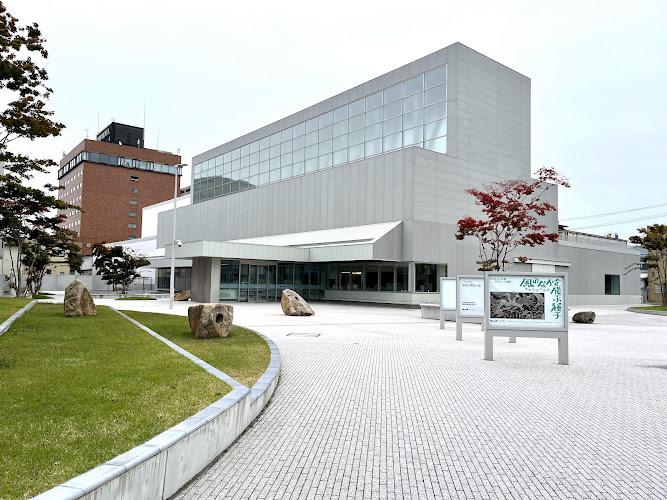
It is the sort of place that rewards curiosity rather than demand it, where rotating exhibitions sit alongside a modest permanent collection focused on 20th- and 21st-century Japanese art, local creators from the Tohoku region, and occasional international exchanges. Travelers who come expecting blockbuster crowds will probably be pleasantly surprised by the room to breathe; the galleries allow for slow looking, and that matters. The museum opens from 10:00 to 19:00 with last admission for special exhibitions at 18:30, which is handy for people who prefer a late-afternoon cultural stop after exploring the city.
What makes the museum stand out is less glitz and more thoughtfulness: gallery layouts that favor sightlines, wall texts that are concise and often bilingual, and a curatorial rhythm that alternates between solo retrospectives, themed group shows, and community-focused exhibitions. The permanent holdings emphasize modern painting and sculpture with a neat showing of contemporary practices, but the museum also programs local craft, photography, and experimental installations. It’s a modern art museum with civic roots—one that aims to reflect Hachinohe’s culture while inviting visitors to see how local art connects to broader Japanese and global conversations.
Many travelers find the place approachable. Families with kids are commonly seen, partly because the museum explicitly welcomes younger visitors: it offers discounted admission for children, changing tables, and a nursing room, which makes life simpler for parents. The museum’s layout and programming tend to avoid intimidating vibes; hands-off signage is clear without sounding stiff, and docents or staff are usually available to answer practical questions. For people with mobility needs the site is sensible—there’s a wheelchair-accessible entrance, accessible parking, and accessible restrooms—so the building largely avoids the small but persistent frustrations that sometimes come with older institutions.
Practicalities matter when traveling, and in that spirit visitors will want to note that there is parking on site. That makes it convenient for drivers doing a day trip around Aomori Prefecture or for those linking Hachinohe with nearby attractions. The museum does not include an onsite restaurant, which can be a surprise if one expects the full museum-cafe experience. So the usual traveler advice applies: plan a meal either before or after the visit. Fortunately, Hachinohe city is known for excellent seafood and local eats, and the museum’s proximity to urban amenities means finding food or a cozy coffee spot is usually easy. Restrooms are available inside the building, and small cafes or vending areas in the nearby neighborhood fill the gap left by the lack of a museum restaurant.
The atmosphere varies by exhibition. On some days, the galleries hum with the quiet concentration of serious art-lovers; on others, the museum hosts school groups or creative workshops that lend a livelier, almost festival-like mood. It’s not uncommon for the museum to schedule educational programming—talks, small workshops, and learning sessions—that connect artists to community members, which gives the place a social pulse beyond simply displaying objects. Those programs often make the museum feel more like a cultural center than a purely archival institution, and visitors who time their trip right might leave with the memory of a short artist talk or a hands-on session they didn’t expect to find.
The architecture and interior design are unobtrusive but effective. Galleries receive natural and controlled lighting in ways that respect the art and make photography for personal use straightforward in many sections. Exhibition labels are generally informative without drowning visitors in jargon; that is, the writing aims to help rather than show off. For someone who likes context—who wants to know why a work matters, not just what it looks like—the museum does a good job. And if the visitor is a casual traveler who would rather wander than read every panel, the spacing and pacing of rooms let visual engagement happen at its own speed.
One small but helpful detail: the museum’s schedule often reflects local rhythms. Exhibitions may rotate seasonally, and special events are sometimes timed to coincide with larger city festivals or cultural moments in Hachinohe. This makes the museum a good candidate for repeat visits on future trips, or for travelers planning an itinerary around a specific exhibition or artist. This writer recalls a return visit timed to a regional craft show and discovering new works that made the second trip feel fresh—proof that the museum’s curators keep things moving in ways that reward curiosity.
Visitors who appreciate the quieter pleasures of museum-going will appreciate how the Hachinohe Art Museum balances access with care. The building’s public areas are tidy and easy to navigate, and staff generally show the kind of helpfulness that makes travel smoother: directions, ticketing, and practical assistance are handled without fuss. The museum’s educational outreach is not loud about itself, but it is consistent. Local schools frequently visit for guided sessions, and community workshops for families appear periodically. Those elements contribute to a museum ethos that feels civic-minded and sincere rather than theatrical.
For photographers, there are mixed outcomes: where contemporary installations allow photography for personal use, the lighting and composition possibilities are great. However, as with most museums, photography restrictions apply in certain galleries, especially where works on loan require stricter rules. Travelers should assume some areas are off-limits for shooting and look for staff signage or ask at reception when in doubt. In general, the design of the space accommodates both casual snapshots and more contemplative viewing—good balance.
On the visitor-experience side, admissions and ticketing tend to be straightforward. Special exhibitions may carry a separate fee or different opening times (note the last-entry policy at 18:30 for special shows), so it’s wise to allow extra time if a particular exhibition is the main reason for a trip. Many travelers choose to spend one to two hours inside if they plan a relaxed visit; those with a keen interest in contemporary Japanese art could easily linger longer. Either way, planning a museum visit as part of a half-day itinerary in Hachinohe makes sense: combine it with a market stroll, a harbor walk, or a lunch at a recommended local spot and the day feels neatly composed.
As for accessibility and family amenities, the museum performs well for a regional institution. Wheelchair-accessible entrances and parking reduce common travel anxieties, while family facilities such as changing tables and a nursing room make it more practical for parents to stay longer. These details matter—especially when traveling with small children—and they help shape the impression that the museum is oriented toward inclusion rather than exclusivity.
There are a few realistic caveats to mention. The museum does not have a full-service restaurant, so longer visits mean stepping out for food. Also, being a regional art museum, the scale of the collection and exhibition budgets are different from major metropolitan institutions; visitors seeking blockbuster contemporary installations on the scale of Tokyo or Osaka might find the offerings more subtle. But for many travelers that gentler scale is exactly the appeal: a chance to see carefully curated work without the crush and commercialism sometimes found in bigger venues.
Finally, for anyone mapping out a trip to Aomori Prefecture, the Hachinohe Art Museum is an honest, useful stop. It provides a clear window into contemporary art practices in the north of Honshu and into local creative communities, and it does so with accessible facilities that make a visit straightforward for most travelers. It’s the sort of place where the curious will be rewarded, families will be accommodated, and art lovers will find enough to linger over—often with the pleasant surprise of discovering work that stays with them beyond the visit.
 Real Journey Travels