
Lilleshall Abbey
About Lilleshall Abbey
Key Features
More Details
Updated June 11, 2025
## Lilleshall Abbey (Shropshire): A Free English Heritage Ruin With Shockingly Intact Medieval Detail
If you like medieval sites that still read like buildings—not just piles of stone—Lilleshall Abbey delivers. It’s an English Heritage property with free entry, and while it’s a ruin, a surprising amount of the abbey church and claustral ranges remain legible: you can trace the cloister plan, pick out later alterations, and spot individual “working” features like doorways intended for processions and even built-in book storage. Heritage
This guide focuses on what you can confidently see and understand on site, plus the practical realities (access, parking, surfaces) that matter once you actually arrive.
—
## Quick facts you’ll want before you go
– Official site / management: English Heritage (free entry). Heritage
– Address: Abbey Road, Lilleshall, Newport, Shropshire, TF10 9HW, United Kingdom. Heritage
– Opening times (as listed by English Heritage):
– Apr–Sep: 10am–6pm daily
– Oct–Mar: 10am–4pm daily Heritage
– Ground conditions / access notes: accessed via a kissing gate; uneven ground, low walls/features; narrow/dark spiral stair off the nave. Heritage
– Parking: very limited at the abbey entrance and seasonal; in winter English Heritage advises parking at the gateway entrance and walking ~250m via the pedestrian gate. Heritage
– Facilities: English Heritage points to nearby Boscobel House and the Royal Oak for tearoom/shop/toilets. Heritage
– Dogs: welcome on leads. Heritage
Outdated-data flag: opening times and parking arrangements can change (seasonal closures, maintenance, weather damage). If this visit is time-sensitive, verify on the official English Heritage page the day you go. Heritage
—
## Where Lilleshall Abbey sits—and why it feels unusually “complete”
Historic England’s listing makes clear this isn’t only a church ruin. The protected monument includes ruined, earthwork, and buried remains of the abbey complex, plus landscape infrastructure: an 18th-century canal cutting across the precinct, and the earthwork dams of two fishponds to the northwest. England
That matters for visitors because it explains why the site still feels like a place with boundaries and systems—water management, food supply, circulation routes—rather than a single photogenic wall. It’s one of the reasons the visit is satisfying even if you’re not doing a full medieval-monastic deep dive.
—
## A short, reliable history (no legends required)
– Founded: in about 1148 for a community of Augustinian canons (not monks). Heritage
– Growth: by the late 13th century it had a reputation for prestige; later, the community dwindled amid financial trouble in the 14th century. Heritage
– Suppressed / Dissolution era: the abbey was suppressed in 1538 and converted into a private house. Heritage
– Civil War damage: English Heritage notes severe damage during the Civil War after a Parliamentarian siege; Historic England describes fortification and a forced entry through the church, with parts (including the Lady Chapel and towers) ruined. Heritage
If you’re the kind of traveler who likes “timeline layering,” this is a great site for it: early stonework, later medieval modifications, post-Dissolution domestic adaptation, then abrupt Civil War destruction—followed by centuries of managed survival.
—
## What to look for on site (the details most people walk past)
### 1) The monastic layout: cloister logic still visible
English Heritage’s description page emphasizes a classic monastery plan: major buildings arranged around a central cloister, with most surviving fabric dating to the late 12th and early 13th centuries. Heritage
Practical tip: as you walk, keep asking “what connects to the cloister?” Door placement and passages start to make sense fast.
### 2) The church: surviving height, later medieval upgrades, and a gallery-level viewpoint
English Heritage highlights that much of the church survives and is viewable from gallery level. Heritage
Historic England adds that the east end includes a multi-bayed presbytery and that a large 14th-century east window replaced earlier Romanesque openings. England
In other words: you’re not just seeing “a medieval church.” You’re seeing a building that changed, and you can often spot the “newer” idea inserted into an older frame.
### 3) The processional doorway: sculpted stonework with purpose
English Heritage calls out a “lavishly sculpted processional door.” Heritage
Historic England describes a notable processional doorway leading from the cloister into the church, with layered arches and detailed capitals characteristic of 13th-century workmanship. England
This is one of those features that signals how ceremonial movement worked: the abbey wasn’t only a place to pray; it was a place to process—ritual in motion.
### 4) The chapter house: governance, memory, and literal graves
Historic England notes abbots’ graves in the chapter house floor. England
That’s a reminder that monastic life was administrative as well as spiritual: the chapter house is where rules were read, decisions were made, and identity was maintained across generations.
### 5) The refectory/frater: daily life and later medieval “edits”
Historic England describes the frater/refectory and later changes, including a 14th-century division to create a warming/dayroom and service spaces. England
If you care about social history, this is gold: it shows how comfort, logistics, and status evolved inside the complex.
### 6) A Romanesque “book locker” (yes, really)
One of the most distinctive details in the Historic England entry is a Romanesque book locker with compartments shaped for doors and bolt hardware. England
It’s the sort of small, functional survival that turns a walk around ruins into a real encounter with medieval practice.
—
## Visiting strategy: how to get the most from a short stop
### Plan for surfaces and gate access (mobility + pushchairs)
English Heritage is explicit: a kissing gate may be unsuitable for some mobility aids or pushchairs, and the ground is uneven with low walls/features. Heritage
If your group includes someone with limited mobility, consider:
– keeping expectations flexible (you may not cover every corner)
– prioritizing the most stable paths first
– skipping the narrow/dark spiral stair off the nave if it doesn’t feel safe Heritage
### Parking reality: don’t assume there’s room
Parking is described as very limited, and winter access changes where you should leave the car. Heritage
If you’re arriving at a popular time, the simplest move is to treat the final approach as potentially “park-and-walk.”
### No facilities on site—pair it with a nearby stop
English Heritage points visitors to Boscobel House and the Royal Oak for toilets/tearoom/shop. Heritage
Even if you don’t tour Boscobel, it’s useful as a facilities anchor.
—
## Nearby places that make sense (without overstuffing your day)
English Heritage suggests pairing Lilleshall Abbey with White Ladies Priory and Boscobel House and the Royal Oak, both linked to the future King Charles II after the Battle of Worcester (1651). Heritage
That combo works because it keeps you in a coherent story-world: religious sites, survival, hiding places, and political upheaval.
—
## Two contextual internal links (only if your site has them)
I can’t know your RealJourneyTravels.com URL structure, so here are two contextual link placements you can wire to existing relevant pages:
– Link from a sentence about monastic layouts to your “How to Read Abbey Ruins” explainer (or equivalent).
– Link from the “Nearby places” section to your guide on Boscobel House / White Ladies Priory / Civil War sites in Shropshire (whichever exists on your site).
(If you tell me your exact slug patterns—e.g., /england/ vs /united-kingdom/england/—I’ll output the final, clickable anchors.)
—
## Photo note (for your media editor)
Here’s a representative image of the west end of Lilleshall Abbey, suitable for a hero or mid-article break:
—
If you want this article tuned even harder for SEO (schema-ready FAQs, snippet targeting, and an “easy-to-skim” itinerary box), share:
– your preferred internal link targets (2 URLs)
– whether you want a “How long to spend here” section (I can keep it factual if you give your own visit benchmark).
Table of Contents
Key Highlights
Lilleshall Abbey
Location
Places to Stay Near Lilleshall Abbey"Steeped in. history fascinating building well worth a visit"
Find and Book a Tour
Explore More Travel Guides
No reviews found! Be the first to review!
Traveler Reviews for Lilleshall Abbey
There are no reviews yet. Be the first one to write one.
Have you visited Lilleshall Abbey? Help other travelers by sharing your review.
You Might Also Like
Enginuity
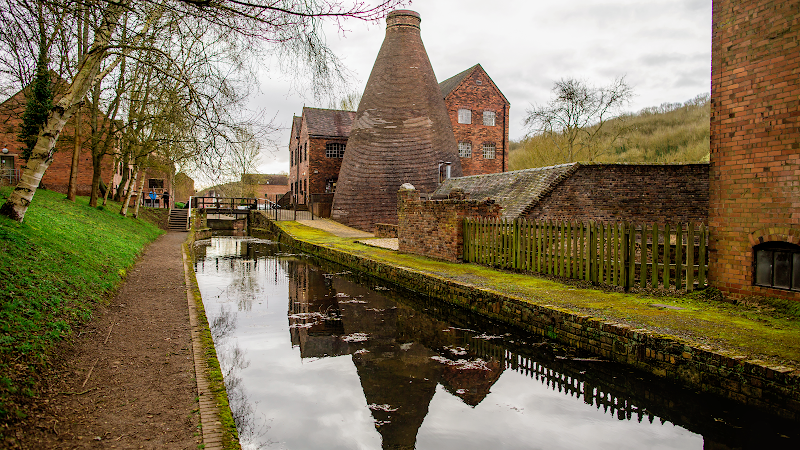
Coalport China Museum

Telford Town Park
Find Accommodations Nearby
Recommended Tours & Activities
Visitor Reviews
There are no reviews yet. Be the first one to write one.
Share Your Experience
Have you visited Lilleshall Abbey? Help other travelers by leaving a review.