
Kasteel van Breda
About Kasteel van Breda
Key Features
More Details
Updated April 15, 2024
Rondleidingen Kasteel van Breda – Explore Breda
## Kasteel van Breda (Kasteel van Breda): what it is, why it matters, and how to see it without wasting a trip
Kasteel van Breda sits at Kasteelplein 10, 4811 XC Breda (Netherlands) and is best understood as two places layered on top of each other: a former residence and power center of the Nassau dynasty (with deep ties to the later House of Orange-Nassau), and—today—a functioning military complex associated with the Royal Military Academy (Koninklijke Militaire Academie, KMA).
That second identity is the reason most visitors get surprised: this is not a standard walk-in castle. Access is limited, changes with security and operations, and usually requires a guided entry or a special open day.
Quick facts from your listing
– Post title: Kasteel van Breda
– Location: Breda, Netherlands
– Address: Kasteelplein 10, 4811 XC Breda, Netherlands
– Coordinates: 51.5909119, 4.7765102
– Category: Tourist attraction
– Rating: 4.3
—
## Why Kasteel van Breda is historically significant (in plain language)
### A Nassau stronghold that shaped Dutch “royal roots”
A castle has stood on this site since at least 1198, and it entered Nassau hands in the early 15th century through the marriage of Engelbrecht van Nassau and Johanna van Polanen—a dynastic link frequently cited as foundational to later Orange-Nassau prominence in the Netherlands.
### A Renaissance rebuild with an Italian connection
In the 16th century, Count Henry III of Nassau rebuilt the complex into a Renaissance palace, bringing Thomas Vincidor de Bologna (noted as a pupil of Raphael in regional heritage summaries) to work in Breda. That “Renaissance outside Italy” angle is one of the castle’s most distinctive historical claims.
### The Peace of Breda: a world-history footnote that happened here
The Treaty of Breda was signed on 31 July 1667, ending the Second Anglo-Dutch War (with England, the Dutch Republic, France, and Denmark-Norway as parties). Even if you never step inside the castle, this is one of those moments that anchors Breda to global maritime history. Britannica
### The modern reality: a military academy site
King William I made the castle available for a new military academy in the 1820s (sources differ on whether to label the “start” as 1826 vs. the academy’s later operational timeline), and the castle remains tied to officer training today.
—
## What you can reliably see without special access
Even when the gate is closed, the castle’s setting still delivers a lot if you approach it the right way:
### Kasteelplein and the castle perimeter
Kasteelplein is the immediate public-facing square; it’s where you’ll get your cleanest exterior views and orientation before heading toward the water defenses.
### Spanjaardsgat: the “photographable” fortification element
At the waterline, Spanjaardsgat is the most visible defensive feature connected to the castle complex. It consists of two defensive towers linked to fortifications built under Count Henry III of Nassau (construction referenced around 1530 in Breda’s city heritage materials).
Key details worth knowing (because they’re easy to miss if you don’t):
– The left tower is called Grenade Tower.
– The right tower is called Dovecote Tower because homing pigeons were kept there for William of Orange.
– The towers now serve as chapels, and the Dovecote Tower also houses an information centre tied to the Dutch Defence Academy/KMA context.
– A common misconception links the 1590 “turf ship” ruse to Spanjaardsgat; local heritage notes say it happened elsewhere nearby, closer to what is now a sports field area of the KMA.
—
## How to visit Kasteel van Breda in practice (the part most guides gloss over)
### 1) Assume you need a guided entry
Because the castle sits on military grounds, regular public wandering isn’t the norm. A recurring option is a guided tour of the grounds run by Gilde de Baronie, promoted via Breda’s official visitor platform.
What that tour typically involves (and what can trip people up):
– Tours run almost every Saturday (dates vary).
– Access can change depending on what Defence permits that day, so the route may vary.
– ID is required for visitors 13+ (bring the document named during registration).
– No backpacks/bags; only a small handbag is allowed, and it may be checked.
– You must stay with the group and follow instructions—this is explicitly framed as visiting an active workplace/residential environment for defence personnel.
### 2) Know about the Tuesday opening that’s not the castle itself
There is a permanent exhibition about the castle and the KMA hosted in the Koningin Wilhelmina Paviljoen (Wilhelmina Pavilion). It is stated to be open weekly on Tuesdays, 11:00–16:00.
This matters because it’s often the most predictable way to add real substance to your visit when the main complex is closed.
### 3) Time your trip around special open days if you want “inside” access
Local heritage materials describe periodic openings tied to city heritage programming—such as Nassaudag and Open Monumentendag—when the castle gates may open and tours may be offered. These are not daily openings, and availability has been affected in recent years by operational/security constraints.
—
## A tight, low-risk itinerary that works even if the castle is closed
### 60–90 minutes: the “history + fortifications” loop
– Start at Kasteelplein for orientation and exterior viewing.
– Walk toward Spanjaardsgat for the defensive-towers viewpoint and context.
– If it’s Tuesday, add the Wilhelmina Pavilion exhibition for the deeper story.
### Half-day: add a guided tour (when available)
– Book a Gilde de Baronie tour and follow their entry rules (ID, no bags).
—
—
## Outdated-data flags (what to verify before publishing)
– Access and open days can change quickly because the castle is on an active defence site and is explicitly described as restricted due to current security context. Always point readers to the official tour/exhibition pages for the latest conditions.
– Founding/usage dates in the 1820s vary by source framing (e.g., “placed at the disposal” vs. “academy established/training starts”). If you want a single-date statement in your article, quote the specific source you choose rather than asserting an absolute. Breda
—
## Bottom line: what to expect as a visitor
Kasteel van Breda is compelling because it’s not a curated, always-open castle. It’s an intact power site with a Renaissance past, a world-history treaty attached to it, and a living military function that still dictates who gets in. Plan for the exterior + Spanjaardsgat as your guaranteed payoff, then treat guided access or heritage open days as the bonus you earn by timing it right.
Table of Contents
Key Highlights
Kasteel van Breda
Location
Places to Stay Near Kasteel van Breda
Find and Book a Tour
Explore More Travel Guides
No reviews found! Be the first to review!
Traveler Reviews for Kasteel van Breda
There are no reviews yet. Be the first one to write one.
Have you visited Kasteel van Breda? Help other travelers by sharing your review.
You Might Also Like
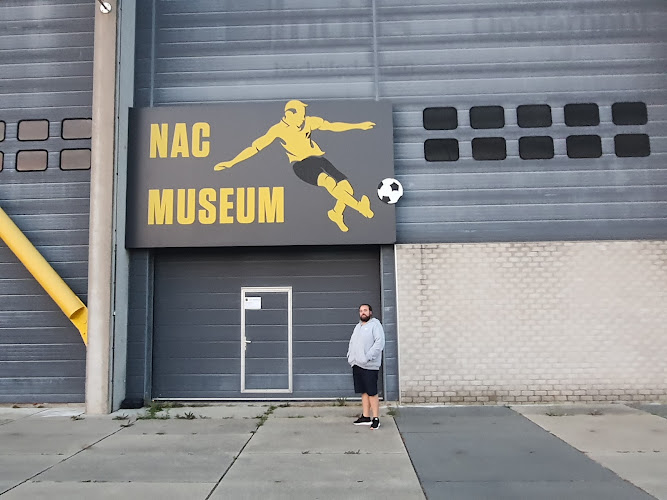
NAC Museum
Bevrijdingsmonument Breda

Bierreclame Museum
Find Accommodations Nearby
Recommended Tours & Activities
Visitor Reviews
There are no reviews yet. Be the first one to write one.
Share Your Experience
Have you visited Kasteel van Breda? Help other travelers by leaving a review.