
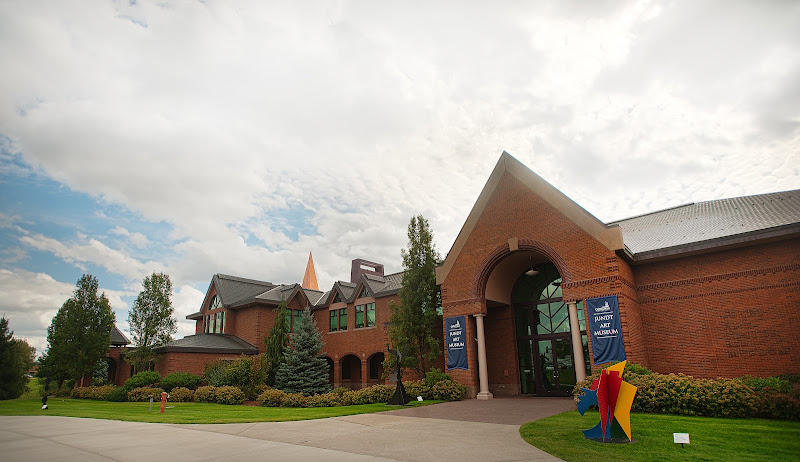
Jundt Art Museum
About Jundt Art Museum
Description
The Jundt Art Museum is the kind of place that sneaks up on travelers. One minute, someone is wandering through a university campus thinking they’ll pop in for 20 minutes, and the next thing they know an hour has passed and they’re still staring at a small etching by Goya, trying to make sense of how something so quiet can feel so heavy. This museum is part of a university art collection, and that academic backbone shows in the best possible way. The focus is on depth, not flash. Quality over spectacle. And honestly, that’s refreshing.
The collection spans centuries and continents, anchored by serious names: Rembrandt, Rodin, Warhol, Goya. Not reproductions. Real works. It’s almost jarring at first, seeing art history royalty in a setting that feels approachable and calm, not guarded by velvet ropes or crowds shuffling you along. And because it’s also a research center, the curation leans thoughtful. Pieces are contextualized, not just hung up to look pretty.
The museum itself isn’t huge, which I personally love. Big museums exhaust me; after a while everything blurs together and my feet hurt. Here, the scale invites slowing down. You can actually stand with a work and let it do its thing. I remember visiting on a rainy afternoon once, killing time between meetings, and realizing I’d stopped checking my phone entirely. That almost never happens. That’s the Jundt effect.
Travelers who appreciate art but don’t necessarily consider themselves art experts tend to feel comfortable here. The atmosphere isn’t intimidating. Labels are informative without being pretentious, and rotating exhibitions keep the space feeling alive. Some visitors expect a traditional tourist attraction and leave surprised by how intimate and scholarly it feels. Others come specifically because of that. Either way, it tends to stick with people longer than they expect.
There’s also a subtle spiritual calm to the place, likely influenced by the university setting. It’s not religious in-your-face, but there’s a sense of reflection baked into the experience. And for travelers who’ve been rushing from landmark to landmark, that quiet pause can feel like a gift.
Key Features
- University-based art collection with a strong academic and research focus
- Original works by major artists including Rembrandt, Goya, Rodin, and Warhol
- Rotating exhibitions that highlight both historical and modern themes
- Intimate gallery layout that encourages slow, thoughtful viewing
- On-site research center supporting deeper study of the collection
- Guided tours available, often led by knowledgeable staff or students
- Wheelchair accessible entrance, restrooms, and parking
- Free parking options, including on-site and street parking
- Quiet atmosphere compared to larger, more crowded art museums
- Wi‑Fi access for visitors who like to look things up as they go
Best Time to Visit
Timing matters here, but not in the way it does for blockbuster museums. The Jundt Art Museum doesn’t really have a “bad” time to visit, which is part of its charm. Still, travelers who want the calmest experience should aim for weekday mornings or early afternoons. That’s when the galleries feel almost meditative. You might share the space with a couple of students sketching or someone taking notes, which somehow adds to the vibe.
Weekends can be a little busier, especially during special exhibitions or campus events, but busy here is relative. It never turns into shoulder-to-shoulder chaos. I once went on a Saturday expecting crowds and ended up having a whole room to myself for a solid ten minutes. That’s rare, and kind of magical.
Seasonally, the museum works well year-round. In colder months, it’s a perfect indoor escape when the weather makes outdoor sightseeing less appealing. In warmer months, it’s a cool, quiet break from walking-heavy itineraries. If you’re planning a longer stay in the area, keep an eye on rotating exhibitions. They often align with the academic calendar and can offer surprisingly bold themes or lesser-known artists alongside the big names.
And if you’re the type who likes structure, guided tours are worth timing your visit around. They add layers you might miss on your own, especially regarding printmaking and sculpture. Just don’t overplan it. This is a place that rewards wandering.
How to Get There
The Jundt Art Museum sits within a university campus, which can feel confusing at first if you’re not familiar with college layouts. But don’t let that deter you. Getting there is straightforward, whether you’re driving or walking from nearby accommodations. Signage on campus is generally clear, and there’s free parking available, which honestly still feels like a small miracle in museum-going.
Travelers arriving by car will appreciate the on-site parking options as well as nearby free street parking. That alone makes it easier to justify a spontaneous visit. No circling the block, no parking apps, no stress. Just park and go look at art. Public transportation can also get you close, depending on where you’re staying, and from there it’s usually a short walk.
Once you’re on campus, slow down. Campuses have their own rhythm, and rushing through them feels wrong somehow. Allow a few extra minutes to orient yourself. You might pass historic buildings, green spaces, or student hangouts along the way. It’s part of the experience, not an inconvenience.
Accessibility is well handled here. Entrances, restrooms, and parking are wheelchair accessible, which makes a real difference for travelers who need that consistency. It’s clear that inclusivity wasn’t an afterthought.
Tips for Visiting
First tip: don’t rush it. This isn’t a checklist museum. Give yourself at least an hour, more if you’re someone who likes to read wall text or sit with a piece for a while. I’ve made the mistake of squeezing it in between appointments, and while it was still worthwhile, I left wishing I’d had more time.
Second, say yes to a tour if one’s available. The staff and guides know their stuff, and they’re genuinely enthusiastic. You can feel it. They won’t talk down to you or drown you in jargon. Instead, they’ll point out details you probably would’ve missed, like why a certain print technique mattered historically, or how a sculpture’s placement changes the way you read it.
Third, manage expectations. Some travelers walk in expecting a massive museum experience and feel a twinge of disappointment at the size. But that misses the point. This place is about quality, context, and calm. Go in with curiosity instead of a mental checklist, and it delivers.
Fourth, use the Wi‑Fi. Seriously. If something catches your eye, look it up right there. I’ve gone down some fantastic rabbit holes standing in the gallery, learning about an artist’s personal life or the political climate behind a piece. It deepens the visit in a very modern way.
Fifth, be okay with silence. The museum tends to be quiet, and that can feel awkward if you’re not used to it. Lean into it. Let the quiet do some work on you. There’s a reason so many people leave feeling unexpectedly moved.
Lastly, pair your visit with something low-key afterward. A walk, a coffee, a sit somewhere green. The art here lingers, and giving yourself space to process it is part of the pleasure. Not every travel experience needs to be loud or Instagram-ready. Some just need to be felt.
The Jundt Art Museum doesn’t shout for attention, and that’s exactly why it earns it. For travelers who appreciate substance, reflection, and the rare joy of seeing world-class art without the usual circus around it, this museum quietly delivers. And once you’ve been, you might find yourself recommending it with a little grin, like you’re letting someone in on a secret.
Key Features
- University-based art collection with a strong academic and research focus
- Original works by major artists including Rembrandt, Goya, Rodin, and Warhol
- Rotating exhibitions that highlight both historical and modern themes
- Intimate gallery layout that encourages slow, thoughtful viewing
- On-site research center supporting deeper study of the collection
- Guided tours available, often led by knowledgeable staff or students
- Wheelchair accessible entrance, restrooms, and parking
- Free parking options, including on-site and street parking
More Details
Updated January 1, 2026
Table of Contents
Description
The Jundt Art Museum is the kind of place that sneaks up on travelers. One minute, someone is wandering through a university campus thinking they’ll pop in for 20 minutes, and the next thing they know an hour has passed and they’re still staring at a small etching by Goya, trying to make sense of how something so quiet can feel so heavy. This museum is part of a university art collection, and that academic backbone shows in the best possible way. The focus is on depth, not flash. Quality over spectacle. And honestly, that’s refreshing.
The collection spans centuries and continents, anchored by serious names: Rembrandt, Rodin, Warhol, Goya. Not reproductions. Real works. It’s almost jarring at first, seeing art history royalty in a setting that feels approachable and calm, not guarded by velvet ropes or crowds shuffling you along. And because it’s also a research center, the curation leans thoughtful. Pieces are contextualized, not just hung up to look pretty.
The museum itself isn’t huge, which I personally love. Big museums exhaust me; after a while everything blurs together and my feet hurt. Here, the scale invites slowing down. You can actually stand with a work and let it do its thing. I remember visiting on a rainy afternoon once, killing time between meetings, and realizing I’d stopped checking my phone entirely. That almost never happens. That’s the Jundt effect.
Travelers who appreciate art but don’t necessarily consider themselves art experts tend to feel comfortable here. The atmosphere isn’t intimidating. Labels are informative without being pretentious, and rotating exhibitions keep the space feeling alive. Some visitors expect a traditional tourist attraction and leave surprised by how intimate and scholarly it feels. Others come specifically because of that. Either way, it tends to stick with people longer than they expect.
There’s also a subtle spiritual calm to the place, likely influenced by the university setting. It’s not religious in-your-face, but there’s a sense of reflection baked into the experience. And for travelers who’ve been rushing from landmark to landmark, that quiet pause can feel like a gift.
Key Features
- University-based art collection with a strong academic and research focus
- Original works by major artists including Rembrandt, Goya, Rodin, and Warhol
- Rotating exhibitions that highlight both historical and modern themes
- Intimate gallery layout that encourages slow, thoughtful viewing
- On-site research center supporting deeper study of the collection
- Guided tours available, often led by knowledgeable staff or students
- Wheelchair accessible entrance, restrooms, and parking
- Free parking options, including on-site and street parking
- Quiet atmosphere compared to larger, more crowded art museums
- Wi‑Fi access for visitors who like to look things up as they go
Best Time to Visit
Timing matters here, but not in the way it does for blockbuster museums. The Jundt Art Museum doesn’t really have a “bad” time to visit, which is part of its charm. Still, travelers who want the calmest experience should aim for weekday mornings or early afternoons. That’s when the galleries feel almost meditative. You might share the space with a couple of students sketching or someone taking notes, which somehow adds to the vibe.
Weekends can be a little busier, especially during special exhibitions or campus events, but busy here is relative. It never turns into shoulder-to-shoulder chaos. I once went on a Saturday expecting crowds and ended up having a whole room to myself for a solid ten minutes. That’s rare, and kind of magical.
Seasonally, the museum works well year-round. In colder months, it’s a perfect indoor escape when the weather makes outdoor sightseeing less appealing. In warmer months, it’s a cool, quiet break from walking-heavy itineraries. If you’re planning a longer stay in the area, keep an eye on rotating exhibitions. They often align with the academic calendar and can offer surprisingly bold themes or lesser-known artists alongside the big names.
And if you’re the type who likes structure, guided tours are worth timing your visit around. They add layers you might miss on your own, especially regarding printmaking and sculpture. Just don’t overplan it. This is a place that rewards wandering.
How to Get There
The Jundt Art Museum sits within a university campus, which can feel confusing at first if you’re not familiar with college layouts. But don’t let that deter you. Getting there is straightforward, whether you’re driving or walking from nearby accommodations. Signage on campus is generally clear, and there’s free parking available, which honestly still feels like a small miracle in museum-going.
Travelers arriving by car will appreciate the on-site parking options as well as nearby free street parking. That alone makes it easier to justify a spontaneous visit. No circling the block, no parking apps, no stress. Just park and go look at art. Public transportation can also get you close, depending on where you’re staying, and from there it’s usually a short walk.
Once you’re on campus, slow down. Campuses have their own rhythm, and rushing through them feels wrong somehow. Allow a few extra minutes to orient yourself. You might pass historic buildings, green spaces, or student hangouts along the way. It’s part of the experience, not an inconvenience.
Accessibility is well handled here. Entrances, restrooms, and parking are wheelchair accessible, which makes a real difference for travelers who need that consistency. It’s clear that inclusivity wasn’t an afterthought.
Tips for Visiting
First tip: don’t rush it. This isn’t a checklist museum. Give yourself at least an hour, more if you’re someone who likes to read wall text or sit with a piece for a while. I’ve made the mistake of squeezing it in between appointments, and while it was still worthwhile, I left wishing I’d had more time.
Second, say yes to a tour if one’s available. The staff and guides know their stuff, and they’re genuinely enthusiastic. You can feel it. They won’t talk down to you or drown you in jargon. Instead, they’ll point out details you probably would’ve missed, like why a certain print technique mattered historically, or how a sculpture’s placement changes the way you read it.
Third, manage expectations. Some travelers walk in expecting a massive museum experience and feel a twinge of disappointment at the size. But that misses the point. This place is about quality, context, and calm. Go in with curiosity instead of a mental checklist, and it delivers.
Fourth, use the Wi‑Fi. Seriously. If something catches your eye, look it up right there. I’ve gone down some fantastic rabbit holes standing in the gallery, learning about an artist’s personal life or the political climate behind a piece. It deepens the visit in a very modern way.
Fifth, be okay with silence. The museum tends to be quiet, and that can feel awkward if you’re not used to it. Lean into it. Let the quiet do some work on you. There’s a reason so many people leave feeling unexpectedly moved.
Lastly, pair your visit with something low-key afterward. A walk, a coffee, a sit somewhere green. The art here lingers, and giving yourself space to process it is part of the pleasure. Not every travel experience needs to be loud or Instagram-ready. Some just need to be felt.
The Jundt Art Museum doesn’t shout for attention, and that’s exactly why it earns it. For travelers who appreciate substance, reflection, and the rare joy of seeing world-class art without the usual circus around it, this museum quietly delivers. And once you’ve been, you might find yourself recommending it with a little grin, like you’re letting someone in on a secret.
Key Highlights
- University-based art collection with a strong academic and research focus
- Original works by major artists including Rembrandt, Goya, Rodin, and Warhol
- Rotating exhibitions that highlight both historical and modern themes
- Intimate gallery layout that encourages slow, thoughtful viewing
- On-site research center supporting deeper study of the collection
- Guided tours available, often led by knowledgeable staff or students
- Wheelchair accessible entrance, restrooms, and parking
- Free parking options, including on-site and street parking
Location
Places to Stay Near Jundt Art Museum
Find and Book a Tour
Explore More Travel Guides
No reviews found! Be the first to review!
Traveler Reviews for Jundt Art Museum
There are no reviews yet. Be the first one to write one.
Have you visited Jundt Art Museum? Help other travelers by sharing your review.
You Might Also Like

Campbell House

Edwidge Woldson Park

Bing Crosby House
Find Accommodations Nearby
Recommended Tours & Activities
Visitor Reviews
There are no reviews yet. Be the first one to write one.
Share Your Experience
Have you visited Jundt Art Museum? Help other travelers by leaving a review.