
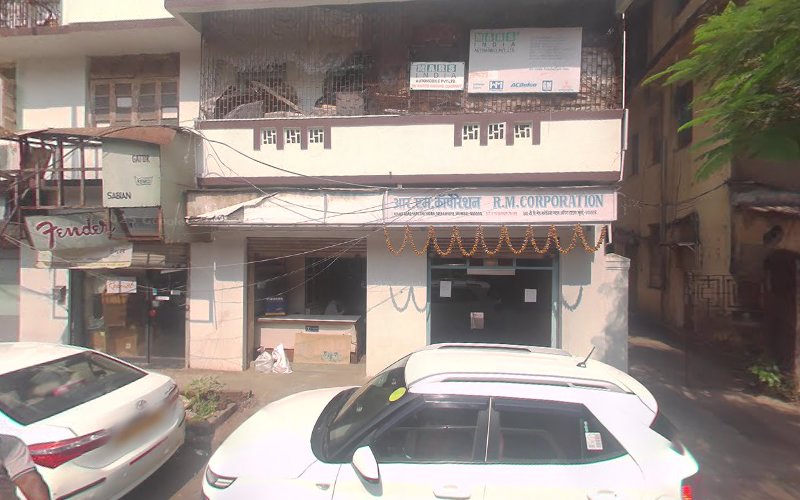
Jinnah Hall Building
About Jinnah Hall Building
Description
Jinnah Hall Building, often referred to in older records as Jinnah’s People’s Memorial Hall, is a quiet yet weighty chapter in Mumbai’s freedom-era story. Set within the Congress House precinct in South Mumbai, not far from Lamington Road and the Opera House area, the hall was conceived in the early decades of the 20th century as a public tribute to Muhammad Ali Jinnah—then a celebrated barrister and legislator in Bombay’s civic life, long before the politics of Partition would dominate his legacy. Citizens of Bombay raised funds to build a hall that could host meetings, talks, and public gatherings. That idea still clings to the building’s bones: a plainly dignified facade, a high-ceilinged interior made for speeches that carried without microphones, and a sense of civic ambition that was very Bombay.
Travelers looking for a historical landmark that isn’t packaged for mass tourism will appreciate what the Jinnah Hall Building represents: a community-built venue for public discourse, tucked into the living campus of the Indian National Congress in South Mumbai. Today, it is usually calm, sometimes closed, sometimes used for small exhibitions or community events. Some visitors find that serene; others wish it were more animated or curated. That contrast is part of the hall’s reality—and, arguably, its power. It survived political shifts and heated debates intact, still bearing the name that made sense to the city’s donors a century ago.
Architecturally, the hall is modest-colonial Bombay: stone and plaster, semicircular arches, broad doors, ventilation grills that once made cross-breezes the sound engineer. Much of the charm lies in details—the patina on old wood, fading signboards, the slight unevenness of stone steps, a plaque or two that hints at the donors and committees who turned their rupees into brick and mortar. One feels the practical grandeur of a venue built to be used, not merely admired. There’s no theatrical dome or heavy ornament; the hall feels like a town hall for a coastal trading city used to getting things done.
Because of its location within a working political compound, the visitor experience can vary. On some days, security may be light-touch and a brief chat at the gate suffices. On others, the hall may not be accessible without prior permission. Travelers accustomed to museums with fixed hours and staffed ticket counters may need to adjust expectations here: it’s a historical landmark, yes, but it’s also embedded in an active civic site. Those who do step inside usually come away reflecting on the paradoxes of Indian history—how a figure honored by the “Citizens of Bombay” would later be central to a separate national story, and how a hall that once rang with debate can slip into long stretches of silence.
That silence isn’t empty, though. Old-timers in the neighborhood will tell you (often over a cutting chai) that the hall hosted meetings in which ideas were the main event, not the speaker’s celebrity. And while much of South Mumbai flaunts its heritage—Art Deco at Marine Drive, Gothic spires at Fort—Jinnah Hall wears its age in a more utilitarian way. From the street, it’s easy to miss if you don’t know what you’re looking for; from inside, it’s hard not to think about what must have been said here when podiums were scarce and courage was common.
Visitors occasionally confuse Jinnah Hall with Jinnah House, the Malabar Hill bungalow called South Court. Different places, different stories. Jinnah House is a private residence built by Muhammad Ali Jinnah in the 1930s, later caught up in post-1947 legal and diplomatic questions; it sits on roughly a couple of acres on a prestigious ridge and is generally closed to the public. Jinnah Hall, by contrast, was built by public subscription near Lamington Road as a venue—practical, participative, and aimed at the city’s civic heart. In short: one was a home, the other a forum.
A frequent local question pops up in conversations: did the Indian National Congress ever consider renaming the hall after Independence, maybe under leaders like S. K. Patil? The short answer: the name stayed. In a city where roads, stations, and institutions have changed titles with the times, that continuity feels deliberate. Whether one reads it as a nod to Mumbai’s plural civic past or as a quiet refusal to edit history, the effect is the same—the plaque says Jinnah, and the building stands.
For travelers building an itinerary near me in Mumbai, especially around Grant Road, Opera House, and Charni Road, Jinnah Hall Building is a worthwhile detour. It’s not glossy, not theatrical, and that’s the point. Most visitors appreciate the authenticity and the odd serenity that hangs over the site. Some, understandably, wish for better upkeep—fewer cobwebs, more interpretation panels, maybe a volunteer-led tour a couple of days a week. If you land on a day when the doors are closed, take it in stride, ask the guard politely, and spend a moment reading whatever signage is visible. The context alone will likely reframe your walk through South Mumbai’s heritage precincts.
Key Features
- Historical provenance: A citizens-funded memorial hall dedicated to Muhammad Ali Jinnah during the Bombay years of his public life, before Partition redefined his role in the subcontinent’s story.
- Location inside Congress House: The hall sits within the Indian National Congress compound, making it part of a still-living political campus rather than a standalone museum.
- Early 20th-century fabric: High ceilings, arched windows, and thick walls that speak to pre-air-conditioning design and the acoustics of public speech-making.
- Legacy of civic debate: Built as a venue for talks, community meetings, and events—a people’s forum at a time when political life spilled beyond legislative chambers into public halls.
- Unvarnished authenticity: Expect a working landmark—occasionally dusty edges, imperfect paint, aging signboards—rather than a fully restored showpiece.
- Photogenic details: The interplay of stone, wood, and light through arches makes for atmospheric photos, especially in the morning or late afternoon.
- Distinct from Jinnah House: Not the Malabar Hill bungalow; this is the public memorial hall near Lamington Road, historically a different site and purpose.
- Low-key crowd levels: Often quiet, with short dwell times—ideal for travelers who prefer contemplative stops over high-traffic attractions.
- Walkable heritage cluster: Easy to pair with Opera House architecture, Lamington Road’s bazaar energy, and other South Mumbai landmarks.
- Conversation starter: From the inscription on the façade to the very survival of the name, the building invites nuanced thinking about Bombay/Mumbai’s layered identity.
Best Time to Visit
Mumbai’s balmy climate rewards early risers and shade-seekers. For most travelers, November to February is the sweet spot: cooler air, softer light, and less humidity. Early mornings on weekdays or late afternoons are best for photography and for avoiding any ad hoc event-related closures. March to May brings heat; if visiting then, consider arriving before 10 a.m., carrying water, and wearing breathable fabrics. During the monsoon (June to September), the neighborhood is atmospheric but wet—carry an umbrella, watch for slippery stone, and be prepared for sudden showers that can turn short walks into soggy hikes.
Public holidays and big political dates can sometimes bring activity to the Congress House precinct, though formal programs at Jinnah Hall Building are irregular. If you happen to be in town around important national dates, it’s worth doing a quick local check the day before—security protocols and access may change without online notice. On the flip side, a quiet Sunday afternoon here can be wonderfully reflective, when the neighborhood’s usual bustle dials down and the hall’s facade takes on a soft, old-city glow.
How to Get There
South Mumbai is best approached the old-fashioned way: by local train plus a short taxi or by bus if you enjoy city rides. The Western Line’s stations at Grant Road and Charni Road put you within a brief cab ride or a manageable walk of the Congress House area. If you choose to walk, factor in 10–20 minutes depending on your pace, traffic lights, and photo stops. The roads around Lamington Road/Opera House are lively—part bazaar, part workshop, part theatre district—so budget extra time if you tend to linger at storefronts or snap street photos.
BEST buses crisscross the neighborhood throughout the day along V. P. Road and near Lamington Road, offering an inexpensive route for those comfortable with Mumbai’s public transport. Taxis are abundant and, frankly, the easiest option if you’re moving between multiple heritage stops across South Mumbai. App cabs also work well, though signal hiccups inside dense streets can occasionally slow location pinning—simply set a nearby landmark and message the driver if needed.
Driving is possible but not recommended; curbside parking is scarce and often time-limited. If you must drive, aim for early morning on weekends, when the streets breathe easier. Cyclists should be cautious—South Mumbai traffic is assertive, and heritage lanes can be narrow with sudden turn-ins.
A quick note to prevent mix-ups: Jinnah Hall Building is in the Congress House/Lamington Road orbit of South Mumbai. Jinnah House (the private bungalow known as South Court) stands in the Malabar Hill area and is typically off-limits. If a driver seems unsure, specify that you are heading toward the Congress House side near Opera House/Lamington Road rather than Malabar Hill.
Tips for Visiting
- Check access on the day: Because the hall sits inside an active political compound, access can vary. A polite ask at the gate usually gets you the latest word on entry that day or suggestions on when to return.
- Set expectations: This is a historical landmark, not a staffed museum. You may not find curated panels or guides; bring your own context and enjoy the atmosphere and the architecture.
- Photography etiquette: Street-side photos are generally fine. If you’re invited inside, ask before shooting interior details; be mindful of staff or events in progress.
- Footwear and clothing: Light, comfortable footwear is best for uneven stone and quick detours. Dress modestly and practically; the visit involves standing, looking up, and stepping around narrow entries.
- Hydrate and carry small bills: South Mumbai walking can be thirsty work; nearby stalls sell water and chai. Keep small change handy for cabs or snacks.
- Pair with a heritage loop: Combine Jinnah Hall Building with Opera House architecture, a wander through Lamington Road’s storied electronics lanes, and a stop at Chowpatty or a theatre show if the day allows.
- Understand the distinction: If your interest includes Jinnah House at Malabar Hill, note that it’s usually closed to visitors. That bungalow sits on a sizeable plot and has been the subject of government stewardship and public debate; no one is typically living there, despite periodic rumors.
- Be sensitive to history: The hall’s dedication reflects a specific moment when the Citizens of Bombay honored a leader’s civic contributions. It’s perfectly okay to hold complex views; that complexity is part of Mumbai’s identity. The fact that the hall retains its original name is historically meaningful and often sparks thoughtful conversations on India–Pakistan histories.
- Ask locals for stories: Shopkeepers and theatre hands around Opera House sometimes recall school events, lectures, or local meetings connected with the hall. Oral histories add color you won’t find on plaques.
- Accessibility considerations: Entrances may include steps and uneven surfaces. If mobility is a concern, plan for assistance, go during daylight, and keep visits shorter.
- Safety and timing: The area is generally safe by day. After dark, stick to main roads, use cabs for hops between stops, and avoid empty lanes if you’re unfamiliar with the neighborhood.
- If it’s closed, don’t write it off: Many visitors have found the exterior alone worth a stop, especially when paired with a broader South Mumbai walk. Even a five-minute pause can be surprisingly evocative.
For travelers mapping out historical landmarks in Mumbai India, Jinnah Hall Building adds nuance and texture to the standard circuit. It’s not a blockbuster attraction, but it is a rare, surviving people’s tribute—proof that Bombay’s citizens once pooled small donations to build a hall and say: this voice matters. Some days the doors are open and you’ll catch the hush of a long room built for public speech; other days the gates are shut and the hall seems to host only its own memories. Either way, for those drawn to the city’s layered civic history, it’s absolutely worth the walk.
Key Features
- Historic civic meeting hall associated with Muhammad Ali Jinnah and Bombay-era political mobilization
- Located within the Congress House compound in South Mumbai near Lamington Road and Opera House
- Surviving colonial-era architecture and period details (façade, windows, interior proportions)
- Quiet, off-the-beaten-path atmosphere ideal for reflective visits and photography
- Close to other heritage and cultural sites, enabling combined walking tours
More Details
Updated November 1, 2025
Table of Contents
Description
Jinnah Hall Building, often referred to in older records as Jinnah’s People’s Memorial Hall, is a quiet yet weighty chapter in Mumbai’s freedom-era story. Set within the Congress House precinct in South Mumbai, not far from Lamington Road and the Opera House area, the hall was conceived in the early decades of the 20th century as a public tribute to Muhammad Ali Jinnah—then a celebrated barrister and legislator in Bombay’s civic life, long before the politics of Partition would dominate his legacy. Citizens of Bombay raised funds to build a hall that could host meetings, talks, and public gatherings. That idea still clings to the building’s bones: a plainly dignified facade, a high-ceilinged interior made for speeches that carried without microphones, and a sense of civic ambition that was very Bombay.
Travelers looking for a historical landmark that isn’t packaged for mass tourism will appreciate what the Jinnah Hall Building represents: a community-built venue for public discourse, tucked into the living campus of the Indian National Congress in South Mumbai. Today, it is usually calm, sometimes closed, sometimes used for small exhibitions or community events. Some visitors find that serene; others wish it were more animated or curated. That contrast is part of the hall’s reality—and, arguably, its power. It survived political shifts and heated debates intact, still bearing the name that made sense to the city’s donors a century ago.
Architecturally, the hall is modest-colonial Bombay: stone and plaster, semicircular arches, broad doors, ventilation grills that once made cross-breezes the sound engineer. Much of the charm lies in details—the patina on old wood, fading signboards, the slight unevenness of stone steps, a plaque or two that hints at the donors and committees who turned their rupees into brick and mortar. One feels the practical grandeur of a venue built to be used, not merely admired. There’s no theatrical dome or heavy ornament; the hall feels like a town hall for a coastal trading city used to getting things done.
Because of its location within a working political compound, the visitor experience can vary. On some days, security may be light-touch and a brief chat at the gate suffices. On others, the hall may not be accessible without prior permission. Travelers accustomed to museums with fixed hours and staffed ticket counters may need to adjust expectations here: it’s a historical landmark, yes, but it’s also embedded in an active civic site. Those who do step inside usually come away reflecting on the paradoxes of Indian history—how a figure honored by the “Citizens of Bombay” would later be central to a separate national story, and how a hall that once rang with debate can slip into long stretches of silence.
That silence isn’t empty, though. Old-timers in the neighborhood will tell you (often over a cutting chai) that the hall hosted meetings in which ideas were the main event, not the speaker’s celebrity. And while much of South Mumbai flaunts its heritage—Art Deco at Marine Drive, Gothic spires at Fort—Jinnah Hall wears its age in a more utilitarian way. From the street, it’s easy to miss if you don’t know what you’re looking for; from inside, it’s hard not to think about what must have been said here when podiums were scarce and courage was common.
Visitors occasionally confuse Jinnah Hall with Jinnah House, the Malabar Hill bungalow called South Court. Different places, different stories. Jinnah House is a private residence built by Muhammad Ali Jinnah in the 1930s, later caught up in post-1947 legal and diplomatic questions; it sits on roughly a couple of acres on a prestigious ridge and is generally closed to the public. Jinnah Hall, by contrast, was built by public subscription near Lamington Road as a venue—practical, participative, and aimed at the city’s civic heart. In short: one was a home, the other a forum.
A frequent local question pops up in conversations: did the Indian National Congress ever consider renaming the hall after Independence, maybe under leaders like S. K. Patil? The short answer: the name stayed. In a city where roads, stations, and institutions have changed titles with the times, that continuity feels deliberate. Whether one reads it as a nod to Mumbai’s plural civic past or as a quiet refusal to edit history, the effect is the same—the plaque says Jinnah, and the building stands.
For travelers building an itinerary near me in Mumbai, especially around Grant Road, Opera House, and Charni Road, Jinnah Hall Building is a worthwhile detour. It’s not glossy, not theatrical, and that’s the point. Most visitors appreciate the authenticity and the odd serenity that hangs over the site. Some, understandably, wish for better upkeep—fewer cobwebs, more interpretation panels, maybe a volunteer-led tour a couple of days a week. If you land on a day when the doors are closed, take it in stride, ask the guard politely, and spend a moment reading whatever signage is visible. The context alone will likely reframe your walk through South Mumbai’s heritage precincts.
Key Features
- Historical provenance: A citizens-funded memorial hall dedicated to Muhammad Ali Jinnah during the Bombay years of his public life, before Partition redefined his role in the subcontinent’s story.
- Location inside Congress House: The hall sits within the Indian National Congress compound, making it part of a still-living political campus rather than a standalone museum.
- Early 20th-century fabric: High ceilings, arched windows, and thick walls that speak to pre-air-conditioning design and the acoustics of public speech-making.
- Legacy of civic debate: Built as a venue for talks, community meetings, and events—a people’s forum at a time when political life spilled beyond legislative chambers into public halls.
- Unvarnished authenticity: Expect a working landmark—occasionally dusty edges, imperfect paint, aging signboards—rather than a fully restored showpiece.
- Photogenic details: The interplay of stone, wood, and light through arches makes for atmospheric photos, especially in the morning or late afternoon.
- Distinct from Jinnah House: Not the Malabar Hill bungalow; this is the public memorial hall near Lamington Road, historically a different site and purpose.
- Low-key crowd levels: Often quiet, with short dwell times—ideal for travelers who prefer contemplative stops over high-traffic attractions.
- Walkable heritage cluster: Easy to pair with Opera House architecture, Lamington Road’s bazaar energy, and other South Mumbai landmarks.
- Conversation starter: From the inscription on the façade to the very survival of the name, the building invites nuanced thinking about Bombay/Mumbai’s layered identity.
Best Time to Visit
Mumbai’s balmy climate rewards early risers and shade-seekers. For most travelers, November to February is the sweet spot: cooler air, softer light, and less humidity. Early mornings on weekdays or late afternoons are best for photography and for avoiding any ad hoc event-related closures. March to May brings heat; if visiting then, consider arriving before 10 a.m., carrying water, and wearing breathable fabrics. During the monsoon (June to September), the neighborhood is atmospheric but wet—carry an umbrella, watch for slippery stone, and be prepared for sudden showers that can turn short walks into soggy hikes.
Public holidays and big political dates can sometimes bring activity to the Congress House precinct, though formal programs at Jinnah Hall Building are irregular. If you happen to be in town around important national dates, it’s worth doing a quick local check the day before—security protocols and access may change without online notice. On the flip side, a quiet Sunday afternoon here can be wonderfully reflective, when the neighborhood’s usual bustle dials down and the hall’s facade takes on a soft, old-city glow.
How to Get There
South Mumbai is best approached the old-fashioned way: by local train plus a short taxi or by bus if you enjoy city rides. The Western Line’s stations at Grant Road and Charni Road put you within a brief cab ride or a manageable walk of the Congress House area. If you choose to walk, factor in 10–20 minutes depending on your pace, traffic lights, and photo stops. The roads around Lamington Road/Opera House are lively—part bazaar, part workshop, part theatre district—so budget extra time if you tend to linger at storefronts or snap street photos.
BEST buses crisscross the neighborhood throughout the day along V. P. Road and near Lamington Road, offering an inexpensive route for those comfortable with Mumbai’s public transport. Taxis are abundant and, frankly, the easiest option if you’re moving between multiple heritage stops across South Mumbai. App cabs also work well, though signal hiccups inside dense streets can occasionally slow location pinning—simply set a nearby landmark and message the driver if needed.
Driving is possible but not recommended; curbside parking is scarce and often time-limited. If you must drive, aim for early morning on weekends, when the streets breathe easier. Cyclists should be cautious—South Mumbai traffic is assertive, and heritage lanes can be narrow with sudden turn-ins.
A quick note to prevent mix-ups: Jinnah Hall Building is in the Congress House/Lamington Road orbit of South Mumbai. Jinnah House (the private bungalow known as South Court) stands in the Malabar Hill area and is typically off-limits. If a driver seems unsure, specify that you are heading toward the Congress House side near Opera House/Lamington Road rather than Malabar Hill.
Tips for Visiting
- Check access on the day: Because the hall sits inside an active political compound, access can vary. A polite ask at the gate usually gets you the latest word on entry that day or suggestions on when to return.
- Set expectations: This is a historical landmark, not a staffed museum. You may not find curated panels or guides; bring your own context and enjoy the atmosphere and the architecture.
- Photography etiquette: Street-side photos are generally fine. If you’re invited inside, ask before shooting interior details; be mindful of staff or events in progress.
- Footwear and clothing: Light, comfortable footwear is best for uneven stone and quick detours. Dress modestly and practically; the visit involves standing, looking up, and stepping around narrow entries.
- Hydrate and carry small bills: South Mumbai walking can be thirsty work; nearby stalls sell water and chai. Keep small change handy for cabs or snacks.
- Pair with a heritage loop: Combine Jinnah Hall Building with Opera House architecture, a wander through Lamington Road’s storied electronics lanes, and a stop at Chowpatty or a theatre show if the day allows.
- Understand the distinction: If your interest includes Jinnah House at Malabar Hill, note that it’s usually closed to visitors. That bungalow sits on a sizeable plot and has been the subject of government stewardship and public debate; no one is typically living there, despite periodic rumors.
- Be sensitive to history: The hall’s dedication reflects a specific moment when the Citizens of Bombay honored a leader’s civic contributions. It’s perfectly okay to hold complex views; that complexity is part of Mumbai’s identity. The fact that the hall retains its original name is historically meaningful and often sparks thoughtful conversations on India–Pakistan histories.
- Ask locals for stories: Shopkeepers and theatre hands around Opera House sometimes recall school events, lectures, or local meetings connected with the hall. Oral histories add color you won’t find on plaques.
- Accessibility considerations: Entrances may include steps and uneven surfaces. If mobility is a concern, plan for assistance, go during daylight, and keep visits shorter.
- Safety and timing: The area is generally safe by day. After dark, stick to main roads, use cabs for hops between stops, and avoid empty lanes if you’re unfamiliar with the neighborhood.
- If it’s closed, don’t write it off: Many visitors have found the exterior alone worth a stop, especially when paired with a broader South Mumbai walk. Even a five-minute pause can be surprisingly evocative.
For travelers mapping out historical landmarks in Mumbai India, Jinnah Hall Building adds nuance and texture to the standard circuit. It’s not a blockbuster attraction, but it is a rare, surviving people’s tribute—proof that Bombay’s citizens once pooled small donations to build a hall and say: this voice matters. Some days the doors are open and you’ll catch the hush of a long room built for public speech; other days the gates are shut and the hall seems to host only its own memories. Either way, for those drawn to the city’s layered civic history, it’s absolutely worth the walk.
Key Highlights
- Historic civic meeting hall associated with Muhammad Ali Jinnah and Bombay-era political mobilization
- Located within the Congress House compound in South Mumbai near Lamington Road and Opera House
- Surviving colonial-era architecture and period details (façade, windows, interior proportions)
- Quiet, off-the-beaten-path atmosphere ideal for reflective visits and photography
- Close to other heritage and cultural sites, enabling combined walking tours
Location
Places to Stay Near Jinnah Hall Building
Find and Book a Tour
Explore More Travel Guides
No reviews found! Be the first to review!
Traveler Reviews for Jinnah Hall Building
There are no reviews yet. Be the first one to write one.
Have you visited Jinnah Hall Building? Help other travelers by sharing your review.
Nearby Attractions
You Might Also Like
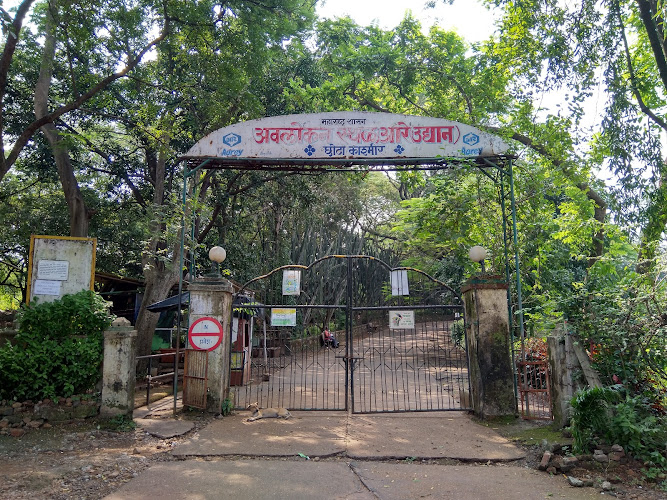
Chhota Kashmir Park.

Mandapeshwar Caves

Kanheri Caves
Find Accommodations Nearby
Recommended Tours & Activities
Visitor Reviews
There are no reviews yet. Be the first one to write one.
Share Your Experience
Have you visited Jinnah Hall Building? Help other travelers by leaving a review.