
Jiangxi Assembly Hall
About Jiangxi Assembly Hall
Key Features
More Details
Updated April 15, 2024
Jiangxi Assembly Hall (会泽江西会馆), Huize County, Yunnan | Historical …
## Jiangxi Assembly Hall (Huize Jiangxi Guild Hall): what it is, why it matters, and what to look for
The Jiangxi Assembly Hall—more precisely the Huize Jiangxi Guild Hall (会泽江西会馆)—is a historic guild hall and religious complex in Qujing’s Huize County. It’s also known as Wanshou Palace (万寿宫) and “Jiangxi Temple (江西庙).”
Guild halls like this weren’t just “old buildings.” They functioned as administrative offices, social hubs, and spiritual anchors for migrants—here, people from Jiangxi living and doing business in Huize.
### Quick facts you can rely on
– Location (official address in the heritage record): Fengle Community, Erdao Lane (二道巷) No. 28, Gucheng Subdistrict, Huize County, Qujing, Yunnan, China.
– Built: funded and constructed in 1711 (Kangxi 50th year) by Jiangxi merchants; dedicated to Xu Xun / Xu Jingyang Zhenjun (许旌阳真君) as a protective deity figure.
– Religious character: described as integrating Confucianism, Daoism, and Buddhism (“three teachings in one”).
– Heritage status: listed as a provincial protected site in 1987; in 2006, included as part of the “Huize Guild Halls” (会泽会馆) group in the Sixth batch of National Key Cultural Relics Protection Units.
> Data-quality flag: Your dataset’s coordinates (26.4137176, 103.2957681) don’t match the Wikipedia entry’s coordinates (26.418139, 103.295028). Both point to the same Huize area, but if you’re pinning maps or building structured data, verify the exact pin in a mapping app before publishing.
—
## The backstory that makes the building click
Huize’s historical prosperity is tied (in the sources) to its wider regional importance during the Qing period, when mining activity—especially copper—helped draw merchants from across China. In that context, guild halls became a kind of “institutional infrastructure”: a place to coordinate trade, settle disputes, support fellow provincials, and maintain shared rituals far from home. The Huize Jiangxi Guild Hall is explicitly framed in this merchant-migrant tradition: a Jiangxi-built office and religious complex, established by Jiangxi people in Huize.
This is why it feels different from a typical temple visit. You’re reading an economic story in architectural form—who had money, who needed community, and how identity was maintained through public buildings.
—
## What to look for on-site: the layout and the “signature” stage
### 1) The axial plan (and why it matters)
The complex is described as facing south-to-north and arranged along a central axis with three successive courtyards plus two cross courtyards (“three进 two跨院”).
That axis-based symmetry isn’t just aesthetic. It reflects a hierarchy of spaces—formal reception and performance up front, core worship halls deeper in, and side courts for gardens and smaller performance/auxiliary areas.
### 2) The gatehouse opera stage: the thing people remember
Multiple sources single out the gatehouse stage as the hallmark feature—an opera stage integrated into the entrance structure.
Specific architectural details recorded for the gatehouse stage include:
– A hip-and-gable roof (歇山顶) with mixed structural framing styles
– Width: 16 meters; depth: 6.5 meters
– A dramatic profusion of roof corners—described as 42 corners, likened to cranes in flight
Even if you’re not an architecture nerd, this is where you’ll feel the “theater-city” logic: performance wasn’t an add-on; it was literally part of entering the complex.
### 3) The main and rear halls: who’s worshipped here
The building description identifies:
– A Zhenjun Hall (真君殿) honoring Xu Xun / Xu Jingyang Zhenjun (许旌阳真君)
– A Guanyin Hall (观音殿) to the rear
And importantly, it notes an embedded worldview: the overall plan is said to reflect a Confucian cosmology of “round heaven, square earth” (天圆地方).
—
## How to visit well (practical, low-regret tips)
### Give yourself the right amount of time
A focused visit works best when you treat the site as:
– front-stage → halls → side courtyards (one continuous narrative walk), then loop back for details (carvings, plaques, roofline angles).
### Photography and respect
Because this is a religious complex as well as a heritage site, keep a few common-sense norms:
– Avoid photographing people in worship without consent.
– Don’t treat altars like photo props.
– If there are performances, be mindful of blocking sightlines.
### Opening hours & tickets: assume change is possible
Some travel listings report free entry and opening hours around 8:00–17:30. These details can change seasonally or due to local management decisions, so treat them as likely but not guaranteed—verify on the day (local signage or an up-to-date listing).
—
## What to pair it with nearby for a better story
If your broader goal is “understand Huize,” this guild hall works best as part of a guild-halls-and-old-town circuit—because it’s one piece of a larger built environment shaped by trade and migration. One English-language overview of Huize emphasizes the concentration of guild halls/temples and highlights the Jiangxi Guild Hall’s opera stage as a key stop. Exploration
—
## Two internal-link placements you can drop into RealJourneyTravels.com
(Use these as contextual anchors; adjust slugs to match your site’s taxonomy.)
1) Huize context link (before logistics section):
“If you’re building a full day around heritage architecture, start with our guide to Huize Ancient Town: /china/yunnan/huize-ancient-town/.” Exploration
2) Regional context link (near the end):
“For more historically dense stops in northeastern Yunnan, see our Qujing travel guide: /china/yunnan/qujing/.”
—
## Summary: why Jiangxi Assembly Hall deserves a slot on your itinerary
If you want a site that explains how communities organized themselves—not just what they worshipped—this guild hall is unusually legible. It’s documented as a Jiangxi merchant-built institution (1711), religiously syncretic, and formally recognized as part of a nationally protected heritage grouping.
The architecture isn’t subtle: the axial layout and the gatehouse opera stage were designed to project stability, identity, and social power. Go slowly, look up often, and read it as an artifact of migration, money, and community—because that’s exactly what the sources say it was built to be.
Table of Contents
Key Highlights
Jiangxi Assembly Hall
Location
Places to Stay Near Jiangxi Assembly Hall
Find and Book a Tour
Explore More Travel Guides
No reviews found! Be the first to review!
Traveler Reviews for Jiangxi Assembly Hall
There are no reviews yet. Be the first one to write one.
Have you visited Jiangxi Assembly Hall? Help other travelers by sharing your review.
You Might Also Like
Jiulong Waterfalls
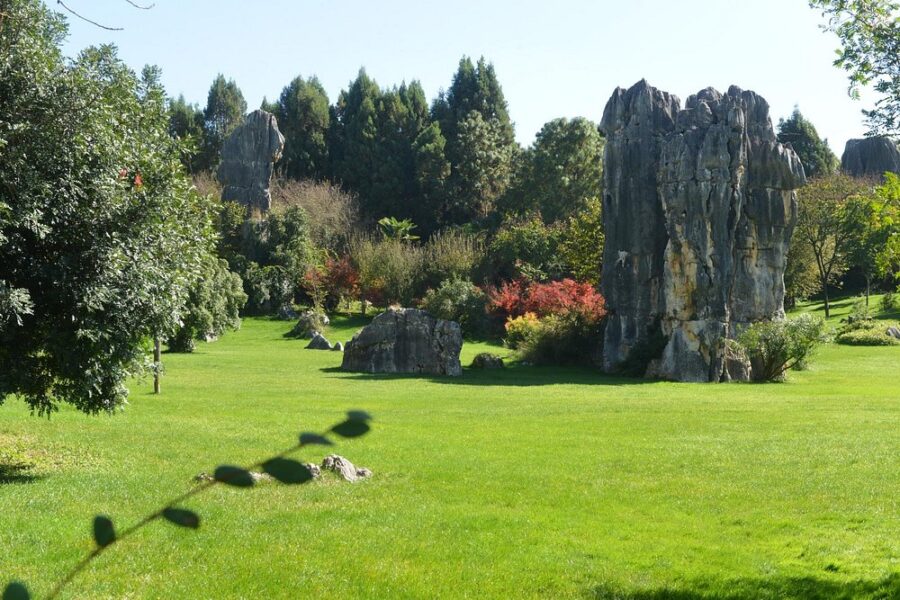
Naigu Stone Forest Scenic Area (Southeast Gate 2)
Jiuxiangxiang
Find Accommodations Nearby
Recommended Tours & Activities
Visitor Reviews
There are no reviews yet. Be the first one to write one.
Share Your Experience
Have you visited Jiangxi Assembly Hall? Help other travelers by leaving a review.