
Jardín Botánico Viera y Clavijo
About Jardín Botánico Viera y Clavijo
Description
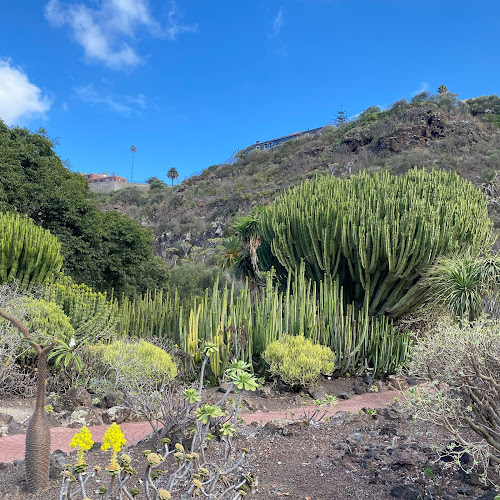
The Jardín Botánico Viera y Clavijo is one of those places that quietly grows on you. It’s not flashy, it doesn’t shout for attention, and honestly, that’s part of its charm. This botanical garden, dedicated almost entirely to plant life native to the Canary Islands, feels more like a long, thoughtful walk through nature than a typical tourist attraction. There are over 500 species here, many of them endemic, meaning you won’t casually spot them anywhere else in the world. And yes, that matters, even if you’re not the kind of traveler who usually reads plant labels.
What struck me the first time I visited was the sense of scale. The garden spreads across a steep ravine, so you’re constantly moving downhill and uphill, switching perspectives. One minute you’re looking across treetops, the next you’re standing next to towering cacti that look like something out of a sci‑fi movie. And the air feels different too. Cooler, quieter, with that faint earthy smell that reminds you nature is doing its thing without needing your approval.
This isn’t a manicured city park. Paths are paved and well maintained, sure, but the layout respects the terrain. You’ll notice how plants are grouped according to island ecosystems, from coastal scrub to pine forest species. And if you’re anything like me, you’ll start off thinking, I’ll just stroll for 30 minutes, and somehow end up staying half the morning. Time slips here. It’s sneaky like that.
It’s also refreshingly educational without being preachy. Information panels explain how fragile the Canary Islands’ ecosystems are, and why conservation actually matters. Not in a doom-and-gloom way, but in a calm, factual tone that makes you want to protect these plants rather than feel guilty about existing. For travelers who want to understand the island beyond beaches and resorts, this garden fills in a lot of blanks.
Key Features
- Over 500 plant species native to the Canary Islands, many found nowhere else on Earth
- Large collection of cacti and succulents adapted to volcanic landscapes
- Walking and hiking paths that follow a natural ravine and hillside terrain
- Shaded areas and open viewpoints offering varied microclimates
- Wheelchair accessible entrance, parking, and restrooms
- Kid-friendly trails that feel like gentle exploration rather than a lesson
- Free on-site parking, which is always a small win while traveling
- Public restrooms spaced conveniently along the main routes
Best Time to Visit
If you ask me, mornings are the sweet spot. The garden opens early enough that you can beat both the heat and the larger tour groups. And there’s something about wandering through plant collections while the day is still waking up. Birds are louder, the light is softer, and you’re less likely to feel rushed.
Season-wise, spring is hard to beat. From around March to May, many plants are flowering, and the colors pop in a way that photos never quite capture. But here’s the thing people don’t always realize: because of the Canary Islands’ climate, there’s no truly bad time to visit. Even in summer, the garden’s elevation and shaded paths keep temperatures manageable. I’ve visited in July and expected to melt, but it was actually pleasant, especially compared to the coast.
Winter has its perks too. Fewer visitors, cooler air, and a more contemplative vibe. Some species won’t be in bloom, sure, but the structure of the plants and landscapes becomes more noticeable. You start appreciating shapes, textures, and those strange little details you’d otherwise miss.
One small heads-up though. If it’s rained recently, paths can be a bit slippery in places. Nothing dramatic, but worth wearing proper shoes. And yes, I learned that the hard way once, trying to look cool in flimsy sandals. Don’t be me.
How to Get There
Getting to the Jardín Botánico Viera y Clavijo is fairly straightforward, especially if you have a car. Driving gives you flexibility, and the free on-site parking is a blessing. The roads leading up are well marked, though they do wind a bit as you approach. That’s island geography for you. Take it slow and enjoy the views.
If you’re relying on public transport, it’s still doable, but requires a little planning. Buses run from nearby urban areas, and from there it’s usually a short walk to the entrance. Just be mindful of return times, especially in the afternoon. Missing the last bus can turn into an unintended adventure. Sometimes that’s fun. Sometimes it’s just inconvenient.
Taxis are another solid option, particularly if you’re traveling in a small group or with kids. Most drivers know the garden well, and it’s a common enough destination that you won’t get blank stares when you mention it. Always reassuring.
Once inside, everything is walkable. The garden is large, yes, but paths are clearly laid out, with benches scattered around for breaks. You don’t need a map glued to your face the whole time, which I appreciate. Getting a little lost here feels intentional.
Tips for Visiting
First tip, and I can’t stress this enough: wear comfortable shoes. The terrain varies, and while it’s not hardcore hiking, it’s not a flat stroll either. Your feet will thank you later. Mine didn’t, once. Lesson learned.
Bring water, even if the weather seems mild. Walking uphill among plants that evolved to survive drought has a way of making you thirsty. There are restrooms, but not places to buy drinks everywhere, so plan ahead.
If you’re visiting with kids, frame it as an adventure rather than a garden. Talk about giant plants, weird-looking succulents, and how some species only live on one island. Curiosity works better than facts alone. I’ve seen children who were initially bored end up racing ahead, pointing things out to their parents.
Take your time reading the information panels. They’re well written and genuinely interesting. Even if you skim, you’ll pick up insights about volcanic soils, island evolution, and why conservation here isn’t just a buzzword.
Photography lovers, you’ll want a camera or at least a decent phone. Light changes constantly as you move through the ravine, and some viewpoints open up unexpectedly. But also, don’t spend the entire visit behind a lens. Pause. Sit. Listen. This place rewards stillness.
And finally, manage your expectations. This isn’t a theme park or a flashy attraction designed to wow you every five seconds. It’s calmer, more thoughtful. Some people love that immediately, others warm up to it slowly. Give it a chance. Let the garden set the pace. You might leave more relaxed than you planned, and honestly, that’s a pretty great souvenir.
Key Features
- Over 500 plant species native to the Canary Islands, many found nowhere else on Earth
- Large collection of cacti and succulents adapted to volcanic landscapes
- Walking and hiking paths that follow a natural ravine and hillside terrain
- Shaded areas and open viewpoints offering varied microclimates
- Wheelchair accessible entrance, parking, and restrooms
- Kid-friendly trails that feel like gentle exploration rather than a lesson
- Free on-site parking, which is always a small win while traveling
- Public restrooms spaced conveniently along the main routes
More Details
Updated December 31, 2025
Table of Contents
Description
The Jardín Botánico Viera y Clavijo is one of those places that quietly grows on you. It’s not flashy, it doesn’t shout for attention, and honestly, that’s part of its charm. This botanical garden, dedicated almost entirely to plant life native to the Canary Islands, feels more like a long, thoughtful walk through nature than a typical tourist attraction. There are over 500 species here, many of them endemic, meaning you won’t casually spot them anywhere else in the world. And yes, that matters, even if you’re not the kind of traveler who usually reads plant labels.
What struck me the first time I visited was the sense of scale. The garden spreads across a steep ravine, so you’re constantly moving downhill and uphill, switching perspectives. One minute you’re looking across treetops, the next you’re standing next to towering cacti that look like something out of a sci‑fi movie. And the air feels different too. Cooler, quieter, with that faint earthy smell that reminds you nature is doing its thing without needing your approval.
This isn’t a manicured city park. Paths are paved and well maintained, sure, but the layout respects the terrain. You’ll notice how plants are grouped according to island ecosystems, from coastal scrub to pine forest species. And if you’re anything like me, you’ll start off thinking, I’ll just stroll for 30 minutes, and somehow end up staying half the morning. Time slips here. It’s sneaky like that.
It’s also refreshingly educational without being preachy. Information panels explain how fragile the Canary Islands’ ecosystems are, and why conservation actually matters. Not in a doom-and-gloom way, but in a calm, factual tone that makes you want to protect these plants rather than feel guilty about existing. For travelers who want to understand the island beyond beaches and resorts, this garden fills in a lot of blanks.
Key Features
- Over 500 plant species native to the Canary Islands, many found nowhere else on Earth
- Large collection of cacti and succulents adapted to volcanic landscapes
- Walking and hiking paths that follow a natural ravine and hillside terrain
- Shaded areas and open viewpoints offering varied microclimates
- Wheelchair accessible entrance, parking, and restrooms
- Kid-friendly trails that feel like gentle exploration rather than a lesson
- Free on-site parking, which is always a small win while traveling
- Public restrooms spaced conveniently along the main routes
Best Time to Visit
If you ask me, mornings are the sweet spot. The garden opens early enough that you can beat both the heat and the larger tour groups. And there’s something about wandering through plant collections while the day is still waking up. Birds are louder, the light is softer, and you’re less likely to feel rushed.
Season-wise, spring is hard to beat. From around March to May, many plants are flowering, and the colors pop in a way that photos never quite capture. But here’s the thing people don’t always realize: because of the Canary Islands’ climate, there’s no truly bad time to visit. Even in summer, the garden’s elevation and shaded paths keep temperatures manageable. I’ve visited in July and expected to melt, but it was actually pleasant, especially compared to the coast.
Winter has its perks too. Fewer visitors, cooler air, and a more contemplative vibe. Some species won’t be in bloom, sure, but the structure of the plants and landscapes becomes more noticeable. You start appreciating shapes, textures, and those strange little details you’d otherwise miss.
One small heads-up though. If it’s rained recently, paths can be a bit slippery in places. Nothing dramatic, but worth wearing proper shoes. And yes, I learned that the hard way once, trying to look cool in flimsy sandals. Don’t be me.
How to Get There
Getting to the Jardín Botánico Viera y Clavijo is fairly straightforward, especially if you have a car. Driving gives you flexibility, and the free on-site parking is a blessing. The roads leading up are well marked, though they do wind a bit as you approach. That’s island geography for you. Take it slow and enjoy the views.
If you’re relying on public transport, it’s still doable, but requires a little planning. Buses run from nearby urban areas, and from there it’s usually a short walk to the entrance. Just be mindful of return times, especially in the afternoon. Missing the last bus can turn into an unintended adventure. Sometimes that’s fun. Sometimes it’s just inconvenient.
Taxis are another solid option, particularly if you’re traveling in a small group or with kids. Most drivers know the garden well, and it’s a common enough destination that you won’t get blank stares when you mention it. Always reassuring.
Once inside, everything is walkable. The garden is large, yes, but paths are clearly laid out, with benches scattered around for breaks. You don’t need a map glued to your face the whole time, which I appreciate. Getting a little lost here feels intentional.
Tips for Visiting
First tip, and I can’t stress this enough: wear comfortable shoes. The terrain varies, and while it’s not hardcore hiking, it’s not a flat stroll either. Your feet will thank you later. Mine didn’t, once. Lesson learned.
Bring water, even if the weather seems mild. Walking uphill among plants that evolved to survive drought has a way of making you thirsty. There are restrooms, but not places to buy drinks everywhere, so plan ahead.
If you’re visiting with kids, frame it as an adventure rather than a garden. Talk about giant plants, weird-looking succulents, and how some species only live on one island. Curiosity works better than facts alone. I’ve seen children who were initially bored end up racing ahead, pointing things out to their parents.
Take your time reading the information panels. They’re well written and genuinely interesting. Even if you skim, you’ll pick up insights about volcanic soils, island evolution, and why conservation here isn’t just a buzzword.
Photography lovers, you’ll want a camera or at least a decent phone. Light changes constantly as you move through the ravine, and some viewpoints open up unexpectedly. But also, don’t spend the entire visit behind a lens. Pause. Sit. Listen. This place rewards stillness.
And finally, manage your expectations. This isn’t a theme park or a flashy attraction designed to wow you every five seconds. It’s calmer, more thoughtful. Some people love that immediately, others warm up to it slowly. Give it a chance. Let the garden set the pace. You might leave more relaxed than you planned, and honestly, that’s a pretty great souvenir.
Key Highlights
- Over 500 plant species native to the Canary Islands, many found nowhere else on Earth
- Large collection of cacti and succulents adapted to volcanic landscapes
- Walking and hiking paths that follow a natural ravine and hillside terrain
- Shaded areas and open viewpoints offering varied microclimates
- Wheelchair accessible entrance, parking, and restrooms
- Kid-friendly trails that feel like gentle exploration rather than a lesson
- Free on-site parking, which is always a small win while traveling
- Public restrooms spaced conveniently along the main routes
Location
Places to Stay Near Jardín Botánico Viera y Clavijo
Find and Book a Tour
Explore More Travel Guides
No reviews found! Be the first to review!
Traveler Reviews for Jardín Botánico Viera y Clavijo
There are no reviews yet. Be the first one to write one.
Have you visited Jardín Botánico Viera y Clavijo? Help other travelers by sharing your review.
You Might Also Like
Sa Pedrera de Cala D
WOMAD Las Palmas de Gran Canaria
Platja de Cala Xarraca
Find Accommodations Nearby
Recommended Tours & Activities
Visitor Reviews
There are no reviews yet. Be the first one to write one.
Share Your Experience
Have you visited Jardín Botánico Viera y Clavijo? Help other travelers by leaving a review.