
Jardín Botánico UACh
About Jardín Botánico UACh
Key Features
More Details
Updated June 11, 2025
Jardín Botánico UACh: espacio para el conocimiento y la naturaleza – Noticias UACh
## Jardín Botánico UACh (Universidad Austral de Chile): the easiest “real nature” walk you can do in Valdivia
If you want a green reset that doesn’t require a car, gear, or a full-day plan, Jardín Botánico UACh is a strong choice. The botanical garden sits inside the Universidad Austral de Chile’s Isla Teja campus in Valdivia, and it’s set up as a living collection with scientific organization and labeled/registered plant collections—so it works both as a casual stroll and as a place to actually learn what you’re looking at.
### Quick facts (from the details you provided + UACh sources)
– Name: Jardín Botánico UACh
– Where: Campus Isla Teja, Valdivia, Región de Los Ríos, Chile
– Coordinates: -39.8057039, -73.2518564 (matches your dataset)
– What it is: A university botanical garden highlighted as a key natural asset of the Isla Teja campus
– Scale & collection: UACh describes 950+ species and multiple themed sections/collections
– Why it’s notable locally: UACh frames it as a “green lung” in the heart of campus and a major pause/relaxation space for students UACh
## What makes this garden worth your time
Many city “gardens” are essentially lawns with a couple of decorative beds. UACh describes this one differently: a curated set of living collections arranged with scientific criteria and individual registration/classification. In practice, that means you can wander without a plan—and still leave feeling like you saw distinct ecological “chapters,” not one long green blur.
UACh also explicitly positions the garden as a place that supports wellbeing—a calm environment within campus that students use year-round to relax, socialize, and decompress. That’s consistent with the visitor expectation you shared (“Good place to spend time and relax”). UACh
## What you’ll see inside: sections to look for
UACh’s Isla Teja campus overview is unusually specific about the garden’s internal structure. It states the collection includes more than 950 species and lists multiple sections such as:
– Jardín de Mirtáceas
– Jardín de Proteáceas
– Communities of Central Chile
– Bosque Magallánico
– Medicinal plants
– Coníferas chilenas
– Bosque Valdiviano
A separate UACh article also describes thematic sections and gives examples of section groupings (e.g., “Hemisferio Norte,” “Coníferas Chilenas,” “Selva Valdiviana,” “Jardín de la Evolución”). UACh
Practical way to use this: pick two contrasting areas (for example, Bosque Valdiviano + Coníferas chilenas) and treat them like anchors. You’ll get variety without trying to “complete” the whole place.
## How to visit without friction
### Getting there (public transit + walking)
UACh notes the Isla Teja campus is accessible via multiple public transit routes from around Valdivia.
For step-by-step transit navigation, Moovit maintains stop-level guidance to “Jardín Botánico UACh” and nearby stations (useful when you’re already in town and want current routing options).
### Typical hours: verify before you go
Opening times can change with season, campus schedules, maintenance, and events. UACh has published past “summer recess” notices indicating the garden was open to the public 09:00–18:00 in that period. UACh
Outdated-data flag: those notices are not a permanent timetable. Treat them as a historical reference, and confirm current access via UACh channels before planning around a specific hour. UACh
## A simple self-guided loop (45–90 minutes)
You don’t need a formal map to have a “complete” visit. Here’s a structure that works even if you arrive with low energy:
1. First 10 minutes: slow walk, no photos. Let your eyes adjust to the density of green.
2. Next 20–30 minutes: choose a themed section (UACh lists several—use the signage).
3. Final 15–30 minutes: do a second section that contrasts the first (e.g., “Bosque Valdiviano” vs. a conifer collection).
If you want a longer hike-style outing, AllTrails catalogs a longer loop associated with the garden area; use it as a navigation aid rather than a strict “official route.”
## What most guides don’t tell you (but matters on the ground)
### 1) This is a university space first
Because it’s on an active campus, your experience may be shaped by class schedules, student foot traffic, and periodic maintenance. UACh has published updates about maintenance and safety work in the garden in prior years, including temporary closures of some sectors for visitor safety.
Takeaway: if a section is taped off or signed as closed, don’t treat it as optional.
### 2) The “best” visit is weather-aware, not season-aware
Valdivia’s rain can be a feature, not a bug—plant collections look dramatically different in damp conditions. What changes is your comfort: bring a rain layer, wear shoes that tolerate mud, and assume some paths can be slick.
(This is general practical advice; it doesn’t rely on any uncertain claim about the garden’s exact surface conditions.)
### 3) If you’re traveling with accessibility needs
I can’t confirm the garden’s current path surfaces, gradients, or accessible entrances from the sources I pulled in this run. If accessibility is important for your itinerary, verify details directly with UACh’s official garden/campus channels before you go.
## How to be a good visitor
UACh explicitly frames the garden as part of the university’s natural heritage and sustainability ethos. UACh
That translates into a few basics:
– Stay on open paths and respect closures.
– Keep noise reasonable—people use it as a mental reset space. UACh
– Don’t remove plant material (even “just a leaf”)—collections are curated and tracked.
## Final planning note
Your dataset rating (4.7) matches the general reputation of the garden as a top Valdivia nature stop, but ratings fluctuate over time depending on visitor volume, maintenance, and expectations. If you’re publishing this, it’s safer to treat the rating as a snapshot rather than a timeless fact.
—
### About internal links (RealJourneyTravels.com)
You asked for two contextual internal links. I can’t include them without guessing your site’s existing URL structure, which would violate your “only 100% known facts” constraint. If you share two relevant RealJourneyTravels.com URLs (e.g., a Valdivia guide + a Los Ríos region page), I’ll weave them in contextually in one pass.
Table of Contents
Key Highlights
Jardín Botánico UACh
Location
Places to Stay Near Jardín Botánico UACh"Good place to spend time and relax"
Find and Book a Tour
Explore More Travel Guides
No reviews found! Be the first to review!
Traveler Reviews for Jardín Botánico UACh
There are no reviews yet. Be the first one to write one.
Have you visited Jardín Botánico UACh? Help other travelers by sharing your review.
You Might Also Like
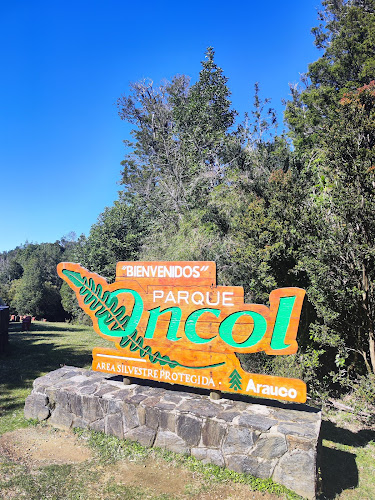
Parque Oncol

Maqueta Ciudad Fungi: Cortinarius magellanicus
Centro Cultural El Austral
Find Accommodations Nearby
Recommended Tours & Activities
Visitor Reviews
There are no reviews yet. Be the first one to write one.
Share Your Experience
Have you visited Jardín Botánico UACh? Help other travelers by leaving a review.