
Historical Museum AINOYAKATA
About Historical Museum AINOYAKATA
Description
The Historical Museum AINOYAKATA is a quietly compelling slice of local history in Aizumi, Tokushima Prefecture. It centers on the preserved estate of the Okumura family, who were major players in the indigo trade. Thirteen traditional buildings from the Okumura compound were donated to the town by the 11th head of the family, Okumura Takeo, and the collection of family documents and tools was turned into a public museum that opened in the first year of the Heisei era (1989). The result is less a polished tourist spectacle and more a living archive of how indigo — awa indigo, to be precise — shaped daily life, commerce, and craft in this part of Shikoku.
Visitors will find that AINOYAKATA is particularly strong at connecting dots: from the cultivation of indigo plants and the drying of indigo leaves to sukumo production (the fermented indigo compost), and finally to dyeing practices carried out using the traditional alkaline fermentation vat method known locally as akuzumi hakko-date. The museum displays tools and implements used in leaf processing and sukumo making, and it preserves rooms and architectural details of the Edo-period residence that reveal how a prosperous indigo merchant family lived and worked.
There is a kind of authenticity here that tends to surprise people. It's not flashy. The wooden beams creak a bit, the earthen floors show the footprints of long use, and paper dolls and dioramas stand in for people performing the multi-step dyeing process. Those paper figures might sound quaint, but they serve a powerful purpose: they reconstruct complex production steps in ways that are clearer than a dry text panel. The museum balances artifacts, documents, and that hands-on reconstruction so visitors actually leave with an understandable narrative of how indigo moved from plant to deep blue cloth.
For travelers keen on craft and process, AINOYAKATA provides a rare chance to see traditional indigo dyeing in context. The museum offers an indigo dyeing experience using the alkaline fermentation vat technique, which many travelers find unexpectedly addictive — more meditative than frenetic. It is possible to try dyeing small items, and those sessions give a tactile appreciation of indigo chemistry and timing: how multiple dips change color depth; how exposure to air develops that characteristic indigo blue. Those who take part tend to say they finally understand why indigo has such cultural weight in Tokushima and across Japan.
The historical depth on display is noteworthy. The Okumura family documents illuminate commercial networks and local economics dating back to the Edo period. There are bills, ledger pages, and notes that hint at the logistics of the trade: shipments, partners, and the scale of leaf cultivation. For people who geek out on economic history, these items are the small, human evidence of how craft industries structured rural life. For the casual visitor, they're an unusual, readable slice of the past — enough to make the everyday feel important.
AINOYAKATA is also a believable place to bring kids. Exhibits are arranged so that younger visitors can see and sometimes touch (under supervision) the tools used for cultivation and leaf processing. The presence of simple hands-on tasks makes the story of indigo accessible: children can watch how leaves were turned into sukumo, how vats were tended, and how fabric acquired that deep blue hue. Expect to spend roughly one to two hours on a focused visit; those who take part in a dyeing workshop should budget more time.
Practical accessibility is better than one might assume for a historic site. There are wheelchair-accessible entrances, an accessible parking area, and a wheelchair-accessible restroom. The museum runs on modest staffing, though, so while the grounds are adapted for better physical access, interpretive support in foreign languages is limited. English signage exists here and there, but many of the original documents and some explanatory panels are in Japanese only. Travelers who want the richest experience will do well to go with a guide or use a translation app for the deeper text-based displays.
It is also worth noting a few realistic limitations. The museum is local in scale: it does not have a large cafe, it lacks a full restaurant, and gift options are modest. If someone expects a big, multi-floor tourist museum, they might be a little disappointed. But if someone is prepared for a close, detailed look at indigo as an industry and cultural practice, AINOYAKATA delivers far more than its size would indicate. Many visitors appreciate the intimacy — it allows one to linger in corners where the light falls across wooden floors and to imagine the rhythms of indigo seasons.
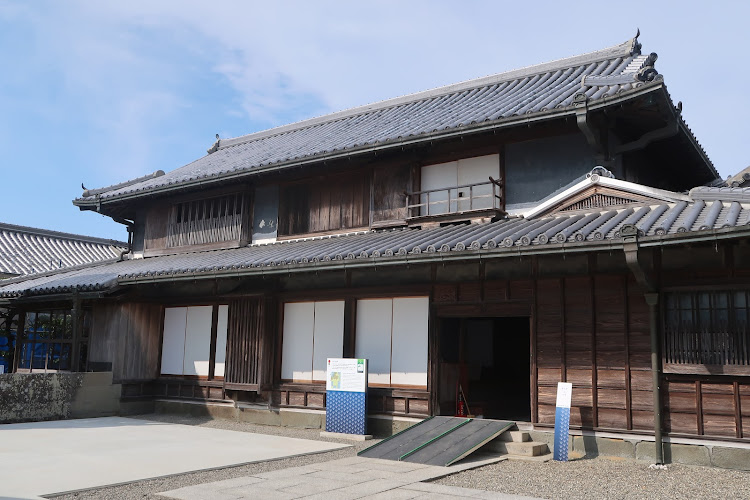
Architecturally, the compound preserves an Edo-period merchant residence and outbuildings that together create a small historic neighborhood. The woodwork, sliding doors, and tiled roofs show how function and status intertwined in a merchant family’s compound. Those who love old buildings will want to poke around: look for subtle alterations that reveal changing needs across generations, the ways storage spaces are organized for bulky raw material like dried leaves, and small features that hint at both domestic life and commercial uses. Photographers who prefer low-key, documentary-style images will find a lot to enjoy in the textures and natural light.
On the storytelling side, AINOYAKATA stands out because it links craft, environment, and economy. Indigo is not presented as an abstract art form; it's shown as something that required land, labor, chemistry, and merchants. That narrative is useful for travelers who want context rather than just pretty objects. The museum situates Tokushima's indigo within the broader tradition of Japanese indigo dyeing and highlights regional techniques and terms, such as awa indigo and sukumo, that connect this place to a wider cultural practice.
Visitors should also appreciate that the museum doubles as a small community hub at times. Local volunteers occasionally help with demonstrations, and school groups use the space as an educational resource about traditional crafts and local history. The atmosphere can swing from quiet and reflective to lively, especially during scheduled workshops or seasonal events where farmers and artisans participate. Timing a visit to overlap with a workshop can turn a passive museum tour into an active, memorable learning experience.
Finally, AINOYAKATA has a certain charm for people who like nuance: it's a museum that rewards curiosity and patience. If a traveler arrives with only an hour and a checklist, they will still learn something interesting. But those who read a few panels, watch a demonstration, and spend a little time in the dye workshop — or even simply sit quietly in the old parlors imagining how merchants counted and recorded their transactions — will leave with a stronger sense of why indigo blue is woven into Tokushima's identity.
In short, the Historical Museum AINOYAKATA is a compact, high-value stop for travelers interested in Japanese craft, indigo dyeing, Edo-period commerce, and authentic rural heritage. It offers tangible hands-on experiences, preserved architecture, and documentary evidence that together sketch a clear story of how indigo once shaped local economies and how that craft continues to be remembered. For anyone passing through Tokushima Prefecture with an eye for process, color, and a slower kind of museum visit, AINOYAKATA is worth the detour.
Key Features
More Details
Updated August 29, 2025
Table of Contents
Description
The Historical Museum AINOYAKATA is a quietly compelling slice of local history in Aizumi, Tokushima Prefecture. It centers on the preserved estate of the Okumura family, who were major players in the indigo trade. Thirteen traditional buildings from the Okumura compound were donated to the town by the 11th head of the family, Okumura Takeo, and the collection of family documents and tools was turned into a public museum that opened in the first year of the Heisei era (1989). The result is less a polished tourist spectacle and more a living archive of how indigo — awa indigo, to be precise — shaped daily life, commerce, and craft in this part of Shikoku.
Visitors will find that AINOYAKATA is particularly strong at connecting dots: from the cultivation of indigo plants and the drying of indigo leaves to sukumo production (the fermented indigo compost), and finally to dyeing practices carried out using the traditional alkaline fermentation vat method known locally as akuzumi hakko-date. The museum displays tools and implements used in leaf processing and sukumo making, and it preserves rooms and architectural details of the Edo-period residence that reveal how a prosperous indigo merchant family lived and worked.
There is a kind of authenticity here that tends to surprise people. It’s not flashy. The wooden beams creak a bit, the earthen floors show the footprints of long use, and paper dolls and dioramas stand in for people performing the multi-step dyeing process. Those paper figures might sound quaint, but they serve a powerful purpose: they reconstruct complex production steps in ways that are clearer than a dry text panel. The museum balances artifacts, documents, and that hands-on reconstruction so visitors actually leave with an understandable narrative of how indigo moved from plant to deep blue cloth.
For travelers keen on craft and process, AINOYAKATA provides a rare chance to see traditional indigo dyeing in context. The museum offers an indigo dyeing experience using the alkaline fermentation vat technique, which many travelers find unexpectedly addictive — more meditative than frenetic. It is possible to try dyeing small items, and those sessions give a tactile appreciation of indigo chemistry and timing: how multiple dips change color depth; how exposure to air develops that characteristic indigo blue. Those who take part tend to say they finally understand why indigo has such cultural weight in Tokushima and across Japan.
The historical depth on display is noteworthy. The Okumura family documents illuminate commercial networks and local economics dating back to the Edo period. There are bills, ledger pages, and notes that hint at the logistics of the trade: shipments, partners, and the scale of leaf cultivation. For people who geek out on economic history, these items are the small, human evidence of how craft industries structured rural life. For the casual visitor, they’re an unusual, readable slice of the past — enough to make the everyday feel important.
AINOYAKATA is also a believable place to bring kids. Exhibits are arranged so that younger visitors can see and sometimes touch (under supervision) the tools used for cultivation and leaf processing. The presence of simple hands-on tasks makes the story of indigo accessible: children can watch how leaves were turned into sukumo, how vats were tended, and how fabric acquired that deep blue hue. Expect to spend roughly one to two hours on a focused visit; those who take part in a dyeing workshop should budget more time.
Practical accessibility is better than one might assume for a historic site. There are wheelchair-accessible entrances, an accessible parking area, and a wheelchair-accessible restroom. The museum runs on modest staffing, though, so while the grounds are adapted for better physical access, interpretive support in foreign languages is limited. English signage exists here and there, but many of the original documents and some explanatory panels are in Japanese only. Travelers who want the richest experience will do well to go with a guide or use a translation app for the deeper text-based displays.
It is also worth noting a few realistic limitations. The museum is local in scale: it does not have a large cafe, it lacks a full restaurant, and gift options are modest. If someone expects a big, multi-floor tourist museum, they might be a little disappointed. But if someone is prepared for a close, detailed look at indigo as an industry and cultural practice, AINOYAKATA delivers far more than its size would indicate. Many visitors appreciate the intimacy — it allows one to linger in corners where the light falls across wooden floors and to imagine the rhythms of indigo seasons.
Architecturally, the compound preserves an Edo-period merchant residence and outbuildings that together create a small historic neighborhood. The woodwork, sliding doors, and tiled roofs show how function and status intertwined in a merchant family’s compound. Those who love old buildings will want to poke around: look for subtle alterations that reveal changing needs across generations, the ways storage spaces are organized for bulky raw material like dried leaves, and small features that hint at both domestic life and commercial uses. Photographers who prefer low-key, documentary-style images will find a lot to enjoy in the textures and natural light.
On the storytelling side, AINOYAKATA stands out because it links craft, environment, and economy. Indigo is not presented as an abstract art form; it’s shown as something that required land, labor, chemistry, and merchants. That narrative is useful for travelers who want context rather than just pretty objects. The museum situates Tokushima’s indigo within the broader tradition of Japanese indigo dyeing and highlights regional techniques and terms, such as awa indigo and sukumo, that connect this place to a wider cultural practice.
Visitors should also appreciate that the museum doubles as a small community hub at times. Local volunteers occasionally help with demonstrations, and school groups use the space as an educational resource about traditional crafts and local history. The atmosphere can swing from quiet and reflective to lively, especially during scheduled workshops or seasonal events where farmers and artisans participate. Timing a visit to overlap with a workshop can turn a passive museum tour into an active, memorable learning experience.
Finally, AINOYAKATA has a certain charm for people who like nuance: it’s a museum that rewards curiosity and patience. If a traveler arrives with only an hour and a checklist, they will still learn something interesting. But those who read a few panels, watch a demonstration, and spend a little time in the dye workshop — or even simply sit quietly in the old parlors imagining how merchants counted and recorded their transactions — will leave with a stronger sense of why indigo blue is woven into Tokushima’s identity.
In short, the Historical Museum AINOYAKATA is a compact, high-value stop for travelers interested in Japanese craft, indigo dyeing, Edo-period commerce, and authentic rural heritage. It offers tangible hands-on experiences, preserved architecture, and documentary evidence that together sketch a clear story of how indigo once shaped local economies and how that craft continues to be remembered. For anyone passing through Tokushima Prefecture with an eye for process, color, and a slower kind of museum visit, AINOYAKATA is worth the detour.
Key Highlights
Historical Museum AINOYAKATA
Location
Places to Stay Near Historical Museum AINOYAKATA
Find and Book a Tour
Explore More Travel Guides
No reviews found! Be the first to review!
Traveler Reviews for Historical Museum AINOYAKATA
There are no reviews yet. Be the first one to write one.
Have you visited Historical Museum AINOYAKATA? Help other travelers by sharing your review.
Find Accommodations Nearby
Recommended Tours & Activities
Visitor Reviews
There are no reviews yet. Be the first one to write one.
Share Your Experience
Have you visited Historical Museum AINOYAKATA? Help other travelers by leaving a review.