
Hazuri Bagh
About Hazuri Bagh
Key Features
More Details
Updated April 15, 2024
Walled City Lahore: Conservation of Cultural Heritage
## Hazuri Bagh, Lahore: What to Know Before You Go (History, Layout, and Smart Visit Tips)
Hazuri Bagh is a historic garden square in Lahore’s Walled City, positioned between major landmarks: the Lahore Fort on the east and the Badshahi Mosque on the west, with the Samadhi of Ranjit Singh to the north and the Roshnai Gate to the south.
At the center sits the Hazuri Bagh Baradari, a white-marble pavilion commissioned by Maharaja Ranjit Singh and completed in 1818, associated with celebrations after the Sikh Empire obtained the Koh-i-Noor from Shuja Shah Durrani in 1813.
If you’re building a tight Lahore itinerary, Hazuri Bagh is one of the rare places where you can read multiple eras—Mughal, Sikh, and later British-period changes—in a single, walkable space.
—
## Quick facts (from your dataset)
– Name: Hazuri Bagh
– Location: Badshahi Mosque, Walled City of Lahore, Lahore, Punjab, Pakistan
– Coordinates: 31.5884117, 74.3118295
– Type: Garden
– Rating: 4.6
—
## Why Hazuri Bagh matters (beyond “a garden near the mosque”)
### 1) It’s a deliberate “in-between” space
Hazuri Bagh isn’t tucked away behind walls; it’s a formal quadrangle that visually and physically connects two Lahore icons—the fort and the mosque—while also sitting beside Sikh-era memorial architecture (notably Ranjit Singh’s samadhi).
That geography matters when you’re trying to make sense of Lahore’s urban history: empires didn’t just build monuments; they controlled the space between them.
### 2) It’s Sikh-era patronage expressed through Mughal design language
Sources describe Hazuri Bagh as laid out in a Mughal-garden style, while being built under Ranjit Singh’s rule.
That blend—Mughal spatial logic, Sikh political context—is the story you’re really walking through.
—
## The Hazuri Bagh Baradari: what you’re looking at
A baradari is a pavilion type; the Hazuri Bagh Baradari is specifically described as a white-marble structure built by Ranjit Singh and completed in 1818.
Notable architectural details that are consistently mentioned in reference summaries:
– Marble pavilion with cusped arches supported by pillars.
– A mirrored ceiling in the central area, tied to its use as a courtly space under Ranjit Singh.
– The pavilion was originally two storeys, and later suffered damage attributed to lightning in 1932 (as commonly summarized in reference overviews).
Practical lens: when you’re standing here, orient yourself west-to-east: the pavilion sits in the middle of a tight axis between the Badshahi Mosque and the Lahore Fort’s Alamgiri Gate area (often referenced as being directly west of that gate).
—
## What was here before Hazuri Bagh?
Reference summaries note that the Serai Alamgiri caravanserai previously occupied the site where Hazuri Bagh now stands.
That detail is useful because it hints at continuity: the space functioned as an organized, serviced node (serai/caravan movement) before becoming an organized ceremonial/visual node (garden + pavilion).
—
## How to experience Hazuri Bagh well (without guessing logistics)
I’m not going to claim current ticketing or opening hours without an official, current primary source for those specifics. (Third-party listings vary and can be outdated.) Your Pocket Tour Guide
What you can do on-site, reliably:
### Use Hazuri Bagh as your “orientation hub”
Because Hazuri Bagh is bounded by multiple major landmarks, it works as a natural reset point between visits—especially if you’re moving between the mosque, the fort precincts, and nearby memorial structures.
### Read the place in layers
A simple way to “decode” the garden in 10 minutes:
– Start at the edges and note how the space is framed by Mughal and Sikh landmarks.
– Move inward and treat the Baradari as the interpretive key: Sikh-era commemoration using a pavilion form embedded in a Mughal-style garden plan.
### Look for lived culture, not just architecture
Travel accounts regularly describe Hazuri Bagh as a place where storytellers gather (an element of local public-life usage).
Even if you don’t catch a session, this is a reminder that Hazuri Bagh functions as civic space—more than a photo stop.
—
## Photography pointers (high-value angles)
These are technique-based recommendations, not claims about site rules:
– Symmetry shot: Center yourself on the Baradari with the garden geometry leading lines; it’s the cleanest way to show the pavilion as the “pivot” of the square.
– Context shot: Frame the Baradari with the Badshahi Mosque or fort-side backdrop to communicate where the garden sits in the Walled City landmark cluster.
– Detail shot: If you can capture arches/pillars cleanly, those cusped profiles help viewers instantly identify Indo-Islamic architectural vocabulary, even within a Sikh-commissioned structure.
—
## Accessibility and respectful visiting
Without asserting current enforcement details, these are broadly applicable best practices for historic religious/civic precincts:
– Expect mixed foot traffic and be patient with families, elders, and people using the garden as everyday public space.
– If you’re also visiting the adjacent mosque precinct, dress and behavior norms may be stricter there than in the garden square itself. (Follow posted signage on-site.)
– Ask before photographing identifiable individuals up close.
—
—
## What might be outdated (flagged)
– Visiting hours / ticketing / entry rules: third-party pages frequently advise checking official or local sources for current details, which implies these specifics can drift. Your Pocket Tour Guide
– Damage-history specifics: high-level summaries commonly repeat the “1932 lightning damage” note; treat interpretive plaques/on-site signage and conservation documentation as the best confirmation when available.
—
## Bottom line
Hazuri Bagh is one of Lahore’s most efficient “meaning-per-step” stops: a Mughal-style garden plan commissioned under Sikh rule, anchored by a marble Baradari tied to Ranjit Singh’s court culture, and physically stitched into the fort–mosque axis of the Walled City.
Table of Contents
Key Highlights
Hazuri Bagh
Location
Places to Stay Near Hazuri Bagh
Find and Book a Tour
Explore More Travel Guides
No reviews found! Be the first to review!
Traveler Reviews for Hazuri Bagh
There are no reviews yet. Be the first one to write one.
Have you visited Hazuri Bagh? Help other travelers by sharing your review.
You Might Also Like
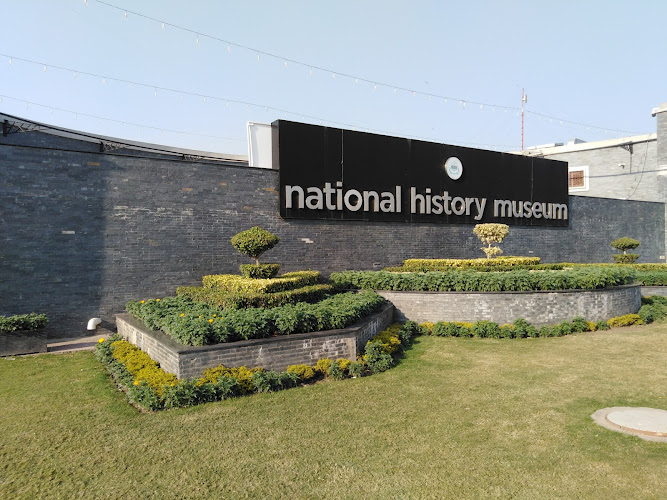
National History Museum

Shalamar Garden
Jahangir
Find Accommodations Nearby
Recommended Tours & Activities
Visitor Reviews
There are no reviews yet. Be the first one to write one.
Share Your Experience
Have you visited Hazuri Bagh? Help other travelers by leaving a review.