
Haight Village Historic District
About Haight Village Historic District
Key Features
More Details
Updated April 15, 2024
About Haight Village Historic District | Schools, Demographics, Things …
## Haight Village Historic District (Rockford, Illinois): a practical walking guide for architecture lovers
Haight Village Historic District is Rockford’s early east-side residential area and one of the city’s most historically significant neighborhoods for 19th–early 20th century domestic architecture. It’s listed on the National Register of Historic Places (NRHP) and was added on November 20, 1987 (reference 87002044).
If you’re the kind of traveler who prefers details you can actually use—boundaries, what you’ll see, and how to explore without being “that person” in a residential neighborhood—this guide is built for you.
—
## Quick facts you can plan around
### Where it is
The NRHP district is roughly bounded by Walnut & Kishwaukee Streets, the Chicago & Northwestern railroad tracks, and Madison Street in Rockford, Illinois.
A convenient “map pin” reference point inside the district is 222 S 1st St, Rockford, IL 61104 (a historic single-family home property listing).
### Why it matters
The district reflects Rockford’s earliest residential development on the east side of the Rock River—dating back to the city’s formative years—while showcasing a broad sweep of architectural styles, including Greek Revival, Classical Revival, and Late Victorian.
### What kind of place it is (important for expectations)
This is primarily a residential neighborhood (not an “attraction” with gates, ticket booths, or an official visitor route). Village
—
## What you’ll actually see: architectural highlights (without guessing)
Haight Village is best experienced as an outdoor architecture walk. The district’s significance is tied to its range of historic home styles and its connection to Rockford’s growth in the 1800s and early 1900s.
### Styles called out in official/heritage references
– Greek Revival (a key early American domestic style)
– Gothic Revival (appears in notable early homes described in local historical material)
– Late Victorian (a broad umbrella that includes several “high ornament” late-1800s looks)
### A specific example you can anchor on
One illustrated example associated with the district is 326 South Third Street, described as an 1883 Gothic Revival house with a Second Empire tower.
—
## A simple, respectful way to explore (self-guided)
Because this is a living neighborhood, the best “itinerary” is a slow, observant walk where your goal is to read the built environment—rooflines, porch details, window shapes, masonry, and setbacks—rather than trying to “do” a checklist.
### Step 1: Start with the boundaries (so you’re not wandering blind)
Use the NRHP boundary description as your frame:
– North/west edges: Walnut & Kishwaukee
– South edge: railroad tracks
– East edge: Madison Street
This lets you build a loop without relying on a single “main attraction” address.
### Step 2: Walk the “older-to-newer” story
The district includes buildings dating back to 1843 and extends through later periods as Rockford expanded.
A good way to notice that progression (without needing a guided tour) is to watch how:
– Houses closer to the earliest settlement areas tend to read “earlier” in massing and symmetry.
– Later homes often become more vertical, decorative, and stylistically mixed (a common Late Victorian pattern).
(That’s not a promise about every street—just a reliable lens for how historic neighborhoods often reveal growth over time.)
### Step 3: Know what not to do
Residential historic districts are easy to enjoy—and easy to disrespect by accident. The basics:
– Stay on sidewalks and treat porches/steps as private property.
– Avoid photographing people or private interiors through windows.
– If you’re documenting architecture, focus on façades and public right-of-way views.
—
## Cultural and historical context you can trust
### The “Haight” in Haight Village
The neighborhood takes its name from Daniel Shaw Haight, who established a claim in 1835, and the area formed part of Rockford’s early incorporated footprint (Rockford was incorporated in 1839). Village
### A Swedish-American thread
Haight Village is associated with Rockford’s Swedish community history; one notable figure referenced in district history is John Erlander, a Swedish immigrant and business leader whose 1871 house is now a museum operated by the Swedish Historical Society of Rockford.
—
## Practical tips for visiting (without pretending there’s a visitor center)
### Best way to experience it
– On foot. This is a streetscape-and-details neighborhood, not a drive-by. Village
### Time planning
I’m not going to claim an exact “tour length” (that would be guesswork), but the district spans a multi-block area and is typically approached as a short neighborhood walk rather than an all-day site. Use the boundary streets to scale your loop.
### Accessibility note (honest + cautious)
I can’t confirm curb cuts, sidewalk conditions, or maintenance street-by-street from the sources above. If mobility access matters for your group, consider previewing the area with street-level mapping before you go.
—
## Outdated-data flags (what to double-check before publishing)
A couple of commonly repeated “neighborhood facts” are presented online in ways that may be approximate or time-sensitive:
– Claims like “the majority of our structures are 100 to 150 years old” and a specific structure count (e.g., “100 structures”) are presented as general descriptions and may change with updated surveys or boundary definitions. Treat these as informal unless you verify against city or NRHP documentation. Village
– NRHP entries can receive “additional documentation” updates separate from the original 1987 listing; Haight Village has had additional documentation referenced by the National Park Service. Park Service
—
—
## Bottom line: why Haight Village is worth your time
Haight Village Historic District is for travelers who enjoy places that don’t perform for visitors—places where history sits in everyday scale: a run of porches, a roofline shift, a street that still reads like a 19th-century neighborhood. It’s officially recognized (NRHP, 1987), geographically well-defined, and rich in architectural variety anchored in Rockford’s earliest growth.
If you want, paste 2–3 internal URLs you do have for Rockford/Illinois, and I’ll weave them into the post as clean, contextual in-line links (no placeholders, no awkward “click here”).
Table of Contents
Key Highlights
Haight Village Historic District
Location
Places to Stay Near Haight Village Historic District
Find and Book a Tour
Explore More Travel Guides
No reviews found! Be the first to review!
Traveler Reviews for Haight Village Historic District
There are no reviews yet. Be the first one to write one.
Have you visited Haight Village Historic District? Help other travelers by sharing your review.
You Might Also Like

Rockford Art Museum
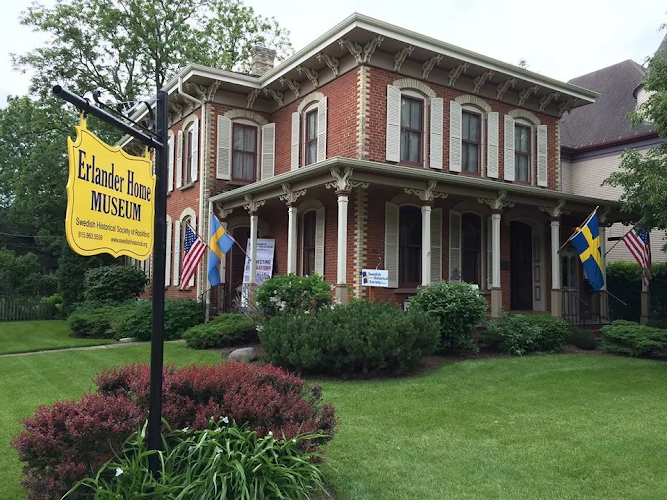
Erlander Home Museum

Rockford Park District
Find Accommodations Nearby
Recommended Tours & Activities
Visitor Reviews
There are no reviews yet. Be the first one to write one.
Share Your Experience
Have you visited Haight Village Historic District? Help other travelers by leaving a review.