
Guiguinto River
About Guiguinto River
Key Features
More Details
Updated April 16, 2024
## Guiguinto River (Bulacan): What It Is, Where It Runs, and Why It Matters
If you’re mapping out low-key outdoor stops around Guiguinto, Bulacan, Guiguinto River is one of those “on-the-map but easy-to-overlook” places—more infrastructure and everyday life than a formal sightseeing attraction.
Based on the details you provided, the river is categorized simply as Water with a 3.5 rating and coordinates 14.8298954, 120.8778401. Those coordinates place it in Guiguinto, Bulacan, Central Luzon, Philippines.
What makes this river interesting for travelers isn’t a curated boardwalk or a ticket booth—it’s the way it connects to Guiguinto’s local geography, flooding realities, and the town’s long-running relationship with waterways.
—
## Quick facts (grounded in published references + your listing)
– Name: Guiguinto River
– Location: Guiguinto, Bulacan, Philippines
– Your provided coordinates: 14.8298954, 120.8778401 (Guiguinto)
– Other published coordinates (GeoNames listing): 14.85085, 120.87952
– Approx. length (OpenStreetMap-derived dataset): ~10 km
– Elevation context (topographic map site): the mapped area around Guiguinto River is very low-lying (single-digit meters). maps
Why the coordinate mismatch matters: rivers aren’t a single point. Different databases may pin a river label at different segments, bends, or nearby barangays. Your coordinate (14.8299, 120.8778) and GeoNames’ coordinate (14.8509, 120.8795) can both be “correct” for different parts of the same river.
—
## Where Guiguinto River runs (and how to visualize it fast)
You don’t need a specialized map app to understand this river’s footprint:
– A river listing built from OpenStreetMap data describes Guiguinto River as ~10 km long and located in Bulacan.
– A separate mapping source describes it as a stream near Daungan in Guiguinto.
– A topographic map view of “Guiguinto River, Daungan, Guiguinto, Bulacan” shows a very low elevation range (roughly 2–9 m in that mapped area), which is useful context for why waterways here are tied to drainage and flood planning. maps
If you’re building an itinerary, treat the river less like a single “destination” and more like a linear feature you’ll intersect while moving between barangays and roadside points.
—
## What to expect as a visitor (without guessing)
Because the river is not consistently marketed as a tourist site across mainstream travel platforms, the most accurate expectation-setting is simple:
– You’re looking at a working waterway in a municipality that is part of Central Luzon’s built-up expansion north of Metro Manila.
– On-the-ground experience will vary by segment (near barangay centers vs. quieter stretches), season, and recent rainfall—especially in low-lying areas. maps
So, if you stop by, you’re typically doing it for:
– a quick look at local scenery and daily life,
– photography of bridges/banks (when accessible),
– or as a “connector” stop between other Guiguinto points—not as a standalone half-day attraction.
—
## A real historical note: rehabilitation efforts and why they started
One of the clearest published narratives around Guiguinto River comes from a 2006 report describing a rehabilitation push involving Swedish environmental experts working with the local government.
Key claims in that report (time-stamped 2006, so treat as historical context, not “current status”):
– Swedish environmentalists joined the municipal government in efforts to revive Guiguinto River.
– The article states the river was among waterways declared “biologically dead” by the Department of Environment and Natural Resources (DENR) in the late 1990s.
– It mentions an inspected five-kilometer stretch from Barangay Poblacion to Barangay Daungan, with observed heavy siltation and lack of household wastewater treatment facilities discussed as issues.
– It also notes dredging activity underway at the time and that water testing/data collection were part of the plan.
Why this matters for a travel guide: it frames the river as an environmental and infrastructure story, not a postcard spot. If you visit, you’re looking at a place shaped by policy, drainage, and community behavior over decades.
—
## Practical visit tips that don’t rely on speculation
### Safety and timing (common-sense, not “secret hacks”)
– Daylight only if you’re walking near riverbanks; footing can be uneven and visibility matters.
– Avoid immediately after heavy rain in low-elevation river areas (standing water and fast-moving flow risks are universal in low-lying terrain). maps
– If you’re with kids or older travelers, keep riverbank stops brief and choose stable viewing points (bridges/roadside pull-offs where legal and safe).
### Respect & access
– Treat any riverside pass-through areas as local space first—homes, small enterprises, and commuter corridors.
– Don’t assume there are formal trails or maintained promenades. Plan this as a “stop-and-look” rather than a long walk unless you can clearly see safe pedestrian space.
—
## Pair it with nearby Guiguinto stops (easy internal-link wins)
If you’re publishing this on RealJourneyTravels.com, Guiguinto River works best as part of a micro-itinerary that stacks multiple nearby points.
Two contextual internal links you can use based on your existing Guiguinto entries:
– Guiguinto Municipal Arena and Botanical Centrum (good “structured stop” contrast to a natural waterway):
/guiguinto-municipal-arena-and-botanical-centrum/
– Guiguinto Municipal Oval (useful as a “walk/stretch + local sports” pairing):
/guiguinto-municipal-oval/
These pairings keep the river post honest (it’s not overpromised as an attraction) while still giving readers a satisfying plan.
—
## Data quality + “outdated” flags (important for factual accuracy)
Here’s what is stable vs. what should be treated as historical or dataset-dependent:
– The river’s presence in Guiguinto and its identification as a stream/river is supported by multiple listings.
– The ~10 km length is explicitly stated as derived from OpenStreetMap-based data, so it’s best treated as an approximate, map-derived figure (not a surveyed measurement).
– The 2006 rehabilitation story is nearly two decades old. Use it as context, not as proof of current conditions (water quality, dredging status, transport stations, etc.).
– Your 3.5 rating is part of the listing you provided; ratings can change over time and across platforms, so avoid presenting it as universal consensus.
—
## Bottom line
Guiguinto River is a legitimate mapped waterway running through Guiguinto, Bulacan—more “working landscape” than “tourist attraction,” with a documented history of environmental concern and rehabilitation efforts discussed publicly as far back as 2006.
If you position it correctly—as a short stop within a Guiguinto route, paired with more structured nearby locations—this becomes a useful, trustworthy post that doesn’t inflate what the river experience is.
Table of Contents
Key Highlights
Guiguinto River
Location
Places to Stay Near Guiguinto River
Find and Book a Tour
Explore More Travel Guides
No reviews found! Be the first to review!
Traveler Reviews for Guiguinto River
There are no reviews yet. Be the first one to write one.
Have you visited Guiguinto River? Help other travelers by sharing your review.
You Might Also Like
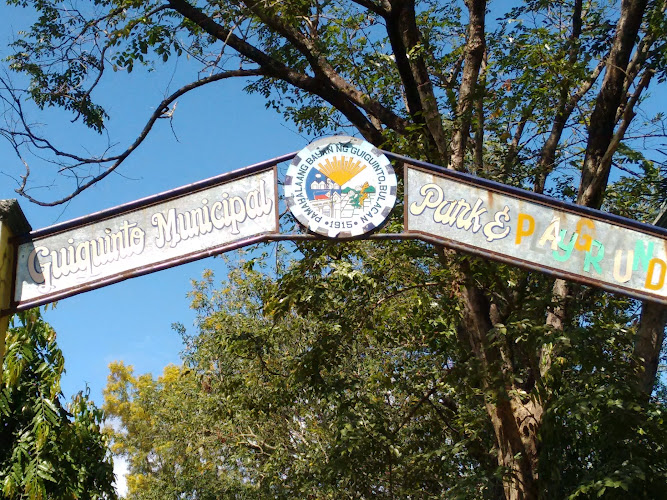
Guiguinto Municipal Park & Play Ground
I Love Tiaong Sign
Guiguinto Municipal Oval
Find Accommodations Nearby
Recommended Tours & Activities
Visitor Reviews
There are no reviews yet. Be the first one to write one.
Share Your Experience
Have you visited Guiguinto River? Help other travelers by leaving a review.