
Derbent, Stela
About Derbent, Stela
Key Features
More Details
Updated April 16, 2024
## Derbent, Stela (Дербентская стела): a quick stop that fits neatly into a UNESCO-heavy Derbent day
If you’re building a day around Derbent’s big-ticket history—fortress walls, old quarters, and Caspian Sea viewpoints—the Derbent, Stela is the kind of small landmark that works as a fast photo-and-orientation stop rather than a standalone destination.
Based on the listing details provided, this attraction sits in Derbent, Republic of Dagestan, Russia, with coordinates 42.0790213, 48.2659928, and is associated with an address rendered in Cyrillic as ул. Даш-галы… (Derbent, Dagestan).
### Quick facts (from your dataset)
– Name: Derbent, Stela
– Location: Derbent, Republic of Dagestan, Russia
– Coordinates: 42.0790213, 48.2659928
– Category: Tourist attraction
– Rating: 5 (as provided in your input)
> Data freshness note: third-party attraction listings can change names, pins, and address strings (especially when transliterated). Always sanity-check the map pin against the coordinates above before you go.
—
## Where this fits in a Derbent itinerary
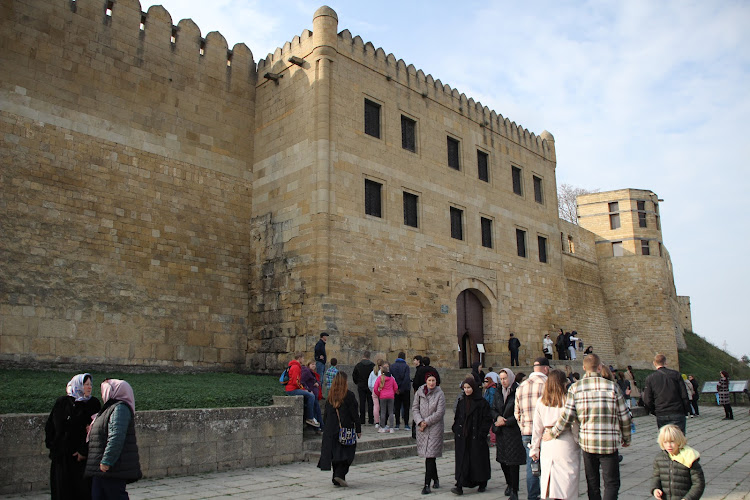
Derbent isn’t “just another city stop” in Dagestan; it’s home to the UNESCO World Heritage property “Citadel, Ancient City and Fortress Buildings of Derbent” (inscribed in 2003). World Heritage Centre
That UNESCO listing covers the fortified system—including the citadel and defensive walls—that historically controlled a narrow passage between the Caucasus mountains and the Caspian coastline. World Heritage Centre
Because the “stela” is a monument-type stop, the best way to use it is as:
– a micro-break between larger sites,
– a marker on a walking route,
– a context cue before/after visiting the fortifications and older parts of town.
If you only have a few hours in Derbent, prioritize the UNESCO core first, then use the stela as a quick add-on rather than the anchor.
—
## How to visit Derbent, Stela without wasting time
### 1) Navigate by coordinates, not the address string
The address text for this attraction appears partially garbled in transliteration/encoding, which is common when Cyrillic street names are passed through multiple systems. The most reliable “ground truth” you have is the coordinate pair:
– 42.0790213, 48.2659928
Practical move:
– Drop those coordinates into your maps app.
– Compare the pin to nearby major roads/landmarks before you commit to walking there.
### 2) Treat it as a “5–15 minute” stop
With stela-style monuments, the typical experience is:
– arrive → quick look → photo → move on.
Unless you have specific historical interpretation on-site (plaques, dates, named dedication), don’t budget it like a museum.
### 3) Pair it with Derbent’s core heritage sites
The most dependable way to make a smaller monument feel “worth it” is to place it inside a route that already has high context density:
– Citadel + fortification walls (UNESCO) World Heritage Centre
– Old-town fabric between the defensive lines (also explicitly noted in UNESCO description) World Heritage Centre
Even if you don’t know the stela’s full backstory in advance, you still get value by making it a waypoint between sites you do understand historically.
—
## What you can say confidently about Derbent’s historical context
If your goal is to write a RealJourneyTravels-style piece that’s useful without guessing, anchor your “meaning” section in what UNESCO states about Derbent’s fortifications:
– Derbent’s fortified system formed part of the northern defensive lines of the Sasanian Persian Empire, built in stone. World Heritage Centre
– The fortification included two parallel walls that created a barrier running from the seashore up toward the mountain—Derbent developed between these walls and retains elements of medieval urban fabric. World Heritage Centre
– The site remained strategically important until the 19th century. World Heritage Centre
That’s enough to give readers a grounded understanding of why Derbent “matters,” even if the stela itself is a small modern stop.
—
## Accessibility, safety, and practical travel notes
### Walking conditions
Without verified on-the-ground details for this specific stela (stairs, ramps, surface), avoid making promises. What you can do is give travelers a smart checklist:
– Wear shoes that handle uneven pavement (common in older city areas).
– If you’re traveling with limited mobility, plan for short segments and confirm surfaces via recent map photos/reviews.
### Language and signage
In Dagestan, you should expect Russian-language signage to be common. If you don’t read Cyrillic, save the coordinates and the attraction name in both Latin and Cyrillic when possible.
### Local sensitivity
Monuments can be commemorative (war memorials, civic markers, cultural dedications). If there’s a plaque, read it first; keep photos respectful, especially if locals treat the site as a memorial.
—
## A simple “half-day Derbent” route that can include the stela
This is designed to minimize backtracking and maximize context:
1. Start with the UNESCO fortifications/citadel zone (highest historical density) World Heritage Centre
2. Walk/drive through the old-town areas between the defensive lines (UNESCO explicitly describes the town’s relationship to the walls) World Heritage Centre
3. Add Derbent, Stela as a short waypoint stop (5–15 minutes)
4. Finish with a Caspian Sea-side viewpoint/shore walk if your day and transport allow (Derbent sits on the Caspian coast; this is geography-level reliable).
> Outdated-data flag: opening hours, ticketing, and access rules for individual sites can change seasonally and with local administration. Verify day-of.
—
## Two contextual internal links (use if these pages exist on your site)
If RealJourneyTravels.com has (or you plan) broader supporting pages, these two internal links are the most natural companions to a “stela” micro-attraction:
– Derbent Travel Guide (city logistics + context): [/derbent/]
– Naryn-Kala / Derbent Fortifications Guide (UNESCO core): [/fortifications-of-derbent/]
If your URL structure differs, keep the anchor text and swap the slugs during publishing.
—
## Final takeaway
Derbent, Stela is best written and visited as a supporting stop—a short, easy add-on that rounds out a Derbent day dominated by one of Russia’s most historically significant fortified landscapes. Keep the post honest: navigate by coordinates, don’t invent a dedication story, and let the UNESCO-verified context do the heavy lifting. World Heritage Centre
Table of Contents
Key Highlights
Derbent, Stela
Location
Places to Stay Near Derbent, Stela
Find and Book a Tour
Explore More Travel Guides
No reviews found! Be the first to review!
Traveler Reviews for Derbent, Stela
There are no reviews yet. Be the first one to write one.
Have you visited Derbent, Stela? Help other travelers by sharing your review.
You Might Also Like
Kyrkhlyar Gates
Kala-Bulag
Derbentskiy Muzey-Zapovednik
Find Accommodations Nearby
Recommended Tours & Activities
Visitor Reviews
There are no reviews yet. Be the first one to write one.
Share Your Experience
Have you visited Derbent, Stela? Help other travelers by leaving a review.