Custom House
About Custom House
Description
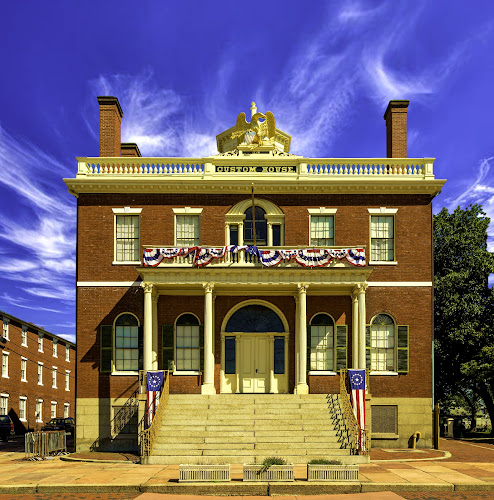
The Custom House in Salem stands with a quiet dignity that only two centuries of history can give. Built in 1815, it’s one of those places that feels like it’s seen more stories than it could ever tell. The moment one steps inside, there’s this sense of stepping back into a time when handwritten ledgers ruled commerce and ships carried fortunes across the Atlantic. The building’s grand Federal-style architecture—tall windows, polished wood floors, and sweeping staircases—still whispers of the wealth and ambition that once defined Salem’s seafaring days.
Now serving as part of the Salem Maritime National Historic Site, the Custom House is more than just a museum—it’s a preserved slice of American history. It’s famously known as the workplace of Nathaniel Hawthorne, the author of *The Scarlet Letter*, who spent three years here as a surveyor before his literary fame took off. You can almost imagine him sitting at his desk, gazing out the window at the harbor, his mind wandering between ledgers and literature. I remember my first visit; it was a rainy afternoon, and the soft patter against the old glass made the place feel alive, like the walls were breathing history.
Inside, the exhibits are a mix of maritime artifacts, period furnishings, and interpretive displays that bring Salem’s trading era to life. It’s not flashy or overly modernized, which honestly feels refreshing. The creak of the wooden floors and the faint scent of old varnish make every step feel authentic. It’s the kind of museum that rewards curiosity—you look closer, and suddenly you notice the craftsmanship in a carved banister or the faded handwriting in an old customs ledger. There’s a certain charm in its restraint; it doesn’t try to overwhelm you with digital screens or noise, just quiet storytelling through space and detail.
Key Features
- Authentic 19th-century architecture preserved in near-original condition
- Historical exhibits detailing Salem’s maritime trade and customs operations
- Nathaniel Hawthorne’s restored office, complete with his original desk
- Guided tours led by knowledgeable National Park Service staff
- Views of Salem Harbor from the upper floors that connect past and present
- Access to nearby historic sites within the Salem Maritime National Historic Site
What really stands out, though, is how personal the experience feels. It’s not a massive museum with endless corridors—it’s intimate. You can take your time, read the placards, and actually absorb the stories. And if you’re into photography, the light that filters through those old windows is pure magic in the late afternoon. I’ve seen travelers spend an hour just trying to capture that perfect shot of the stairway curve or the brass fixtures gleaming against the wood.
Best Time to Visit
Spring and fall are the sweet spots for visiting. Salem can get pretty busy, especially around October when the town’s witch-related attractions draw crowds, but the Custom House offers a quieter escape from the bustle. Early mornings tend to be the most peaceful—you can wander through the rooms almost alone, and it’s easier to imagine how it must’ve felt two hundred years ago when clerks and sailors filled the halls.
Summer brings a livelier vibe, with more guided tours and open-air events nearby. The sea breeze drifts in from the harbor, and you can practically taste the salt in the air. Winter, on the other hand, gives the place a moody, contemplative feel. The low light through frosted windows and the hush of the empty halls make it feel like you’ve stepped into a different century entirely. If you’re the type who enjoys atmosphere over crowds, winter might just be your season.
How to Get There
Reaching the Custom House is easy if you’re already exploring Salem. It’s just a short walk from the downtown area, and most visitors find it as part of the larger Salem Maritime National Historic Site. The walk itself is part of the experience—brick paths, historic homes, and the scent of the sea leading you right to the building’s stately entrance. If you’re coming by train, Salem Station is about a 15-minute walk away, and there’s usually plenty of signage to guide you. Parking can be tricky on weekends, but there are several public lots nearby if you don’t mind a short stroll.
For those traveling from Boston, the commuter rail is your best bet—fast, scenic, and stress-free. I once took the ferry up from Boston on a whim, and honestly, it was one of the best travel decisions I made that summer. Watching the coastline roll by and then stepping off the boat practically at the museum’s doorstep—it just felt right, like arriving the way visitors might have centuries ago.
Tips for Visiting
First off, give yourself enough time. It’s not a huge museum, but it’s layered with details that deserve attention. Plan for at least an hour, maybe more if you’re the kind of person who likes to linger over old maps or peek closely at handwritten documents. And if you’re a history buff, chat with the rangers—they’re full of stories that don’t always make it onto the official displays.
Photography is allowed in most areas, but be mindful of the lighting. Natural light is your best friend here, especially near the big front windows. If you’re traveling with kids, the exhibits are approachable enough to keep them interested, though younger ones might not grasp all the historical context. There’s a certain calmness to the place, so it’s worth encouraging them to slow down and just take it in.
Wear comfortable shoes. The floors are original and slightly uneven in spots, which adds to the charm but can catch you off guard if you’re wearing heels. And if you’re planning to explore more of Salem’s historic district afterward, you’ll be glad for the comfort. Bring a light jacket too—the harbor breeze can surprise you, even on warm days.
One small but meaningful thing: take a moment to stand by the window in Hawthorne’s office. Look out toward the harbor, and imagine what he saw—the ships, the bustle, the endless horizon. There’s something grounding about that view, a reminder of how deeply connected Salem’s history is to the sea. Every time I visit, that’s the moment that stays with me the longest.
And finally, don’t rush. The Custom House rewards patience. It’s not a place that shouts for attention—it whispers. If you listen closely, you’ll find that its stories still echo softly through every creak of the floorboards and every glint of sunlight on polished wood. For travelers who love history, architecture, and the quiet beauty of preserved spaces, this stop in Salem is a must-see. It’s a rare chance to step into the past and feel, even for a moment, like you belong there.
Key Features
- Authentic 19th-century architecture preserved in near-original condition
- Historical exhibits detailing Salem’s maritime trade and customs operations
- Nathaniel Hawthorne’s restored office, complete with his original desk
- Guided tours led by knowledgeable National Park Service staff
- Views of Salem Harbor from the upper floors that connect past and present
- Access to nearby historic sites within the Salem Maritime National Historic Site
More Details
Updated November 7, 2025
Table of Contents The Custom House in Salem stands with a quiet dignity that only two centuries of history can give. Built in 1815, it’s one of those places that feels like it’s seen more stories than it could ever tell. The moment one steps inside, there’s this sense of stepping back into a time when handwritten ledgers ruled commerce and ships carried fortunes across the Atlantic. The building’s grand Federal-style architecture—tall windows, polished wood floors, and sweeping staircases—still whispers of the wealth and ambition that once defined Salem’s seafaring days. Now serving as part of the Salem Maritime National Historic Site, the Custom House is more than just a museum—it’s a preserved slice of American history. It’s famously known as the workplace of Nathaniel Hawthorne, the author of *The Scarlet Letter*, who spent three years here as a surveyor before his literary fame took off. You can almost imagine him sitting at his desk, gazing out the window at the harbor, his mind wandering between ledgers and literature. I remember my first visit; it was a rainy afternoon, and the soft patter against the old glass made the place feel alive, like the walls were breathing history. Inside, the exhibits are a mix of maritime artifacts, period furnishings, and interpretive displays that bring Salem’s trading era to life. It’s not flashy or overly modernized, which honestly feels refreshing. The creak of the wooden floors and the faint scent of old varnish make every step feel authentic. It’s the kind of museum that rewards curiosity—you look closer, and suddenly you notice the craftsmanship in a carved banister or the faded handwriting in an old customs ledger. There’s a certain charm in its restraint; it doesn’t try to overwhelm you with digital screens or noise, just quiet storytelling through space and detail. What really stands out, though, is how personal the experience feels. It’s not a massive museum with endless corridors—it’s intimate. You can take your time, read the placards, and actually absorb the stories. And if you’re into photography, the light that filters through those old windows is pure magic in the late afternoon. I’ve seen travelers spend an hour just trying to capture that perfect shot of the stairway curve or the brass fixtures gleaming against the wood. Spring and fall are the sweet spots for visiting. Salem can get pretty busy, especially around October when the town’s witch-related attractions draw crowds, but the Custom House offers a quieter escape from the bustle. Early mornings tend to be the most peaceful—you can wander through the rooms almost alone, and it’s easier to imagine how it must’ve felt two hundred years ago when clerks and sailors filled the halls. Summer brings a livelier vibe, with more guided tours and open-air events nearby. The sea breeze drifts in from the harbor, and you can practically taste the salt in the air. Winter, on the other hand, gives the place a moody, contemplative feel. The low light through frosted windows and the hush of the empty halls make it feel like you’ve stepped into a different century entirely. If you’re the type who enjoys atmosphere over crowds, winter might just be your season. Reaching the Custom House is easy if you’re already exploring Salem. It’s just a short walk from the downtown area, and most visitors find it as part of the larger Salem Maritime National Historic Site. The walk itself is part of the experience—brick paths, historic homes, and the scent of the sea leading you right to the building’s stately entrance. If you’re coming by train, Salem Station is about a 15-minute walk away, and there’s usually plenty of signage to guide you. Parking can be tricky on weekends, but there are several public lots nearby if you don’t mind a short stroll. For those traveling from Boston, the commuter rail is your best bet—fast, scenic, and stress-free. I once took the ferry up from Boston on a whim, and honestly, it was one of the best travel decisions I made that summer. Watching the coastline roll by and then stepping off the boat practically at the museum’s doorstep—it just felt right, like arriving the way visitors might have centuries ago. First off, give yourself enough time. It’s not a huge museum, but it’s layered with details that deserve attention. Plan for at least an hour, maybe more if you’re the kind of person who likes to linger over old maps or peek closely at handwritten documents. And if you’re a history buff, chat with the rangers—they’re full of stories that don’t always make it onto the official displays. Photography is allowed in most areas, but be mindful of the lighting. Natural light is your best friend here, especially near the big front windows. If you’re traveling with kids, the exhibits are approachable enough to keep them interested, though younger ones might not grasp all the historical context. There’s a certain calmness to the place, so it’s worth encouraging them to slow down and just take it in. Wear comfortable shoes. The floors are original and slightly uneven in spots, which adds to the charm but can catch you off guard if you’re wearing heels. And if you’re planning to explore more of Salem’s historic district afterward, you’ll be glad for the comfort. Bring a light jacket too—the harbor breeze can surprise you, even on warm days. One small but meaningful thing: take a moment to stand by the window in Hawthorne’s office. Look out toward the harbor, and imagine what he saw—the ships, the bustle, the endless horizon. There’s something grounding about that view, a reminder of how deeply connected Salem’s history is to the sea. Every time I visit, that’s the moment that stays with me the longest. And finally, don’t rush. The Custom House rewards patience. It’s not a place that shouts for attention—it whispers. If you listen closely, you’ll find that its stories still echo softly through every creak of the floorboards and every glint of sunlight on polished wood. For travelers who love history, architecture, and the quiet beauty of preserved spaces, this stop in Salem is a must-see. It’s a rare chance to step into the past and feel, even for a moment, like you belong there.Description
Key Features
Best Time to Visit
How to Get There
Tips for Visiting
Key Highlights
- Authentic 19th-century architecture preserved in near-original condition
- Historical exhibits detailing Salem’s maritime trade and customs operations
- Nathaniel Hawthorne’s restored office, complete with his original desk
- Guided tours led by knowledgeable National Park Service staff
- Views of Salem Harbor from the upper floors that connect past and present
- Access to nearby historic sites within the Salem Maritime National Historic Site
Location
Places to Stay Near Custom House
Find and Book a Tour
Explore More Travel Guides
No reviews found! Be the first to review!
Traveler Reviews for Custom House
There are no reviews yet. Be the first one to write one.
Have you visited Custom House? Help other travelers by sharing your review.
Find Accommodations Nearby
Recommended Tours & Activities
Visitor Reviews
There are no reviews yet. Be the first one to write one.
Share Your Experience
Have you visited Custom House? Help other travelers by leaving a review.
