
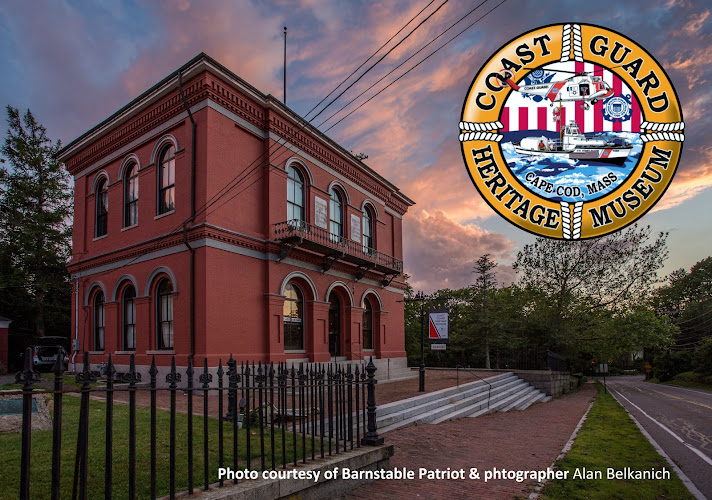
Coast Guard Heritage Museum
About Coast Guard Heritage Museum
Description
The Coast Guard Heritage Museum sits in a striking 1856 U.S. Customs House and presents the Coast Guard story through a distinctly Cape Cod lens. As a 501(c)(3) non-profit and veteran-owned organization, it focuses on local maritime service, customs operations, life-saving stations, and the evolution of coastal defense that shaped Barnstable and the surrounding Cape Cod communities. With roughly 2,700 square feet of exhibit space, the museum manages to feel both intimate and surprisingly comprehensive: a compact but deep dive into maritime history that rewards visitors who linger.
Exhibits range from scale models of cutters and lifeboats to original artifacts, photographs, uniforms, and personal accounts that trace the threads from colonial customs enforcement to the modern Coast Guard. The building itself is part of the story. The old Customs House was where revenue and regulation met commerce and the sea; that layered history is visible in the architecture and in interpretive displays that connect stone, timber and policy to rescue missions, iceberg responses, and wartime coastal patrols. It’s not just objects behind glass — many displays put emphasis on people and the choices they made at sea and on shore.
Admission includes an audio tour option, which is a quiet little luxury for those who like to travel at their own pace. And it’s worth mentioning: the audio tour is more than a recitation of dates. It blends oral histories with contextual narration, so a visitor hears the voice of a rescuer or a customs officer and then gets the factual framing that makes the anecdote meaningful. That combination helps turn dusty facts into human stories — and that’s what sticks with most visitors after they leave.
The museum leans into Cape Cod specifics. It highlights local life-saving stations and revenue cutters, and it explains how Massachusetts’ maritime culture fed into national service development. For travelers who come to the Cape for lighthouses and beaches, this museum is an unexpected complement: it explains why the coastline looks the way it does on maps, why certain towns weathered storms differently, and why a seemingly quiet harbor was once a frontline of rescues and enforcement. The regional angle makes the content feel focused; this is not a general, all-things-U.S.-Coast-Guard overview — it’s Cape Cod’s Coast Guard story, told with care.
Accessibility and practical details are also treated with attention. The museum offers a wheelchair-accessible entrance and parking, assisted listening devices for talks and tours, and gender-neutral restroom facilities. Those small but important touches make the experience easier for families, older visitors, and veterans who come looking for a respectful, informative visit. There are active military discounts, and onsite guided tours can be arranged; community volunteers frequently lead special programming that leans into oral history and artifact interpretation. That community connection is noticeable — this is a museum tied to local memory as much as to national legacy.
Visitors often comment on how personable the staff and volunteers are. Don’t expect a high-tech, hands-off tourist attraction. The Coast Guard Heritage Museum prefers conversation. Volunteers will happily point out little details on a model boat or tell the backstory of a faded uniform patch. That human element makes the museum a friendly pit stop for curious travelers who want to learn more than what a brochure provides. A frequent visitor once compared the experience to sitting down with an old neighbor who knows the seafaring gossip — in a good way.
There are a few visitor realities to know up front. The museum occupies a historic building and so some areas have low ceilings or narrow passageways; it’s charming, yes, but it does mean the layout is not a sprawling, modern gallery. Audio and small-group tours are recommended for those who want the fullest appreciation of exhibits, because placards alone can’t convey every anecdote or technical detail. Also, while there is no on-site restaurant, the museum’s location in Barnstable village places visitors a short walk from cafés and bakeries, which is handy when appetite and curiosity collide.
For families, the museum hits a sweet spot. Exhibits are curated to be kid-friendly without being condescending. Children can see models, tactile items, and age-appropriate storytelling that make maritime history tangible. The displays do a good job of balancing the heroic and the practical: life-saving stories are presented honestly, with focus on training, teamwork, and technology rather than sensationalism. Parents who worry about kids losing interest will find the scale and pacing of the museum forgiving — it’s the sort of place where a young visitor can be captivated for half an hour and an adult can wander for much longer.
From a historian’s perspective, the museum is quietly resourceful. It highlights primary sources and uncommon artifacts, like customs ledgers, local cutter logs, and correspondence that reveal policy decisions from the 18th and 19th centuries. Those who want to dig deeper can often find volunteers who know where to point them toward further reading or local archives. The museum acts as a gateway: it gives a strong local overview and then nudges the curious into follow-up trails across Cape Cod maritime history.
There’s a practical advantage to visiting the museum in Barnstable village: it’s centrally located for exploring other Cape Cod attractions. Travelers can pair a museum visit with a stroll down Main Street, a quick lighthouse detour, or a harbor-side walk. That makes it ideal for travelers with a half-day to fill. But don’t let its modest footprint fool you — content density is high. Even repeat visitors find fresh nuggets each time, because new artifacts and rotating mini-exhibits surface periodically.
One small anecdote that travel writers and regulars tell: on a rainy September afternoon the writer noticed an elderly man visiting with a grandson. The man pointed to a black-and-white photograph and began to tell a rescue story that stretched family memory into regional history. The museum, in that moment, became a bridge between generations. That sort of unplanned exchange is common here — locals visit to reconnect with family stories, while visitors from away discover that Cape Cod’s maritime past is personal, not just historical.
Practical features matter for travelers who plan ahead. The museum is veteran-owned and offers active military discounts, so it attracts a respectful cross-section of visitors including veterans, researchers, school groups, and curious vacationers. Onsite tours are offered and can be especially useful for groups who want a coherent narrative rather than wandering display-to-display. The presence of assisted listening devices also demonstrates that the museum thinks about the details that make a visit enjoyable for a variety of guests.
From a marketing and SEO perspective, the museum’s strongest hooks are its local emphasis and its authentic artifacts. Keywords that draw visitors include Coast Guard history, Cape Cod maritime, Customs House Barnstable, life-saving stations, and heritage museum. Travel writers who want a museum that’s both authentic and manageable in size will often recommend it as a highlight of Barnstable village. It’s a stop that rewards curiosity with real stories and tangible artifacts, not flashy multimedia. If a traveler wants a calm, informative, and heartfelt exploration of maritime service — and the regional roots of the Coast Guard — this museum delivers.
Finally, the visitor takeaway tends to be more reflective than celebratory. The museum honors bravery and service, yes, but it also prompts questions about coastal communities, maritime policy, and the human costs and ingenuity behind rescue operations. It’s the kind of place where a visitor might come for a quick historical fix and leave thinking about the sea in a slightly different way. And honestly, that’s the best kind of museum experience: one that changes how a traveler notices the coastline on the drive away.
Key Features
More Details
Updated August 29, 2025
Table of Contents
Description
The Coast Guard Heritage Museum sits in a striking 1856 U.S. Customs House and presents the Coast Guard story through a distinctly Cape Cod lens. As a 501(c)(3) non-profit and veteran-owned organization, it focuses on local maritime service, customs operations, life-saving stations, and the evolution of coastal defense that shaped Barnstable and the surrounding Cape Cod communities. With roughly 2,700 square feet of exhibit space, the museum manages to feel both intimate and surprisingly comprehensive: a compact but deep dive into maritime history that rewards visitors who linger.
Exhibits range from scale models of cutters and lifeboats to original artifacts, photographs, uniforms, and personal accounts that trace the threads from colonial customs enforcement to the modern Coast Guard. The building itself is part of the story. The old Customs House was where revenue and regulation met commerce and the sea; that layered history is visible in the architecture and in interpretive displays that connect stone, timber and policy to rescue missions, iceberg responses, and wartime coastal patrols. It’s not just objects behind glass — many displays put emphasis on people and the choices they made at sea and on shore.
Admission includes an audio tour option, which is a quiet little luxury for those who like to travel at their own pace. And it’s worth mentioning: the audio tour is more than a recitation of dates. It blends oral histories with contextual narration, so a visitor hears the voice of a rescuer or a customs officer and then gets the factual framing that makes the anecdote meaningful. That combination helps turn dusty facts into human stories — and that’s what sticks with most visitors after they leave.
The museum leans into Cape Cod specifics. It highlights local life-saving stations and revenue cutters, and it explains how Massachusetts’ maritime culture fed into national service development. For travelers who come to the Cape for lighthouses and beaches, this museum is an unexpected complement: it explains why the coastline looks the way it does on maps, why certain towns weathered storms differently, and why a seemingly quiet harbor was once a frontline of rescues and enforcement. The regional angle makes the content feel focused; this is not a general, all-things-U.S.-Coast-Guard overview — it’s Cape Cod’s Coast Guard story, told with care.
Accessibility and practical details are also treated with attention. The museum offers a wheelchair-accessible entrance and parking, assisted listening devices for talks and tours, and gender-neutral restroom facilities. Those small but important touches make the experience easier for families, older visitors, and veterans who come looking for a respectful, informative visit. There are active military discounts, and onsite guided tours can be arranged; community volunteers frequently lead special programming that leans into oral history and artifact interpretation. That community connection is noticeable — this is a museum tied to local memory as much as to national legacy.
Visitors often comment on how personable the staff and volunteers are. Don’t expect a high-tech, hands-off tourist attraction. The Coast Guard Heritage Museum prefers conversation. Volunteers will happily point out little details on a model boat or tell the backstory of a faded uniform patch. That human element makes the museum a friendly pit stop for curious travelers who want to learn more than what a brochure provides. A frequent visitor once compared the experience to sitting down with an old neighbor who knows the seafaring gossip — in a good way.
There are a few visitor realities to know up front. The museum occupies a historic building and so some areas have low ceilings or narrow passageways; it’s charming, yes, but it does mean the layout is not a sprawling, modern gallery. Audio and small-group tours are recommended for those who want the fullest appreciation of exhibits, because placards alone can’t convey every anecdote or technical detail. Also, while there is no on-site restaurant, the museum’s location in Barnstable village places visitors a short walk from cafés and bakeries, which is handy when appetite and curiosity collide.
For families, the museum hits a sweet spot. Exhibits are curated to be kid-friendly without being condescending. Children can see models, tactile items, and age-appropriate storytelling that make maritime history tangible. The displays do a good job of balancing the heroic and the practical: life-saving stories are presented honestly, with focus on training, teamwork, and technology rather than sensationalism. Parents who worry about kids losing interest will find the scale and pacing of the museum forgiving — it’s the sort of place where a young visitor can be captivated for half an hour and an adult can wander for much longer.
From a historian’s perspective, the museum is quietly resourceful. It highlights primary sources and uncommon artifacts, like customs ledgers, local cutter logs, and correspondence that reveal policy decisions from the 18th and 19th centuries. Those who want to dig deeper can often find volunteers who know where to point them toward further reading or local archives. The museum acts as a gateway: it gives a strong local overview and then nudges the curious into follow-up trails across Cape Cod maritime history.
There’s a practical advantage to visiting the museum in Barnstable village: it’s centrally located for exploring other Cape Cod attractions. Travelers can pair a museum visit with a stroll down Main Street, a quick lighthouse detour, or a harbor-side walk. That makes it ideal for travelers with a half-day to fill. But don’t let its modest footprint fool you — content density is high. Even repeat visitors find fresh nuggets each time, because new artifacts and rotating mini-exhibits surface periodically.
One small anecdote that travel writers and regulars tell: on a rainy September afternoon the writer noticed an elderly man visiting with a grandson. The man pointed to a black-and-white photograph and began to tell a rescue story that stretched family memory into regional history. The museum, in that moment, became a bridge between generations. That sort of unplanned exchange is common here — locals visit to reconnect with family stories, while visitors from away discover that Cape Cod’s maritime past is personal, not just historical.
Practical features matter for travelers who plan ahead. The museum is veteran-owned and offers active military discounts, so it attracts a respectful cross-section of visitors including veterans, researchers, school groups, and curious vacationers. Onsite tours are offered and can be especially useful for groups who want a coherent narrative rather than wandering display-to-display. The presence of assisted listening devices also demonstrates that the museum thinks about the details that make a visit enjoyable for a variety of guests.
From a marketing and SEO perspective, the museum’s strongest hooks are its local emphasis and its authentic artifacts. Keywords that draw visitors include Coast Guard history, Cape Cod maritime, Customs House Barnstable, life-saving stations, and heritage museum. Travel writers who want a museum that’s both authentic and manageable in size will often recommend it as a highlight of Barnstable village. It’s a stop that rewards curiosity with real stories and tangible artifacts, not flashy multimedia. If a traveler wants a calm, informative, and heartfelt exploration of maritime service — and the regional roots of the Coast Guard — this museum delivers.
Finally, the visitor takeaway tends to be more reflective than celebratory. The museum honors bravery and service, yes, but it also prompts questions about coastal communities, maritime policy, and the human costs and ingenuity behind rescue operations. It’s the kind of place where a visitor might come for a quick historical fix and leave thinking about the sea in a slightly different way. And honestly, that’s the best kind of museum experience: one that changes how a traveler notices the coastline on the drive away.
Key Highlights
Coast Guard Heritage Museum
Location
Places to Stay Near Coast Guard Heritage Museum
Find and Book a Tour
Explore More Travel Guides
No reviews found! Be the first to review!
Traveler Reviews for Coast Guard Heritage Museum
There are no reviews yet. Be the first one to write one.
Have you visited Coast Guard Heritage Museum? Help other travelers by sharing your review.
You Might Also Like
Korean War Memorial
Cape Cod Canal Visitor Center
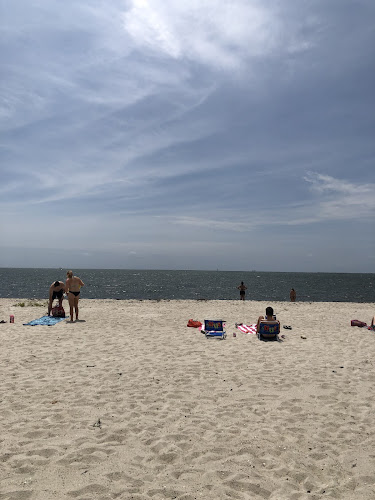
Kalmus Park Beach
Find Accommodations Nearby
Recommended Tours & Activities
Visitor Reviews
There are no reviews yet. Be the first one to write one.
Share Your Experience
Have you visited Coast Guard Heritage Museum? Help other travelers by leaving a review.