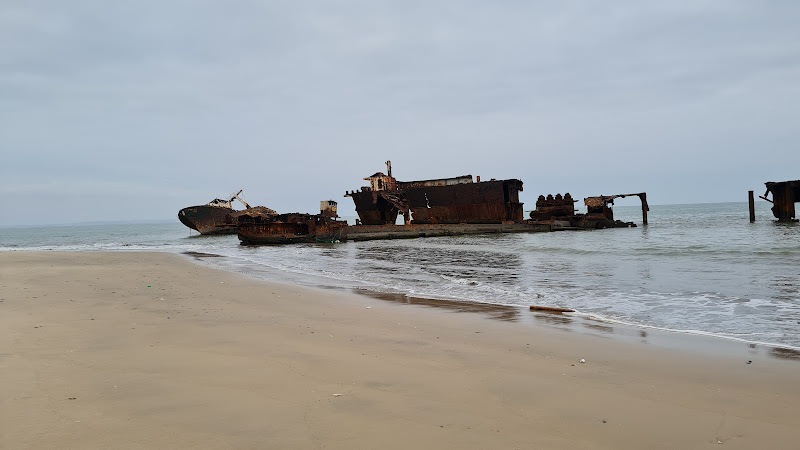
The Cemitério Dos Navios, or Ship Cemetery as many travelers know it, presents one of those genuinely unexpected sights that make you stop and wonder how such a place came to exist.
Highlights & Key Features
Key Features
Best Time to Visit
How to Get There
Tips for Visiting
Visitor Guide & Information
Description
I’ve always been drawn to places that tell stories without needing plaques or guided tours, and this ship cemetery does exactly that. The rusting hulls and weathered steel create an almost apocalyptic landscape that photographers and adventure seekers find absolutely irresistible. You’ll find vessels in different stages of deterioration, some still recognizable as ships while others have surrendered almost completely to the elements.
What strikes most visitors is the sheer scale of abandonment. These aren’t small fishing boats we’re talking about – many of these vessels were serious commercial ships that once traversed oceans. Now they sit in silence, creating an eerie yet captivating atmosphere that’s become increasingly popular among travelers looking for something genuinely different from the usual tourist circuit.
The site works surprisingly well for families too. While you might think a bunch of old ships wouldn’t capture kids’ imaginations, there’s something about the massive scale and the adventure-like quality of the place that gets younger visitors excited. It’s like exploring a real-life treasure hunt scene, minus the actual treasure but with plenty of photo opportunities and that sense of discovery that children naturally gravitate toward.
Key Features
The Ship Cemetery offers several distinctive elements that make it worth the journey:
• Multiple abandoned vessels in various stages of decay, each with its own character and story to tell through the rust and wear
• Exceptional photography opportunities, particularly during golden hour when the light plays off the oxidized steel creating dramatic contrasts
• A genuine off-the-beaten-path experience that hasn’t been commercialized or turned into a sanitized tourist trap
• Industrial archaeology at its most raw, showing how nature slowly reclaims human-made structures over time
• Accessible viewing areas that allow visitors to observe the ships safely while getting close enough to appreciate the details
• Atmospheric setting that appeals to urban explorers, history buffs, and anyone tired of conventional attractions
• Family-friendly environment despite the unusual subject matter, with enough visual interest to keep children engaged
• Minimal crowds compared to mainstream tourist destinations, giving you space to explore at your own pace
• Free or very low-cost access, making it an budget-friendly addition to any travel itinerary
Best Time to Visit
Timing your visit to the Cemitério Dos Navios can really make or break your experience, and I’ve learned through talking with other travelers that certain periods work better than others.
The dry season generally offers the most reliable conditions for visiting. You don’t want to be navigating around massive steel structures in pouring rain – it’s not particularly safe, and the photos won’t turn out great either. Plus, wet metal surfaces can be treacherous if you’re planning to get close to the ships.
Early morning visits have their own magic. The light during those first hours after sunrise creates incredible shadows and highlights on the rusted surfaces. And you’ll likely have the place mostly to yourself, which adds to that post-apocalyptic feeling that makes the location so compelling. There’s something special about being alone among these massive metal skeletons as the day begins.
Late afternoon works beautifully too, especially if you’re serious about photography. That golden hour light we photographers obsess over? It transforms the rust into something almost beautiful, painting the steel in warm oranges and reds that complement the natural oxidation. I’ve seen pictures from sunset visits that look almost artistic, turning industrial decay into accidental sculpture.
Avoid midday visits if possible. The harsh overhead light washes out details and creates unflattering shadows. Plus, depending on the season, you’ll be dealing with intense heat with limited shade – those steel hulls don’t exactly provide relief from the sun.
Weekdays typically see fewer visitors than weekends, though this isn’t exactly Disneyland in terms of crowds. Still, if you prefer solitude for your exploration, aim for a Tuesday or Wednesday morning and you might have the entire cemetery to yourself.
How to Get There
Getting to the Ship Cemetery requires a bit more effort than your typical tourist attraction, but that’s partly what keeps it authentic and uncrowded.
Most visitors will need to arrange transportation specifically for this destination. It’s not the kind of place you stumble upon while walking through town. Taxis or rideshare services can get you there, though you’ll want to arrange a return pickup since you won’t find cars waiting around at a ship graveyard.
If you’re the independent type who likes renting vehicles, having your own car gives you flexibility with timing and the freedom to explore the surrounding area at your own pace. Just make sure you’ve got reliable GPS or downloaded maps because signage might not be as clear as you’d hope. The roads leading to the cemetery vary in quality – some are perfectly fine while others might test your suspension a bit.
Some travelers join organized tours that include the Ship Cemetery as part of a broader itinerary. This can work well if you prefer having transportation sorted and don’t mind keeping to a schedule. The downside? You’re working on someone else’s timeline, which might not align with optimal lighting or your personal exploration pace.
Local buses might service the general area, but you’ll likely need to walk a fair distance from the nearest stop. This option works for budget-conscious travelers who don’t mind a bit of hiking, but it’s not the most convenient approach, especially in hot weather.
Plan for the journey to take longer than maps might suggest. Between navigation challenges and road conditions, building in extra time prevents stress and rushing.
Tips for Visiting
Preparing properly for your Ship Cemetery visit makes the difference between a frustrating experience and a memorable adventure.
Wear sturdy closed-toe shoes – this isn’t the place for flip-flops or nice sandals. You’re walking around industrial ruins with potentially sharp metal edges, uneven ground, and who knows what hiding in the shadows. I can’t stress this enough. Those Instagram-worthy photos aren’t worth a tetanus shot.
Bring more water than you think you’ll need. There’s no convenience store nearby, no cafe selling cold drinks. The metal structures might provide some shade, but they also radiate heat. Dehydration sneaks up on you, especially when you’re focused on exploring and taking pictures.
Sun protection goes beyond just sunscreen. A hat, sunglasses, and light long-sleeves can make your visit much more comfortable. That reflected light off the steel can be intense, and you’ll probably spend more time there than planned once you start exploring.
Photography enthusiasts should bring their full kit. Wide-angle lenses capture the scale of the ships, while telephoto options let you isolate interesting details in the rust and decay. A tripod helps if you’re shooting in lower light conditions during early morning or late afternoon. And seriously, bring extra batteries and memory cards – you’ll take way more photos than expected.
Respect the structures and don’t climb on the ships unless it’s clearly safe and permitted. These vessels are deteriorating, and what looks solid might not be. Plus, disturbing the site diminishes it for future visitors and could be dangerous. Look, photograph, appreciate, but don’t destroy.
Check the weather forecast before heading out. Visiting during or right after rain can make the area muddy and slippery. Strong winds can also make being around tall metal structures less pleasant.
Bring a small first-aid kit. Even careful visitors can get minor scrapes or cuts when exploring industrial sites. Better to have bandages and antiseptic wipes and not need them than the reverse.
Consider bringing binoculars if you’re interested in observing details on ships from a safe distance. Sometimes the best-preserved or most interesting features are on parts of vessels you can’t safely approach.
Tell someone where you’re going and when you expect to return. This might sound paranoid, but cell service can be spotty around remote industrial areas. Basic safety practice that’s easy to forget when excited about an adventure.
Pack out everything you pack in. There aren’t facilities or trash bins at most ship cemeteries. Leave the place as you found it – or better.
The Cemitério Dos Navios rewards visitors who come prepared and approach it with the right mindset. This isn’t a polished attraction with gift shops and guided commentary. It’s raw, authentic, and honestly a bit melancholy. But that’s precisely what makes it special in an age where so many destinations feel manufactured for tourists rather than preserved as genuine pieces of history.
The Cemitério Dos Navios, or Ship Cemetery as many travelers know it, presents one of those genuinely unexpected sights that make you stop and wonder how such a place came to exist. This graveyard of abandoned vessels sits as a stark reminder of maritime history, where once-proud ships now rest in various states of decay. It’s not your typical postcard-perfect attraction, and honestly, that’s exactly what makes it fascinating.
I’ve always been drawn to places that tell stories without needing plaques or guided tours, and this ship cemetery does exactly that. The rusting hulls and weathered steel create an almost apocalyptic landscape that photographers and adventure seekers find absolutely irresistible. You’ll find vessels in different stages of deterioration, some still recognizable as ships while others have surrendered almost completely to the elements.
What strikes most visitors is the sheer scale of abandonment. These aren’t small fishing boats we’re talking about – many of these vessels were serious commercial ships that once traversed oceans. Now they sit in silence, creating an eerie yet captivating atmosphere that’s become increasingly popular among travelers looking for something genuinely different from the usual tourist circuit.
The site works surprisingly well for families too. While you might think a bunch of old ships wouldn’t capture kids’ imaginations, there’s something about the massive scale and the adventure-like quality of the place that gets younger visitors excited. It’s like exploring a real-life treasure hunt scene, minus the actual treasure but with plenty of photo opportunities and that sense of discovery that children naturally gravitate toward.
Key Features
The Ship Cemetery offers several distinctive elements that make it worth the journey:
• Multiple abandoned vessels in various stages of decay, each with its own character and story to tell through the rust and wear
• Exceptional photography opportunities, particularly during golden hour when the light plays off the oxidized steel creating dramatic contrasts
• A genuine off-the-beaten-path experience that hasn’t been commercialized or turned into a sanitized tourist trap
• Industrial archaeology at its most raw, showing how nature slowly reclaims human-made structures over time
• Accessible viewing areas that allow visitors to observe the ships safely while getting close enough to appreciate the details
• Atmospheric setting that appeals to urban explorers, history buffs, and anyone tired of conventional attractions
• Family-friendly environment despite the unusual subject matter, with enough visual interest to keep children engaged
• Minimal crowds compared to mainstream tourist destinations, giving you space to explore at your own pace
• Free or very low-cost access, making it an budget-friendly addition to any travel itinerary
Best Time to Visit
Timing your visit to the Cemitério Dos Navios can really make or break your experience, and I’ve learned through talking with other travelers that certain periods work better than others.
The dry season generally offers the most reliable conditions for visiting. You don’t want to be navigating around massive steel structures in pouring rain – it’s not particularly safe, and the photos won’t turn out great either. Plus, wet metal surfaces can be treacherous if you’re planning to get close to the ships.
Early morning visits have their own magic. The light during those first hours after sunrise creates incredible shadows and highlights on the rusted surfaces. And you’ll likely have the place mostly to yourself, which adds to that post-apocalyptic feeling that makes the location so compelling. There’s something special about being alone among these massive metal skeletons as the day begins.
Late afternoon works beautifully too, especially if you’re serious about photography. That golden hour light we photographers obsess over? It transforms the rust into something almost beautiful, painting the steel in warm oranges and reds that complement the natural oxidation. I’ve seen pictures from sunset visits that look almost artistic, turning industrial decay into accidental sculpture.
Avoid midday visits if possible. The harsh overhead light washes out details and creates unflattering shadows. Plus, depending on the season, you’ll be dealing with intense heat with limited shade – those steel hulls don’t exactly provide relief from the sun.
Weekdays typically see fewer visitors than weekends, though this isn’t exactly Disneyland in terms of crowds. Still, if you prefer solitude for your exploration, aim for a Tuesday or Wednesday morning and you might have the entire cemetery to yourself.
How to Get There
Getting to the Ship Cemetery requires a bit more effort than your typical tourist attraction, but that’s partly what keeps it authentic and uncrowded.
Most visitors will need to arrange transportation specifically for this destination. It’s not the kind of place you stumble upon while walking through town. Taxis or rideshare services can get you there, though you’ll want to arrange a return pickup since you won’t find cars waiting around at a ship graveyard.
If you’re the independent type who likes renting vehicles, having your own car gives you flexibility with timing and the freedom to explore the surrounding area at your own pace. Just make sure you’ve got reliable GPS or downloaded maps because signage might not be as clear as you’d hope. The roads leading to the cemetery vary in quality – some are perfectly fine while others might test your suspension a bit.
Some travelers join organized tours that include the Ship Cemetery as part of a broader itinerary. This can work well if you prefer having transportation sorted and don’t mind keeping to a schedule. The downside? You’re working on someone else’s timeline, which might not align with optimal lighting or your personal exploration pace.
Local buses might service the general area, but you’ll likely need to walk a fair distance from the nearest stop. This option works for budget-conscious travelers who don’t mind a bit of hiking, but it’s not the most convenient approach, especially in hot weather.
Plan for the journey to take longer than maps might suggest. Between navigation challenges and road conditions, building in extra time prevents stress and rushing.
Tips for Visiting
Preparing properly for your Ship Cemetery visit makes the difference between a frustrating experience and a memorable adventure.
Wear sturdy closed-toe shoes – this isn’t the place for flip-flops or nice sandals. You’re walking around industrial ruins with potentially sharp metal edges, uneven ground, and who knows what hiding in the shadows. I can’t stress this enough. Those Instagram-worthy photos aren’t worth a tetanus shot.
Bring more water than you think you’ll need. There’s no convenience store nearby, no cafe selling cold drinks. The metal structures might provide some shade, but they also radiate heat. Dehydration sneaks up on you, especially when you’re focused on exploring and taking pictures.
Sun protection goes beyond just sunscreen. A hat, sunglasses, and light long-sleeves can make your visit much more comfortable. That reflected light off the steel can be intense, and you’ll probably spend more time there than planned once you start exploring.
Photography enthusiasts should bring their full kit. Wide-angle lenses capture the scale of the ships, while telephoto options let you isolate interesting details in the rust and decay. A tripod helps if you’re shooting in lower light conditions during early morning or late afternoon. And seriously, bring extra batteries and memory cards – you’ll take way more photos than expected.
Respect the structures and don’t climb on the ships unless it’s clearly safe and permitted. These vessels are deteriorating, and what looks solid might not be. Plus, disturbing the site diminishes it for future visitors and could be dangerous. Look, photograph, appreciate, but don’t destroy.
Check the weather forecast before heading out. Visiting during or right after rain can make the area muddy and slippery. Strong winds can also make being around tall metal structures less pleasant.
Bring a small first-aid kit. Even careful visitors can get minor scrapes or cuts when exploring industrial sites. Better to have bandages and antiseptic wipes and not need them than the reverse.
Consider bringing binoculars if you’re interested in observing details on ships from a safe distance. Sometimes the best-preserved or most interesting features are on parts of vessels you can’t safely approach.
Tell someone where you’re going and when you expect to return. This might sound paranoid, but cell service can be spotty around remote industrial areas. Basic safety practice that’s easy to forget when excited about an adventure.
Pack out everything you pack in. There aren’t facilities or trash bins at most ship cemeteries. Leave the place as you found it – or better.
The Cemitério Dos Navios rewards visitors who come prepared and approach it with the right mindset. This isn’t a polished attraction with gift shops and guided commentary. It’s raw, authentic, and honestly a bit melancholy. But that’s precisely what makes it special in an age where so many destinations feel manufactured for tourists rather than preserved as genuine pieces of history.
Explore verified points of interest within walking or short transit distance.
No neighboring places mapped within 5 km yet.
Find Places to Stay Nearby
Stay22 provides this accommodation search. We may earn a commission if you book through it; verify current prices and terms with the provider.
🗺️
Interactive accommodation map requires marketing cookies to display live rates.
Recommended Experiences & Activities
GetYourGuide provides this tour inventory. We may earn a commission if you book through it; verify current availability, prices, and terms with the provider.
Top Viator Experiences & Guided Tours in Luanda
We may earn a commission if you book through links on this page at no extra cost to you. All tours feature verified customer reviews and flexible cancellation options.