
Cathedral of Saint Bonaventure, Banja Luka
About Cathedral of Saint Bonaventure, Banja Luka
Key Features
More Details
Updated April 15, 2024
## Visiting the Cathedral of Saint Bonaventure in Banja Luka: Modern Faith, Earthquake Memory, and Quiet Symbolism
The Cathedral of Saint Bonaventure in Banja Luka (Katedrala svetog Bonaventure) is one of the most intriguing religious buildings in Bosnia and Herzegovina. It looks nothing like the classic stone cathedrals many travelers expect. Instead, you get a sharply angled, tent-shaped concrete structure with a striking bell tower rising above Kralja Petra I Karađorđevića Street, not far from Banja Luka City Stadium.
For culture-focused travelers planning a Banja Luka itinerary, this cathedral is worth a deliberate stop—not just for its architecture, but for what it says about the city’s earthquakes, wars, and Catholic minority community.
> Note on ratings & data: The location data you provided lists the cathedral with an approximate rating of 4.3/5 as a tourist attraction. Review scores on Google Maps, TripAdvisor, and similar platforms do shift over time, so always expect small variations versus what’s written here.
—
## Quick Facts
– Name: Cathedral of Saint Bonaventure (Katedrala svetog Bonaventure)
– Location: Kralja Petra I Karađorđevića 80, Banja Luka, Bosnia and Herzegovina
– Denomination: Roman Catholic; cathedral of the Diocese of Banja Luka
– Original cathedral: Neo-Gothic church built between 1885–1887 on what locals once called “Polje” (“the field”) Luka Info
– Destruction: Serious damage in the 1969 earthquake; old structure demolished and Beyond
– Current building: Modernist, tent-shaped cathedral constructed in the early 1970s (around 1972–1973), later damaged in the Bosnian War and re-consecrated in 2001 after repairs
– Bell tower: Approx. 42-meter tower added in 1990–1991, visually separate from the main structure
– Special feature: Memorial chapel of Blessed Ivan Merz with his relics, plus classic pipe organs refurbished and installed in 2002
—
## A Short History: From Gothic Field Church to Modernist Landmark
### The 19th-Century Cathedral
The Catholic story in Banja Luka really accelerates in the late 19th century. After the Diocese of Banja Luka was established (1881), Bishop Marijan Marković laid the foundation stone for a new cathedral in 1884 on land provided by the authorities from Sarajevo.
Key historical notes:
– The first cathedral was built in neo-Gothic style and completed in 1885–1887.
– Construction reportedly cost 26,000 forints, supported significantly by Trappist monks from the nearby Marija Zvijezda monastery. Luka Info
– Alongside the church, a bishop’s residence was built—today’s Biskupska palača still stands right next to the modern cathedral complex.
At that time, the area around the church was barely settled. Locals called it Polje (“the field”), which tells you how much the cathedral anchored later urban development along today’s Kralja Petra I Karađorđevića boulevard. RS
### The 1969 Earthquake
On 27 October 1969, a powerful earthquake struck Banja Luka and the region. The original cathedral suffered severe damage; it had to be demolished in the years that followed. and Beyond
For travelers interested in disaster history and urban resilience, this is a key point: the present cathedral is not just a replacement church—it is a built response to the earthquake, both structurally and symbolically.
### Rebuilding in the 1970s
The current Cathedral of Saint Bonaventure rose on the same site in the early 1970s, part of a small but fascinating wave of modern sacral architecture in socialist Yugoslavia.
Several sources attribute the design to Alfred Pichler, the then bishop of Banja Luka, while others credit Zagreb architect Ljubo Matasović with the major architectural work. Because documentation is not fully consistent, it’s safest to say that the building emerged from a collaboration between church leadership and contemporary architects, typical for the era.
More stable facts:
– The new cathedral was built around 1972–1973, replacing the demolished Gothic structure.
– Its tent-like roof was intentionally symbolic—a reference to the biblical tabernacle (a tent as a place of God’s presence) and to the actual tents where residents sheltered after the earthquake.
### War Damage and 2001 Re-Consecration
During the Bosnian War (1990s), the cathedral was damaged again. After extensive repairs, it was re-inaugurated and consecrated on 1 December 2001, restoring its full liturgical function as the cathedral of the Diocese of Banja Luka.
In 2003, Pope John Paul II visited Banja Luka; his visit included the cathedral and the chapel of Blessed Ivan Merz, where Merz’s relics are kept.
—
## Architecture: Tent, Tower, and Minimalist Interior
Even if you’re not usually into church architecture, Saint Bonaventure is unusual enough to be worth a slow walk around.
### Exterior
– The roofline forms steep, sweeping concrete “wings” that meet over a central vertical glass strip. Seen from the front, it reads almost like a stylized tent or a folded piece of paper rather than a traditional nave-and-aisles church.
– The 42-meter bell tower, added around 1990–1991, stands slightly apart from the main body of the building. Its open vertical structure and visible bells give it a lighter feel than the heavy base.
Because of this combination, the cathedral is often included in discussions of rare sacral architecture in socialist Yugoslavia—a period when modernist forms were used cautiously for religious buildings.
### Interior
Inside, expect simplicity rather than baroque overload:
– Clean lines, relatively restrained decoration, and a focus on light filtering down from the roof and side windows.
– The altar area typically carries modern religious art rather than historic altarpieces—a break from the neo-Gothic heritage of the original church.
– The pipe organ, originally built in 1886 by the Richard Ibach company in Germany, was donated to the diocese, renovated, and installed here in 2002—a rare blend of 19th-century instrument and 20th-century architecture.
If you’re sensitive to acoustics, try to attend a mass or concert: the tent-like ceiling and organ combination can produce surprisingly powerful sound for a modest-sized space.
### Memorial Chapel of Blessed Ivan Merz
To the right of the main entrance you’ll find a memorial chapel dedicated to Blessed Ivan Merz (1896–1928), a Catholic layman born in Banja Luka and beatified in the city in 2003.
The chapel contains:
– A coffin with his relics, transferred from Zagreb’s Mirogoj cemetery.
– Devotional material linked to his work with youth movements and liturgical renewal in the region.
For visitors interested in Catholic history, this chapel is one of the most important Merz-related sites in Bosnia and Herzegovina.
—
## Practical Visit Tips
### Getting There
– The cathedral stands directly on Kralja Petra I Karađorđevića, one of Banja Luka’s key boulevards and a nationally protected urban ensemble.
– It’s within walking distance of the city center, and close to landmarks like the National Theater of the Republic of Srpska and Banja Luka City Stadium.
– City buses use this corridor; if you’re staying outside the central area (e.g., in neighborhoods like Borik or Starčevica), you’ll typically pass near this avenue on the way downtown.
### Opening Hours & Access
– Opening times are not fully standardized across sources—some travelers report finding the main doors closed outside mass hours but the grounds accessible via gates.
– If the church is locked, you can still:
– Walk around the exterior and bell tower.
– View the statue of Christ with open arms in the courtyard.
– For those who specifically want to visit the Ivan Merz chapel or attend mass, check the latest schedule on the diocesan website or by phone; online listings can age quickly.
### Dress Code & Behavior
Bosnia and Herzegovina is religiously mixed and visitors are generally welcome in churches and mosques, but basic respect applies:
– Shoulders and knees covered is a safe baseline.
– Avoid loud conversation or photography during services.
– If you’re not sure whether photography is allowed inside, ask someone connected to the church or look for posted notices—rules can change after renovations or leadership changes.
—
## How to Fit the Cathedral into a Banja Luka Itinerary
If you’re planning one full day in Banja Luka, the cathedral pairs well with:
– Kastel Fortress on the Vrbas River – the city’s main historic fortification, on the left bank in the center, with layers of Roman and Ottoman history.
– The Orthodox Cathedral of Christ the Saviour – the golden-domed Orthodox cathedral in the city center, offering a sharp contrast in style and symbolism compared to Saint Bonaventure.
– Ferhadija Mosque – a major Ottoman-era mosque reconstructed after wartime destruction, reinforcing how multi-confessional Banja Luka’s landscape is.
Structuring your walk this way turns the cathedral into a key stop on a “faith and resilience” loop: earthquake memory at Saint Bonaventure, war-time destruction and reconstruction at Ferhadija, and centuries of shifting power at Kastel Fortress.
—
## Inclusivity, Memory, and What to Look For
Because Catholicism is a minority faith in Banja Luka today—the diocese counts only a small percentage of Catholics in its territory—this cathedral is more than a tourist attraction; it’s a living center for a relatively small but historically significant community.
As you visit, it’s worth paying attention to:
Table of Contents
Key Highlights
Cathedral of Saint Bonaventure, Banja Luka
Location
Find and Book a Tour
Explore More Travel Guides
No reviews found! Be the first to review!
There are no reviews yet. Be the first one to write one.
Have you visited Cathedral of Saint Bonaventure, Banja Luka? Help other travelers by sharing your review.
You Might Also Like
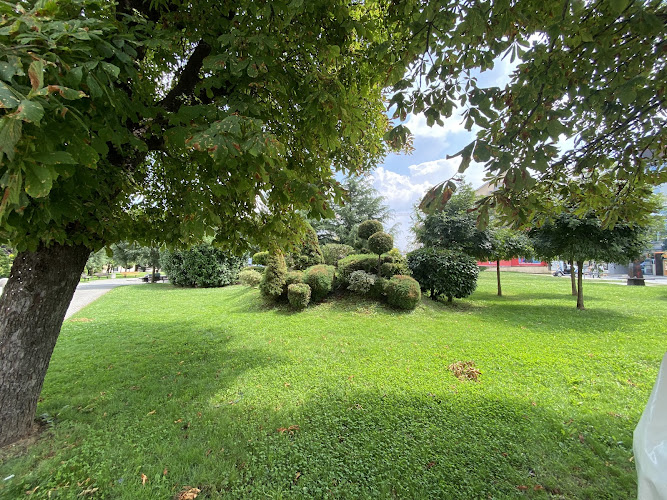
Park Bana Milosavljevića
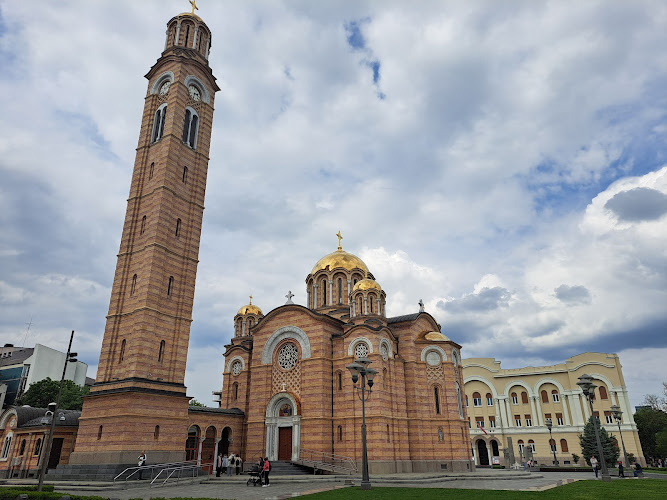
Park Cara Dušana
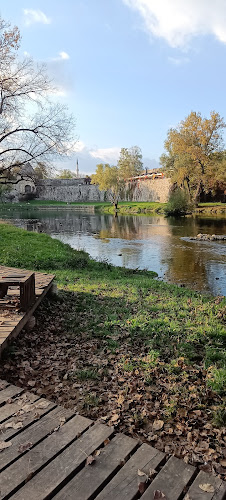
Banja Luka Beach ️
Find Accommodations Nearby
Recommended Tours & Activities
Visitor Reviews
There are no reviews yet. Be the first one to write one.
Share Your Experience
Have you visited Cathedral of Saint Bonaventure, Banja Luka? Help other travelers by leaving a review.