About Brigham Young Monument

Description

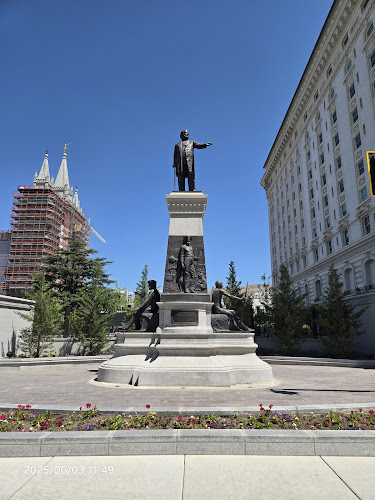
The Brigham Young Monument stands proudly in downtown Salt Lake City, a bronze tribute to one of the most influential figures in Utah’s early history. It’s not just a statue—it’s a story cast in metal, a piece of the city’s heart that tells of courage, migration, and the sheer willpower of pioneers who carved out a new life in the desert. The monument honors Brigham Young, the leader of the Church of Jesus Christ of Latter-day Saints, who guided the Mormon pioneers into the Salt Lake Valley in 1847. It’s one of those places you can walk by a hundred times and still find something new in the details—the way the light hits the bronze at sunset or how the base tells its own story through intricate carvings of settlers and wagons.

I remember the first time I stopped here on a chilly fall morning. The city was just waking up, the air smelled faintly of roasted coffee from a nearby café, and there was this quiet reverence in the air. The statue seemed to command attention without demanding it. It’s not just about Brigham Young himself—it’s about the spirit of exploration, faith, and grit that built this city. And whether you’re a history buff or just someone who enjoys a good walk through downtown Salt Lake, it’s worth pausing for a moment to take it in.

The monument’s location—right at the intersection of Main and South Temple Streets—makes it a natural stop for anyone exploring the city. You’ll often find locals sitting nearby, tourists snapping photos, or even street performers adding a bit of modern-day liveliness to this historic corner. It’s both a landmark and a living part of the city’s rhythm.

Key Features

  • Bronze Statue: The centerpiece features Brigham Young standing tall, symbolizing leadership and vision. The craftsmanship is impressive, with lifelike details that capture both strength and calm authority.
  • Historical Base Reliefs: Around the base are beautifully detailed panels depicting scenes from the Mormon pioneer journey—covered wagons, settlers, and even Native American figures—each telling a piece of Utah’s origin story.
  • Meridian Marker: The monument also marks the original Salt Lake City meridian, the point from which early settlers measured all city blocks. It’s a subtle but fascinating piece of urban history that most visitors overlook.
  • Accessible Design: The area around the monument is wheelchair accessible, with nearby parking that makes visiting easy for everyone.
  • Family-Friendly Environment: The plaza surrounding the statue is open and safe, making it a good spot for families with kids to explore a bit of history without worrying about traffic or crowds.

What’s interesting is how the monument has sparked conversation over the years. Some admire its historical importance and artistic beauty, while others see it as a reminder of a more complex past. That’s part of what makes it fascinating—it’s not static history; it’s living dialogue. Every person who visits brings their own interpretation, their own story to add to the mix.

Best Time to Visit

If you’re planning to visit, I’d say go either early in the morning or just before sunset. There’s something magical about the way the bronze glows in the soft light—it almost looks alive. Midday can get busy, especially during summer when downtown fills with visitors and tour groups. But mornings? You’ll often have the place almost to yourself, with the sound of the city slowly coming alive around you.

Spring and fall are particularly pleasant times to visit. The weather is mild, and you can comfortably linger to take photos or just people-watch. Winter has its own charm too—the snow-dusted monument against a gray sky looks straight out of a painting. Summer afternoons can get hot, but there’s usually a nice breeze that cuts through the city streets.

And if you happen to be in town during Pioneer Day in July, you’ll find the area buzzing with energy. Parades, reenactments, and festivities often pass nearby, giving you a chance to see the monument in its full celebratory context. It’s like the statue comes to life in the middle of Utah’s biggest annual story.

How to Get There

Getting to the Brigham Young Monument is simple, especially if you’re already exploring downtown Salt Lake City. It’s located right near the heart of the city’s historic district, within walking distance of Temple Square and several other landmarks. If you’re staying downtown, you can easily stroll there—it’s one of those spots that almost finds you before you find it.

For those driving, there’s parking available nearby, including accessible spots. Public transportation is also a breeze. The TRAX light rail system runs close by, and several bus routes stop within a short walk. If you’re using a rideshare, just plug in the monument’s name, and most drivers will know exactly where to go—it’s that iconic.

I actually prefer walking there. The streets around it are lined with trees and historic buildings, and you get this sense of stepping through time as you approach. It’s one of those walks where you notice something new every time—a hidden plaque, an old storefront, or a bit of public art tucked into a corner.

Tips for Visiting

Before you head out, here are a few things I’ve learned from visiting (and revisiting) over the years:

  • Take your time: Don’t just snap a photo and move on. Walk around the base, look closely at the reliefs, and read the inscriptions. You’ll appreciate the artistry and history a lot more.
  • Bring a camera: The monument photographs beautifully, especially when the light hits just right. If you’re into photography, try capturing it from different angles—each side tells a different story.
  • Visit nearby attractions: Since you’re already in the area, make time to explore Temple Square, the Utah State Capitol, or City Creek Center. They’re all within walking distance and add depth to your visit.
  • Be respectful: This is an important historical and cultural site, so it’s good to approach it with a bit of reverence. Locals often see it as more than just a tourist stop.
  • Check the weather: Utah’s weather can change fast. Bring sunscreen in summer and a jacket in winter. The open plaza doesn’t offer much shade or shelter.
  • Accessibility matters: The site is wheelchair accessible, with smooth pathways and nearby parking, so everyone can enjoy it comfortably.
  • Combine with a walking tour: If you enjoy guided experiences, several local walking tours include the monument as a stop. It’s a great way to get context and hear stories you might not find on a plaque.

One thing I love about the Brigham Young Monument is how it bridges the old and the new. You can stand there, surrounded by modern buildings and bustling traffic, yet feel the echo of wagon wheels and pioneer footsteps. It’s a reminder of how far the city has come—and how its roots still run deep beneath the pavement.

For travelers, it’s more than just a statue. It’s a snapshot of Utah’s identity, a blend of faith, determination, and artistry. Even if you’re not particularly into history, there’s something grounding about standing before it. You can almost sense the weight of the past meeting the pulse of the present.

So, if you find yourself wandering through Salt Lake City, carve out a few minutes to stop by. Sit on a nearby bench, take a breath, and let the story of the Brigham Young Monument unfold around you. It’s one of those places that doesn’t just tell history—it lets you feel it.

Key Features

  • Key Features
  • Best Time to Visit
  • How to Get There
  • Tips for Visiting

More Details

Updated October 11, 2025


Description

The Brigham Young Monument stands proudly in downtown Salt Lake City, a bronze tribute to one of the most influential figures in Utah’s early history. It’s not just a statue—it’s a story cast in metal, a piece of the city’s heart that tells of courage, migration, and the sheer willpower of pioneers who carved out a new life in the desert. The monument honors Brigham Young, the leader of the Church of Jesus Christ of Latter-day Saints, who guided the Mormon pioneers into the Salt Lake Valley in 1847. It’s one of those places you can walk by a hundred times and still find something new in the details—the way the light hits the bronze at sunset or how the base tells its own story through intricate carvings of settlers and wagons.

I remember the first time I stopped here on a chilly fall morning. The city was just waking up, the air smelled faintly of roasted coffee from a nearby café, and there was this quiet reverence in the air. The statue seemed to command attention without demanding it. It’s not just about Brigham Young himself—it’s about the spirit of exploration, faith, and grit that built this city. And whether you’re a history buff or just someone who enjoys a good walk through downtown Salt Lake, it’s worth pausing for a moment to take it in.

The monument’s location—right at the intersection of Main and South Temple Streets—makes it a natural stop for anyone exploring the city. You’ll often find locals sitting nearby, tourists snapping photos, or even street performers adding a bit of modern-day liveliness to this historic corner. It’s both a landmark and a living part of the city’s rhythm.

Key Features

  • Bronze Statue: The centerpiece features Brigham Young standing tall, symbolizing leadership and vision. The craftsmanship is impressive, with lifelike details that capture both strength and calm authority.
  • Historical Base Reliefs: Around the base are beautifully detailed panels depicting scenes from the Mormon pioneer journey—covered wagons, settlers, and even Native American figures—each telling a piece of Utah’s origin story.
  • Meridian Marker: The monument also marks the original Salt Lake City meridian, the point from which early settlers measured all city blocks. It’s a subtle but fascinating piece of urban history that most visitors overlook.
  • Accessible Design: The area around the monument is wheelchair accessible, with nearby parking that makes visiting easy for everyone.
  • Family-Friendly Environment: The plaza surrounding the statue is open and safe, making it a good spot for families with kids to explore a bit of history without worrying about traffic or crowds.

What’s interesting is how the monument has sparked conversation over the years. Some admire its historical importance and artistic beauty, while others see it as a reminder of a more complex past. That’s part of what makes it fascinating—it’s not static history; it’s living dialogue. Every person who visits brings their own interpretation, their own story to add to the mix.

Best Time to Visit

If you’re planning to visit, I’d say go either early in the morning or just before sunset. There’s something magical about the way the bronze glows in the soft light—it almost looks alive. Midday can get busy, especially during summer when downtown fills with visitors and tour groups. But mornings? You’ll often have the place almost to yourself, with the sound of the city slowly coming alive around you.

Spring and fall are particularly pleasant times to visit. The weather is mild, and you can comfortably linger to take photos or just people-watch. Winter has its own charm too—the snow-dusted monument against a gray sky looks straight out of a painting. Summer afternoons can get hot, but there’s usually a nice breeze that cuts through the city streets.

And if you happen to be in town during Pioneer Day in July, you’ll find the area buzzing with energy. Parades, reenactments, and festivities often pass nearby, giving you a chance to see the monument in its full celebratory context. It’s like the statue comes to life in the middle of Utah’s biggest annual story.

How to Get There

Getting to the Brigham Young Monument is simple, especially if you’re already exploring downtown Salt Lake City. It’s located right near the heart of the city’s historic district, within walking distance of Temple Square and several other landmarks. If you’re staying downtown, you can easily stroll there—it’s one of those spots that almost finds you before you find it.

For those driving, there’s parking available nearby, including accessible spots. Public transportation is also a breeze. The TRAX light rail system runs close by, and several bus routes stop within a short walk. If you’re using a rideshare, just plug in the monument’s name, and most drivers will know exactly where to go—it’s that iconic.

I actually prefer walking there. The streets around it are lined with trees and historic buildings, and you get this sense of stepping through time as you approach. It’s one of those walks where you notice something new every time—a hidden plaque, an old storefront, or a bit of public art tucked into a corner.

Tips for Visiting

Before you head out, here are a few things I’ve learned from visiting (and revisiting) over the years:

  • Take your time: Don’t just snap a photo and move on. Walk around the base, look closely at the reliefs, and read the inscriptions. You’ll appreciate the artistry and history a lot more.
  • Bring a camera: The monument photographs beautifully, especially when the light hits just right. If you’re into photography, try capturing it from different angles—each side tells a different story.
  • Visit nearby attractions: Since you’re already in the area, make time to explore Temple Square, the Utah State Capitol, or City Creek Center. They’re all within walking distance and add depth to your visit.
  • Be respectful: This is an important historical and cultural site, so it’s good to approach it with a bit of reverence. Locals often see it as more than just a tourist stop.
  • Check the weather: Utah’s weather can change fast. Bring sunscreen in summer and a jacket in winter. The open plaza doesn’t offer much shade or shelter.
  • Accessibility matters: The site is wheelchair accessible, with smooth pathways and nearby parking, so everyone can enjoy it comfortably.
  • Combine with a walking tour: If you enjoy guided experiences, several local walking tours include the monument as a stop. It’s a great way to get context and hear stories you might not find on a plaque.

One thing I love about the Brigham Young Monument is how it bridges the old and the new. You can stand there, surrounded by modern buildings and bustling traffic, yet feel the echo of wagon wheels and pioneer footsteps. It’s a reminder of how far the city has come—and how its roots still run deep beneath the pavement.

For travelers, it’s more than just a statue. It’s a snapshot of Utah’s identity, a blend of faith, determination, and artistry. Even if you’re not particularly into history, there’s something grounding about standing before it. You can almost sense the weight of the past meeting the pulse of the present.

So, if you find yourself wandering through Salt Lake City, carve out a few minutes to stop by. Sit on a nearby bench, take a breath, and let the story of the Brigham Young Monument unfold around you. It’s one of those places that doesn’t just tell history—it lets you feel it.

Key Highlights

  • Key Features
  • Best Time to Visit
  • How to Get There
  • Tips for Visiting

Location

Places to Stay Near Brigham Young Monument

Find and Book a Tour

Explore More Travel Guides

No reviews found! Be the first to review!

Traveler Reviews for Brigham Young Monument

There are no reviews yet. Be the first one to write one.

Share Your Experience

Have you visited Brigham Young Monument? Help other travelers by sharing your review.

Find Accommodations Nearby

Recommended Tours & Activities

Visitor Reviews

There are no reviews yet. Be the first one to write one.

Share Your Experience

Have you visited Brigham Young Monument? Help other travelers by leaving a review.