
Bodagh Soltan Tomb
About Bodagh Soltan Tomb
Key Features
More Details
Updated April 15, 2024
Bodagh Sultan Tomb – Mahabad
## Bodagh Soltan Tomb: Safavid-Era Shrine Overlooking Mahabad
In the Kurdish city of Mahabad, in Iran’s West Azerbaijan Province, Bodagh Soltan Tomb is one of the key historical landmarks tied directly to the city’s 17th-century growth and identity. Iranian heritage and tourism sites consistently list it among Mahabad’s most important attractions and a registered national monument.
This small red-brick shrine is more than a solitary tomb. It’s the family mausoleum of Bodagh (Bedagh/Bodaq) Sultan Mokri, a Safavid-era governor whose infrastructure projects—mosques, bridges, baths and a library—shaped the Mahabad you see today. News
—
## Who Was Bodagh Sultan?
Sources describe Bodagh Sultan Mokri as a prominent ruler of the Mukriyan region under the Safavid dynasty in the 17th century. He governed Mahabad for about 49 years, roughly from 1641 to 1690 CE, and was known for being charitable and widely respected. News
Several Persian-language historical summaries and tourism articles credit him with: فارسی
– Establishing or rebuilding Mahabad’s Jame (Red) Mosque, famous for its red brick and multiple domes
– Building the Red Bridge and key caravanserais and qanats (underground water channels) that supported trade and agriculture
– Funding public baths such as Laj Bath and Daralak Bath
A conservation and restoration study notes that Bodagh Soltan’s tomb is the family mausoleum of the ruler and other relatives, dating to the Islamic (Safavid) period in Mahabad.
During later restoration work, a broken inscription slab indicating the year 1111 AH was found, suggesting his death around 1699–1700 CE.
—
## Where Bodagh Soltan Tomb Is in Mahabad
Mahabad is the capital of Mahabad County, a predominantly Kurdish city south of Lake Urmia, lying in a narrow valley at about 1,300 meters above sea level.
Within the city, Bodagh Soltan Tomb is located:
– In the southwest of Mahabad
– Inside the public cemetery on a rise above the urban area
– Along Cemetery Street (Khiābān-e Qabrestān)
– Between Esteghlal Square and Shayegan Garden, in a zone historically used for prominent graves Iran
The Plus Code and mapping address used by online directories correspond to PPX9+CV7, Mahabad, West Azerbaijan Province, Iran, which matches the coordinates you provided.
This elevated cemetery area is sometimes referred to locally as Gombazān (Gonbadān), reflecting the presence of domed tombs.
—
## National Heritage Status and Conservation
Multiple Iranian heritage sources state that Bodagh Soltan Tomb is officially registered on the Iran National Heritage List:
– Registration number: 3485
– Date of registration: Esfand 1379 (March 2001)
A research paper on the tomb’s conservation notes that despite being registered, the building had suffered structural damage—particularly to the northern iwan—and was considered partly ruined before restoration efforts.
Later local reports and tourism write-ups describe:
– Boundary walls built around the cemetery
– Installation of bilingual (Persian–English) signage
– Paved walkways around the monument
These interventions are documented up to around 2019–2023. Conditions and visitor arrangements at any heritage site can change, so opening hours and on-site facilities should be verified locally when planning a trip.
—
## Architecture: A Compact Safavid Brick Mausoleum
Photographs and architectural descriptions give a consistent picture of the tomb’s design:
– Plan and height
– Roughly rectangular in plan with a compact footprint
– Overall height about 6 meters, including the dome
– Structure and materials
– Built primarily with square red bricks
– Stone and sand-lime mortar used in the foundation and joints
– Category and usage recorded as tomb/mausoleum within a cemetery in regional attraction listings
– Layout
– Two main parts: an entrance space and the main burial chamber, each with its own dome, according to regional tourism descriptions
– The central domed chamber contains the grave of Bodagh Sultan; other family graves are in the surrounding cemetery
– Façade
– Exterior walls articulated with blind brick arches, typical of Safavid-era brickwork in north-western Iran
– The main entrance is closed by a metal grill gate, allowing visitors to see the interior while also protecting the shrine
Inside, the structure functions primarily as a shrine and burial place, not as a museum with extensive exhibits. This matches its classification as a tomb and cemetery monument in national and regional databases.
—
## Cultural Role and Local Traditions
Tasnim News Agency, reporting on the site in 2019, describes Bodagh Sultan as “one of the most charitable and good-hearted men of his time” and notes that: News
– Local residents regard the tomb as a shrine.
– Some visit on Wednesdays for pilgrimage, believing their prayers may be answered there.
Several Persian tourism portals also refer to the site as a ziyarati (pilgrimage) place, not just a historical ruin.
Given this role, it functions both as:
– A heritage landmark for visitors interested in Safavid architecture and Mahabad’s history
– A living religious site for some local people
—
## Visiting Experience and Practical Details
### Entry, Duration, and Cost
Kojaro, an Iranian travel guide, lists typical visit time as 1–2 hours, and notes that entry is free.
### Accessibility and Terrain
From recent photos and conservation notes:
– The monument is surrounded by cobbled or uneven ground within the cemetery.
– There is at least one step up to the entrance gate, and paths slope slightly due to the hilltop position.
This means:
– Visitors with limited mobility or wheelchair users may find access challenging without assistance.
– Footwear with good grip is sensible, especially in wet or snowy conditions.
These observations are based on documented imagery and do not rely on speculation about any unmarked ramps or later modifications.
### Climate and Seasonality
Studies of Mahabad’s climate describe it as semi-arid with cold winters and hot summers, with relatively mild shoulder seasons.
– Winter temperatures can drop below freezing; historical averages in December show lows around −3 °C (26 °F) and highs around 6 °C (44 °F).
– July averages can reach highs around 36–37 °C (about 97–99 °F).
These patterns make spring and autumn more comfortable for outdoor walking around Mahabad’s cemetery hills and historical neighborhoods, based on the climatic data above.
—
## Nearby Sights to Combine With Bodagh Soltan Tomb
Bodagh Soltan Tomb is one of several historical and natural attractions in and around Mahabad. Regional tourism and booking sites commonly mention the following as nearby or complementary visits:
– Mahabad Jame (Red) Mosque – A Safavid-era brick mosque in the city center, also associated with Bodagh Sultan’s building program.
– Mirza Rasul Bath (now an anthropology museum) – A historical bathhouse with domes and traditional interior spaces, re-used as a museum.
– Mahabad Dam Lake – A scenic reservoir and lake near the city, frequently listed among West Azerbaijan’s key natural attractions.
– Saholan (Sahoolan) Cave – A partly water-filled cave system near the Mahabad–Bukan road, noted for its geological formations.
– Fakhrigah (Faghragha) Rock Tomb – An ancient rock-cut tomb in the wider Mahabad region.
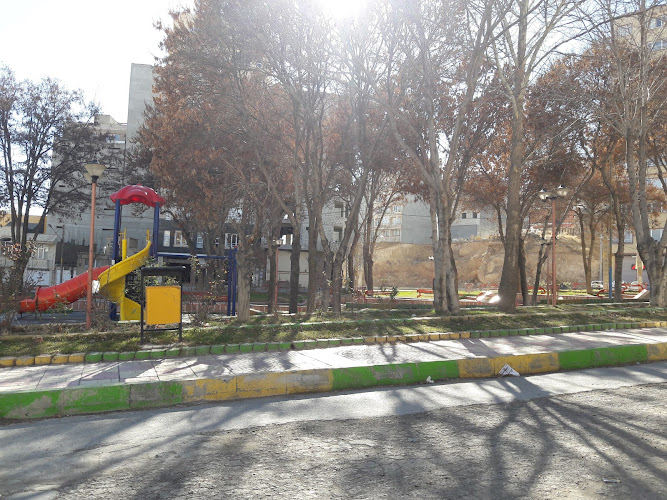
– Urban parks such as Mellat Park and Family Park – Popular green spaces in local attraction rankings.
Iranian travel platforms often rate Bodagh Soltan Tomb among the top-ranked sights in Mahabad—sometimes first out of roughly thirty listed attractions—though this is based on a small number of user reviews, so the numerical rating should be treated as indicative rather than statistically robust.
—
## Data Reliability and What May Be Outdated
To keep this guide fact-based and current to the extent possible:
– Heritage status: Multiple independent Iranian sources confirm that the tomb is registered as a national monument (no. 3485), and this status is unlikely to change frequently.
– Condition and conservation: A 2018 conservation study describes significant damage, especially to the northern iwan, even after registration. Later tourism articles and photographs up to around 2023 show a standing, maintained structure with signage and paved surroundings. Both can be accurate at different times; physical condition may have improved through restoration but can continue to evolve.
– Ratings and rankings: Online ratings (4.5–5/5) and “#1 of X attractions” lists are based on limited reviews and can change as more visitors leave feedback.
For any on-the-ground decisions—such as exact opening hours, current access inside the tomb, or photography rules—it is prudent to confirm details locally in Mahabad, because those operational aspects are not fixed in official heritage records and may be updated after the latest available sources.
Table of Contents
Key Highlights
Bodagh Soltan Tomb
Location
Places to Stay Near Bodagh Soltan Tomb
Find and Book a Tour
Explore More Travel Guides
No reviews found! Be the first to review!
Traveler Reviews for Bodagh Soltan Tomb
There are no reviews yet. Be the first one to write one.
Have you visited Bodagh Soltan Tomb? Help other travelers by sharing your review.
You Might Also Like
Farhangian Park

Mellat Park

Hemen House, Museum of Art and Culture Celebrities in Mahabad
Find Accommodations Nearby
Recommended Tours & Activities
Visitor Reviews
There are no reviews yet. Be the first one to write one.
Share Your Experience
Have you visited Bodagh Soltan Tomb? Help other travelers by leaving a review.