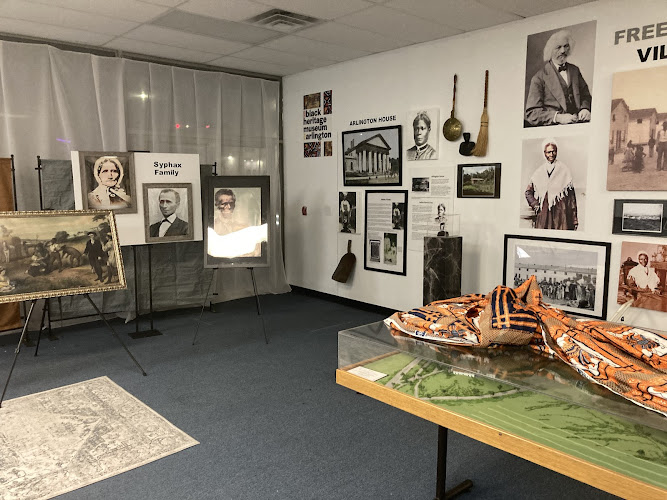
Tucked along Columbia Pike in Arlington, the Black Heritage Museum of Arlington offers an intimate, deeply felt look at the African American story in Northern Virginia. Housed in a modest, community-focused space, the museum documents local Black history through photographs, oral histories, artifacts, and rotating exhibits that highlight civic leaders, churches, schools, and grassroots movements that shaped Arlington’s neighborhoods. Founded and sustained by community advocates and historians, the museum preserves personal stories often absent from larger institutions, connecting visitors to the lived experiences of generations—from Reconstruction-era families to mid-20th-century migration and civil rights activism. A visit rewards the curious traveler with thoughtful interpretation, personal narratives, and a sense of place: you’ll leave with concrete recommendations for neighborhood sites, historic churches, and landmarks to explore. It’s a compact but powerful stop for anyone interested in community history, social justice, and the everyday people whose lives made Arlington what it is today.
Highlights & Key Features
Local-focused exhibits on Arlington’s Black communities and leaders
Photographs, oral histories, and community-donated artifacts
Rotating temporary exhibitions that highlight specific people and events
Educational programming and community events (check locally for schedule)
Accessible, neighborhood location on Columbia Pike with nearby public transit
Visitor Guide & Information
Description
The Black Heritage Museum of Arlington, Virginia stands as a powerful testament to the African American experience in this historic region. And honestly, when you first approach this museum, you might be surprised by its intimate setting—it’s not one of those sprawling institutions that takes half a day just to navigate. Instead, visitors discover a thoughtfully curated space that packs an incredible amount of history, culture, and community stories into an accessible format that feels personal rather than overwhelming.
I remember visiting smaller museums like this one and thinking they’d be quick stops, but ending up completely absorbed for hours. That’s the thing about places dedicated to telling underrepresented stories—they have a way of drawing you in deeper than you expected. This museum focuses specifically on the African American heritage within Arlington County, which gives it a unique local perspective you won’t find in larger, more generalized institutions.
The museum serves as both an educational resource and a community gathering space, preserving the narratives of Black Arlingtonians from the 19th century through present day. Through exhibits, artifacts, photographs, and oral histories, visitors gain insight into the struggles, triumphs, and everyday lives of people who shaped this community despite facing systemic discrimination and countless obstacles. What makes this particular museum special is its dedication to preserving local stories that might otherwise be lost to time—the kind of grassroots history that textbooks often skip over.
For travelers interested in authentic American history beyond the usual tourist circuit, this museum offers something genuinely meaningful. You’re not just looking at objects behind glass; you’re connecting with real families, real neighborhoods, and real experiences that continue to resonate today.
Key Features
The Black Heritage Museum of Arlington offers several distinctive features that make it worth including on any traveler’s itinerary:
Local historical exhibits focusing on Arlington’s African American communities, including the historically Black neighborhoods that thrived despite segregation
Rotating displays that keep the museum fresh even for repeat visitors who want to dive deeper into different aspects of local Black heritage
Photographic collections that bring the past to life, showing real people in their communities, churches, schools, and workplaces throughout different eras
Educational programming that goes beyond static displays, often featuring guest speakers, panel discussions, and community events
Artifacts and documents from Arlington’s African American families, businesses, and organizations that tell stories of resilience and achievement
Wheelchair accessible entrance, parking, and restrooms, making the museum welcoming to all visitors regardless of mobility needs
Family-friendly environment that makes it appropriate for kids, helping younger generations understand this important part of American history
Restroom facilities on-site for visitor convenience during your visit
Intimate setting that allows for contemplative viewing without the crowds common at larger tourist attractions
Connection to broader Civil Rights history while maintaining focus on local experiences and contributions
Best Time to Visit
Timing your visit to the Black Heritage Museum of Arlington can enhance your overall experience, though honestly, any time you can make it work is better than not going at all. But if you’re planning a trip to the Arlington area and want to optimize your museum visit, here’s what travelers should consider.
Weekday mornings tend to offer the quietest experience. If you appreciate having space to read exhibits thoroughly and reflect without distraction, aiming for a Tuesday or Wednesday morning usually works well. Schools sometimes schedule field trips, so calling ahead can help you avoid accidentally arriving during a busy educational program—unless you enjoy the energy of excited students discovering history, which can actually be pretty infectious.
February, being Black History Month, brings special programming and events to many institutions celebrating African American heritage. The museum often hosts additional speakers, special exhibits, or community gatherings during this time. While it might be busier, the enhanced programming makes it an excellent time for visitors who want a more immersive experience beyond the permanent collection.
Spring and fall generally provide pleasant weather for exploring Arlington more broadly, and you can easily combine your museum visit with walking tours of historic Black neighborhoods in the area. Summer can work too, though Virginia summers get pretty humid—trust me on this one, that mid-Atlantic humidity is no joke—so you’ll appreciate that the museum is indoors and climate-controlled.
Winter months outside of February tend to be quieter, which some travelers prefer. And hey, museum visiting is a perfect indoor activity when the weather turns cold anyway. Just check their operating hours before making plans, as some smaller museums adjust schedules during slower seasons.
Avoid assuming you’ll just pop in for 20 minutes. Give yourself at least an hour and a half, maybe two hours if you really want to engage with the material properly. This isn’t the kind of place where you rush through snapping photos; it deserves your attention and reflection.
How to Get There
Getting to the Black Heritage Museum of Arlington is relatively straightforward, especially since Arlington itself is well-connected to the broader Washington D.C. metropolitan area. For travelers staying in D.C. or anywhere in Northern Virginia, you’ve got several solid transportation options.
If you’re relying on public transportation—which honestly makes a lot of sense in this traffic-heavy region—the Washington Metro system serves Arlington extensively. The museum’s proximity to Metro stations makes it accessible without needing a car. From wherever you’re staying in the D.C. metro area, you can plan your route using the Metro’s trip planner. The Orange and Silver lines both serve Arlington, and depending on where exactly you’re coming from, you might connect through different stations.
For those driving, Arlington is just across the Potomac River from Washington D.C., accessible via several bridges and major roadways. Interstate 66 and Route 50 are main arteries running through Arlington. The museum provides wheelchair accessible parking, which is particularly helpful for visitors with mobility considerations. GPS navigation works reliably in this area, so plugging in the museum location should get you there without too much trouble.
Ride-sharing services like Uber and Lyft operate extensively throughout Arlington and the D.C. region. Many travelers find this the most convenient option, especially if you’re planning to visit multiple sites in one day without the hassle of parking.
If you’re staying in Arlington itself—maybe you picked a hotel near Pentagon City or Rosslyn—you might even be within walking or biking distance depending on your exact location. Arlington has been working on making the area more pedestrian and cyclist-friendly over the years.
One thing I’ve learned from traveling to museum destinations: always build in extra time for finding parking or navigating public transit in unfamiliar places. What looks like a 20-minute trip on the map can easily become 45 minutes when you factor in real-world complications. Give yourself buffer time so you’re not stressed and rushed when you arrive.
Tips for Visiting
Making the most of your visit to the Black Heritage Museum of Arlington involves a bit of planning and the right mindset. Here’s what travelers should keep in mind for the best possible experience.
First off, call ahead or check current operating hours before you go. Smaller museums sometimes have more limited schedules than major institutions, and nothing’s more frustrating than showing up to find the doors locked. While you’re at it, ask if any special programs or exhibits are happening during your visit—you might time your trip to catch something extra special.
Bring your curiosity and openness to learning. This isn’t one of those museums where you breeze through looking at pretty objects. The stories here can be heavy, touching on discrimination, segregation, and injustice. But they also celebrate resilience, community, achievement, and hope. Come prepared to engage with complex history that might challenge comfortable narratives.
Plan to read the information provided with exhibits rather than just glancing at artifacts. The context matters enormously in understanding the significance of what you’re seeing. I know some people prefer audio tours or guided experiences, so asking about those options when you arrive could enhance your visit.
The museum is good for kids, which is great for traveling families. But parents should be prepared to have age-appropriate conversations about racism, civil rights, and social justice. These topics come up inevitably in a museum focused on African American heritage. That’s not a negative—it’s an opportunity for meaningful family discussion—but it helps to think through how you’ll approach these subjects with younger children beforehand.
Don’t plan to eat at the museum since there’s no restaurant on-site. However, Arlington has plenty of dining options nearby, so you can easily grab lunch before or after your visit. Consider seeking out Black-owned restaurants in the area to extend your support for the community whose history you’ve just learned about.
Photography policies vary by institution, so ask about taking pictures when you arrive. Some exhibits may allow photos while others don’t, particularly if they include borrowed materials or sensitive content.
Take advantage of the accessibility features if you need them. The wheelchair accessible entrance, parking, and restrooms mean visitors with mobility challenges can navigate the space comfortably. If you have specific accessibility questions or needs, calling ahead lets staff prepare to assist you.
Consider visiting the museum as part of a broader exploration of African American heritage sites in Arlington and the D.C. region. The area has a rich Civil Rights history, and this museum can serve as an excellent starting point for understanding the local context before exploring historic neighborhoods, churches, or other landmarks.
Finally, museums like this one typically operate on tight budgets and depend on community support. If your visit is meaningful, consider making a donation, purchasing something from the gift shop if available, or simply spreading the word about the museum to other travelers. These institutions preserve crucial history that might otherwise disappear, and they need visitors who appreciate their mission.
Approach your visit with respect, intellectual curiosity, and a willingness to sit with uncomfortable truths alongside inspiring stories of human strength. That’s when museum experiences transform from simple tourism into genuine understanding.
The Black Heritage Museum of Arlington, Virginia stands as a powerful testament to the African American experience in this historic region. And honestly, when you first approach this museum, you might be surprised by its intimate setting—it’s not one of those sprawling institutions that takes half a day just to navigate. Instead, visitors discover a thoughtfully curated space that packs an incredible amount of history, culture, and community stories into an accessible format that feels personal rather than overwhelming.
I remember visiting smaller museums like this one and thinking they’d be quick stops, but ending up completely absorbed for hours. That’s the thing about places dedicated to telling underrepresented stories—they have a way of drawing you in deeper than you expected. This museum focuses specifically on the African American heritage within Arlington County, which gives it a unique local perspective you won’t find in larger, more generalized institutions.
The museum serves as both an educational resource and a community gathering space, preserving the narratives of Black Arlingtonians from the 19th century through present day. Through exhibits, artifacts, photographs, and oral histories, visitors gain insight into the struggles, triumphs, and everyday lives of people who shaped this community despite facing systemic discrimination and countless obstacles. What makes this particular museum special is its dedication to preserving local stories that might otherwise be lost to time—the kind of grassroots history that textbooks often skip over.
For travelers interested in authentic American history beyond the usual tourist circuit, this museum offers something genuinely meaningful. You’re not just looking at objects behind glass; you’re connecting with real families, real neighborhoods, and real experiences that continue to resonate today.
Key Features
The Black Heritage Museum of Arlington offers several distinctive features that make it worth including on any traveler’s itinerary:
Local historical exhibits focusing on Arlington’s African American communities, including the historically Black neighborhoods that thrived despite segregation
Rotating displays that keep the museum fresh even for repeat visitors who want to dive deeper into different aspects of local Black heritage
Photographic collections that bring the past to life, showing real people in their communities, churches, schools, and workplaces throughout different eras
Educational programming that goes beyond static displays, often featuring guest speakers, panel discussions, and community events
Artifacts and documents from Arlington’s African American families, businesses, and organizations that tell stories of resilience and achievement
Wheelchair accessible entrance, parking, and restrooms, making the museum welcoming to all visitors regardless of mobility needs
Family-friendly environment that makes it appropriate for kids, helping younger generations understand this important part of American history
Restroom facilities on-site for visitor convenience during your visit
Intimate setting that allows for contemplative viewing without the crowds common at larger tourist attractions
Connection to broader Civil Rights history while maintaining focus on local experiences and contributions
Best Time to Visit
Timing your visit to the Black Heritage Museum of Arlington can enhance your overall experience, though honestly, any time you can make it work is better than not going at all. But if you’re planning a trip to the Arlington area and want to optimize your museum visit, here’s what travelers should consider.
Weekday mornings tend to offer the quietest experience. If you appreciate having space to read exhibits thoroughly and reflect without distraction, aiming for a Tuesday or Wednesday morning usually works well. Schools sometimes schedule field trips, so calling ahead can help you avoid accidentally arriving during a busy educational program—unless you enjoy the energy of excited students discovering history, which can actually be pretty infectious.
February, being Black History Month, brings special programming and events to many institutions celebrating African American heritage. The museum often hosts additional speakers, special exhibits, or community gatherings during this time. While it might be busier, the enhanced programming makes it an excellent time for visitors who want a more immersive experience beyond the permanent collection.
Spring and fall generally provide pleasant weather for exploring Arlington more broadly, and you can easily combine your museum visit with walking tours of historic Black neighborhoods in the area. Summer can work too, though Virginia summers get pretty humid—trust me on this one, that mid-Atlantic humidity is no joke—so you’ll appreciate that the museum is indoors and climate-controlled.
Winter months outside of February tend to be quieter, which some travelers prefer. And hey, museum visiting is a perfect indoor activity when the weather turns cold anyway. Just check their operating hours before making plans, as some smaller museums adjust schedules during slower seasons.
Avoid assuming you’ll just pop in for 20 minutes. Give yourself at least an hour and a half, maybe two hours if you really want to engage with the material properly. This isn’t the kind of place where you rush through snapping photos; it deserves your attention and reflection.
How to Get There
Getting to the Black Heritage Museum of Arlington is relatively straightforward, especially since Arlington itself is well-connected to the broader Washington D.C. metropolitan area. For travelers staying in D.C. or anywhere in Northern Virginia, you’ve got several solid transportation options.
If you’re relying on public transportation—which honestly makes a lot of sense in this traffic-heavy region—the Washington Metro system serves Arlington extensively. The museum’s proximity to Metro stations makes it accessible without needing a car. From wherever you’re staying in the D.C. metro area, you can plan your route using the Metro’s trip planner. The Orange and Silver lines both serve Arlington, and depending on where exactly you’re coming from, you might connect through different stations.
For those driving, Arlington is just across the Potomac River from Washington D.C., accessible via several bridges and major roadways. Interstate 66 and Route 50 are main arteries running through Arlington. The museum provides wheelchair accessible parking, which is particularly helpful for visitors with mobility considerations. GPS navigation works reliably in this area, so plugging in the museum location should get you there without too much trouble.
Ride-sharing services like Uber and Lyft operate extensively throughout Arlington and the D.C. region. Many travelers find this the most convenient option, especially if you’re planning to visit multiple sites in one day without the hassle of parking.
If you’re staying in Arlington itself—maybe you picked a hotel near Pentagon City or Rosslyn—you might even be within walking or biking distance depending on your exact location. Arlington has been working on making the area more pedestrian and cyclist-friendly over the years.
One thing I’ve learned from traveling to museum destinations: always build in extra time for finding parking or navigating public transit in unfamiliar places. What looks like a 20-minute trip on the map can easily become 45 minutes when you factor in real-world complications. Give yourself buffer time so you’re not stressed and rushed when you arrive.
Tips for Visiting
Making the most of your visit to the Black Heritage Museum of Arlington involves a bit of planning and the right mindset. Here’s what travelers should keep in mind for the best possible experience.
First off, call ahead or check current operating hours before you go. Smaller museums sometimes have more limited schedules than major institutions, and nothing’s more frustrating than showing up to find the doors locked. While you’re at it, ask if any special programs or exhibits are happening during your visit—you might time your trip to catch something extra special.
Bring your curiosity and openness to learning. This isn’t one of those museums where you breeze through looking at pretty objects. The stories here can be heavy, touching on discrimination, segregation, and injustice. But they also celebrate resilience, community, achievement, and hope. Come prepared to engage with complex history that might challenge comfortable narratives.
Plan to read the information provided with exhibits rather than just glancing at artifacts. The context matters enormously in understanding the significance of what you’re seeing. I know some people prefer audio tours or guided experiences, so asking about those options when you arrive could enhance your visit.
The museum is good for kids, which is great for traveling families. But parents should be prepared to have age-appropriate conversations about racism, civil rights, and social justice. These topics come up inevitably in a museum focused on African American heritage. That’s not a negative—it’s an opportunity for meaningful family discussion—but it helps to think through how you’ll approach these subjects with younger children beforehand.
Don’t plan to eat at the museum since there’s no restaurant on-site. However, Arlington has plenty of dining options nearby, so you can easily grab lunch before or after your visit. Consider seeking out Black-owned restaurants in the area to extend your support for the community whose history you’ve just learned about.
Photography policies vary by institution, so ask about taking pictures when you arrive. Some exhibits may allow photos while others don’t, particularly if they include borrowed materials or sensitive content.
Take advantage of the accessibility features if you need them. The wheelchair accessible entrance, parking, and restrooms mean visitors with mobility challenges can navigate the space comfortably. If you have specific accessibility questions or needs, calling ahead lets staff prepare to assist you.
Consider visiting the museum as part of a broader exploration of African American heritage sites in Arlington and the D.C. region. The area has a rich Civil Rights history, and this museum can serve as an excellent starting point for understanding the local context before exploring historic neighborhoods, churches, or other landmarks.
Finally, museums like this one typically operate on tight budgets and depend on community support. If your visit is meaningful, consider making a donation, purchasing something from the gift shop if available, or simply spreading the word about the museum to other travelers. These institutions preserve crucial history that might otherwise disappear, and they need visitors who appreciate their mission.
Approach your visit with respect, intellectual curiosity, and a willingness to sit with uncomfortable truths alongside inspiring stories of human strength. That’s when museum experiences transform from simple tourism into genuine understanding.
Key Highlights
Local-focused exhibits on Arlington’s Black communities and leaders
Photographs, oral histories, and community-donated artifacts
Rotating temporary exhibitions that highlight specific people and events
Educational programming and community events (check locally for schedule)
Accessible, neighborhood location on Columbia Pike with nearby public transit
Location
Places to Stay Near Black Heritage Museum of Arlington, Virginia
Explore verified points of interest within walking or short transit distance.
No neighboring places mapped within 5 km yet.
Find Places to Stay Nearby
Stay22 provides this accommodation search. We may earn a commission if you book through it; verify current prices and terms with the provider.
🗺️
Interactive accommodation map requires marketing cookies to display live rates.
Recommended Experiences & Activities
GetYourGuide provides this tour inventory. We may earn a commission if you book through it; verify current availability, prices, and terms with the provider.
Top Viator Experiences & Guided Tours in Arlington
We may earn a commission if you book through links on this page at no extra cost to you. All tours feature verified customer reviews and flexible cancellation options.