
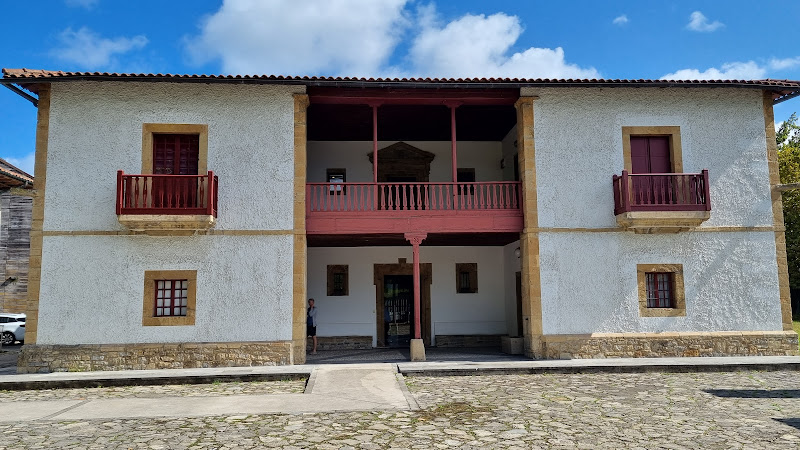
Bagpipe Museum
About Bagpipe Museum
Description
The Bagpipe Museum in Gijón stands as a focused, surprisingly deep dive into an instrument that many think they understand until they hear it up close. The museum presents the bagpipe — or gaita, as it is known in Asturias — not as a single object but as a living thread through history, craft and local identity. Visitors will find a carefully arranged collection of instruments from Asturias and beyond, contextual displays on materials and construction, and interpretive panels that trace the gaita from folk ceremonies to modern performances. It feels more like stepping into a maker's workshop and a cultural study at once, and that juxtaposition is what gives the place its charm.
This description comes from an observer who has wandered through too many small museums and can spot the difference between a dusty display and a space that still breathes. The Bagpipe Museum leans toward the latter. On arrival, the eye is drawn to a range of bagpipes: highland-style pipes, reed instruments from Galicia, and delicate Asturian gaitas with their distinct chanters and drones. Labels are practical and readable, and the curators smartly avoid overloading panels with academic jargon. Instead, they focus on stories — of players, village processions, and the small, stubborn workshops where reeds are tuned by hand.
What many travelers miss at first glance is the museum’s role as both repository and classroom. There is a quiet educational energy here. Interactive elements are modest but meaningful: a few touchable materials, demonstration reeds, and occasionally a recorded clip of a solo gaita that fills the room with startling clarity. The acoustics are worth noting; the space has been arranged so that recordings and live demonstrations project with surprising warmth. In short, this is a place that asks its visitors to listen, not just look.
Accessibility has been thoughtfully handled. The museum offers a wheelchair accessible entrance and restroom, which is a relief for visitors who need step-free visits — not all small, specialized museums bother with that, so it’s appreciated. Practical details continue inside: clear pathways, seating near exhibits for slower-paced exploration, and a restroom on site. Families bring children who tend to respond well: the displays are vivid enough to keep kids curious without being fragile or off-limits. The museum is good for kids in the sense that it invites hands-on learning while protecting the more delicate artifacts.
There is a subtle international dimension, too. While its heart is Asturian — the gaitas and local histories are central — the collection places the Asturian gaita in conversation with related instruments across Europe and beyond. That comparative approach helps a visitor understand how similar materials and techniques yield such different sounds and cultural uses. It’s an anthropology of reed and leather, if one can put it that way: materials mapped against migration, trade routes, and regional celebrations.
Practical history is a theme here. The museum does not only dwell on centuries-old relics; it also shows how instrument-making evolved through the 19th and 20th centuries, incorporating local innovations and sometimes outside influences. Old photographs capture village processions with gaitas leading dancers; postcards show early 20th-century players in stiff collars and proud poses. A few display cases highlight maker tools — plane, gouge, and a scarred workbench — and there’s a quiet satisfaction in seeing craft preserved as evidence of cultural continuity.
The educational programming deserves a nod. Workshops and occasional small concerts are scheduled; when they happen, the museum shifts from static exhibition to lively practice space. These events are often intimate — five to twenty people rather than a hall full — which means attendees get to ask questions, see instrument assembly up close, and hear details about reed shaping that most museum plaques never cover. The author remembers sitting in on a brief reed-making demo and being amused at how much finesse goes into something that looks so plain when finished. It’s a small, satisfying revelation: tiny adjustments change tonal color in ways that feel almost alchemical.
One distinctive attribute that is not immediately obvious: the museum acts as a local memory bank. It collects oral histories and photocopied scores from regional players and families who have guarded tunes for generations. That archive, while not always glamorous to display, gives the museum depth because it connects instruments to the people who played them in daily life — shepherds, festival bands, wedding ensembles. There’s an effort to preserve not only objects but contexts, and that makes the visits feel richer.
For travelers who care about photography, the lighting is friendly. The curators avoid harsh spotlights and instead use soft directional light that complements wood grain and leather textures without blowing out colors. That makes it easy to take shareable images of instruments and label boards. However, visitors should be aware that some areas are compact; during peak times the space can feel snug. But that proximity often works in favor of the visitor — instruments are close enough to examine fine details, and displays feel curated rather than random.
Another lesser-known aspect: the museum sometimes collaborates with local cider houses and cultural centers for combined programming. It’s a subtle pairing — Asturian music and cider culture overlap historically — and when events are on, one can leave with the sense of having experienced a slice of regional life rather than a standalone museum visit. These seasonal pairings are not always advertised loudly, so a bit of local inquiry at the tourist office can pay off. The author once followed an afternoon lecture on melodic patterns with an impromptu performance in a nearby courtyard and still laughs at how the tune echoed off the stone; small moments like that are what make Gijón feel lived-in.
Expect a compact yet comprehensive collection. This is not a sprawling national museum with dozens of rooms. It is deliberately focused; that makes it efficient for travelers who are mapping out a day in Gijón. One can budget an hour for a quiet walkthrough or two hours if attending a workshop or listening to a demonstration. That time investment pays off. Visitors leave with a clearer understanding of how the gaita functions musically, culturally and materially, and greater appreciation for local artisans who have kept the tradition alive.
On the practical side, signage is bilingual in places, although heavily technical texts may appear primarily in Spanish. Still, the explanatory tone is simple enough that an English reader will pick up main themes quickly. Visitors who know a few musical terms benefit, but no prior expertise is required. The museum seems intentionally written for curious travelers and regional visitors, not only scholars.
The atmosphere is honest, not slick. There’s little in the way of commercial trappings — a modest shop with postcards, a couple of recordings and artisan-made accessories — and that suits the subject. The museum’s modesty is part of its character; it is quieter, more intimate than a polished tourist trap. For some travelers that will be exactly what they want: an authentic, approachable, slightly offbeat cultural stop that rewards curiosity and listening.
As for who will enjoy it most, the list is longer than it first appears. Musicians and instrument makers will find technical and comparative details intriguing. Cultural-history fans will appreciate the archive materials and contextual stories. Casual travelers who enjoy local music and crafts will find it a pleasant detour, and families tend to appreciate the hands-on elements and readable displays. The museum also makes for a smart rainy-day option when Gijón’s weather turns grey and a beach walk is less appealing.
Finally, a word about expectations: this is a museum that asks a visitor to slow down. There are no grandiose claims, no flashy installations. But if one listens — literally and metaphorically — the Bagpipe Museum offers clear payoffs: new appreciation of the gaita, insights into Asturian culture, and the odd, lingering impulse to whistle a tune learned in the display cases. The author, who still hums a short phrase from a live demo years ago, can testify that the place leaves little, memorable echoes. It’s a small cultural deposit in Gijón that rewards those who come curious and leave with a better understanding of why an instrument made of wood, leather and cane can mean so much to a region.
Key Features
More Details
Updated August 29, 2025
Table of Contents
Description
The Bagpipe Museum in Gijón stands as a focused, surprisingly deep dive into an instrument that many think they understand until they hear it up close. The museum presents the bagpipe — or gaita, as it is known in Asturias — not as a single object but as a living thread through history, craft and local identity. Visitors will find a carefully arranged collection of instruments from Asturias and beyond, contextual displays on materials and construction, and interpretive panels that trace the gaita from folk ceremonies to modern performances. It feels more like stepping into a maker’s workshop and a cultural study at once, and that juxtaposition is what gives the place its charm.
This description comes from an observer who has wandered through too many small museums and can spot the difference between a dusty display and a space that still breathes. The Bagpipe Museum leans toward the latter. On arrival, the eye is drawn to a range of bagpipes: highland-style pipes, reed instruments from Galicia, and delicate Asturian gaitas with their distinct chanters and drones. Labels are practical and readable, and the curators smartly avoid overloading panels with academic jargon. Instead, they focus on stories — of players, village processions, and the small, stubborn workshops where reeds are tuned by hand.
What many travelers miss at first glance is the museum’s role as both repository and classroom. There is a quiet educational energy here. Interactive elements are modest but meaningful: a few touchable materials, demonstration reeds, and occasionally a recorded clip of a solo gaita that fills the room with startling clarity. The acoustics are worth noting; the space has been arranged so that recordings and live demonstrations project with surprising warmth. In short, this is a place that asks its visitors to listen, not just look.
Accessibility has been thoughtfully handled. The museum offers a wheelchair accessible entrance and restroom, which is a relief for visitors who need step-free visits — not all small, specialized museums bother with that, so it’s appreciated. Practical details continue inside: clear pathways, seating near exhibits for slower-paced exploration, and a restroom on site. Families bring children who tend to respond well: the displays are vivid enough to keep kids curious without being fragile or off-limits. The museum is good for kids in the sense that it invites hands-on learning while protecting the more delicate artifacts.
There is a subtle international dimension, too. While its heart is Asturian — the gaitas and local histories are central — the collection places the Asturian gaita in conversation with related instruments across Europe and beyond. That comparative approach helps a visitor understand how similar materials and techniques yield such different sounds and cultural uses. It’s an anthropology of reed and leather, if one can put it that way: materials mapped against migration, trade routes, and regional celebrations.
Practical history is a theme here. The museum does not only dwell on centuries-old relics; it also shows how instrument-making evolved through the 19th and 20th centuries, incorporating local innovations and sometimes outside influences. Old photographs capture village processions with gaitas leading dancers; postcards show early 20th-century players in stiff collars and proud poses. A few display cases highlight maker tools — plane, gouge, and a scarred workbench — and there’s a quiet satisfaction in seeing craft preserved as evidence of cultural continuity.
The educational programming deserves a nod. Workshops and occasional small concerts are scheduled; when they happen, the museum shifts from static exhibition to lively practice space. These events are often intimate — five to twenty people rather than a hall full — which means attendees get to ask questions, see instrument assembly up close, and hear details about reed shaping that most museum plaques never cover. The author remembers sitting in on a brief reed-making demo and being amused at how much finesse goes into something that looks so plain when finished. It’s a small, satisfying revelation: tiny adjustments change tonal color in ways that feel almost alchemical.
One distinctive attribute that is not immediately obvious: the museum acts as a local memory bank. It collects oral histories and photocopied scores from regional players and families who have guarded tunes for generations. That archive, while not always glamorous to display, gives the museum depth because it connects instruments to the people who played them in daily life — shepherds, festival bands, wedding ensembles. There’s an effort to preserve not only objects but contexts, and that makes the visits feel richer.
For travelers who care about photography, the lighting is friendly. The curators avoid harsh spotlights and instead use soft directional light that complements wood grain and leather textures without blowing out colors. That makes it easy to take shareable images of instruments and label boards. However, visitors should be aware that some areas are compact; during peak times the space can feel snug. But that proximity often works in favor of the visitor — instruments are close enough to examine fine details, and displays feel curated rather than random.
Another lesser-known aspect: the museum sometimes collaborates with local cider houses and cultural centers for combined programming. It’s a subtle pairing — Asturian music and cider culture overlap historically — and when events are on, one can leave with the sense of having experienced a slice of regional life rather than a standalone museum visit. These seasonal pairings are not always advertised loudly, so a bit of local inquiry at the tourist office can pay off. The author once followed an afternoon lecture on melodic patterns with an impromptu performance in a nearby courtyard and still laughs at how the tune echoed off the stone; small moments like that are what make Gijón feel lived-in.
Expect a compact yet comprehensive collection. This is not a sprawling national museum with dozens of rooms. It is deliberately focused; that makes it efficient for travelers who are mapping out a day in Gijón. One can budget an hour for a quiet walkthrough or two hours if attending a workshop or listening to a demonstration. That time investment pays off. Visitors leave with a clearer understanding of how the gaita functions musically, culturally and materially, and greater appreciation for local artisans who have kept the tradition alive.
On the practical side, signage is bilingual in places, although heavily technical texts may appear primarily in Spanish. Still, the explanatory tone is simple enough that an English reader will pick up main themes quickly. Visitors who know a few musical terms benefit, but no prior expertise is required. The museum seems intentionally written for curious travelers and regional visitors, not only scholars.
The atmosphere is honest, not slick. There’s little in the way of commercial trappings — a modest shop with postcards, a couple of recordings and artisan-made accessories — and that suits the subject. The museum’s modesty is part of its character; it is quieter, more intimate than a polished tourist trap. For some travelers that will be exactly what they want: an authentic, approachable, slightly offbeat cultural stop that rewards curiosity and listening.
As for who will enjoy it most, the list is longer than it first appears. Musicians and instrument makers will find technical and comparative details intriguing. Cultural-history fans will appreciate the archive materials and contextual stories. Casual travelers who enjoy local music and crafts will find it a pleasant detour, and families tend to appreciate the hands-on elements and readable displays. The museum also makes for a smart rainy-day option when Gijón’s weather turns grey and a beach walk is less appealing.
Finally, a word about expectations: this is a museum that asks a visitor to slow down. There are no grandiose claims, no flashy installations. But if one listens — literally and metaphorically — the Bagpipe Museum offers clear payoffs: new appreciation of the gaita, insights into Asturian culture, and the odd, lingering impulse to whistle a tune learned in the display cases. The author, who still hums a short phrase from a live demo years ago, can testify that the place leaves little, memorable echoes. It’s a small cultural deposit in Gijón that rewards those who come curious and leave with a better understanding of why an instrument made of wood, leather and cane can mean so much to a region.
Key Highlights
Bagpipe Museum
Location
Places to Stay Near Bagpipe Museum
Find and Book a Tour
Explore More Travel Guides
No reviews found! Be the first to review!
Traveler Reviews for Bagpipe Museum
There are no reviews yet. Be the first one to write one.
Have you visited Bagpipe Museum? Help other travelers by sharing your review.
You Might Also Like

Evaristo Valle Foundation Museum
Jardín Botánico Atlántico
Laboral Art and Industrial Creation
Find Accommodations Nearby
Recommended Tours & Activities
Visitor Reviews
There are no reviews yet. Be the first one to write one.
Share Your Experience
Have you visited Bagpipe Museum? Help other travelers by leaving a review.