

Atakor volcanic field
About Atakor volcanic field
Description
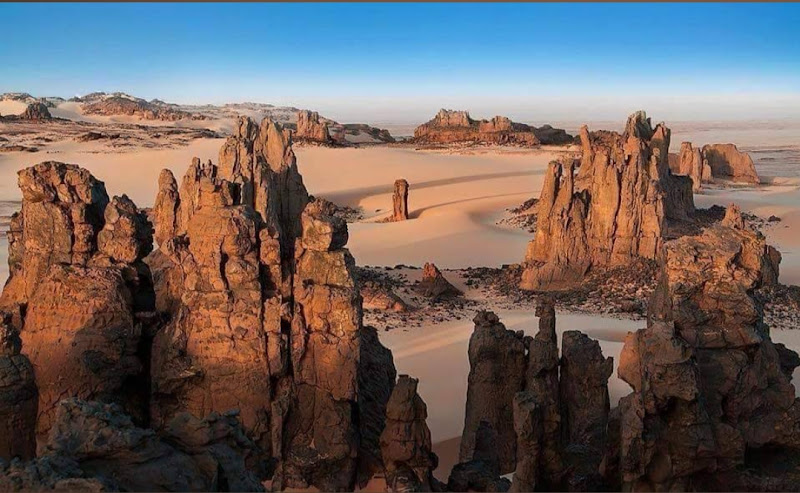
Picture yourself standing amid a moonscape of stark volcanic peaks and ancient lava flows that stretch as far as the eye can see. The Atakor volcanic field, tucked away in the heart of the Hoggar Mountains of southern Algeria, is one of Africa's most remarkable yet lesser-known geological wonders. I've spent years exploring volcanic regions, but this place? It stopped me in my tracks. The field's dramatic black basalt formations pierce through the Saharan sands, creating an otherworldly panorama that'll make you question whether you're still on Earth.Key Features
• Towering volcanic peaks reaching heights of over 2,000 meters, with Mount Tahat standing proudly as Algeria's highest point • Ancient lava flows that have created intricate patterns across the landscape, some dating back millions of years • Distinctive black basalt formations contrasting dramatically with the golden Saharan sands • Natural rock arches and caves formed by centuries of wind erosion • Prehistoric rock art sites scattered throughout the region, telling tales of ancient civilizations • Unique desert vegetation that somehow thrives in this harsh environment • Crystal-clear night skies perfect for stargazing, thanks to zero light pollution • Indigenous Tuareg settlements where traditional desert culture still thrivesBest Time to Visit
Trust me on this one - timing your visit to the Atakor volcanic field is crucial. The sweet spot is between October and March, when temperatures hover around a manageable 20-25°C (68-77°F). I made the rookie mistake of visiting in July once, and let's just say I got a firsthand lesson in why the Sahara has its fierce reputation. Summer temperatures can soar above 40°C (104°F), making exploration not just uncomfortable but potentially dangerous. December and January offer the most pleasant conditions, though nights can get surprisingly chilly - pack that fleece jacket!How to Get There
Getting to Atakor is part of the adventure, and boy, what an adventure it is! Your journey typically starts from Tamanrasset, the nearest major city. From there, you'll need to arrange a 4x4 vehicle with an experienced driver-guide - this isn't your typical road trip, folks. The terrain is challenging, and GPS signals can be spotty, so going solo isn't recommended. Most visitors book through local tour operators who organize expeditions ranging from three days to two weeks. I'd suggest flying into Tamanrasset's airport first, then taking a day to acclimatize before heading into the volcanic field.Tips for Visiting
After multiple visits to volcanic regions worldwide, I can tell you that Atakor requires special preparation. First off, water - bring more than you think you'll need, then add another couple of liters. The dry desert air is sneaky, and dehydration can creep up on you fast. A good pair of hiking boots is non-negotiable - the volcanic rocks are sharp and unforgiving. And speaking of gear, don't forget sun protection! We're talking heavy-duty sunscreen, a wide-brimmed hat, and quality sunglasses. The sun reflects off the black rocks something fierce. Here's something most guides won't tell you: bring a basic first aid kit that includes blister treatment. Those volcanic rocks can be tough on your feet, even with good boots. Also, pack some warm clothes - yeah, I know it sounds crazy for the Sahara, but temperatures can drop dramatically at night. Photography enthusiasts, bring extra batteries and memory cards. The lighting here is incredible, especially during golden hour, and you'll be shooting more than you expect. Oh, and a polarizing filter will help cut through the harsh desert glare. Consider hiring a local Tuareg guide - their knowledge of the terrain is unmatched, plus they know all the hidden gems that aren't in any guidebook. Plus, they'll likely share some fascinating stories about their culture and history with the region. Lastly, remember this is a fragile ecosystem. The volcanic formations took millions of years to form, so practice "leave no trace" principles. And those amazing rock art sites? Look, but don't touch - they've survived thousands of years, and it's our job to make sure they survive thousands more.Key Features
- Key Features
- Best Time to Visit
- How to Get There
- Tips for Visiting
More Details
Updated June 26, 2025
Table of Contents
Description
Picture yourself standing amid a moonscape of stark volcanic peaks and ancient lava flows that stretch as far as the eye can see. The Atakor volcanic field, tucked away in the heart of the Hoggar Mountains of southern Algeria, is one of Africa’s most remarkable yet lesser-known geological wonders. I’ve spent years exploring volcanic regions, but this place? It stopped me in my tracks. The field’s dramatic black basalt formations pierce through the Saharan sands, creating an otherworldly panorama that’ll make you question whether you’re still on Earth.
Key Features
• Towering volcanic peaks reaching heights of over 2,000 meters, with Mount Tahat standing proudly as Algeria’s highest point
• Ancient lava flows that have created intricate patterns across the landscape, some dating back millions of years
• Distinctive black basalt formations contrasting dramatically with the golden Saharan sands
• Natural rock arches and caves formed by centuries of wind erosion
• Prehistoric rock art sites scattered throughout the region, telling tales of ancient civilizations
• Unique desert vegetation that somehow thrives in this harsh environment
• Crystal-clear night skies perfect for stargazing, thanks to zero light pollution
• Indigenous Tuareg settlements where traditional desert culture still thrives
Best Time to Visit
Trust me on this one – timing your visit to the Atakor volcanic field is crucial. The sweet spot is between October and March, when temperatures hover around a manageable 20-25°C (68-77°F). I made the rookie mistake of visiting in July once, and let’s just say I got a firsthand lesson in why the Sahara has its fierce reputation. Summer temperatures can soar above 40°C (104°F), making exploration not just uncomfortable but potentially dangerous. December and January offer the most pleasant conditions, though nights can get surprisingly chilly – pack that fleece jacket!
How to Get There
Getting to Atakor is part of the adventure, and boy, what an adventure it is! Your journey typically starts from Tamanrasset, the nearest major city. From there, you’ll need to arrange a 4×4 vehicle with an experienced driver-guide – this isn’t your typical road trip, folks. The terrain is challenging, and GPS signals can be spotty, so going solo isn’t recommended. Most visitors book through local tour operators who organize expeditions ranging from three days to two weeks. I’d suggest flying into Tamanrasset’s airport first, then taking a day to acclimatize before heading into the volcanic field.
Tips for Visiting
After multiple visits to volcanic regions worldwide, I can tell you that Atakor requires special preparation. First off, water – bring more than you think you’ll need, then add another couple of liters. The dry desert air is sneaky, and dehydration can creep up on you fast.
A good pair of hiking boots is non-negotiable – the volcanic rocks are sharp and unforgiving. And speaking of gear, don’t forget sun protection! We’re talking heavy-duty sunscreen, a wide-brimmed hat, and quality sunglasses. The sun reflects off the black rocks something fierce.
Here’s something most guides won’t tell you: bring a basic first aid kit that includes blister treatment. Those volcanic rocks can be tough on your feet, even with good boots. Also, pack some warm clothes – yeah, I know it sounds crazy for the Sahara, but temperatures can drop dramatically at night.
Photography enthusiasts, bring extra batteries and memory cards. The lighting here is incredible, especially during golden hour, and you’ll be shooting more than you expect. Oh, and a polarizing filter will help cut through the harsh desert glare.
Consider hiring a local Tuareg guide – their knowledge of the terrain is unmatched, plus they know all the hidden gems that aren’t in any guidebook. Plus, they’ll likely share some fascinating stories about their culture and history with the region.
Lastly, remember this is a fragile ecosystem. The volcanic formations took millions of years to form, so practice “leave no trace” principles. And those amazing rock art sites? Look, but don’t touch – they’ve survived thousands of years, and it’s our job to make sure they survive thousands more.
Key Highlights
- Key Features
- Best Time to Visit
- How to Get There
- Tips for Visiting
Location
Places to Stay Near Atakor volcanic field
Find and Book a Tour
Explore More Travel Guides
No reviews found! Be the first to review!
Traveler Reviews for Atakor volcanic field
There are no reviews yet. Be the first one to write one.
Have you visited Atakor volcanic field? Help other travelers by sharing your review.
You Might Also Like
ISSIKLANE N

Mouflon Tourisme
Hoggar Mountains
Find Accommodations Nearby
Recommended Tours & Activities
Visitor Reviews
There are no reviews yet. Be the first one to write one.
Share Your Experience
Have you visited Atakor volcanic field? Help other travelers by leaving a review.