
Arco da Vila
About Arco da Vila
Description
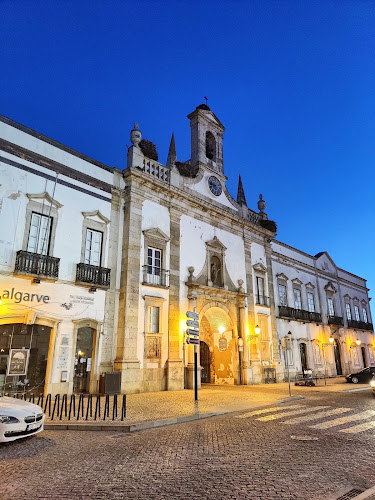
If you’re wandering the sunbleached lanes of Faro and stumble upon an impressive arch with intricate details, stopping to take it in is a must—trust me, you won’t want to miss Arco da Vila. This neo-classical archway basically serves as the doorway into the old quarters of the town, like a grand entrance welcoming you to centuries of history (by the way, nothing beats standing in just the right spot under its vaults, peeking into the walled city beyond). Built in the 19th century, Arco da Vila cleverly integrates remnants of the ancient Moorish wall, so there’s more to this stunner than meets the eye.
And, it’s not just some fancy stone portal. It wears a lot of history on its sleeve—legends, sieges, royal decrees, all stitched into the stones. I always get this strange sense that if you lean in close enough, you might overhear echoes of bygone merchants and travelers bustling in and out, just as you are now. I mean, where else can you touch stones that have seen both Moorish architects and 19th-century Portuguese masons showing off their handiwork? Makes me wish school history classes had been this tactile.
Plus, if you’re like me and live for those little surprises, you’ll find a statue of St. Thomas Aquinas nestled in a pretty alcove above the arch—it’s not always immediately obvious, but it adds that final touch of the unexpected. For many locals (and shameless postcard-hunters), the Arco da Vila is one of those places you come back to at different times of day, watching the light change and the crowds ebb and flow. Seriously, it’s the sort of landmark you’ll remember.
Key Features
- Neo-classical architecture: Think grand arch curves, stately columns, and timeless stonework—a perfect spot for those camera-happy folks (guilty as charged).
- Embedded Moorish Wall: See ancient stones from the original Moorish city wall—there’s real history under your fingertips. History nerd? You’ll be in heaven.
- Statue of St. Thomas Aquinas: You might almost miss him, perched up in his niche above the arch. A quirky little touch for the eagle-eyed wanderer.
- Gateway to Faro’s Old Town: Arco da Vila isn't just a monument—it's literally your entry to winding cobbled alleys, hidden cafés, and secret courtyards. You walk through more than just stone; you step into stories.
- Wheelchair accessible: Smooth pavement, a rare treat in an old European town. Families with strollers or anyone needing easy access—breathe easy, it’s friendly territory.
- Family friendly: Kids can roam (well, somewhat—don’t let ’em climb the arch!), and there’s a sense of safety just from the well-tended surroundings.
- Great for photography: Whether you’re chasing that golden hour shot, or just snapping silly vacation selfies, it’s a seriously photogenic spot.
Best Time to Visit
I’ll let you in on a little secret: early mornings or the soft golden hour before sunset are the absolute best. Faro tends to be sleepier then, and you dodge the bigger tour groups who crowd in around midday. The way the sun grazes the limestone, turning it almost honey-colored? That’s a photo op you won’t regret. (I still have a slightly crooked selfie from 7am—with nobody else around but a pigeon. Best souvenir ever.)
High summer can get toasty—don’t get me wrong, I love a bit of Vitamin D, but standing around under a cloudless Algarve sky in July or August…some shade is a blessing. If you’re sensitive to crowds (aren’t we all, at least a bit?), shoulder seasons like late spring or early autumn hit the sweet spot. The weather’s forgiving, the streets are lively but not claustrophobic, and the arch is all yours for a few quiet moments.
You’ll also catch local events sometimes in the main square nearby. It’s not unusual to find a pop-up concert or a festival market echoing through the arch. I once stumbled on a fado performance, the music swirling up into the stone vaults. Pure magic.
How to Get There
Honestly, I’d say—if you’re already in Faro, you’ll probably kind of…fall into Arco da Vila sooner or later. But for clarity, let’s get practical. The landmark is smack in the historic center. If you’re arriving from the train or bus station (that’s how I like to roll—no car stress), it’s an easy, flat walk of about 10-15 minutes. You stroll down tree-lined boulevards, and bam—there’s the arch, welcoming you like an old friend.
Prefer a rental car? Street parking can be dicey, especially in peak season. There are a couple of larger paid parking lots within walking distance, though—the kind where you pray the machine takes your foreign credit cards. And hey, if you need accessibility, this is one town landmark that seems to have gotten its act together: wide, wheelchair-accessible paths and pretty straightforward navigation for strollers, too.
Cycling? That’s a fun way to see Faro, and bike racks are usually easy enough to find near the old town gates. For those jumping on public transport, buses from most corners of town get you close—just hop off near the marina and walk a block or two. Nothing too complicated. Even Google Maps rarely gets this one wrong.
Tips for Visiting
This isn’t your typical archway that you’ll breeze past without thinking—I recommend you linger, maybe even double back after exploring the old town. Take a pause to run your palm over the time-smoothed stones. You’ll feel the layers—Roman, Moorish, medieval, all gently nudged together.
- Start your old town adventure here: Walk through Arco da Vila and let it set the tone for your journey. The pedestrian lanes beyond are a maze of charm and local flavor, and much of it is just a few minutes’ meander from the arch.
- Look up! That statue above? It’s easy to walk right on by, fixated on the arches. Stand back and take in the details. The angelic sculptures add a spiritual flavor to the stones, and sometimes a stray cat even lazes nearby (great for a funny snap).
- Bring some coins for musicians: Street buskers love the acoustic tunnel under the arch. I once heard a violinist playing Vivaldi as the sunset poured in—wasn’t expecting my goosebumps but there they were.
- Read the plaque (if you find it): It’s like a mini history lesson. I wish all city gates came with cheat sheets!
- Photograph at different times of the day: Trust me, this spot has moods. Early morning for soft shadows; midday for picture-perfect blue sky; evening for that dramatic, almost cinematic light.
- Mingle: Locals aren’t shy about sharing a story or pointing out trivia. I’ve gotten some of my best restaurant tips just by chatting with nearby shopkeepers—you might luck into a secret or two.
- Check ahead for events: Sometimes the area is closed off for parades or markets. Always smart to peek at a local events calendar. Or just ask—Portuguese hospitality is the real deal.
- Rest in the square nearby: The Plaza just past the arch has shady benches perfect for people-watching. Obsessive gelato fans (like me) will be pleased: you’re steps from some of the better ice cream shops in Faro.
The magic of Arco da Vila isn’t just in its size or its flair, but in the way it slips from the everyday to the memorable. Some folks might pass by without much thought, but those who know—well, they make a point of walking through slowly, savoring the shift from modern buzz to medieval cool the second you cross its threshold. For me, it’s not just a landmark…but a doorway into a Faro you’ll want to come back to again, and again.
If you want to catch Faro’s heartbeat, start right here. Let the stones tell their age-old stories, and you might walk away with a few new ones of your own.
Key Features
- Key Features
- Best Time to Visit
- How to Get There
- Tips for Visiting
More Details
Updated June 9, 2025
Table of Contents
Description
If you’re wandering the sunbleached lanes of Faro and stumble upon an impressive arch with intricate details, stopping to take it in is a must—trust me, you won’t want to miss Arco da Vila. This neo-classical archway basically serves as the doorway into the old quarters of the town, like a grand entrance welcoming you to centuries of history (by the way, nothing beats standing in just the right spot under its vaults, peeking into the walled city beyond). Built in the 19th century, Arco da Vila cleverly integrates remnants of the ancient Moorish wall, so there’s more to this stunner than meets the eye.
And, it’s not just some fancy stone portal. It wears a lot of history on its sleeve—legends, sieges, royal decrees, all stitched into the stones. I always get this strange sense that if you lean in close enough, you might overhear echoes of bygone merchants and travelers bustling in and out, just as you are now. I mean, where else can you touch stones that have seen both Moorish architects and 19th-century Portuguese masons showing off their handiwork? Makes me wish school history classes had been this tactile.
Plus, if you’re like me and live for those little surprises, you’ll find a statue of St. Thomas Aquinas nestled in a pretty alcove above the arch—it’s not always immediately obvious, but it adds that final touch of the unexpected. For many locals (and shameless postcard-hunters), the Arco da Vila is one of those places you come back to at different times of day, watching the light change and the crowds ebb and flow. Seriously, it’s the sort of landmark you’ll remember.
Key Features
- Neo-classical architecture: Think grand arch curves, stately columns, and timeless stonework—a perfect spot for those camera-happy folks (guilty as charged).
- Embedded Moorish Wall: See ancient stones from the original Moorish city wall—there’s real history under your fingertips. History nerd? You’ll be in heaven.
- Statue of St. Thomas Aquinas: You might almost miss him, perched up in his niche above the arch. A quirky little touch for the eagle-eyed wanderer.
- Gateway to Faro’s Old Town: Arco da Vila isn’t just a monument—it’s literally your entry to winding cobbled alleys, hidden cafés, and secret courtyards. You walk through more than just stone; you step into stories.
- Wheelchair accessible: Smooth pavement, a rare treat in an old European town. Families with strollers or anyone needing easy access—breathe easy, it’s friendly territory.
- Family friendly: Kids can roam (well, somewhat—don’t let ’em climb the arch!), and there’s a sense of safety just from the well-tended surroundings.
- Great for photography: Whether you’re chasing that golden hour shot, or just snapping silly vacation selfies, it’s a seriously photogenic spot.
Best Time to Visit
I’ll let you in on a little secret: early mornings or the soft golden hour before sunset are the absolute best. Faro tends to be sleepier then, and you dodge the bigger tour groups who crowd in around midday. The way the sun grazes the limestone, turning it almost honey-colored? That’s a photo op you won’t regret. (I still have a slightly crooked selfie from 7am—with nobody else around but a pigeon. Best souvenir ever.)
High summer can get toasty—don’t get me wrong, I love a bit of Vitamin D, but standing around under a cloudless Algarve sky in July or August…some shade is a blessing. If you’re sensitive to crowds (aren’t we all, at least a bit?), shoulder seasons like late spring or early autumn hit the sweet spot. The weather’s forgiving, the streets are lively but not claustrophobic, and the arch is all yours for a few quiet moments.
You’ll also catch local events sometimes in the main square nearby. It’s not unusual to find a pop-up concert or a festival market echoing through the arch. I once stumbled on a fado performance, the music swirling up into the stone vaults. Pure magic.
How to Get There
Honestly, I’d say—if you’re already in Faro, you’ll probably kind of…fall into Arco da Vila sooner or later. But for clarity, let’s get practical. The landmark is smack in the historic center. If you’re arriving from the train or bus station (that’s how I like to roll—no car stress), it’s an easy, flat walk of about 10-15 minutes. You stroll down tree-lined boulevards, and bam—there’s the arch, welcoming you like an old friend.
Prefer a rental car? Street parking can be dicey, especially in peak season. There are a couple of larger paid parking lots within walking distance, though—the kind where you pray the machine takes your foreign credit cards. And hey, if you need accessibility, this is one town landmark that seems to have gotten its act together: wide, wheelchair-accessible paths and pretty straightforward navigation for strollers, too.
Cycling? That’s a fun way to see Faro, and bike racks are usually easy enough to find near the old town gates. For those jumping on public transport, buses from most corners of town get you close—just hop off near the marina and walk a block or two. Nothing too complicated. Even Google Maps rarely gets this one wrong.
Tips for Visiting
This isn’t your typical archway that you’ll breeze past without thinking—I recommend you linger, maybe even double back after exploring the old town. Take a pause to run your palm over the time-smoothed stones. You’ll feel the layers—Roman, Moorish, medieval, all gently nudged together.
- Start your old town adventure here: Walk through Arco da Vila and let it set the tone for your journey. The pedestrian lanes beyond are a maze of charm and local flavor, and much of it is just a few minutes’ meander from the arch.
- Look up! That statue above? It’s easy to walk right on by, fixated on the arches. Stand back and take in the details. The angelic sculptures add a spiritual flavor to the stones, and sometimes a stray cat even lazes nearby (great for a funny snap).
- Bring some coins for musicians: Street buskers love the acoustic tunnel under the arch. I once heard a violinist playing Vivaldi as the sunset poured in—wasn’t expecting my goosebumps but there they were.
- Read the plaque (if you find it): It’s like a mini history lesson. I wish all city gates came with cheat sheets!
- Photograph at different times of the day: Trust me, this spot has moods. Early morning for soft shadows; midday for picture-perfect blue sky; evening for that dramatic, almost cinematic light.
- Mingle: Locals aren’t shy about sharing a story or pointing out trivia. I’ve gotten some of my best restaurant tips just by chatting with nearby shopkeepers—you might luck into a secret or two.
- Check ahead for events: Sometimes the area is closed off for parades or markets. Always smart to peek at a local events calendar. Or just ask—Portuguese hospitality is the real deal.
- Rest in the square nearby: The Plaza just past the arch has shady benches perfect for people-watching. Obsessive gelato fans (like me) will be pleased: you’re steps from some of the better ice cream shops in Faro.
The magic of Arco da Vila isn’t just in its size or its flair, but in the way it slips from the everyday to the memorable. Some folks might pass by without much thought, but those who know—well, they make a point of walking through slowly, savoring the shift from modern buzz to medieval cool the second you cross its threshold. For me, it’s not just a landmark…but a doorway into a Faro you’ll want to come back to again, and again.
If you want to catch Faro’s heartbeat, start right here. Let the stones tell their age-old stories, and you might walk away with a few new ones of your own.
Key Highlights
- Key Features
- Best Time to Visit
- How to Get There
- Tips for Visiting
Location
Places to Stay Near Arco da Vila
Find and Book a Tour
Explore More Travel Guides
No reviews found! Be the first to review!
Traveler Reviews for Arco da Vila
There are no reviews yet. Be the first one to write one.
Have you visited Arco da Vila? Help other travelers by sharing your review.
You Might Also Like

Jardim Manuel Bivar

Jardim da Alameda João de Deus
Praça do Afonso III 14
Find Accommodations Nearby
Recommended Tours & Activities
Visitor Reviews
There are no reviews yet. Be the first one to write one.
Share Your Experience
Have you visited Arco da Vila? Help other travelers by leaving a review.