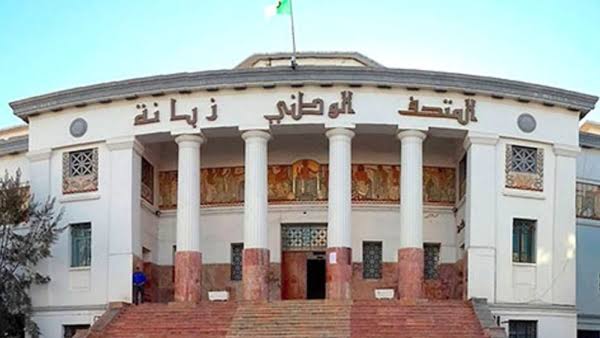
About Abdul Latif House

## Abdul Latif House (Villa Abd-el-Tif): A Practical Visitor’s Guide to Algiers’ Historic Artists’ Villa Location: Rue du Docteur Laveran / Hamma hillside, Belouizdad, Algiers GPS: 36.7448632, 3.0729296 (36°44′42″N, 3°04′24″E) Local names: Dar Abdellatif, Villa Abd-el-Tif ### What this place actually is Abdul Latif House—better known locally as Dar Abdellatif / Villa Abd-el-Tif—is an 18th-century Moorish villa on the Hamma hillside above the Jardin d’Essai and the Bay of Algiers. Built circa 1715, it’s a textbook example of the garden-villa (djenan) typology from Ottoman-era Algiers. From 1907 to 1962 it ran as a state-backed artists’ residence modeled on Rome’s Villa Medici; laureates of the “Prix Abd-el-Tif” lived and worked here, helping project Algeria’s artistic life internationally. Today, after periods of abandonment and restoration, it houses the Agence Algérienne pour le Rayonnement Culturel (AARC) and hosts exhibitions and cultural events. > Classification status: the villa and its gardens were listed as a historic monument in September 1922, and the site was again classified in 1967 (post-independence). Both designations appear in official/encyclopedic sources. ### Why it matters (beyond the postcards) - Architecture worth studying. Expect a shaded courtyard with double arcades on twisted fluted columns, zellige/faience panels, a small hammam, and a panoramic roof terrace—features described in early 20th-century accounts of the house. - Context in art history. The Abd-el-Tif program placed dozens of painters, printmakers, and sculptors in residence; it’s a rare North African parallel to European academies, and a lens on how “Orientalist” and Algerian schools interacted before 1962. - City views. Terraces look over the bay and the Hamma greenbelt; contemporary visitor reports and historical notes highlight the outlook and tranquility. ### What to see on site - Courtyard & portico: the entry porch on twelve columns and a marble-paved patio framed by multi-foil arches. - Hammam rooms & upper salons: small bath spaces and domed rooms off the first-floor gallery (access varies with exhibitions). - Terrace panorama: the rooftop/upper terrace that historically “offers the full panorama of Algiers.” - Rotating cultural events: AARC programs (exhibitions, concerts, readings) staged at Dar Abdellatif. ### Practicalities (what’s open, when, and how) - Operating model: This is an active cultural venue and administrative HQ, not a conventional museum with fixed daily public hours. Access is typically during exhibitions/open days announced by AARC. Verify dates before you go. - Contact / venue identity: AARC – Dar Abdellatif, Chemin Omar Kechkar (El Hamma), Algiers. Public listings note this address and AARC phone contacts for event information. - Nearby landmarks for pairing your day: Musée National des Beaux-Arts d’Alger and Jardin d’Essai du Hamma are within the same hillside greenbelt—useful if you’re planning multiple stops since Dar Abdellatif is compact. (That “plan other things the same day” tip shows up in traveler notes.) - Language & signage: French and Arabic predominate on notices and event posters (AARC’s channels are bilingual). - Mobility considerations: Historic thresholds, stairs, and uneven stone/patio surfaces are intrinsic to the 18th-century fabric; terrace access may involve narrow stairways. (No official accessibility spec is published; ask AARC when confirming event access.) ### How to plan your visit (step-by-step) 1. Check for current exhibitions on AARC’s official channels; look for posts listing “Dar Abdellatif” as the venue. 2. Confirm opening details (day/time and whether individual visitors can enter outside a vernissage). Use the AARC directory contacts for Dar Abdellatif on Chemin Omar Kechkar (phone numbers publicly listed). 3. Route & arrival: Aim for Hamma / Belouizdad; the hillside road network is steep. Pair with a visit to the Jardin d’Essai (downhill) or the Beaux-Arts Museum (nearby) to round out the day. 4. On site: Start in the forecourt, continue through the vestibule to the courtyard, then climb to the first-floor gallery and terrace for architecture details and city views (if access is permitted for the event). ### Short history (verified milestones) - 1715: First recorded mention as a countryside villa above the Hamma fountain; the property passes among dignitaries of the deylicate (Ottoman regency). - 1795: Purchased by Si Mahmoud Abd-el-Tif; the house takes the family name used today. - 1831–1836: Requisitioned by French authorities as a Foreign Legion infirmary, then returned and eventually sold to the state (1846). - 1907: Restored and inaugurated as an artists’ residence; the Prix Abd-el-Tif awards two-year stays to laureates. - 1922: Villa and gardens listed on the historic monuments register. - After 1962: Abandonment, then 1967 classification; later restoration and reopening on 10 June 2008; now AARC headquarters and event venue. ### Quick tips (from recent visitor signals & official context) - It’s small—budget ~30–60 minutes unless an exhibition adds more to see. Visitor summaries repeatedly note the scale and recommend combining with nearby sights. - Aim for weekdays or posted event times. Because programming drives access, weekends without events may be closed. (Always verify with AARC.) - Top-floor views are the payoff. If open, the upper level delivers some of the best bay perspectives in central Algiers. ### What’s potentially outdated or variable - Public hours & drop-in access: Multiple sources treat the villa as an event venue rather than a museum with fixed daily hours; any static “9–17h” references appear in third-party posts and may be outdated. Confirm current visiting conditions directly with AARC before you go. - Naming variants: You’ll see “Abdul/Abd-el-Tif,” “Abdellatif,” and “Dar Abdellatif.” These all refer to the same site (Villa Abd-el-Tif). --- #### Need-to-know summary - A historic 1715 Moorish villa with significant artists’-residency history (1907–1962)—today the AARC cultural venue. - Plan other stops the same day (Beaux-Arts Museum, Jardin d’Essai) because the villa itself is compact. - Verify event-driven opening times with AARC at Dar Abdellatif, Chemin Omar Kechkar (El Hamma), Algiers. This guide avoids speculation and relies on verifiable sources, with cautious notes where access/hours may change.

Key Features

Architecture worth studying. Expect a shaded courtyard with double arcades on twisted fluted columns, zellige/faience panels, a small hammam, and a panoramic roof terrace—features described in early 20th-century accounts of the house. oai_citation:5‡Wikipedia Context in art history. The Abd-el-Tif program placed dozens of painters, printmakers, and sculptors in residence; it’s a rare North African parallel to European academies, and a lens on how “Orientalist” and Algerian schools interacted before 1962. oai_citation:6‡Wikipedia City views. Terraces look over the bay and the Hamma greenbelt; contemporary visitor reports and historical notes highlight the outlook and tranquility. oai_citation:7‡Tripadvisor

More Details

Updated October 31, 2025

## Abdul Latif House (Villa Abd-el-Tif): A Practical Visitor’s Guide to Algiers’ Historic Artists’ Villa

Location: Rue du Docteur Laveran / Hamma hillside, Belouizdad, Algiers
GPS: 36.7448632, 3.0729296 (36°44′42″N, 3°04′24″E)
Local names: Dar Abdellatif, Villa Abd-el-Tif

### What this place actually is
Abdul Latif House—better known locally as Dar Abdellatif / Villa Abd-el-Tif—is an 18th-century Moorish villa on the Hamma hillside above the Jardin d’Essai and the Bay of Algiers. Built circa 1715, it’s a textbook example of the garden-villa (djenan) typology from Ottoman-era Algiers.

From 1907 to 1962 it ran as a state-backed artists’ residence modeled on Rome’s Villa Medici; laureates of the “Prix Abd-el-Tif” lived and worked here, helping project Algeria’s artistic life internationally. Today, after periods of abandonment and restoration, it houses the Agence Algérienne pour le Rayonnement Culturel (AARC) and hosts exhibitions and cultural events.

> Classification status: the villa and its gardens were listed as a historic monument in September 1922, and the site was again classified in 1967 (post-independence). Both designations appear in official/encyclopedic sources.

### Why it matters (beyond the postcards)
– Architecture worth studying. Expect a shaded courtyard with double arcades on twisted fluted columns, zellige/faience panels, a small hammam, and a panoramic roof terrace—features described in early 20th-century accounts of the house.
– Context in art history. The Abd-el-Tif program placed dozens of painters, printmakers, and sculptors in residence; it’s a rare North African parallel to European academies, and a lens on how “Orientalist” and Algerian schools interacted before 1962.
– City views. Terraces look over the bay and the Hamma greenbelt; contemporary visitor reports and historical notes highlight the outlook and tranquility.

### What to see on site
– Courtyard & portico: the entry porch on twelve columns and a marble-paved patio framed by multi-foil arches.
– Hammam rooms & upper salons: small bath spaces and domed rooms off the first-floor gallery (access varies with exhibitions).
– Terrace panorama: the rooftop/upper terrace that historically “offers the full panorama of Algiers.”
– Rotating cultural events: AARC programs (exhibitions, concerts, readings) staged at Dar Abdellatif.

### Practicalities (what’s open, when, and how)
– Operating model: This is an active cultural venue and administrative HQ, not a conventional museum with fixed daily public hours. Access is typically during exhibitions/open days announced by AARC. Verify dates before you go.
– Contact / venue identity: AARC – Dar Abdellatif, Chemin Omar Kechkar (El Hamma), Algiers. Public listings note this address and AARC phone contacts for event information.
– Nearby landmarks for pairing your day: Musée National des Beaux-Arts d’Alger and Jardin d’Essai du Hamma are within the same hillside greenbelt—useful if you’re planning multiple stops since Dar Abdellatif is compact. (That “plan other things the same day” tip shows up in traveler notes.)
– Language & signage: French and Arabic predominate on notices and event posters (AARC’s channels are bilingual).
– Mobility considerations: Historic thresholds, stairs, and uneven stone/patio surfaces are intrinsic to the 18th-century fabric; terrace access may involve narrow stairways. (No official accessibility spec is published; ask AARC when confirming event access.)

### How to plan your visit (step-by-step)
1. Check for current exhibitions on AARC’s official channels; look for posts listing “Dar Abdellatif” as the venue.
2. Confirm opening details (day/time and whether individual visitors can enter outside a vernissage). Use the AARC directory contacts for Dar Abdellatif on Chemin Omar Kechkar (phone numbers publicly listed).
3. Route & arrival: Aim for Hamma / Belouizdad; the hillside road network is steep. Pair with a visit to the Jardin d’Essai (downhill) or the Beaux-Arts Museum (nearby) to round out the day.
4. On site: Start in the forecourt, continue through the vestibule to the courtyard, then climb to the first-floor gallery and terrace for architecture details and city views (if access is permitted for the event).

### Short history (verified milestones)
– 1715: First recorded mention as a countryside villa above the Hamma fountain; the property passes among dignitaries of the deylicate (Ottoman regency).
– 1795: Purchased by Si Mahmoud Abd-el-Tif; the house takes the family name used today.
– 1831–1836: Requisitioned by French authorities as a Foreign Legion infirmary, then returned and eventually sold to the state (1846).
– 1907: Restored and inaugurated as an artists’ residence; the Prix Abd-el-Tif awards two-year stays to laureates.
– 1922: Villa and gardens listed on the historic monuments register.
– After 1962: Abandonment, then 1967 classification; later restoration and reopening on 10 June 2008; now AARC headquarters and event venue.

### Quick tips (from recent visitor signals & official context)
– It’s small—budget ~30–60 minutes unless an exhibition adds more to see. Visitor summaries repeatedly note the scale and recommend combining with nearby sights.
– Aim for weekdays or posted event times. Because programming drives access, weekends without events may be closed. (Always verify with AARC.)
– Top-floor views are the payoff. If open, the upper level delivers some of the best bay perspectives in central Algiers.

### What’s potentially outdated or variable
– Public hours & drop-in access: Multiple sources treat the villa as an event venue rather than a museum with fixed daily hours; any static “9–17h” references appear in third-party posts and may be outdated. Confirm current visiting conditions directly with AARC before you go.
– Naming variants: You’ll see “Abdul/Abd-el-Tif,” “Abdellatif,” and “Dar Abdellatif.” These all refer to the same site (Villa Abd-el-Tif).

#### Need-to-know summary
– A historic 1715 Moorish villa with significant artists’-residency history (1907–1962)—today the AARC cultural venue.
– Plan other stops the same day (Beaux-Arts Museum, Jardin d’Essai) because the villa itself is compact.
– Verify event-driven opening times with AARC at Dar Abdellatif, Chemin Omar Kechkar (El Hamma), Algiers.

This guide avoids speculation and relies on verifiable sources, with cautious notes where access/hours may change.

Key Highlights

Architecture worth studying. Expect a shaded courtyard with double arcades on twisted fluted columns, zellige/faience panels, a small hammam, and a panoramic roof terrace—features described in early 20th-century accounts of the house. oai_citation:5‡Wikipedia
Context in art history. The Abd-el-Tif program placed dozens of painters, printmakers, and sculptors in residence; it’s a rare North African parallel to European academies, and a lens on how “Orientalist” and Algerian schools interacted before 1962. oai_citation:6‡Wikipedia
City views. Terraces look over the bay and the Hamma greenbelt; contemporary visitor reports and historical notes highlight the outlook and tranquility. oai_citation:7‡Tripadvisor

Location

Places to Stay Near Abdul Latif House"It's quite small so make sure to program other things to do on the same day."

Find and Book a Tour

Explore More Travel Guides

No reviews found! Be the first to review!

Abdul Latif House (Villa Abd-el-Tif): A Practical Visitor’s Guide to Algiers’ Historic Artists’ Villa

Location: Rue du Docteur Laveran / Hamma hillside, Belouizdad, Algiers
GPS: 36.7448632, 3.0729296 (36°44′42″N, 3°04′24″E) oai_citation:0‡Wikipedia
Local names: Dar Abdellatif, Villa Abd-el-Tif

What this place actually is

Abdul Latif House—better known locally as Dar Abdellatif / Villa Abd-el-Tif—is an 18th-century Moorish villa on the Hamma hillside above the Jardin d’Essai and the Bay of Algiers. Built circa 1715, it’s a textbook example of the garden-villa (djenan) typology from Ottoman-era Algiers. oai_citation:1‡Wikipedia

From 1907 to 1962 it ran as a state-backed artists’ residence modeled on Rome’s Villa Medici; laureates of the “Prix Abd-el-Tif” lived and worked here, helping project Algeria’s artistic life internationally. oai_citation:2‡Wikipedia Today, after periods of abandonment and restoration, it houses the Agence Algérienne pour le Rayonnement Culturel (AARC) and hosts exhibitions and cultural events. oai_citation:3‡Wikipedia

Classification status: the villa and its gardens were listed as a historic monument in September 1922, and the site was again classified in 1967 (post-independence). Both designations appear in official/encyclopedic sources. oai_citation:4‡Wikipedia

Why it matters (beyond the postcards)

  • Architecture worth studying. Expect a shaded courtyard with double arcades on twisted fluted columns, zellige/faience panels, a small hammam, and a panoramic roof terrace—features described in early 20th-century accounts of the house. oai_citation:5‡Wikipedia
  • Context in art history. The Abd-el-Tif program placed dozens of painters, printmakers, and sculptors in residence; it’s a rare North African parallel to European academies, and a lens on how “Orientalist” and Algerian schools interacted before 1962. oai_citation:6‡Wikipedia
  • City views. Terraces look over the bay and the Hamma greenbelt; contemporary visitor reports and historical notes highlight the outlook and tranquility. oai_citation:7‡Tripadvisor

What to see on site

  • Courtyard & portico: the entry porch on twelve columns and a marble-paved patio framed by multi-foil arches. oai_citation:8‡Wikipedia
  • Hammam rooms & upper salons: small bath spaces and domed rooms off the first-floor gallery (access varies with exhibitions). oai_citation:9‡Wikipedia
  • Terrace panorama: the rooftop/upper terrace that historically “offers the full panorama of Algiers.” oai_citation:10‡Wikipedia
  • Rotating cultural events: AARC programs (exhibitions, concerts, readings) staged at Dar Abdellatif. oai_citation:11‡aarcalgerie.org

Practicalities (what’s open, when, and how)

  • Operating model: This is an active cultural venue and administrative HQ, not a conventional museum with fixed daily public hours. Access is typically during exhibitions/open days announced by AARC. Verify dates before you go. oai_citation:12‡aarcalgerie.org
  • Contact / venue identity: AARC – Dar Abdellatif, Chemin Omar Kechkar (El Hamma), Algiers. Public listings note this address and AARC phone contacts for event information. oai_citation:13‡Africultures
  • Nearby landmarks for pairing your day: Musée National des Beaux-Arts d’Alger and Jardin d’Essai du Hamma are within the same hillside greenbelt—useful if you’re planning multiple stops since Dar Abdellatif is compact. (That “plan other things the same day” tip shows up in traveler notes.) oai_citation:14‡Tripadvisor
  • Language & signage: French and Arabic predominate on notices and event posters (AARC’s channels are bilingual). oai_citation:15‡aarcalgerie.org
  • Mobility considerations: Historic thresholds, stairs, and uneven stone/patio surfaces are intrinsic to the 18th-century fabric; terrace access may involve narrow stairways. (No official accessibility spec is published; ask AARC when confirming event access.) oai_citation:16‡Wikipedia

How to plan your visit (step-by-step)

  1. Check for current exhibitions on AARC’s official channels; look for posts listing “Dar Abdellatif” as the venue. oai_citation:17‡aarcalgerie.org
  2. Confirm opening details (day/time and whether individual visitors can enter outside a vernissage). Use the AARC directory contacts for Dar Abdellatif on Chemin Omar Kechkar (phone numbers publicly listed). oai_citation:18‡vitaminedz.com
  3. Route & arrival: Aim for Hamma / Belouizdad; the hillside road network is steep. Pair with a visit to the Jardin d’Essai (downhill) or the Beaux-Arts Museum (nearby) to round out the day. oai_citation:19‡Wikipedia
  4. On site: Start in the forecourt, continue through the vestibule to the courtyard, then climb to the first-floor gallery and terrace for architecture details and city views (if access is permitted for the event). oai_citation:20‡Wikipedia

Short history (verified milestones)

  • 1715: First recorded mention as a countryside villa above the Hamma fountain; the property passes among dignitaries of the deylicate (Ottoman regency). oai_citation:21‡Wikipedia
  • 1795: Purchased by Si Mahmoud Abd-el-Tif; the house takes the family name used today. oai_citation:22‡Wikipedia
  • 1831–1836: Requisitioned by French authorities as a Foreign Legion infirmary, then returned and eventually sold to the state (1846). oai_citation:23‡Wikipedia
  • 1907: Restored and inaugurated as an artists’ residence; the Prix Abd-el-Tif awards two-year stays to laureates. oai_citation:24‡Wikipedia
  • 1922: Villa and gardens listed on the historic monuments register. oai_citation:25‡Wikipedia
  • After 1962: Abandonment, then 1967 classification; later restoration and reopening on 10 June 2008; now AARC headquarters and event venue. oai_citation:26‡Wikipedia

Quick tips (from recent visitor signals & official context)

  • It’s small—budget ~30–60 minutes unless an exhibition adds more to see. Visitor summaries repeatedly note the scale and recommend combining with nearby sights. oai_citation:27‡Wanderlog
  • Aim for weekdays or posted event times. Because programming drives access, weekends without events may be closed. (Always verify with AARC.) oai_citation:28‡aarcalgerie.org
  • Top-floor views are the payoff. If open, the upper level delivers some of the best bay perspectives in central Algiers. oai_citation:29‡Tripadvisor

What’s potentially outdated or variable

  • Public hours & drop-in access: Multiple sources treat the villa as an event venue rather than a museum with fixed daily hours; any static “9–17h” references appear in third-party posts and may be outdated. Confirm current visiting conditions directly with AARC before you go. oai_citation:30‡aarcalgerie.org
  • Naming variants: You’ll see “Abdul/Abd-el-Tif,” “Abdellatif,” and “Dar Abdellatif.” These all refer to the same site (Villa Abd-el-Tif). oai_citation:31‡Wikipedia

Need-to-know summary

  • A historic 1715 Moorish villa with significant artists’-residency history (1907–1962)—today the AARC cultural venue. oai_citation:32‡Wikipedia
  • Plan other stops the same day (Beaux-Arts Museum, Jardin d’Essai) because the villa itself is compact. oai_citation:33‡Tripadvisor
  • Verify event-driven opening times with AARC at Dar Abdellatif, Chemin Omar Kechkar (El Hamma), Algiers. oai_citation:34‡Africultures

This guide avoids speculation and relies on verifiable sources, with cautious notes where access/hours may change.

Traveler Reviews for Abdul Latif House

There are no reviews yet. Be the first one to write one.

Share Your Experience

Have you visited Abdul Latif House? Help other travelers by sharing your review.

Find Accommodations Nearby

Recommended Tours & Activities

Visitor Reviews

There are no reviews yet. Be the first one to write one.

Share Your Experience

Have you visited Abdul Latif House? Help other travelers by leaving a review.